THE DIRECT ANSWER
What a commercial HVAC replacement includes
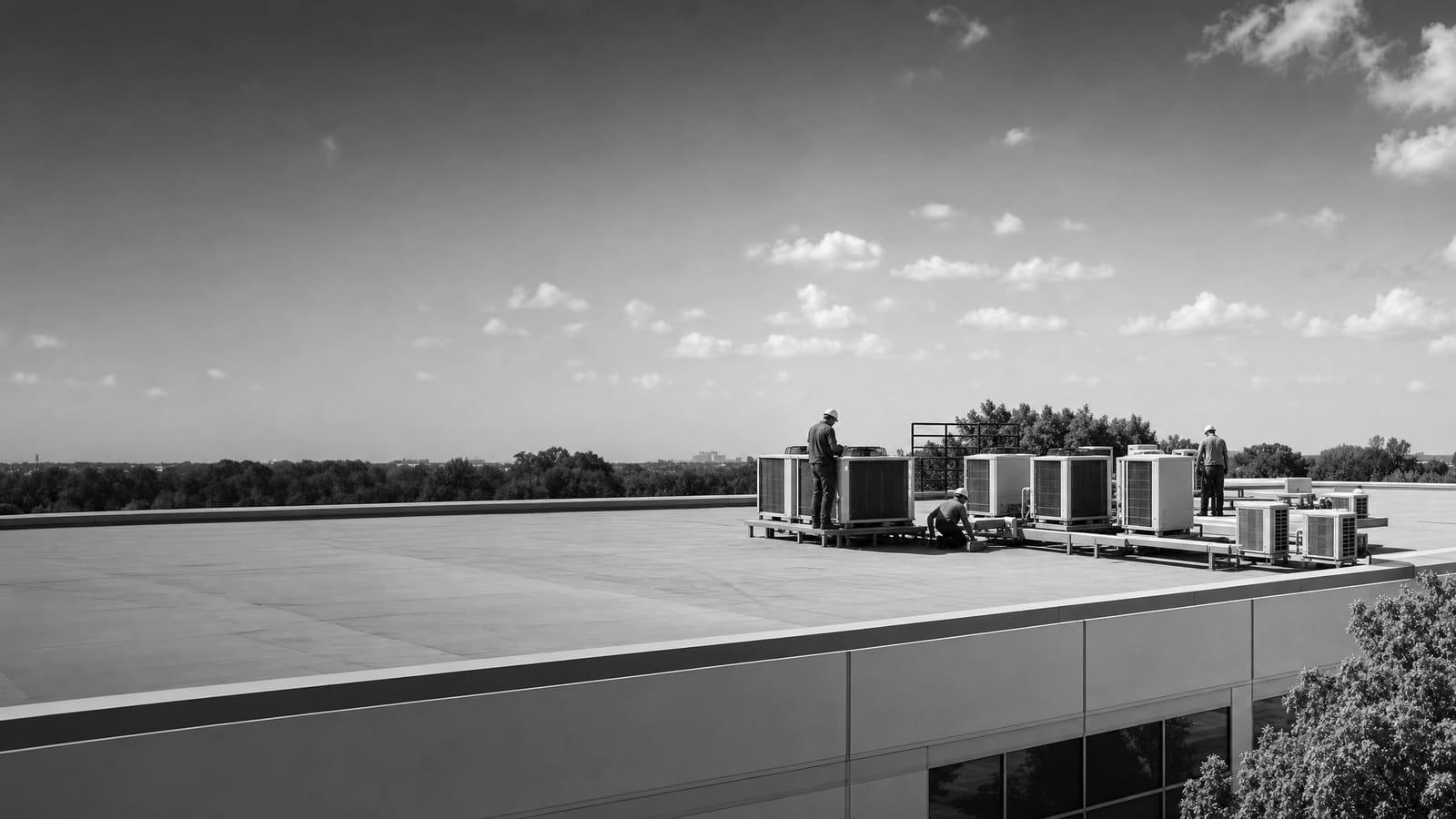
A commercial HVAC replacement is a load check, an equipment decision, a rigging and shutdown plan, the mechanical and electrical work at the curb, and commissioning that proves the unit performs. Replacement beats another repair once a rooftop unit is past roughly fifteen years, because units that old waste a large share of what they draw. Federal estimates put that waste between $900 and $3,700 per unit each year.
A site review has to confirm the actual load, the curb and roof structure, available electrical capacity and gas service, and crane access before any of those numbers mean anything.
THE THREE PATHS
Three ways this decision usually goes
Almost every commercial HVAC project starts in one of three places, and the one you land on sets the cost, the schedule, and how much control you keep. Most facility teams delay a new unit until the old one stops holding the space, needs constant service, or fails outright. The federal guidance is blunt about that habit: replacing an underperforming unit on purpose usually beats both replacement-on-failure and a reflexive like-for-like swap at end of life. The difference is not the equipment on the truck. It is whether you choose the timing, the specification, and the shutdown window, or the equipment chooses them for you. Decide which path you are on before you call for pricing, because each one produces a different quote.
WHAT MOVES THE NUMBER
The budget lines that actually swing
No two roofs price the same, and the spread almost never comes from the unit itself. These are the lines that move a commercial HVAC quote up or down, roughly in the order they tend to surprise people.
HOW TO BUY IT
Load first, tier second, calendar third
Start with the load, not the nameplate. A unit installed twenty years ago was sized for a building that no longer exists: different occupancy, different plug load, different lighting, often a different tenant. Carrying that tonnage forward is the most common way a brand new unit inherits an old comfort complaint. A short load confirmation is cheap next to the equipment it selects.
Then pick the efficiency tier deliberately. Rooftop units cool close to half of all commercial floor area in the country, which makes this the most studied equipment decision in the building. The federal high-performance specification targeted units that cut energy use by up to half against the old standard, and manufacturers have brought more than twenty models past that bar. Whether the premium pays depends on your run hours and your rates. That is a math problem, not a matter of taste.
Finally, order early. Lead time, not labor, is what turns a two-day job into a two-month one. The unit that is available is often not the unit you specified, and the moment you accept a substitution under pressure, every downstream decision about curb, electrical, and controls gets made for you.
SIMPLE VERSUS COMPLICATED
What makes a replacement easy or hard
Two buildings can order the same tonnage and get quotes that are nowhere near each other. The gap is almost always complexity at the curb and the panel, not the box on the truck. Here is roughly where the line falls.
LOWER COMPLEXITY
Same footprint, same fuel
The new unit lands on the existing curb, reuses the gas and electric service already there, and keeps the same control strategy. Crane access is clear and the lot can close on a quiet morning. This is a one to two day job.
HIGHER COMPLEXITY
New footprint or new fuel
Tonnage or dimensions change, so the curb adapter and roof framing get reviewed. Moving to a heat pump adds electrical capacity questions and may leave a gas line to abandon. Tight access means a bigger crane and a longer closure.
BEFORE YOU PRICE IT
What a real site review has to confirm
A quote written from a photo of the nameplate is a guess with a number attached. The federal checklist for rooftop replacement asks for the same handful of items every time, and a walk that skips them will find them later at change-order prices.
Physical constraints come first. What is the curb's actual size, and will the new unit land on it or need an adapter? Can the roof carry the weight? Where does the crane set up, how far does it have to reach, and which stalls or drive lanes close while it works?
Infrastructure comes next. Is there capacity in the panel and the feeder for the unit you want, especially if it carries electric or heat pump heating? Is the gas line staying, being resized, or being abandoned? Does the existing control system speak the same language as the new equipment?
Then availability. Is the specified unit actually orderable on your timeline, and is the contractor experienced with the technology you are buying? That last question gets skipped often, and it shows up as a commissioning problem three months later.
Get it in writing before the order
Ask for the curb and structural finding, the electrical capacity check, the crane and closure plan, and the confirmed lead time as written line items. If a bidder cannot produce them, they have not looked at your roof closely enough to hold their price.
AFTER THE CRANE LEAVES
Two things you own for the next fifteen years
The install ends the project and starts the ownership. Two decisions made during the replacement shape what the next fifteen years cost you, and both are easy to wave through at signing.
The first is refrigerant. EPA rules under Section 608 govern how refrigerant is handled, recovered, and recycled on stationary equipment, and they apply to the old unit coming down as much as the new one going up. New commercial equipment ships on newer refrigerants, so a mixed roof means mixed service parts and mixed technician training.
The second is commissioning. Charge, airflow, economizer operation, and control setpoints either get verified against the specification before handoff, or they get discovered as comfort complaints in month two. Verified and documented is also what keeps the warranty standing.
REFRIGERANT
Plan the fleet, not the unit
Federal rules cover recovery from the unit you remove and service on the one you install. If your roof will run mixed refrigerants for years, put that in the service contract and the spare-parts plan now.
COMMISSIONING
Performance, not just power
A unit that turns on is not a unit that performs. Ask for documented startup readings measured against the submitted specification, and treat that document as part of what you paid for.
THINKING IN FLEETS
Phasing, procurement, and lifetime cost
If you have more than one unit on the roof, stop thinking about this replacement and start thinking about the sequence. Equipment bought at the same time tends to fail at roughly the same time, and three emergency replacements in one season is the most expensive way to run a building. A short condition survey covering age, service history, and how hard each unit is working turns a coming surprise into a schedule.
That schedule is also what unlocks better procurement. Ordering two or three units together gives you a real conversation about price and availability instead of taking what is on the shelf. It lets you standardize on one platform, one control interface, and one set of spare parts. It also gives you time to check whether utility or federal incentive programs apply before the order goes in, rather than after.
The lifetime math is simple once you have run hours. Federal estimates put the annual waste from an old, inefficient rooftop unit between $900 and $3,700. Multiply that by the number of aging units on your roof and by the years you plan to hold the building, and the case for planning tends to make itself.
APPLES TO APPLES
Five things every quote should show
Three bidders will hand you three different numbers. Most of the difference is scope, not price. Make each quote show these five items and the comparison gets honest fast.
01
Model number and efficiency tier
Not just tonnage. The exact unit, its rated efficiency, and whether it is a substitution.
02
Confirmed lead time
A date tied to an actual order, not a range copied out of a catalog.
03
Curb, structural, and roof scope
Adapter, framing, curbing, and patching stated as included or excluded.
04
Crane, rigging, and closure plan
Who supplies the crane, which day it lands, and how long the lot is affected.
05
Permits, commissioning, and startup report
Permit fees, inspections, and the documented startup readings you receive at handoff.
Get a defensible number
Price the equipment and the building together.
Send the address, operating target, and target opening date. Flux will identify what must be verified before the project can be priced.
Get a free estimateQuestions
Straight answers.
When does replacement beat one more repair?
Once a rooftop unit is past about fifteen years and needs frequent service, repairs stop buying much time. Federal estimates put the annual energy waste from an old, inefficient unit between $900 and $3,700. Two more service calls plus a season of that waste often costs more than getting ahead of the replacement.
How long does the actual installation take?
The visible work on a single packaged rooftop replacement is usually one morning to a couple of days: crane in, old unit off, new unit set, connections made, startup run. The schedule risk lives in equipment lead time, which is why a confirmed availability date belongs on the quote right next to the price.
Should we switch to a heat pump rooftop unit?
Sometimes. Heat pump rooftop units are close cousins of standard air-conditioning units, and federal guidance says the decision turns on climate and heating load, electricity and gas prices, electrical capacity at the panel, equipment availability, and incentives. Heat pump heating efficiency falls as outdoor temperature drops, so a building with a real winter heating load usually evaluates dual-fuel or cold-climate models rather than a straight all-electric swap.
What does a commercial HVAC installation cost?
There is no honest universal number, because the equipment is often the smaller half of the spread. Tonnage and efficiency tier set the base, then curb adapters, structural work, electrical capacity, crane access, and controls integration move it. Price it after a site review and compare bids line by line instead of on the total.
Who handles permits, the crane, and refrigerant?
The installing contractor should own all three inside the installed price: permits and inspections, the rigging and lot plan, and refrigerant recovery from the removed unit under EPA Section 608 rules. Confirm in writing that they are included before you sign, because these are the most common quiet exclusions.
Sources used for this guide
- [1]betterbuildingssolutioncenter.energy.gov — DOE Advanced Rooftop Unit Replacement Guidance
- [2]betterbuildingssolutioncenter.energy.gov — DOE Commercial Heat Pump Rooftop Unit Replacement Guidance
- [3]betterbuildingssolutioncenter.energy.gov — DOE High-Efficiency Commercial Rooftop Unit Toolkit
- [4]energy.gov — DOE Efficient Commercial Rooftop Air Conditioner Program
- [5]epa.gov — EPA Stationary HVAC Refrigerant Management