THE SHORT VERSION
What a commercial HVAC replacement actually includes
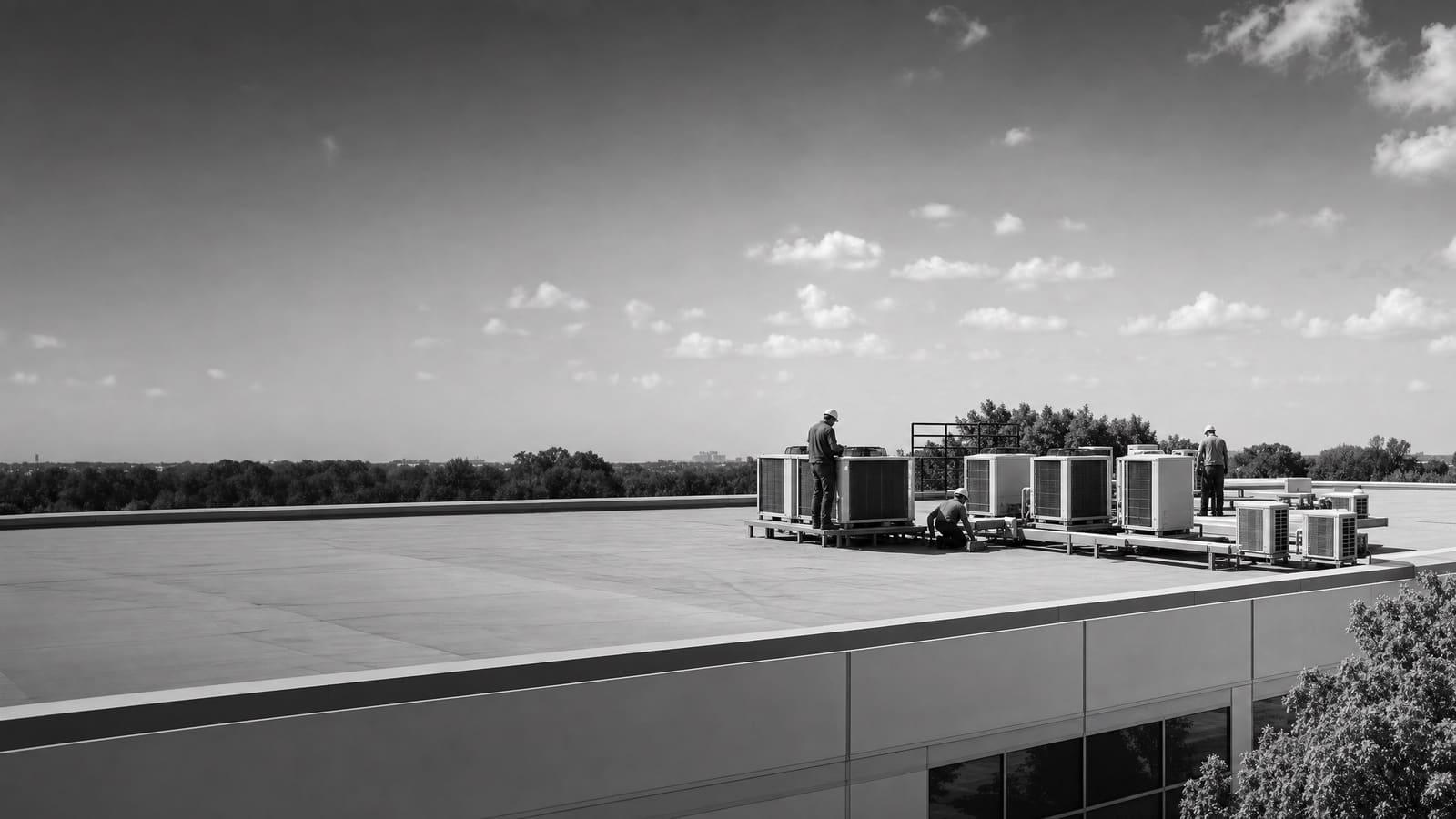
A commercial HVAC replacement is a load check, an equipment selection, a rigging and crane plan, permitting, refrigerant recovery on the old unit, and commissioning before handoff. Replacement beats another repair once the unit is past about fifteen years and is carrying the failures. Federal guidance puts the annual waste from an old, inefficient rooftop unit at roughly $900 to $3,700 per unit. When a second compressor or coil quote lands on a machine like that, you are paying to keep a utility bill in place.
A site review still sets the number. It has to verify tonnage against how the space is used now, curb and roof structure, electrical capacity at the panel, crane access across your lot, and any code items the replacement triggers.
THREE WAYS TO GO
Three replacement paths, and when each one is right
Most commercial buildings replace on failure. Federal guidance is blunt about why that costs more: a unit that dies in July gets whatever equipment is available that week, at whatever price, with no time to compare efficiency tiers or line up an incentive. Planning the same replacement a season early turns it into a purchase instead of a rescue.
There are three real paths. Like-for-like puts the same class of unit on the same curb. A right-sized, higher-efficiency replacement recalculates the load and buys a better operating cost for the next fifteen years. A heat pump rooftop unit trades gas heat for reverse-cycle heating, which federal guidance treats as a good fit across most of the West, where winter heating demand stays mild.
Pick the path before you shop equipment. The path decides your permit scope, your electrical work, and whether the quote you get back is comparable to the next one.
WHAT MOVES THE NUMBER
Where the money goes on a rooftop replacement
Two quotes for the same building can be thousands apart and both be honest, because they scoped different work. These are the lines that move first. Ask for each one priced separately so you can see what you are actually comparing.
CHOOSING EQUIPMENT
Gas heat or a heat pump rooftop unit
The equipment question on most Downey roofs is no longer just tonnage. It is whether the new unit heats with gas or runs reverse-cycle as a heat pump. Federal guidance treats these as technically similar machines — a heat pump rooftop unit is an air-conditioning rooftop unit that can also run backwards to heat — so the decision is about your building, not about unproven technology.
Location does most of the deciding. Heat pump efficiency drops as outdoor temperature falls, so these units suit mild-to-moderate winter heating best. For most of the U.S. South and West, federal guidance says today's units can address most or all of the winter heating demand. Southern California sits squarely in that description, which is why the honest blockers here are usually infrastructure, not climate.
Those blockers are specific and worth checking early: electrical capacity at the panel and service, physical constraints on the roof and curb, existing gas lines, equipment availability in the size you need, and whether the contractor bidding has installed these before. A dual-fuel unit keeps gas heat as backup and is the common middle path when panel capacity is tight. If the checks come back clean, all-electric is a real option. If they do not, a like-for-like gas unit is not a failure. It is a schedule.
SCOPE CHECK
What makes a swap simple, and what adds scope
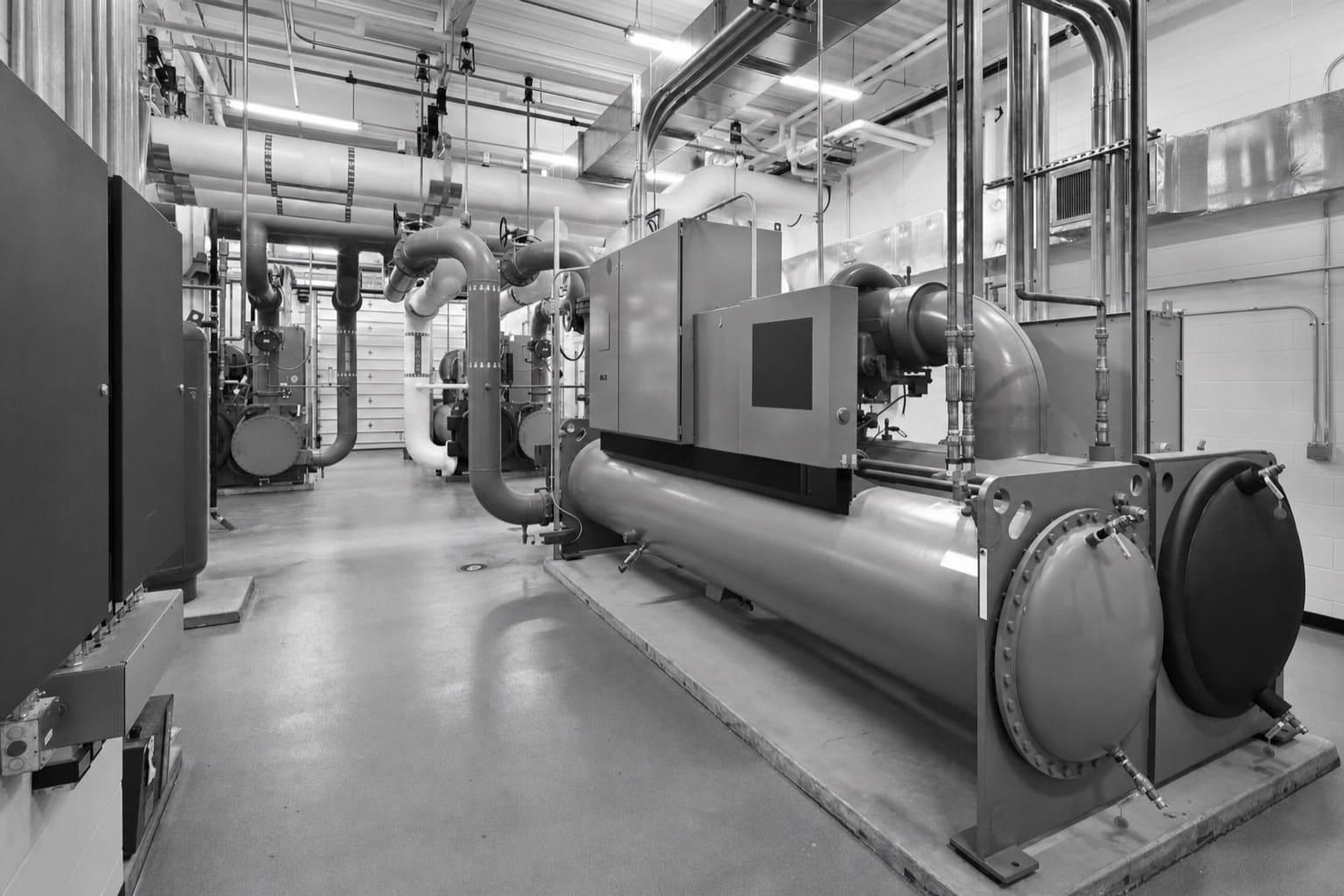
Before you read any price, figure out which building you have. The same tonnage on two different roofs is not the same job, and the gap is mostly access, structure, and power.
LOWER COMPLEXITY
Straight replacement conditions
Same tonnage, same fuel, a curb that accepts an adapter, an open lot with crane reach, a panel with headroom, and a use that has not changed since the last unit went in. These jobs are mostly scheduling and lead time, and the quotes tend to land close together.
HIGHER COMPLEXITY
Conditions that add scope
Growing tonnage, a switch from gas to all-electric, a roof that needs structural review, a tight lot that forces a night or weekend lift, tenants who cannot lose conditioning, or a building automation system the new controls have to speak to. Each one adds a trade and a decision.
BEFORE YOU BUY
What a real site review has to confirm
A quote written from a nameplate photo is a starting number, not a price. It is genuinely useful in an emergency, because it tells you what class of unit fits and roughly what you are facing. It cannot see the curb, the panel, or your lot.
The review that produces a firm price walks the roof and the electrical room. Tonnage gets confirmed against how the space is used today, not against the nameplate of a unit sized twenty years ago for a different tenant, different equipment, and a different occupancy. Old sizing is one of the most common reasons a building has comfort complaints that no amount of service ever fixed.
From there it is physical. Does the new footprint sit on the existing curb or need an adapter. Will the roof structure carry it. Is there panel capacity and a clean routing path if the unit is electric. Where does the crane set up, how far does it have to reach, and how many stalls does that close for how long. What does the gas line situation look like if you are keeping gas heat.
Answer those and the quote stops being a guess. Skip them and the change orders show up after the crane leaves.
Ask for this before you sign
A written scope that names the exact model and tonnage, the curb solution, who pulls the permits, the rigging plan and lot closure window, and the commissioning documents you receive at handoff. If any of those is missing, the price is not comparable to the next quote.
IN DOWNEY
Permits, roofing, and the order you do things in
Rooftop replacements in California cities go through the local building department on a mechanical permit, usually with an electrical permit alongside it. A published California municipal permit list is a useful reminder of how wide that net is: mechanical upgrades and repairs need a permit, and so does re-roofing, whether it is an overlay or a tear-off.
That second item matters more than it looks on a rooftop job. If the roof is near end of life, the crane day is your cheapest chance to handle roofing and curb work at the same time, but it puts two permit scopes on one schedule. Decide that before you book the crane, not after.
Confirm the current requirements, submittal path, and inspection sequence with the City of Downey building division for your address. Permit scope and fees are set locally and change between code editions.
Settle this first
Get the permit and inspection sequence in writing before the equipment ships. Lead time on a rooftop unit is manageable. A crane booked for a Saturday that cannot lift because an inspection was never scheduled is the expensive kind of delay.
OWNERSHIP QUESTIONS
Two decisions that outlive the install
A rooftop unit is a long commitment to a fuel, a refrigerant, and a service relationship. Two questions decide how the rest of that period goes, and both are cheapest to answer while the unit is still on paper.
The first is whether you are buying one unit or starting a fleet plan. Federal work in this space has been portfolio-shaped for a reason: organizations that replaced rooftop units as a program, rather than one failure at a time, upgraded more than 43,000 units and cut a combined $37 million a year from their energy bills. The second is what happens to your parts and service strategy when a new unit lands next to older equipment on the same roof.
PORTFOLIO
One unit or a replacement program
If you run several buildings, or several units on one roof, sequencing replacements across two or three budget years beats replacing on failure. You get to compare equipment, pursue incentives while they exist, and schedule crane days when the building can absorb them.
REFRIGERANT
Mixed fleets and recovery rules
New equipment ships on newer refrigerants, which changes nothing about day-one operation but does change parts and service planning. EPA rules govern how refrigerant is handled and recovered in stationary equipment, so recovery from the old unit belongs on the quote.
TIMING AND MONEY
Phasing, incentives, and the cost after year one
The cheapest version of this project is almost always the one you schedule. Federal guidance is direct about the pattern: facility managers usually delay replacement until the unit stops conditioning the space, needs constant service, or fails outright, and replacing proactively often beats both replacement-on-failure and a like-for-like swap at the end of service life. An in-season failure removes every option that saves money.
Incentives follow the same logic. Utility and federal programs for high-efficiency rooftop equipment exist, but availability, funding, and deadlines change, and many require approval before the equipment is purchased. Confirm what is actually open at the time you are buying, and get the approval in hand before you order. Do not build a budget around a program you have not verified is still running.
Then look past the invoice. Rooftop units condition close to half of all U.S. commercial floor space, which is why efficiency gets so much federal attention, and why the tier you pick on a Tuesday afternoon can outweigh the difference between the two installed prices in front of you. Over the life of the unit, operating cost is the bigger line. Ask each bidder to show the equipment's efficiency rating next to the price, so the comparison includes the part you pay every month.
QUOTE CHECKLIST
Five things a comparable quote has to show
If two bids do not show these five things, you are comparing prices for different jobs. Ask for them in writing before you pick one.
01
The exact unit
Manufacturer, model, tonnage, heating type, and efficiency rating. Not "a comparable 10-ton."
02
Curb and structural scope
Adapter or new curb, any roof framing work, and who is responsible if the roof needs repair once the old unit comes off.
03
Rigging and lot plan
Crane size, setup location, stalls closed, and the window you lose. Night and weekend lifts should be priced, not assumed.
04
Permits and inspections
Which permits get pulled, by whom, and how inspections sequence against the crane date and startup.
05
Commissioning and closeout
Startup readings, charge and airflow verification, controls setup, refrigerant recovery records, and the warranty paperwork you receive.
Get a defensible number
Price the equipment and the building together.
Send the address, operating target, and target opening date. Flux will identify what must be verified before the project can be priced.
Get a free estimateQuestions
Straight answers.
When does replacing a rooftop unit beat repairing it?
Once the unit is past about fifteen years and needs frequent service, a repair is buying time on a machine that is already an expensive line on your utility bill. Federal guidance puts the annual waste from an old, inefficient rooftop unit at roughly $900 to $3,700. Compare the repair quote against that, not against zero.
Should a Downey replacement go all-electric?
Heat pump rooftop units suit mild winters, and federal guidance says units available today can address most or all of the winter heating demand across most of the West. The real gate is infrastructure: panel and service capacity, roof and curb constraints, gas lines, and equipment availability. Dual-fuel is the common middle path when capacity is tight.
Do I need a permit to replace a rooftop unit?
Plan on it. California cities run mechanical work through the local building department, typically with an electrical permit alongside. Confirm the exact submittal and inspection sequence with the City of Downey building division for your address before booking the crane.
How much does a commercial HVAC installation cost?
There is no honest single number, because the price is built from tonnage and efficiency tier, curb and structural work, crane access, electrical scope, and code items the replacement triggers. Any bidder can price those lines separately. Ask for that, and the quotes become comparable.
Are there incentives for high-efficiency rooftop units?
Programs for high-efficiency commercial rooftop equipment exist at the federal and utility level, but funding and deadlines change and many require approval before purchase. Verify what is open at the time you are buying, and do not commit a budget to a program you have not confirmed.
What happens to the refrigerant in the old unit?
EPA rules under Section 608 of the Clean Air Act govern how refrigerant is handled and recovered in stationary air-conditioning and heat pump equipment. Recovery from the old unit is certified work and should appear as a line on your quote rather than as a surprise on the invoice.
Sources used for this guide
- [1]betterbuildingssolutioncenter.energy.gov — DOE Advanced Rooftop Unit Replacement Guidance
- [2]betterbuildingssolutioncenter.energy.gov — DOE Commercial Heat Pump Rooftop Unit Replacement Guidance
- [3]betterbuildingssolutioncenter.energy.gov — DOE High-Efficiency Commercial Rooftop Unit Toolkit
- [4]energy.gov — DOE Efficient Commercial Rooftop Air Conditioner Program
- [5]epa.gov — EPA Stationary HVAC Refrigerant Management
- [6]californiacity-ca.gov — HVAC Permits