THE DIRECT ANSWER
What a commercial HVAC replacement actually includes
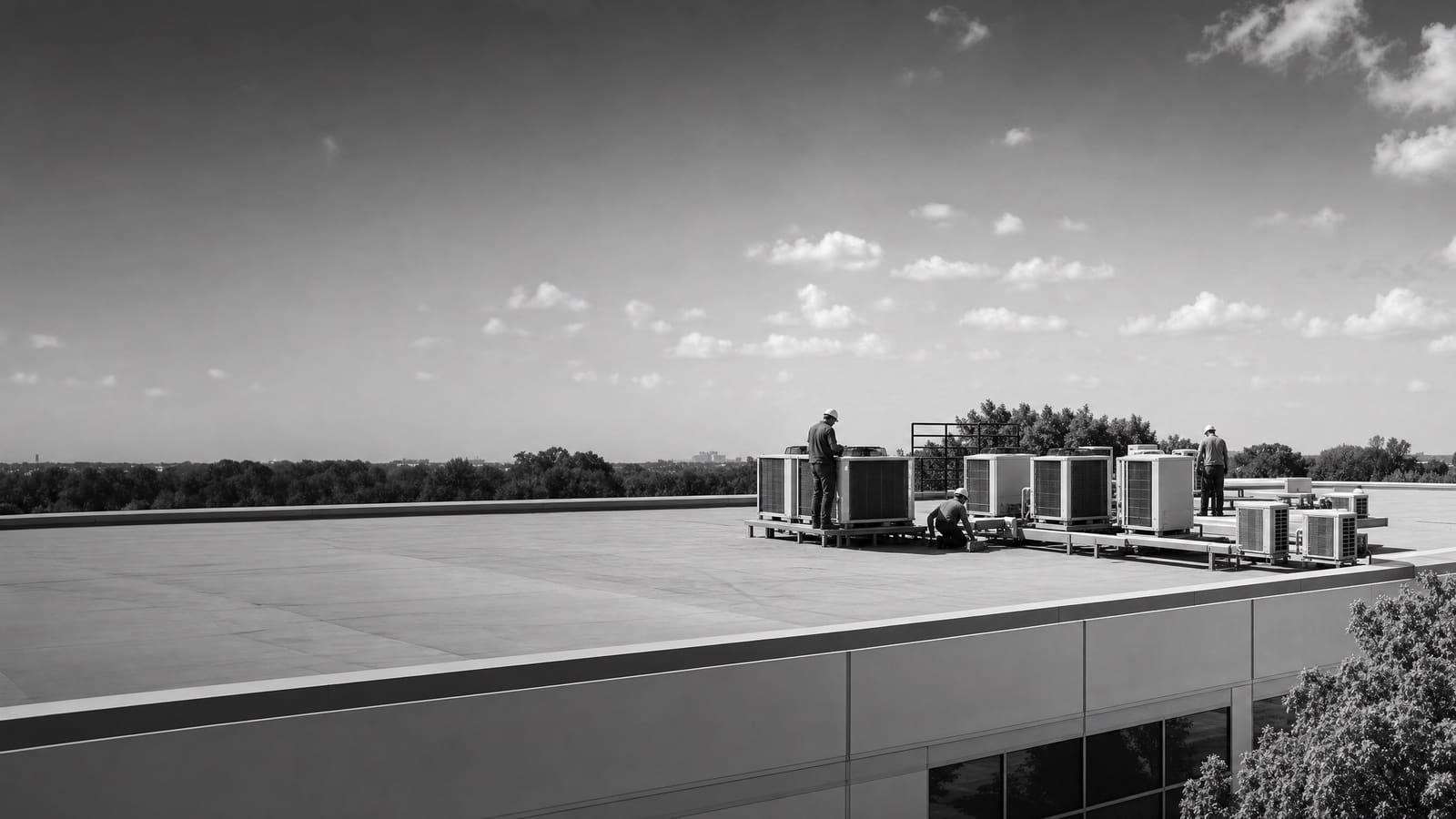
A commercial HVAC replacement is a scoped construction project: confirm the load the building carries today, select equipment against real availability, set the unit by crane, reconnect power, gas, and controls, then commission it to spec. Replacement usually beats one more repair once a rooftop unit passes fifteen years, because Department of Energy analysis puts the annual energy waste of an old, inefficient unit at roughly $900 to $3,700 per unit.
A site review has to verify the curb footprint and roof structure, the electrical service and gas at the unit, economizer and controls requirements, and whether a crane can reach the roof from your lot.
CHOOSE THE PATH
Three ways to replace a commercial rooftop unit
Almost every commercial replacement comes down to three choices, and they are not equally good for every building. Rooftop units cool close to half of all commercial floor space in the country, so most buildings here are choosing between versions of the same packaged machine rather than between wildly different systems.
The honest question is what changed since the last unit went in. If occupancy, tenant layout, and operating hours are the same, carrying the old sizing forward is defensible. If the space now holds more people, more plug load, or a different tenant entirely, the replacement is the only inexpensive chance you get to fix sizing. And if the building has electrification or emissions goals on the calendar, an electric option deserves a real look now rather than at the next failure.
BUDGET LINES
What actually moves the number
An installed price is the equipment plus everything the building makes the crew do to get it in place. Ask for these lines separately, because the ones with the widest range are the ones that turn a clean quote into a change order.
BUYING GUIDANCE
How to buy the replacement, not just the unit
The most expensive mistake in commercial HVAC replacement is buying from the old nameplate. Twenty years changes a building: tenants shuffle, plug load climbs, lighting gets replaced, and the envelope may have been touched more than once. A unit sized for the building that existed then will either short-cycle or run flat out in the building that exists now, and both show up as comfort complaints no service contract can fix.
The second mistake is treating price and availability as separate conversations. Lead time is part of the decision, not a footnote to it. Ask for options that pair an installed price with real availability, because a slightly less efficient unit sitting in a regional warehouse can beat a better unit that lands two months later — especially when the building is limping along on a failing compressor in the meantime.
Third, decide deliberately between planned replacement and replacement on failure. Department of Energy guidance is blunt about this: waiting until a unit stops conditioning the space forfeits the chance to plan, and an old, inefficient unit keeps burning money the whole time you wait. A planned swap lets you pick the weekend, the tier, and the crane day. A failure picks all three for you.
COMPLEXITY
What makes a job simple, and what makes it complicated
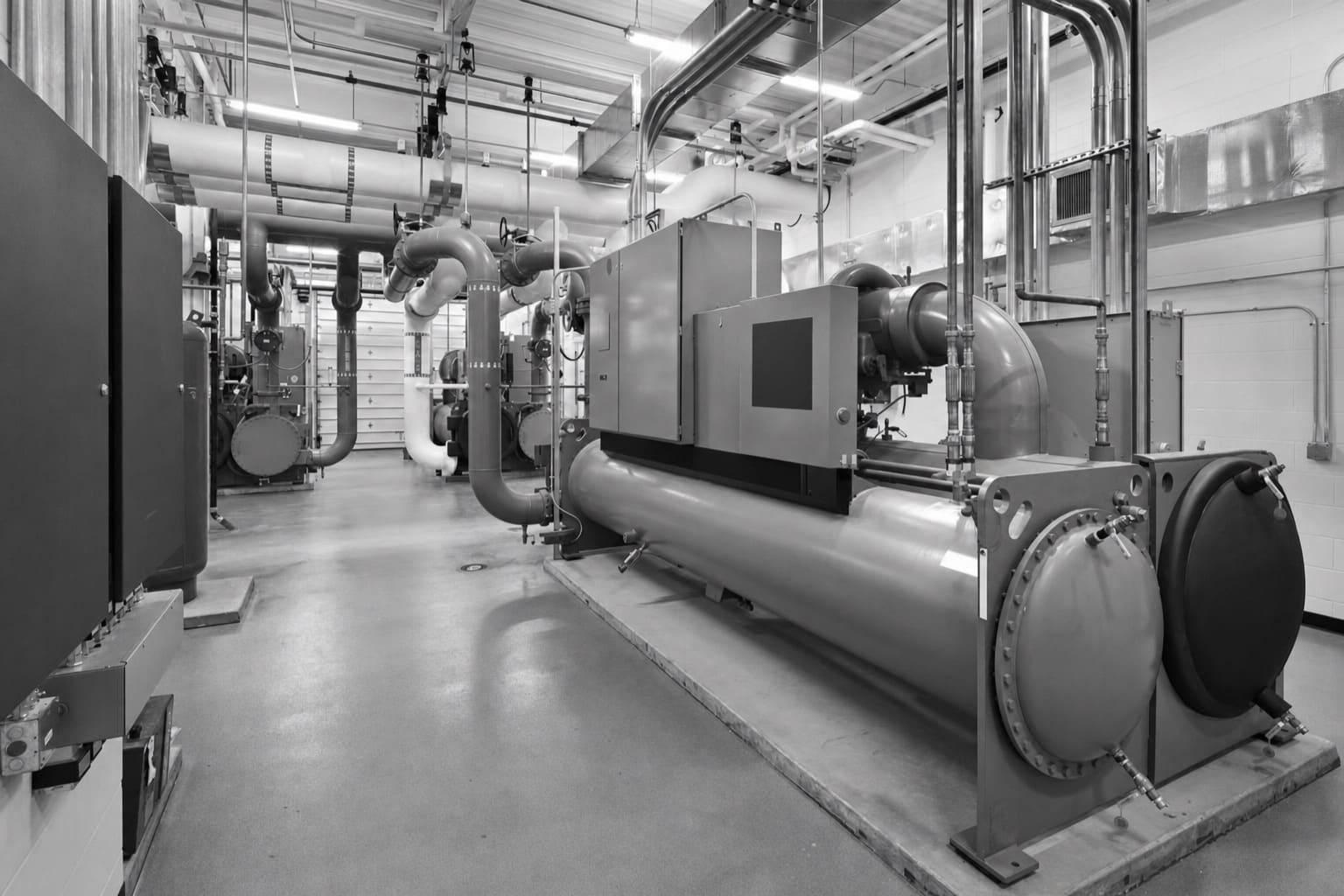
Two replacements with the same tonnage on the quote can be very different jobs. The difference is almost always access, structure, and how much of the building the new unit forces you to touch.
LOWER COMPLEXITY
Straight swap on a clear roof
Same tonnage and fuel, an existing curb that adapts cleanly, an open lot for the crane, and an electrical service that already supports the unit. Set and connected in a day, with tenants noticing the cones more than the outage.
HIGHER COMPLEXITY
Bigger unit, tighter site
Growth in tonnage or footprint, a curb that needs structural review, a shared lot with limited crane reach, an electrical service that has to be upgraded, or controls that must tie into an existing building automation system.
SCOPING
What the site review has to confirm
A quote written from a photo is an estimate. A quote written from a roof visit is a price. The visit exists to answer the questions that change the number, and there are only about six of them.
Structure and curb come first: what the existing curb measures, what the new unit weighs, and whether the roof framing takes it without reinforcement. Then services: electrical capacity at the unit, the gas line if the replacement stays gas-fired, and condensate and refrigerant routing. Then access: where the crane sets up, how far it has to reach, what it closes off, and which neighboring tenants have to be told.
The two that get skipped most often are controls and code. Controls matter because a new unit with modern staging and economizer logic has to talk to whatever runs the rest of the building, and a bad integration produces equipment that works perfectly while the space still feels wrong. Code matters because a replacement can trigger requirements the original unit never had to meet, and finding that during inspection rather than during scoping is the expensive order of operations.
Ask for the six answers in writing
Curb and structure, electrical capacity, gas or refrigerant routing, crane setup and lot closure, controls integration, and code items triggered by the replacement. If a quote does not name all six, it has not priced all six.
LOCAL CONTEXT
Permits and schedule in Daly City
California building departments treat HVAC work as permitted work. Municipal permit guidance in the state is explicit that mechanical, electrical, and plumbing upgrades or repairs require a permit, which means a rooftop changeout is a permitted job even when nothing about the building's use changes. Confirm the current requirements with the Daly City building division for your specific address before equipment is ordered.
The practical effect lands on schedule, not just paperwork. Review and inspection sit between the equipment arriving and the unit being signed off, so they belong on the timeline from day one. When the replacement adds electrical capacity or changes the unit footprint, expect review to touch more than the mechanical trade.
There is a second local decision worth making early. Department of Energy guidance places most western locations in the range where heat pump rooftop units can carry most or all of winter heating, so an all-electric or dual-fuel option deserves pricing here instead of an automatic gas replacement.
Put permitting in the installed price
The installing contractor should pull the mechanical permit, coordinate any electrical scope, and carry the job through inspection as part of the quoted number. Get that in writing before the crane is booked.
OWNERSHIP
Two ownership questions that change the answer
Who pays and who benefits shapes the equipment decision more than most owners expect. So does the number of units you are responsible for. Settle both before the first quote arrives, because they change what you should be asking a contractor to price. A single owner-occupied building can chase efficiency on a straight payback calculation. A leased building has to reconcile a capital cost that sits with the landlord against operating savings that land on the tenant's bill. A portfolio has an option a single building does not: standardizing so parts, controls, and service procedures repeat across every roof.
SPLIT INCENTIVES
Owner-occupied vs. leased
If the tenant pays the utility bill, the efficiency upgrade the landlord funds shows up on someone else's ledger. Lease structure decides whether a higher tier is worth specifying, or whether the savings need to be negotiated into the recovery.
FLEET THINKING
One unit vs. a standard
Owners with several rooftop units get more out of standardizing than out of optimizing any single replacement. Common tonnages, controls, and refrigerant mean one parts strategy and one set of service procedures instead of a museum on the roof.
OVER THE LIFETIME
Phasing, procurement, and lifetime cost
When more than one unit on a roof is aging at the same time, phasing beats waiting. Replacing them one at a time on a planned schedule spreads the capital, keeps the building conditioned, and lets each swap learn from the last — curb details, crane setup, and controls integration are all easier the second time. Replacing everything at once after a bad week takes the choice away and puts the whole roof back on the same failure clock.
Procurement follows the same logic. If you know a replacement is coming within a year or two, start the equipment conversation early enough that availability is an input rather than a constraint. That is also when utility and incentive program questions are worth asking, because programs generally need to see an application before the work happens, not after.
Lifetime cost is where the efficiency tier earns its keep. Department of Energy analysis puts the annual energy waste of an old, inefficient rooftop unit at roughly $900 to $3,700 per unit, and that number repeats every year the unit stays on the roof. Across the full service life of the equipment, the gap between a minimum-efficiency machine and a better one is usually larger than the price difference that made the decision feel hard.
COMPARE QUOTES
Five things a comparable quote has to show
Two quotes are only comparable when they price the same job. When a number comes in low, it is usually because one of these five lines is missing, not because someone found a better price on the unit.
01
Equipment, tonnage, and efficiency tier
Model number, capacity, fuel type, refrigerant, and the efficiency tier — not just "new rooftop unit."
02
Availability, with a date
Real lead time for that specific model, stated next to the price so schedule and cost stay one decision.
03
Curb, structure, and rigging
Curb adapter, any structural work, crane setup and reach, and how long the lot is closed.
04
Services and controls
Electrical, gas, and condensate work, plus how the new unit ties into existing building controls.
05
Permits, commissioning, and disposal
Who pulls the permit, what commissioning documents you receive, and how the old unit and its refrigerant are handled.
Get a defensible number
Price the equipment and the building together.
Send the address, operating target, and target opening date. Flux will identify what must be verified before the project can be priced.
Get a free estimateQuestions
Straight answers.
When does replacement beat one more repair?
Once a unit is past about fifteen years and repairs are repeating, replacement usually wins. Department of Energy analysis puts the annual energy waste of an old, inefficient rooftop unit at roughly $900 to $3,700, and that cost runs every year you defer the decision.
Should I replace like-for-like or resize the unit?
Confirm the load either way. If the space, tenant, and operating hours have not changed, like-for-like is often the right call. If occupancy, plug load, or use changed, right-sizing is the only cheap chance to fix problems the old unit caused.
Is a heat pump rooftop unit realistic for a building here?
Department of Energy guidance puts most western locations in the range where heat pump rooftop units handle most or all of winter heating. The real constraints are electrical capacity and physical fit, so price the electric option alongside the gas one instead of assuming either.
Do I need a permit to replace a rooftop unit in Daly City?
Plan on it. California permit guidance treats mechanical, electrical, and plumbing upgrades or repairs as permitted work. Confirm the specifics with the Daly City building division for your address, and make sure the installing contractor carries permitting and inspection in the quoted price.
What happens to the refrigerant in the old unit?
EPA rules under the Clean Air Act govern how refrigerant is recovered and handled when stationary cooling equipment is serviced or removed. Recovery, documentation, and disposal of the old unit should appear as a line on the quote.
How long is the building without cooling?
The visible work on a single packaged unit is short — the crane sets it and the crew connects it. The variable that decides your timeline is equipment availability and permitting, which is why both belong on the quote next to the price.
Sources used for this guide
- [1]betterbuildingssolutioncenter.energy.gov — DOE Advanced Rooftop Unit Replacement Guidance
- [2]betterbuildingssolutioncenter.energy.gov — DOE Commercial Heat Pump Rooftop Unit Replacement Guidance
- [3]betterbuildingssolutioncenter.energy.gov — DOE High-Efficiency Commercial Rooftop Unit Toolkit
- [4]energy.gov — DOE Efficient Commercial Rooftop Air Conditioner Program
- [5]epa.gov — EPA Stationary HVAC Refrigerant Management
- [6]californiacity-ca.gov — HVAC Permits