THE DIRECT ANSWER
What commercial HVAC replacement includes
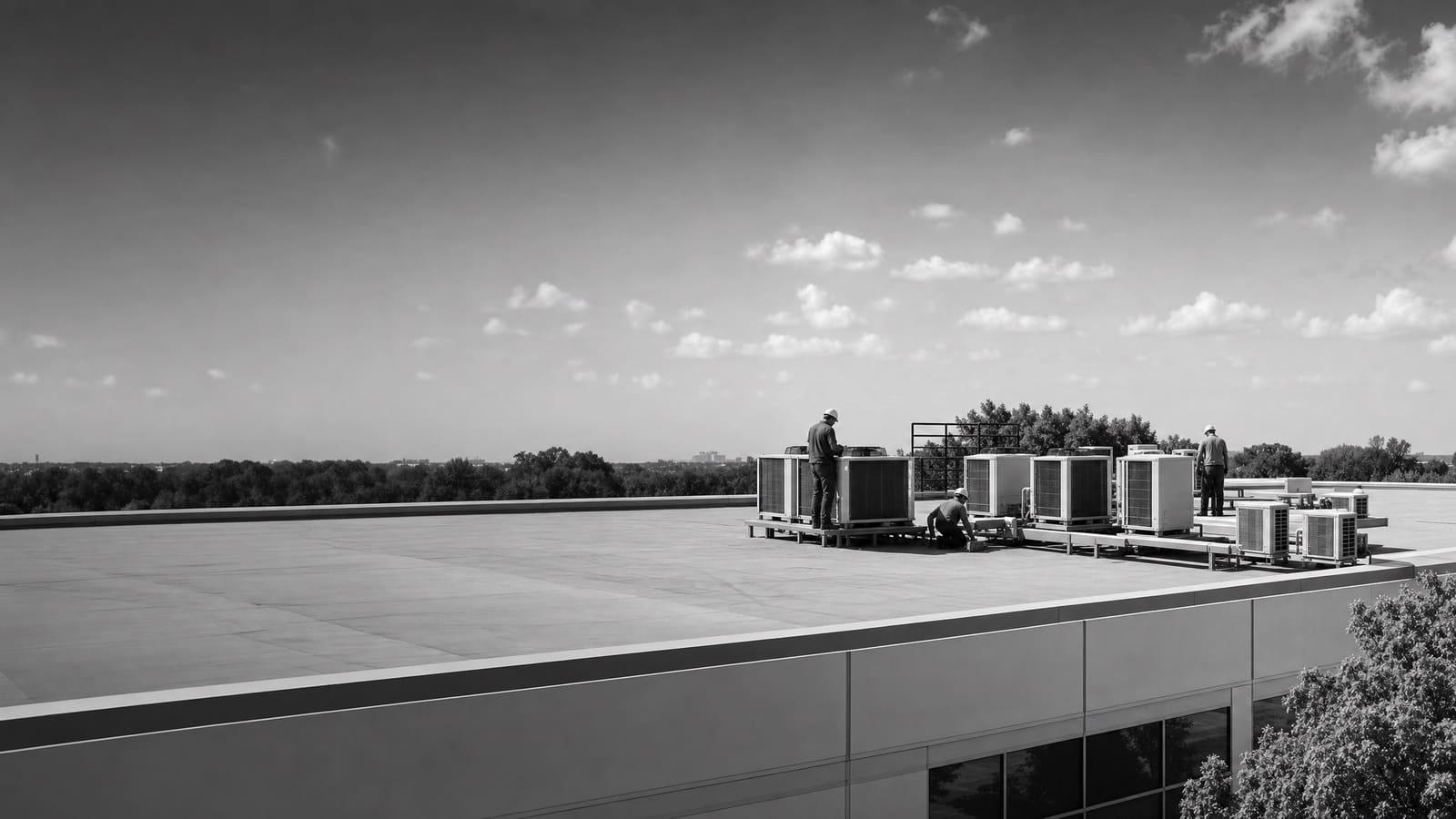
A complete commercial HVAC replacement covers load review, equipment selection, removal, rigging, required connection changes, controls, startup, testing, and handoff. Replacement becomes more useful than another repair when an older unit fails often, cannot hold temperature, wastes energy, or risks an unplanned shutdown. DOE guidance flags rooftop units over 15 years old for closer replacement review.
A site review must confirm present loads, roof or equipment-room access, electrical capacity, fuel connections, controls, ventilation needs, and the condition of reusable components.
START WITH THE DECISION
Choose the project path before choosing a model
The best commercial HVAC installation does not begin with a product sheet. It begins with the business problem. A failed unit may make speed the first concern. A working but unreliable unit gives the owner time to compare efficiency, heating source, controls, and future operating plans. A changed floor plan may require a fresh load review instead of another unit with the old capacity.
Separate urgent needs from long-term goals. Write down which spaces must stay open, where comfort fails, how operating hours vary, and whether the building may change use. Then ask each bidder to solve the same problem. This keeps a quick like-for-like proposal from being compared with a deeper redesign as though they were equal.
BUILD THE BUDGET
What moves the installed price
No supplied source supports a universal installed price. Budget from a defined scope, because equipment capacity alone does not show the labor, access, connection, or control work.
EQUIPMENT CHOICES
Match the system to the building, not the old label
A packaged rooftop unit can combine cooling, heating, ventilation, and controls in one outdoor cabinet. It can be a practical replacement when the building already uses rooftop equipment and the existing distribution still works. DOE reports that rooftop systems condition nearly half of U.S. commercial floor area, so owners have broad experience with this format. Familiarity, however, is not proof that the old capacity or heating method remains right.
A conventional air-conditioning rooftop unit needs a separate heating source. A heat-pump rooftop unit can heat through the refrigeration cycle. DOE identifies all-electric, dual-fuel, and cold-climate heat-pump rooftop units as distinct options. The choice should account for heating load, electrical capacity, gas infrastructure, physical space, equipment availability, utility-bill effects, and operating goals. A heat pump is not an automatic upgrade for every property.
Split systems, indoor air handlers, or larger central equipment may fit buildings with separate zones, limited roof access, or more complex distribution. Ask for the reason behind the proposed system type. The answer should connect the equipment to the load, schedule, ventilation, service access, and ownership plan—not simply to the model being removed.
SCOPE COMPLEXITY
A box swap and a system change are different projects
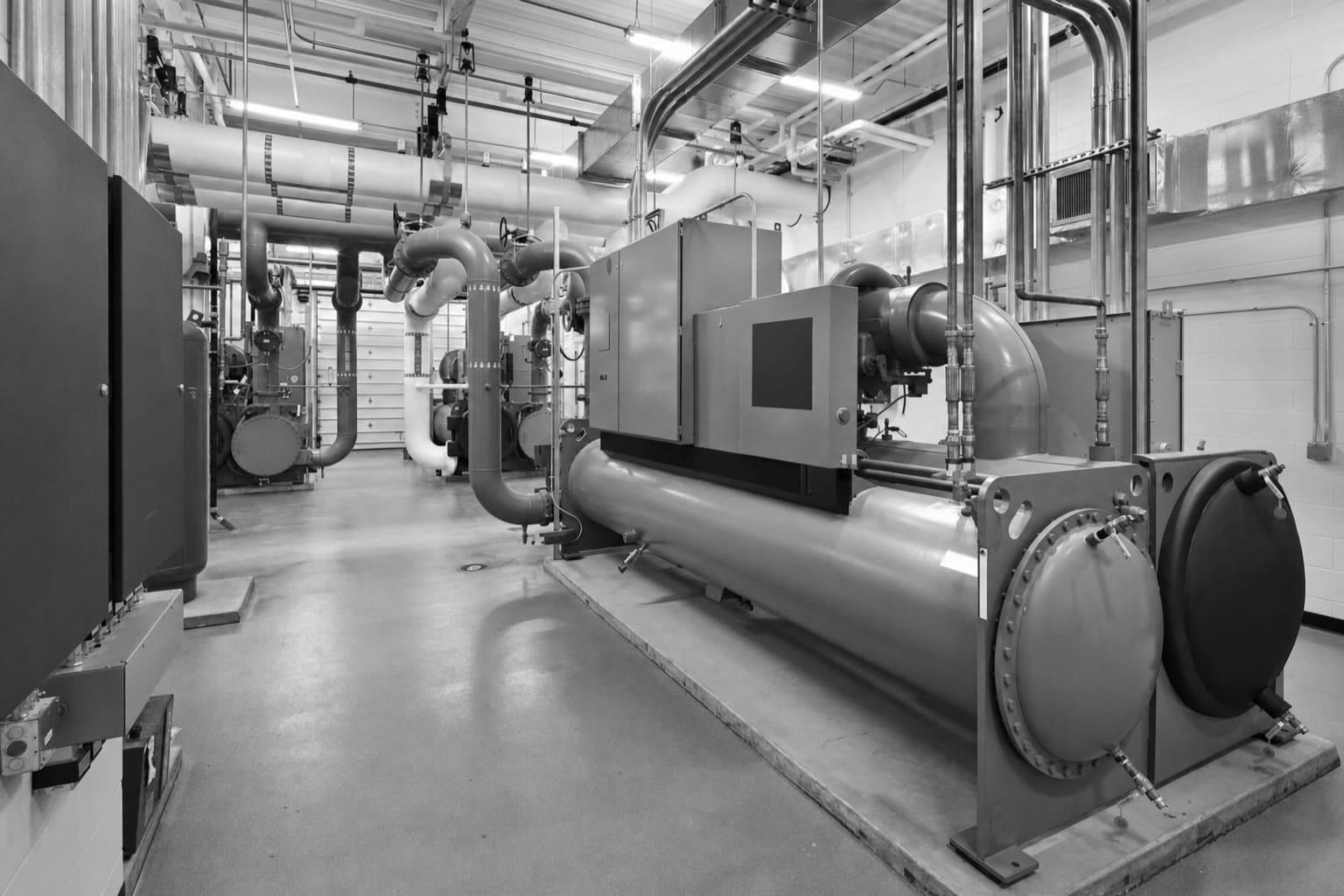
Both projects can end with new equipment, but they carry different design work, shutdown risk, and commissioning needs. Label the project correctly before comparing price.
LOWER COMPLEXITY
Compatible replacement
The building use, load, duct path, utilities, controls, and equipment location remain suitable. The quote still needs verified dimensions, connections, access, startup, and disposal.
HIGHER COMPLEXITY
Changed system
Capacity, heating source, voltage, curb, distribution, ventilation, or controls change. Expect more field review, engineering, trade coordination, outage planning, and performance testing.
SITE REVIEW
Turn field conditions into a buildable scope
Begin with records, then verify them in the field. Useful records include equipment schedules, past repair history, comfort complaints, control trends, energy use, roof information, and any earlier balancing reports. A nameplate photo helps identify the old unit, but it cannot confirm whether that unit was sized well or whether the building has changed around it.
During the visit, trace the full installation path. Inspect the equipment base, service clearances, duct transitions, outside-air path, drains, electrical service, disconnects, fuel connections, sensors, thermostats, and control interface. Review how crews will reach the work and where removed equipment can travel. If a crane or other lifting method is needed, access and staging belong in the plan before equipment is ordered.
The review should also identify what stays. Reusing sound ductwork or controls may control cost. Reusing a weak curb, failed damper, unsuitable wiring, or undocumented control sequence can move an old problem into the new system. Mark every reused item in the quote and state how its condition will be checked.
Ask for an assumptions list
Every quote should state what was field-verified, what remains assumed, what is excluded, and which discoveries can change price or schedule.
OWNER PRIORITIES
Balance uptime with lifetime performance
A failed unit forces a fast decision, but speed should not erase basic scope control. Confirm availability, temporary operating needs, connection compatibility, and the exact work included before authorizing an emergency replacement. If equipment still runs, planned replacement creates room to review alternatives and coordinate work around the business.
Efficiency also deserves context. DOE has documented large energy savings from high-efficiency rooftop equipment and advanced controls across broad commercial programs. Your result still depends on load, schedule, climate, controls, installation quality, and local energy prices. Compare projected performance using the same assumptions, and do not treat a higher efficiency label as a complete financial case.
OPERATIONS
Protect occupied space
Define critical zones, acceptable outage windows, temporary conditioning needs, noise limits, access restrictions, and the person who can approve field changes.
OWNERSHIP
Plan beyond startup
Compare service access, filter needs, controls support, warranty terms, refrigerant strategy, staff training, and likely future changes to the building.
PHASING AND PROCUREMENT
Plan the installation before releasing equipment
The project sequence usually moves from load and condition review to design, equipment selection, procurement, prework, shutdown, removal, setting, connections, startup, testing, and handoff. Some steps can overlap, but the owner should know which decisions must be final before ordering. Equipment voltage, heating configuration, airflow direction, curb dimensions, controls options, and service clearances are difficult mistakes to solve after delivery.
For several units, decide whether to replace them together or in phases. A group project can simplify mobilization and create a common equipment and controls standard. Phasing can spread capital needs and protect operations. It can also leave a mixed fleet with different parts, refrigerants, control interfaces, and maintenance tasks. Rank units by condition, service history, business impact, and replacement readiness rather than age alone.
Federal refrigerant rules govern how refrigerant is handled and recovered from stationary air-conditioning and heat-pump equipment. The proposal should assign this work to qualified personnel and include recovery and disposal documentation where applicable. Before release, also confirm the delivery plan, storage responsibility, protection from damage, shutdown notice process, weather contingency, and who carries schedule risk if the selected equipment is delayed.
COMPARE QUOTES
Five things every comparable proposal should show
Give bidders the same operating needs and ask them to answer the same five points. A short total without these details is not ready for comparison.
01
Selected equipment
Show model, capacity, efficiency, heating type, voltage, airflow, options, availability, and approved substitutes.
02
Complete installed scope
List removal, rigging, adapters, connections, ductwork, drains, controls, insulation, protection, cleanup, and disposal.
03
Allowances and exclusions
Identify assumed conditions, owner work, hidden-condition handling, optional work, and change-order rates.
04
Schedule and outage
State procurement milestones, site duration, shutdown window, phasing, temporary service, and delay responsibilities.
05
Proof of completion
Require startup records, airflow and control checks, training, manuals, warranties, and final equipment information.
Get a defensible number
Price the equipment and the building together.
Send the address, operating target, and target opening date. Flux will identify what must be verified before the project can be priced.
Get a free estimateQuestions
Straight answers.
When should a commercial HVAC unit be replaced instead of repaired?
Consider replacement when failures repeat, comfort cannot be maintained, needed parts or refrigerant service become burdensome, energy performance is poor, or a shutdown would seriously affect the business. DOE notes that rooftop units over 15 years old can waste substantial energy compared with newer models, but age alone does not decide the project. Review condition, repair history, load fit, and operational risk together.
Should a Cranston business replace its rooftop unit like for like?
Only after confirming that the old system still fits the present building. A compatible replacement may reduce design and connection work when use, load, ventilation, utilities, and distribution have not changed. If occupancy, layout, equipment, operating hours, or comfort needs changed, repeat the load and airflow review before selecting capacity.
Is a commercial heat-pump rooftop unit a good replacement choice?
It can be, but the decision needs site-specific analysis. DOE recommends considering climate, heating demand, electricity and gas prices, electrical capacity, physical constraints, gas infrastructure, equipment availability, contractor knowledge, and emissions goals. Compare all-electric, dual-fuel, and cold-climate choices with a conventional system using the same operating assumptions.
What should be included in a commercial HVAC installation quote?
The quote should identify the exact equipment and include removal, refrigerant recovery, lifting, equipment supports or adapters, utility connections, duct and drain work, controls, startup, testing, cleanup, documentation, warranties, schedule, outage needs, exclusions, and change-order rules. It should also say which conditions were verified and which remain assumptions.
How can an owner compare HVAC bids with different totals?
Normalize the scope before comparing totals. Check whether each bid uses the same capacity basis, efficiency level, heating type, controls, reused components, rigging plan, connection work, testing, warranty, and schedule. Move optional work and allowances into matching categories. If one proposal solves a larger problem, it should not be judged as a direct match to a basic equipment swap.
What happens during startup and commissioning?
The team confirms that the installed equipment operates as intended. The work can include checking electrical operation, refrigerant performance, airflow, outside-air settings, drains, sensors, safeties, heating and cooling stages, control sequences, alarms, and communication with building controls. The owner should receive startup records, operating information, warranty details, and training.
Can several commercial HVAC units be replaced in phases?
Yes. Phasing can protect occupied areas and spread capital needs. Prioritize units using condition, failure history, business impact, and readiness for replacement. Also plan for the maintenance burden of a mixed fleet, including different parts, controls, filters, refrigerants, and service procedures.
How should old refrigerant be handled during replacement?
Federal rules under Clean Air Act Section 608 address refrigerant handling and recycling for stationary air-conditioning and heat-pump equipment. The installation scope should assign recovery work to qualified personnel, prevent improper release, and state how refrigerant and removed equipment will be managed and documented.
Sources used for this guide
- [1]betterbuildingssolutioncenter.energy.gov — DOE Advanced Rooftop Unit Replacement Guidance
- [2]betterbuildingssolutioncenter.energy.gov — DOE Commercial Heat Pump Rooftop Unit Replacement Guidance
- [3]betterbuildingssolutioncenter.energy.gov — DOE High-Efficiency Commercial Rooftop Unit Toolkit
- [4]energy.gov — DOE Efficient Commercial Rooftop Air Conditioner Program
- [5]epa.gov — EPA Stationary HVAC Refrigerant Management