THE SHORT ANSWER
What a commercial HVAC replacement includes
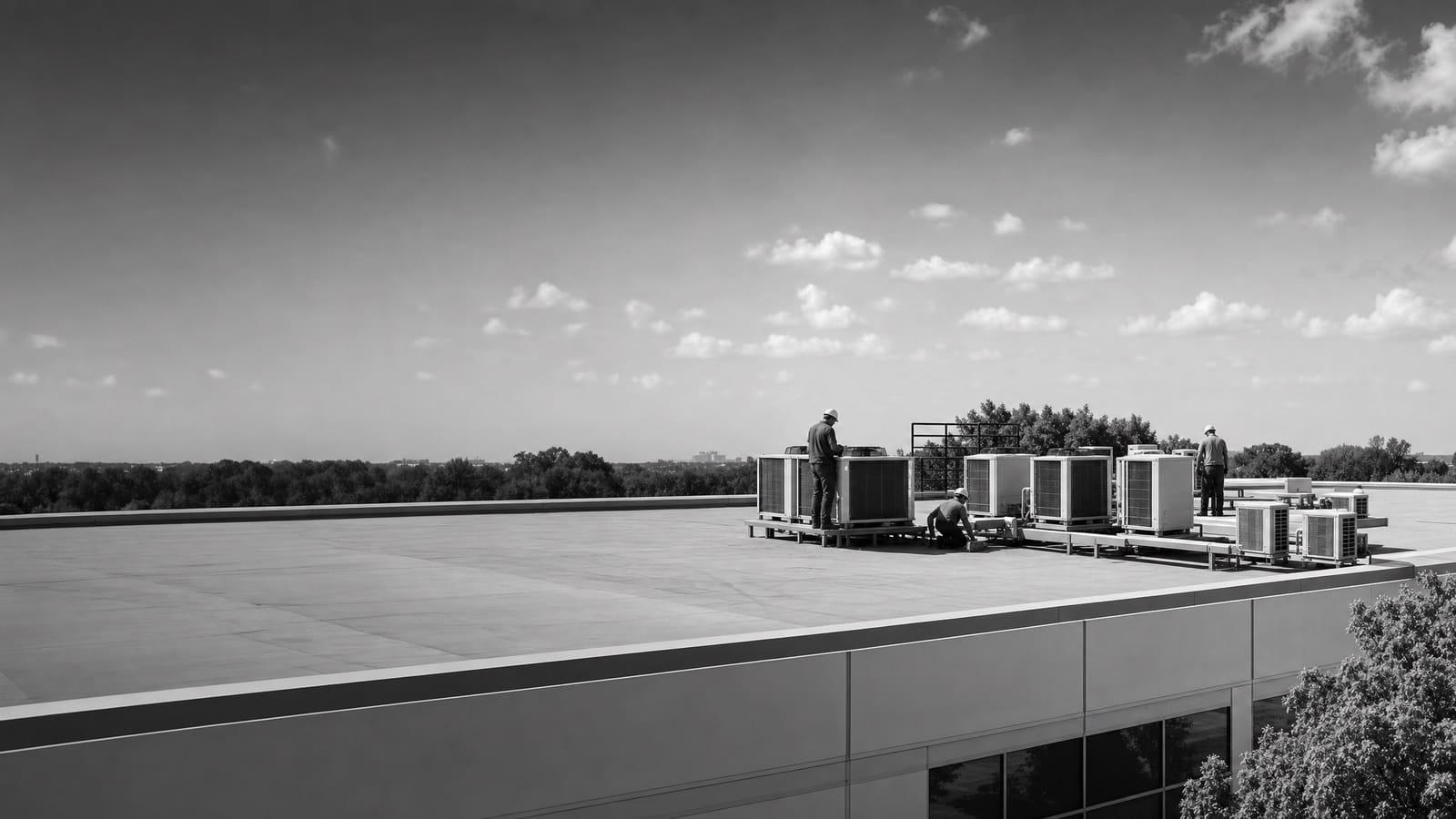
A commercial HVAC replacement covers load confirmation, equipment selection, refrigerant recovery from the old unit, curb and structural work, rigging, electrical and gas connections, controls, permits, and commissioning. Replacement beats another repair once the unit is past 15 years and failing often. DOE puts the energy waste of an old, inefficient rooftop unit at roughly $900 to $3,700 per unit each year, which often outruns the repair bill.
A site review has to verify the actual load, the roof structure under the curb, available electrical capacity, and whether the existing gas line stays or goes. Those four decide the real scope.
THREE PATHS
Repair, retrofit, or replace
Most Compton buildings arrive at this decision the same way: an aging rooftop unit is still running, but the service calls are getting closer together. DOE frames the choice as replacing the unit with a more efficient one or retrofitting it with advanced controls, depending on which makes better financial sense. Repair stays on the table only while the unit is young enough to earn it.
The tiebreaker is usually age plus operating cost, not the failure itself. Units past 15 years waste real money every month they run, and that waste keeps accruing while you decide. A unit that is otherwise sound but poorly controlled is a different problem — that one is a controls project, not a crane day.
Waiting until the unit dies removes the good options. Replacement-on-failure means taking whatever equipment is available that week, at whatever price, on whatever schedule the supply chain allows.
WHAT MOVES THE NUMBER
The lines that decide your price
No two roofs price the same. These are the lines that separate a straightforward changeout from a project, and the ones most likely to move once someone actually walks the roof.
CHOOSING EQUIPMENT
Gas heat, heat pump, or dual fuel
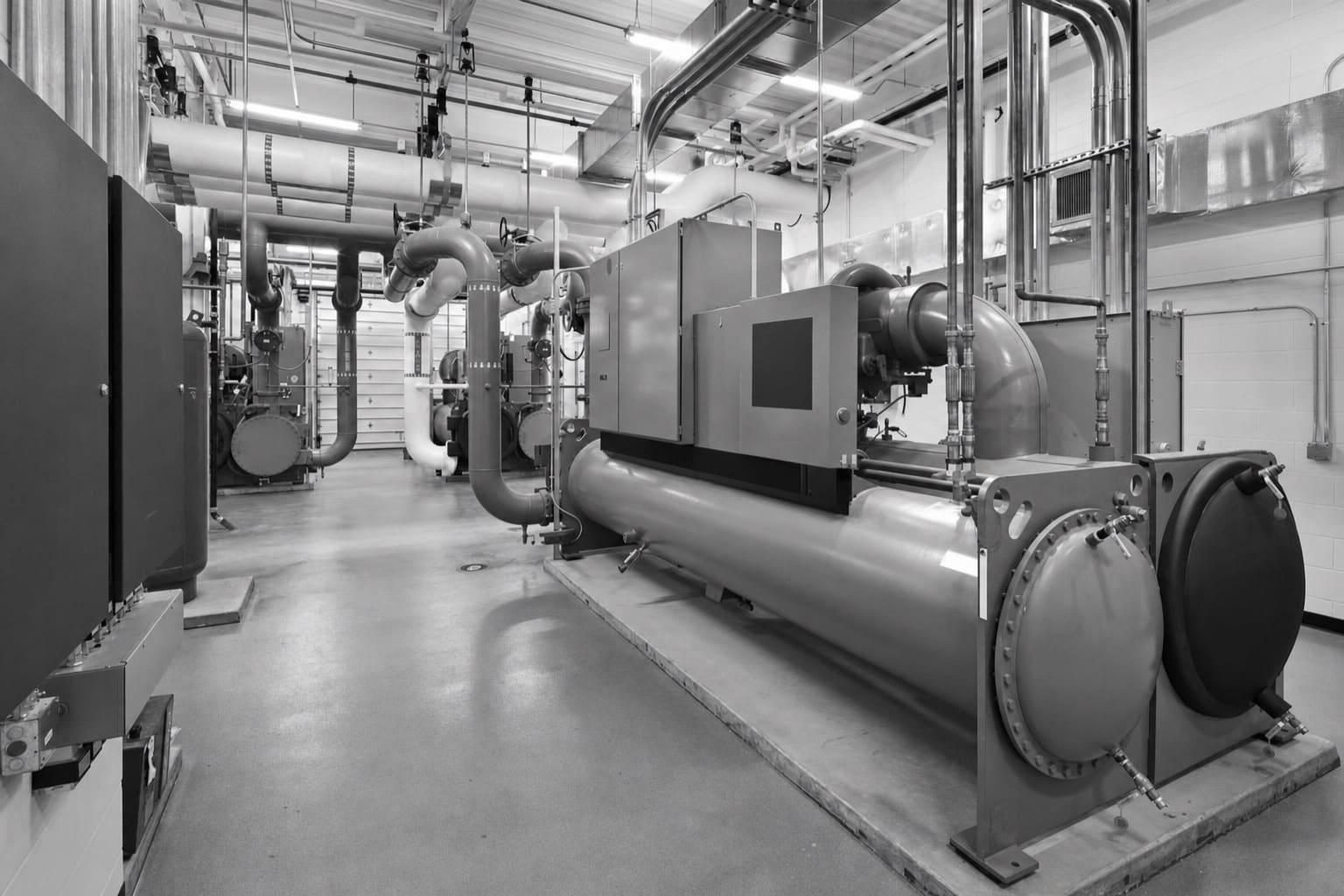
The biggest equipment decision on a Compton roof is no longer tonnage. It's whether the new unit heats with gas or reverses the refrigeration cycle and heats electrically. Heat pump rooftop units are close cousins of standard air-conditioning units — same cabinet, same curb, same rooftop position — with reverse-cycle heating added.
Climate is the first filter, and it favors this region. Heat pump efficiency falls as outdoor temperatures drop, so these units do their best work where winters are mild to moderate. DOE's guidance is direct about it: across most of the U.S. South and West, today's heat pump rooftop units can handle most or all of the winter heating demand. Southern California sits squarely inside that description.
The second filter is the building, not the weather. Electrical capacity is the common blocker, because an all-electric unit draws more and a panel sized decades ago may not have room. Dual-fuel units keep the gas line as backup and sidestep some of that. If the gas service is coming out anyway, that changes the math on both sides. Ask for both options priced, with the electrical work shown as its own line.
SCOPE
Simple changeout versus real project
Two buildings can carry the same tonnage on the roof and still have completely different projects underneath. What separates them is whether anything has to change besides the box.
LOWER COMPLEXITY
Straight like-for-like
Same tonnage, same fuel, same curb footprint, and a roof that already carried the load. Electrical and gas connections stay where they are. Permits are routine and the set is a morning's work.
HIGHER COMPLEXITY
Anything that changes underneath
A bigger footprint, a fuel switch, a service upgrade, or a tight lot with a long crane reach. Add occupied-hours restrictions and the work phases across nights or weekends instead of one lift.
SCOPING
What a site review has to answer
A quote written from a nameplate photo is a guess. It's a useful guess when a unit is down and you need a number the same day, but it isn't the number you sign.
DOE's checklist for rooftop replacement decisions is a good frame for what the visit covers. Climate and building type set the equipment class. Cost and utility bill impact set whether the efficiency upgrade earns its premium. Equipment availability sets the schedule, because the best unit on paper is the wrong unit if it can't be delivered in time. Infrastructure is where projects actually break: electrical capacity, physical constraints on the roof and in the lot, and what happens to the gas line.
The last two items get skipped most often. Contractor familiarity with the specific equipment matters, since newer heat pump units and newer refrigerants aren't universally understood and a crew learning on your roof is expensive. And incentives belong in the conversation before the order is placed, because program requirements and availability change over time.
Confirm these four before ordering
A verified load for how the space is used today. Roof structure under the curb. Available electrical capacity at the panel. Equipment lead time in writing. If a quote doesn't reference all four, it isn't a scoped price yet.
IN COMPTON
Permits and the mild-winter advantage
Two local facts shape a Compton replacement.
Plan on a permit. California city building departments treat HVAC work as permit work, and any electrical or plumbing upgrade or repair that rides along is permitted on its own. That matters for sequencing. If the new unit needs a feeder upgrade or a condensate line rerouted, those aren't quiet field changes — they're separate reviews and separate inspections, and they belong on the schedule before the crane is booked.
The climate works in your favor on equipment choice. Mild winters put this area in the range where current heat pump rooftop units can carry most or all of the heating demand, which makes an all-electric or dual-fuel unit a genuine option here rather than a stretch.
Settle the permit path before the crane
Confirm with Compton's building division which permits your scope actually triggers — mechanical alone, or mechanical plus electrical. A feeder upgrade discovered after the unit is ordered turns a one-morning lift into a two-visit job.
OWNERSHIP
Two things owners underestimate
The install cost is the part everyone negotiates. The two items below usually cost more across the unit's life and get almost no attention in the bid.
Old rooftop units are quietly expensive to run. DOE's figure for an aging, inefficient unit is $900 to $3,700 in wasted energy per unit per year — money that leaves the building whether or not anything is broken. Across a fleet of six units, even the low end of that range is real budget.
The other item is refrigerant. New equipment ships on newer low-GWP refrigerants, and federal rules under Section 608 of the Clean Air Act govern how refrigerant is handled and recycled. On a mixed fleet, that means two parts strategies and two service protocols running in parallel until the last old unit is gone.
OPERATING COST
The waste is already on your bill
An old unit doesn't announce its inefficiency. It just runs. Every month of delay on a 15-plus-year unit spends part of the replacement budget on energy you never actually used.
FLEET STRATEGY
Mixed refrigerants, mixed service
Once one unit is replaced, the building runs two refrigerant generations at once. Your service contract and spare-parts plan should say how each is handled before the first swap.
PHASING
Replacing a fleet without replacing it all at once
Most buildings don't have one aging rooftop unit. They have four, or nine, and they all went in the same year. Replacing them together gets the best equipment pricing and one mobilization for the crane. It also means one very large capital request and one very disruptive week.
The middle path is a ranked plan. Rank by three things: age, service history, and what the space underneath can tolerate. A unit over a server room or a walk-in cooler moves up regardless of age. A unit over dry storage can wait. Then set the replacement order and hold it, so each year's budget request is a line already justified rather than a fresh argument.
Proactive replacement is worth planning on its own terms. DOE's position is that replacing inefficient units before they fail usually beats replacement-on-failure, and often beats a like-for-like swap at end of life, because you control the timing, the equipment, and the price. The version of this project that goes badly is the one that starts with a phone call in August.
Get lead time in writing for every unit in the plan, and re-check it each budget cycle. Availability moves.
THE QUOTE
Five things a comparable quote shows
Two bids are only comparable when they scope the same job. If one number looks low, it's usually because one of these five is missing from it.
01
Tonnage, fuel, and efficiency tier
The exact model, its heating type, and where it lands against the code minimum.
02
Curb, structural, and roof work
Adapter, framing, and any patching — priced, not listed as by others.
03
Electrical and gas scope
Panel capacity confirmed, and feeder work included or excluded in plain language.
04
Rigging, access, and closure window
Crane size, lot plan, and how many hours stalls are out of service.
05
Permits, commissioning, and documentation
Who pulls permits, who meets the inspector, and what the commissioning report contains.
Get a defensible number
Price the equipment and the building together.
Send the address, operating target, and target opening date. Flux will identify what must be verified before the project can be priced.
Get a free estimateQuestions
Straight answers.
When is replacement better than another repair?
Once a unit is past 15 years, needs repeat visits, or was sized for a use the building has outgrown. The energy waste on an aging, inefficient rooftop unit runs roughly $900 to $3,700 per unit per year by DOE's estimate, which frequently outpaces what the repairs are costing.
Does a Compton HVAC replacement need a permit?
Plan on it. California city building departments treat HVAC work as permit work, and electrical or plumbing upgrades that come with the job are permitted separately. Confirm your specific scope with Compton's building division before the equipment is ordered.
Is a heat pump rooftop unit a real option here?
Yes. Heat pump rooftop units work best where winters are mild to moderate, and DOE's guidance says units available today can meet most or all of the winter heating demand across most of the South and West. The real check is electrical capacity at your panel, not the weather.
How much does commercial HVAC installation cost?
There's no honest universal number, because tonnage, curb and structural work, electrical scope, and crane access each move it substantially. What we can price quickly is your specific roof. Ask for the equipment, the electrical work, and the rigging shown as separate lines so bids compare.
What happens to the refrigerant in the old unit?
It gets recovered, not vented. EPA regulations under Section 608 of the Clean Air Act govern how refrigerants are handled and recycled in stationary air-conditioning and heat pump equipment. It should appear on the quote as its own line.
Sources used for this guide
- [1]betterbuildingssolutioncenter.energy.gov — DOE Advanced Rooftop Unit Replacement Guidance
- [2]betterbuildingssolutioncenter.energy.gov — DOE Commercial Heat Pump Rooftop Unit Replacement Guidance
- [3]betterbuildingssolutioncenter.energy.gov — DOE High-Efficiency Commercial Rooftop Unit Toolkit
- [4]energy.gov — DOE Efficient Commercial Rooftop Air Conditioner Program
- [5]epa.gov — EPA Stationary HVAC Refrigerant Management
- [6]californiacity-ca.gov — HVAC Permits