CHICAGO, IL · SOLAR
Commercial solar installation in Chicago.
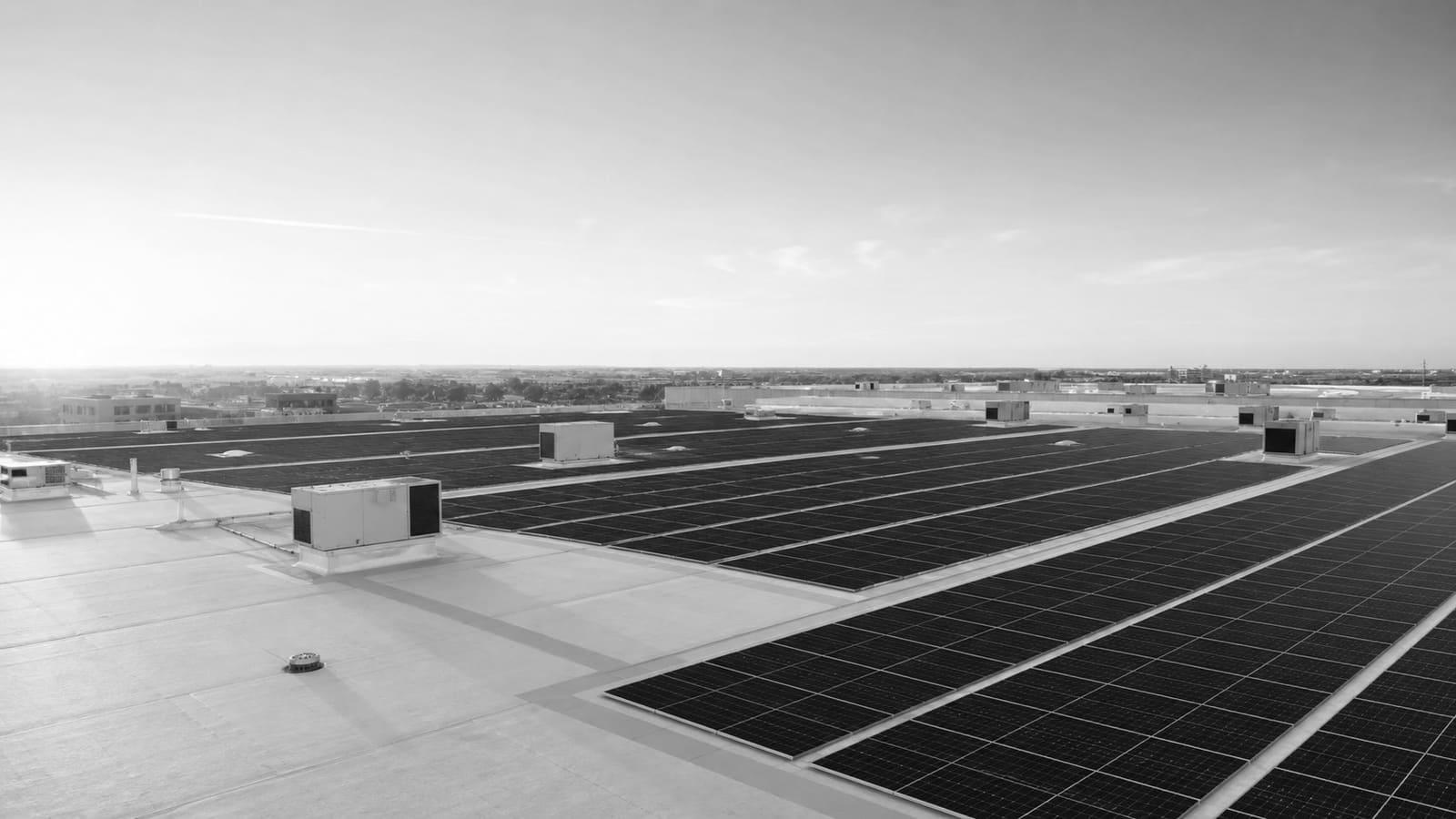
Flux Facility designs, permits, and installs commercial solar for Chicago buildings: rooftop and parking canopy arrays, shading study through city inspection.
Start with the building, not the panels.
A commercial solar project has to fit the site, the roof, the electrical system, and the utility rules. We start with a solar feasibility study, then compare rooftop solar with solar carports where parking offers the stronger site.
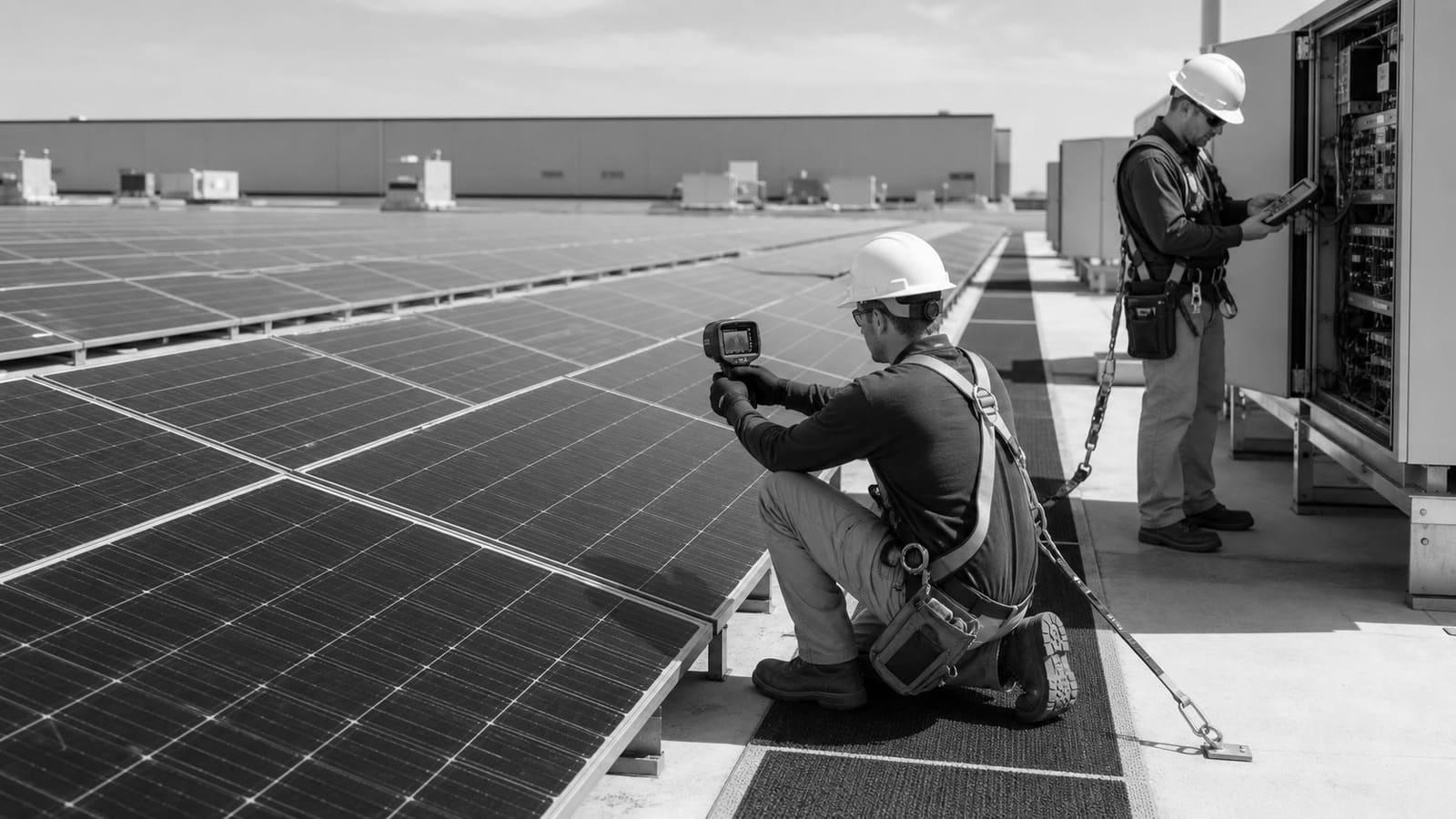
One team carries design, permits, utility interconnection, construction, commissioning, and solar maintenance. We also compare direct ownership with solar financing and PPAs, and add battery storage only when it has a clear job.
START HERE
How do Chicago commercial buildings plan a solar project?
Commercial solar installation puts generating capacity on your Chicago building's roof, parking canopy, or open ground and ties it into the grid. Flux Facility runs the job end to end: shading study, array layout, structural and electrical work, the Chicago building permit, and the inspection. Read the power bill before the roof plan. Demand charges are set by the 15-minute period each month when your use peaks, and an array cuts demand only while it is producing. We read twelve months of bills first, so the size we quote matches what you actually pay for.
How do Chicago building permits work for a commercial solar install?
A permit is required before most construction, demolition, and repair work in Chicago. The Department of Buildings issues it, and the Chicago Construction Codes set the minimum safety standards the work is checked against. The department runs several permitting tracks sized to the project, so a small repair and a new high-rise do not move through the same one. Budget the permit early. The city posts an online calculator that estimates permit cost from the factors in the Chicago Building Code. We pull that estimate, put it in the proposal as its own line, and name which permitting track your solar project uses.
Array sizing inputs
How do you size a commercial solar array in Chicago?
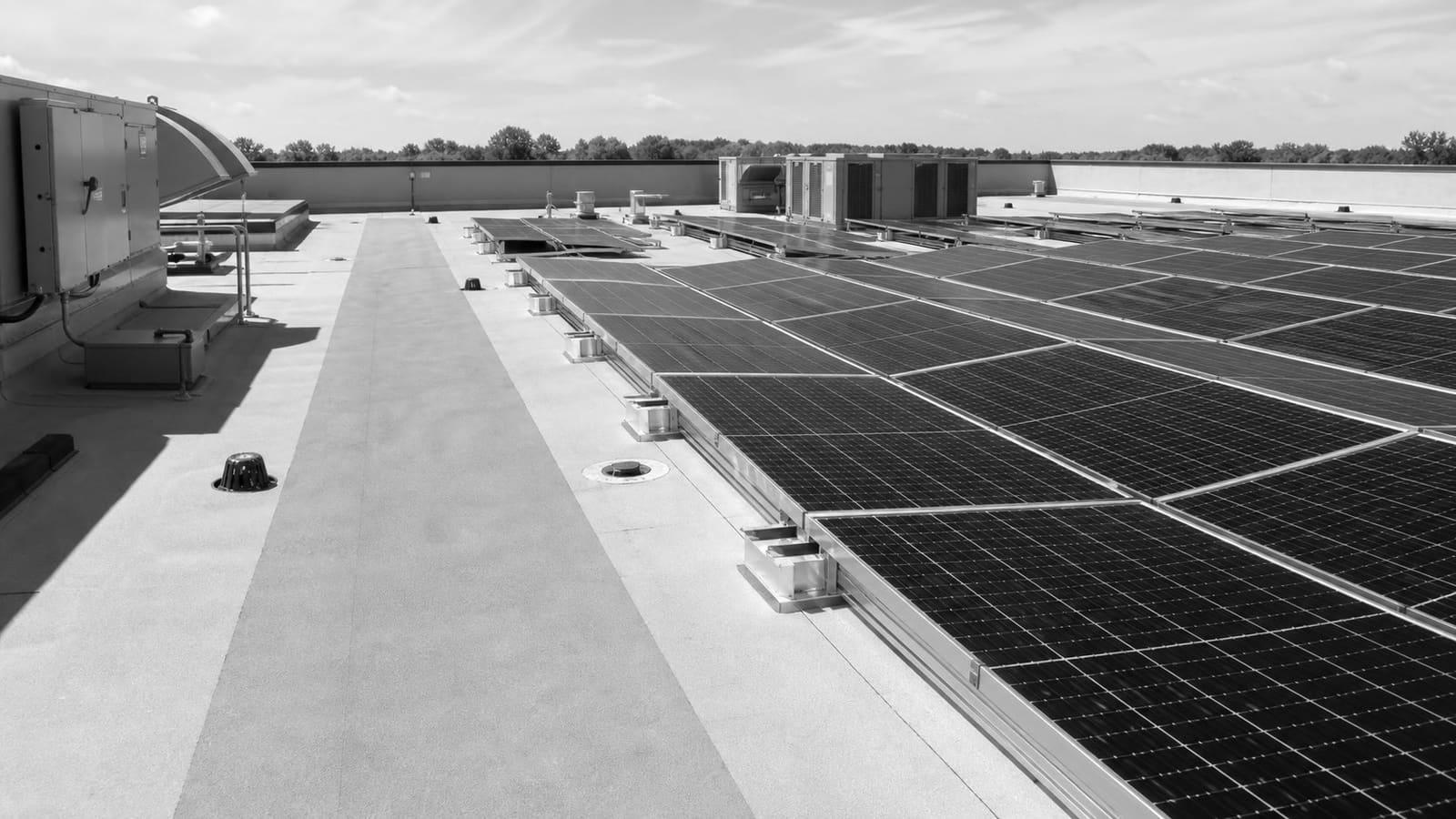
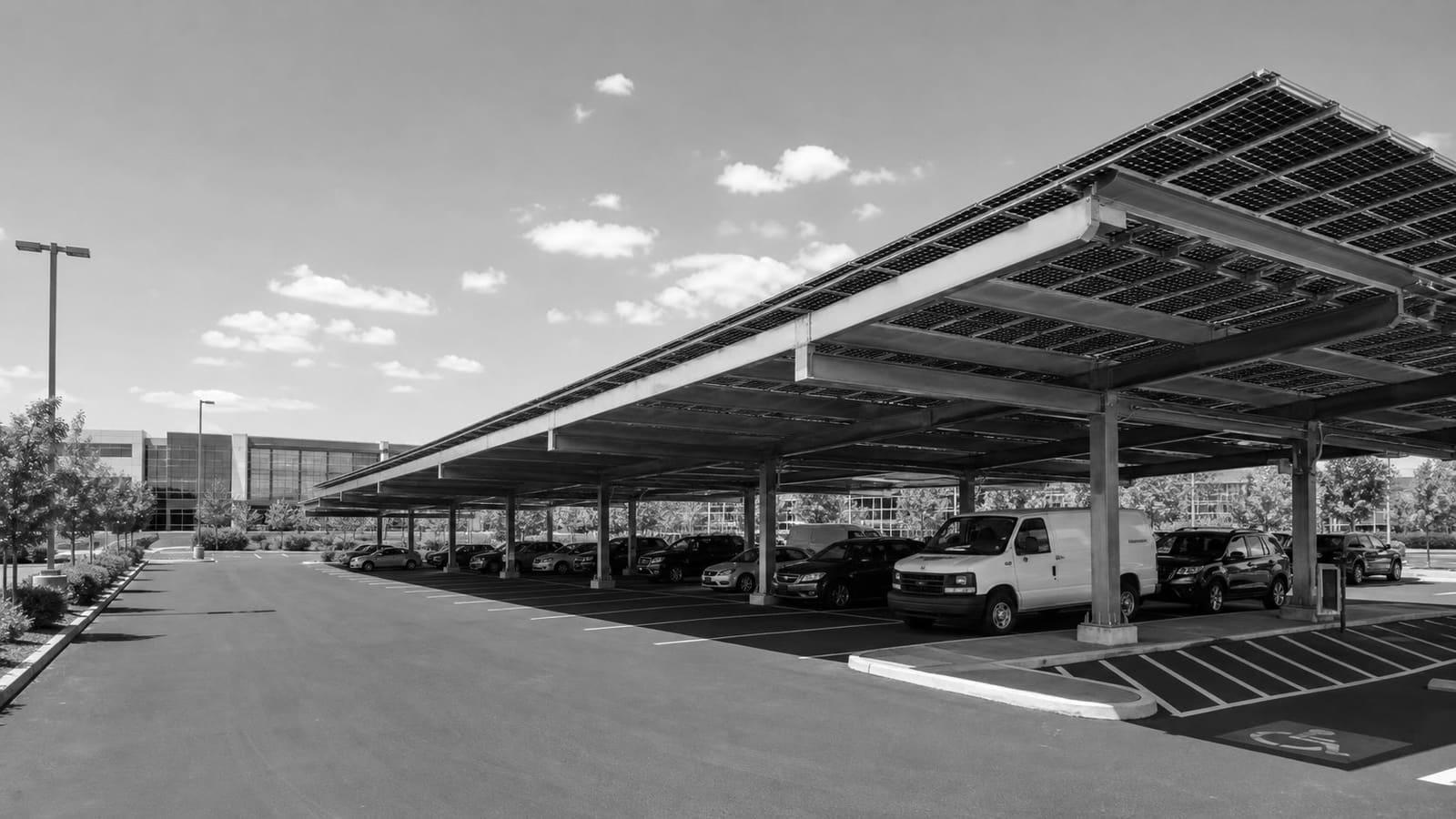
Demand charges drive the math · DEMAND Demand is billed per kilowatt per month, set by the 15-minute stretch in the month when your use peaked. An array cuts demand only when it is producing during that stretch. Many commercial buildings peak in the afternoon on cooling load, and sun on the building is part of what creates that load, so peak demand and peak output often land together. As a rule of thumb, solar saves demand equal to about 10% of rated capacity: roughly 100 kW off a 1 MW system. Shading analysis before layout · SITE STUDY We run a shading analysis of the roof or lot first, tracking which shadows fall where and when, then draw the array around the result. Roof walls, rooftop units, elevator housings, and taller buildings next door all push panels off the spots that look best on a satellite image. You get the study attached to the layout, so you can see why each row sits where it sits. Roof, parking canopy, or open ground · ARRAY TYPE Rooftop arrays and parking canopy arrays both serve commercial sites, and one property can carry both. Old industrial land counts too: a brownfield in DePue, Illinois was rebuilt into a 27 MW solar project that sells its output to local utilities. We walk the roof and the lot before recommending a mix.
WHAT WE HANDLE
Everything under the solar door.
PROJECT PLANNING
Should your Chicago building own the solar array or buy the power?
Own the array outright · CAPITAL You put up the capital, keep the production, and carry the upkeep. Ownership is one of the structures a solar business case weighs, next to leases and power purchase agreements. Flux can hold the upkeep scope after handover so the array does not go unwatched. Lease or power purchase agreement · THIRD PARTY A renewable energy firm builds, owns, operates, and maintains the system while you host it and buy the output. You avoid the upfront capital cost. Energy savings performance contracts and energy-as-a-service agreements work the same way, with the firm keeping ownership. State policy decides third-party ownership · ELIGIBILITY Third-party ownership with the site owner as the power buyer is allowed only in certain states. We confirm the current Illinois policy before we build a side-by-side comparison, so you are not pricing a structure you cannot sign. Who maintains it after year one · UPKEEP Under third-party ownership, the firm that owns the array operates and maintains it. If you own it, that work is yours to schedule, and Flux can run it: panel cleaning, inverter checks, roof penetration inspections, and a written log of each visit.
Bid package contents
What should a commercial solar bid in Chicago include?
- Twelve months of electric bills with the demand lines, so the array is sized against your real peak instead of square footage. - A shading analysis of the roof or lot, dated and attached to the bid, not promised for later. - Proof of commercial-scale solar work: three or more years designing, engineering, and installing commercial solar systems, plus past jobs on commercial, industrial, or utility-scale projects. That standard is self-certified across the industry, so ask for the job list behind it. - One Department of Buildings inspection request, booked as an appointment for a set date, with the on-site contact named. The department otherwise works first-come, first-served, and a duplicate request does not move you up. - Written exclusions in plain words: what the price does not cover, such as roof repairs found during layout.
BEFORE YOU BUY
What should a Chicago building check with ComEd before installing solar?
- Net metering terms, meaning how the utility counts power you send back, and interconnection requirements, meaning the utility's rules for tying the array to the grid. Both come from utility policy and differ from place to place. We confirm both for your service before the array size is final.
- Incentive structures also vary by region: buy-down payments, payments based on how much the array produces, and feed-in tariffs that pay a set rate for output. We check what is live for your site instead of quoting a payback built on a program you cannot join.
- ComEd's customer innovation program posts open requests for proposals and runs pilot programs. We read the current list before scope is locked.
- Backup power capability is one of the pilots ComEd lists. Tell us at the first walkthrough if you want the array paired with backup power, because the electrical design changes with it.
- Curbside charging and EV energy management sit on that same pilot list. If chargers are going into the same lot as a canopy array, we trench the conduit once.
QUESTIONS
Straight answers.
Will commercial solar erase the demand charges on our Chicago building?
No. An array trims demand only in the periods when it is producing. If your peak lands in a 15-minute window with no output, that window sets a new demand charge for the month.
Can a commercial solar array go on a closed or contaminated site in Illinois?
It has been done. A brownfield in DePue, Illinois was rebuilt into a 27 MW solar project that sells its output to local utilities. Site conditions decide it, so we start with a feasibility review of the ground, access, and grid tie-in.
Do we need a year of on-site data before installing solar in Chicago?
Not for solar. About a year of on-site sensor data is what confirms a wind resource. For a solar project we run a shading analysis of the roof or lot and design from that.
We are replacing the roof soon. How does that change a solar install?
Give us the roof date before design starts. We sequence the array behind the roof work, keep panels off a deck you plan to tear up, and plan the permit filing around both scopes.
GET STARTED
Tell us about the building.
Whatever the trade, we scope it, price it, and put the right crew on it. Site visits are free, always.
MORE SERVICE AREAS