CHICAGO, IL · MECHANICAL
Commercial mechanical contractors in Chicago.
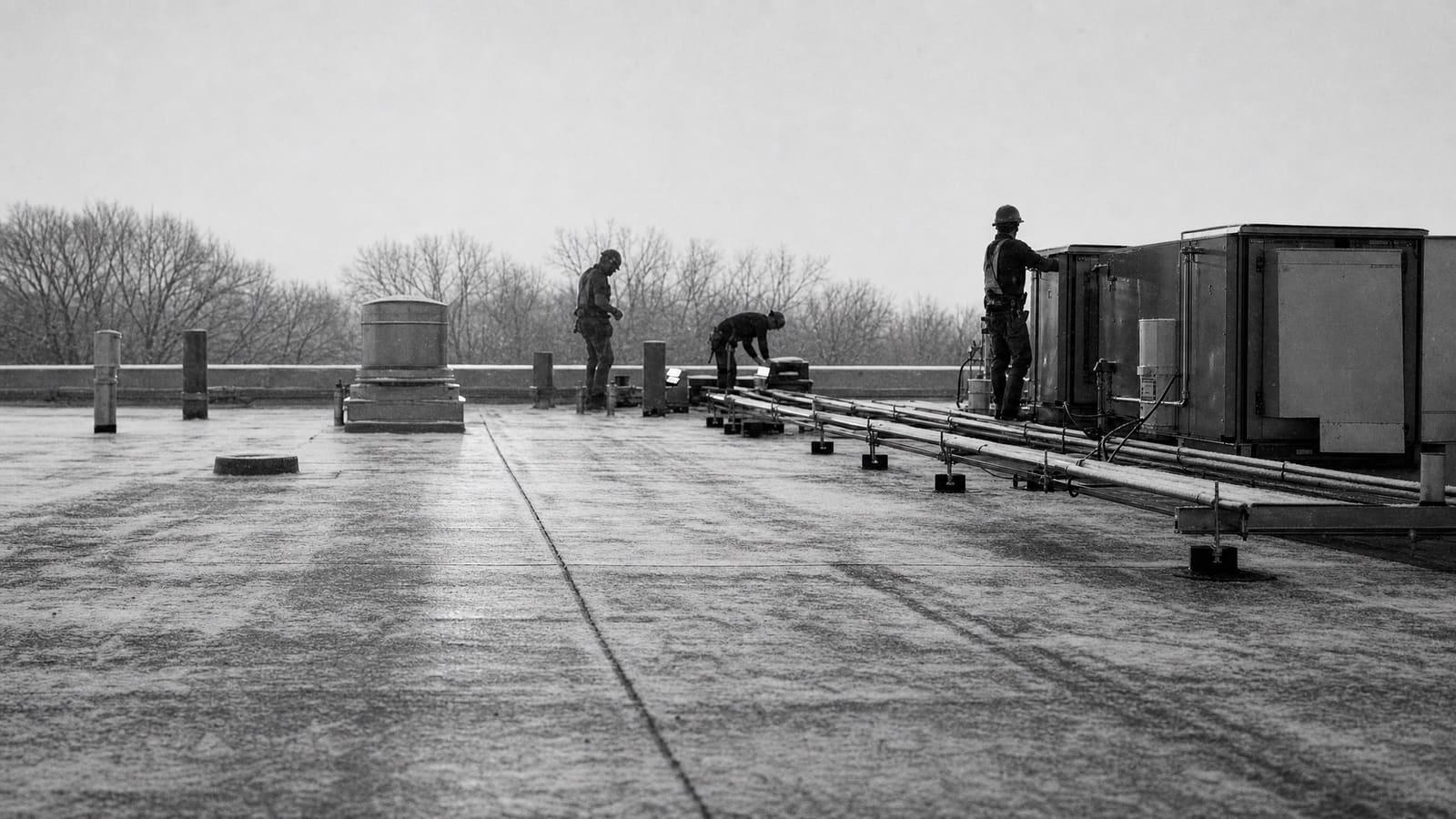
Commercial mechanical contractors keep Chicago buildings running: rooftop units, chillers, air handlers, ductwork, and controls, installed and maintained by one crew.
Mechanical work that hits the date.
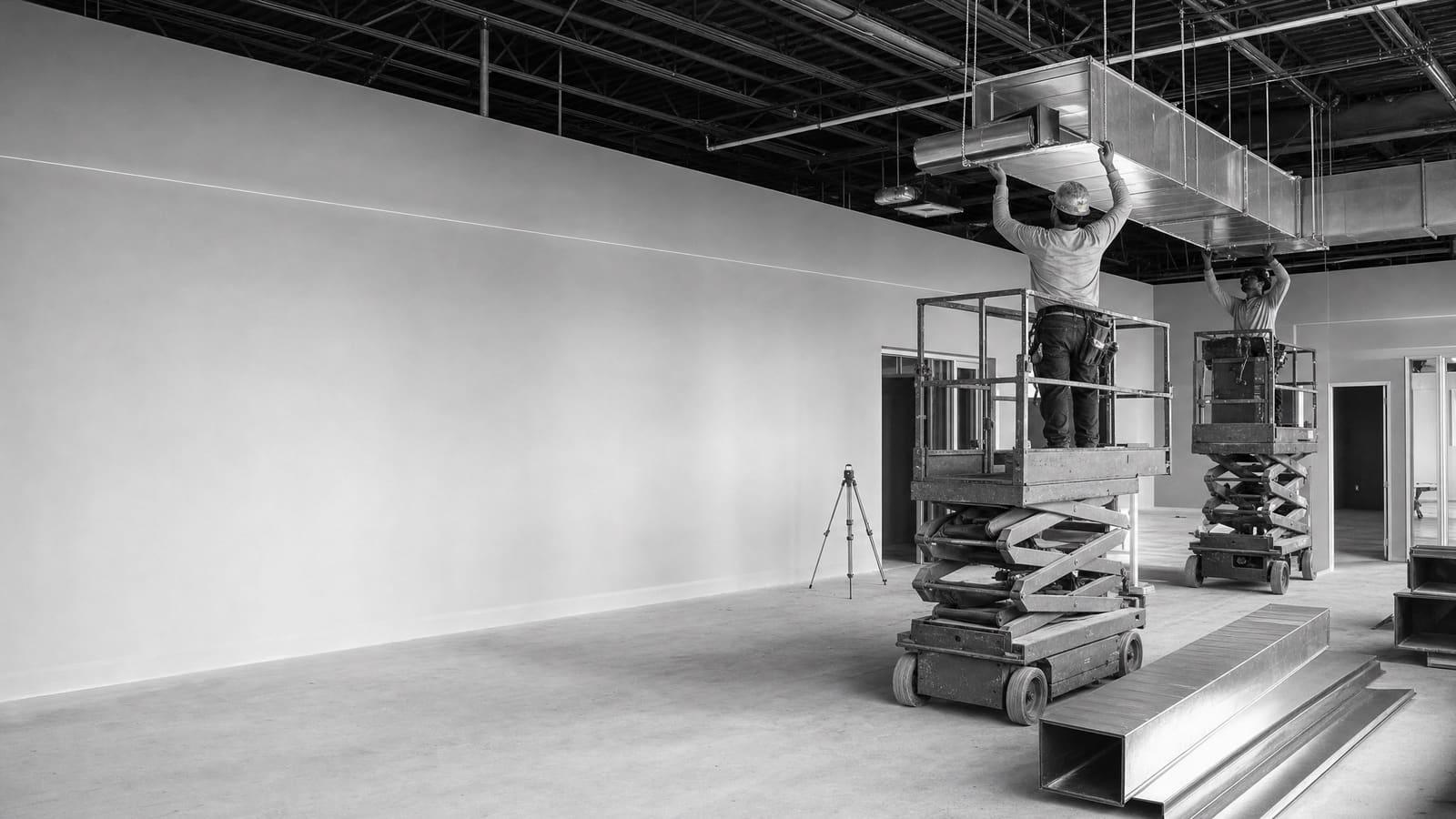
Whether a build-out needs mechanical from scratch or one system reached its end, the schedule is the job. One request covers plumbing, HVAC, boilers and chillers, and ductwork with the coordination that keeps other trades moving.
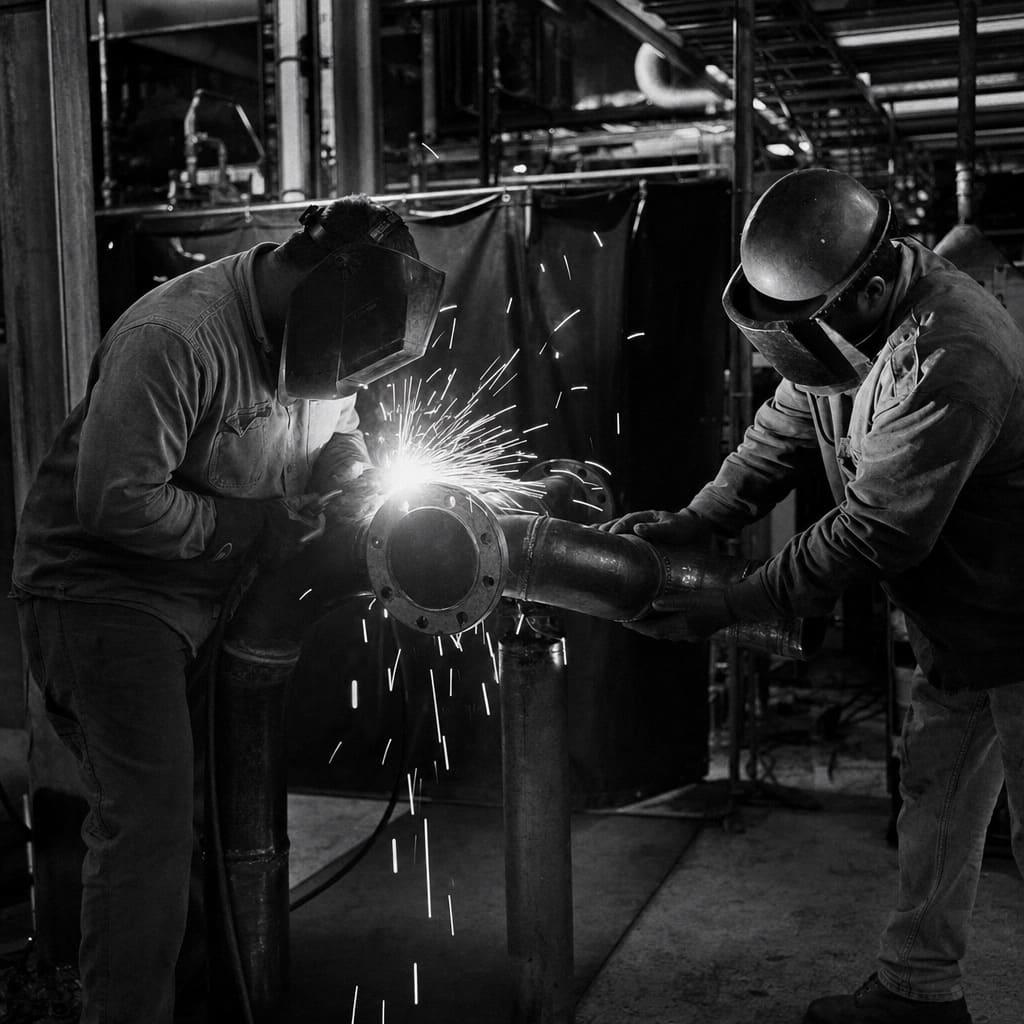
Industrial work is its own discipline: process piping, sheet metal and pipe fabrication, and design-build engineering when the drawings don't exist yet. One point of contact from scope to commissioning, and a number that doesn't move after signing.
START HERE
What does a mechanical contractor do for a Chicago commercial building?
Flux Facility scopes commercial mechanical contractors around your building, equipment, and operating plan. A mechanical contractor installs, repairs, and maintains the systems that heat, cool, and move air through a Chicago commercial building. That covers rooftop units, chillers, air handling equipment, split systems, ductwork, and the controls that run them. Office buildings, retail centers, manufacturing plants, and municipal properties push this equipment under heavy demand and long runtime. A technician fixes what broke. A mechanical contractor also designs, sizes, and replaces. Winters here are hard on heating equipment, so that side gets planned work before it fails, not after.
Repair, retrofit, or replace: how the call gets made
Before you sign for new equipment, the contractor should study four things: system age, building load demand, energy use, and whether you plan to expand. That review is what decides repair, retrofit, or full replacement. Skip it and you buy a unit sized for the building you used to run. Two more asks. Get load calculations on any replacement so the equipment matches real airflow needs. Require that new duct follow SMACNA guidelines. Both show up later in airflow balance and in what the system costs to operate.
Vendor vetting
How do you vet a commercial mechanical contractor in Chicago?
One scope, one owner · SCOPE Ask if the same firm covers HVAC, ductwork, refrigeration, piping, and building controls. Split the scope across vendors and nobody owns the callback. Crew and certification · LABOR Ask who turns the wrenches. Mechanical work here leans on certified union technicians, and crew depth is what holds a schedule. Change orders · SCHEDULE Commercial jobs run on rigid timelines and pick up change orders. Ask how both get priced and approved before work starts. No template PM plan · MAINTENANCE A preventive maintenance program should fit your equipment, runtime, and budget. A copied checklist misses the equipment you actually own.
PROJECT PLANNING
When should a Chicago building retrofit its mechanical system?
- Equipment that no longer meets your energy or operational demands - A rooftop unit taking repair calls between heating and cooling seasons - Zones that never hold setpoint because the controls are outdated - Operating expense climbing while the system ages out - Added space or new load the original design never counted on - heating and cooling or split system options that fit the building better than the old layout
WHAT WE HANDLE
Everything under the mechanical door.
CONSTRUCTION & INSTALLATION
DESIGN & PRECONSTRUCTION
Maintenance scope
What does commercial HVAC maintenance cover in Chicago buildings?
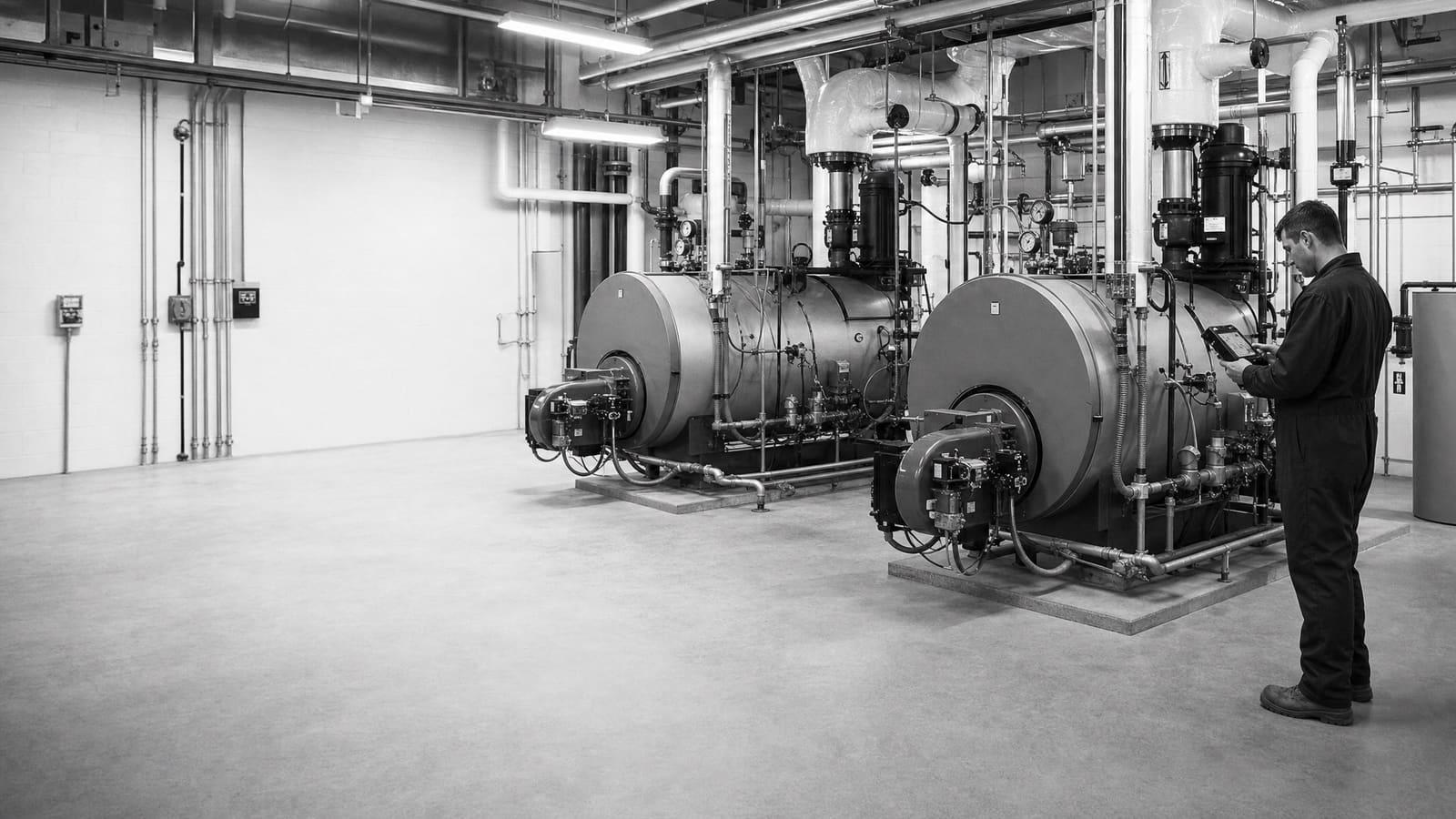
- Rooftop units: filters, coils, and controls checked before heating and cooling peaks - Chillers: inspection, repair, and a written plan for eventual chiller replacement - Air handling equipment with temperature and humidity controls holding setpoint - Heating systems serviced before the coldest stretch, including repairs and upgrades - Energy management review aimed at lowering total cost of operations
BEFORE YOU BUY
Which Chicago commercial buildings run on a mechanical contract?
Office buildings
OFFICE
Comfort complaints drive the ticket count. Controls and air handling get the attention here.
Retail centers
RETAIL
Several rooftop units, several tenants. One maintenance plan beats one call per storefront.
Manufacturing plants
INDUSTRIAL
Long runtime and process cooling. Refrigeration, chillers, and piping matter more than office comfort.
Municipal properties
PUBLIC
Steady public schedules. Replacement gets planned as a project, not handled after a failure.
ASKED IN CHICAGO
Common questions about commercial mechanical contractors in Chicago
What's the difference between HVAC and commercial HVAC?
BASICS
Scale and runtime. Commercial systems mean rooftop units, chillers, and air handlers built for heavy demand, long hours, and compliance in occupied buildings.
Who are some reputable commercial HVAC contractors in Chicago?
VENDORS
Many firms serve the region. Judge them on chiller and rooftop unit experience, certified crews, and a maintenance plan written for your building.
Project in Chicago?
Request a free estimate. Chicago crews, Chicago pricing, one request.
QUESTIONS
Straight answers.
What do commercial mechanical contractors in Chicago charge?
There is no honest number without a walk-through. Price follows equipment size, system age, building load, energy use, and how much manpower the schedule demands.
Should I repair or replace a rooftop unit?
Weigh system age, load demand, energy use, and expansion plans. If the unit can no longer meet current demand, replacement with load-calculated equipment usually wins.
Do mechanical contractors handle chillers too?
Yes. Chiller design, maintenance, repair, and replacement are core mechanical work for commercial and industrial buildings across Chicagoland.
How do Chicago winters change how heating equipment is serviced?
Heating runs hard through the coldest months. Service it before the cold arrives, and schedule replacements as planned projects instead of emergency calls.
GET STARTED
Plan it once. Build it right.
Send the plans or the nameplate and get a complete installed price: real scope, real lead times, no surprises on the back end.
MORE SERVICE AREAS