CHICAGO, IL · ROBOTS
Facility robots in Chicago.
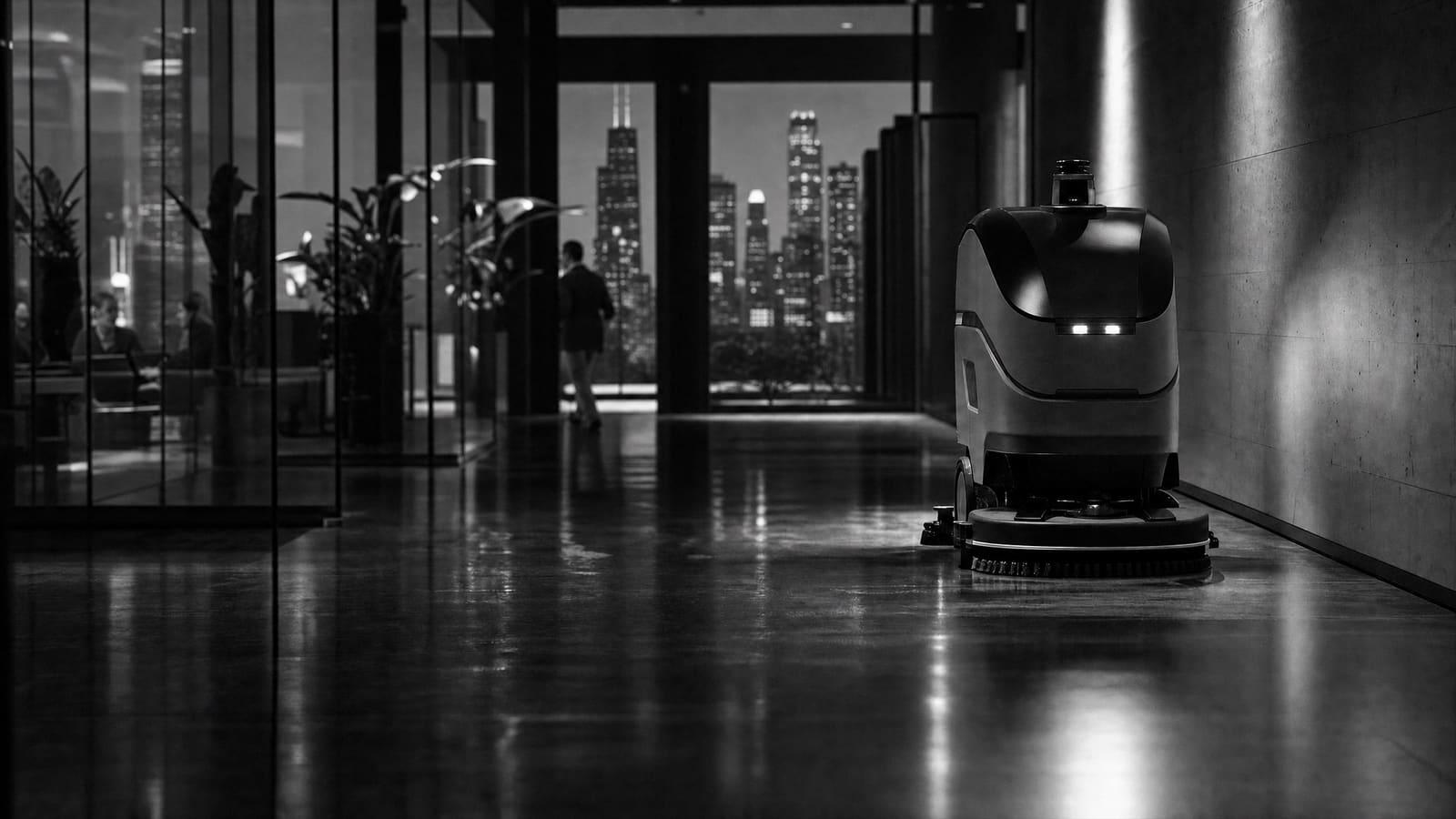
Facility robots take over the repeat floor routes inside Chicago commercial buildings, so your crew spends its hours on edges, spills, and exceptions instead of the same miles every night.
Automation that earns its floor space.
Labor is the biggest line in most facility budgets, and it's the hardest to staff. Commercial cleaning robots and autonomous floor scrubbers take over the square footage; your crew keeps the detail work. Security robots patrol around the clock without overtime.
We pick machines for your floors and your layout, run the pilot, train your team, and keep everything running with robot repair and support. Deeper needs like robotics integration and building automation live under the same roof.
START HERE
Are cleaning robots worth it for Chicago commercial buildings?
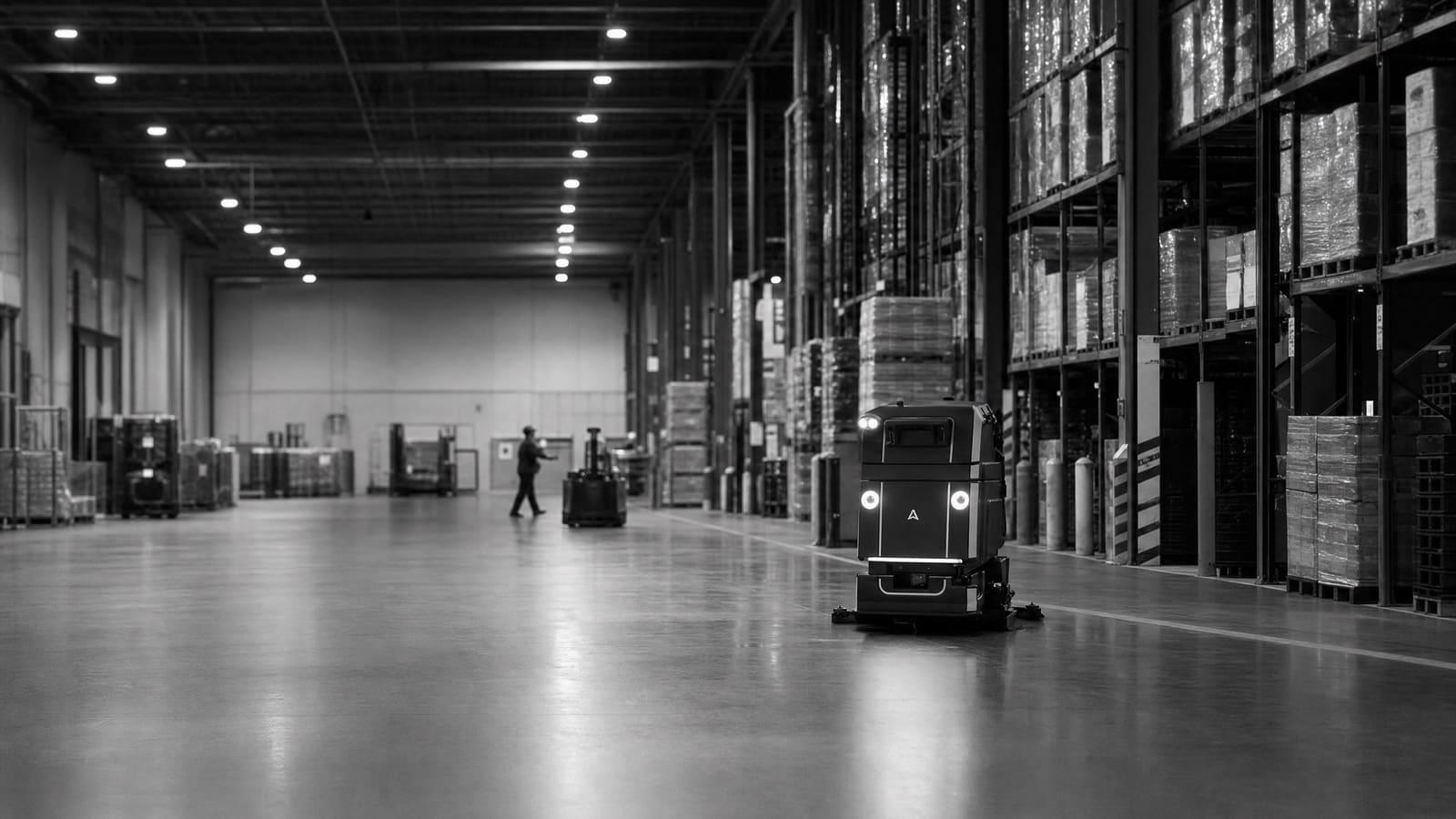
Flux Facility scopes facility robots around your building, equipment, and operating plan. A facility robot takes over the repeat floor work in a Chicago commercial building. It runs the long mapped passes down aisles, corridors, and open warehouse floor. Your crew keeps the edges, spills, restrooms, and anything unusual. The robot keeps the boring miles, overnight and on weekends. These machines work indoors, on your floors, not on sidewalks. Chicagoland is full of buildings that fit: hotels, hospitals, senior living, universities, and warehouses across Cook, DuPage, Lake, Will, and Kane counties. A floor scrubber rental is a different buy. A rented machine still needs a person pushing it all shift.
Can one robot cover a whole Chicago commercial building?
Start with route ownership, not the spec sheet. Ask one question first: can a single robot finish the repeat floor coverage that matters here? Elevators, disconnected wings, and water refill points are what split one route into two. Chicagoland hospitals, universities, hotels, and distribution centers tend to have at least one of those. Once route ownership is settled, compare tank capacity, real unattended runtime, and how often staff still have to babysit the machine.
DEPLOYMENT FIT
What makes a facility robot work in a Chicago building
- Hard floor you clean on the same path every day: aisles, corridors, lobbies, dock areas. Carpet and edges stay manual. - One route the robot can finish end to end, without elevator hops between disconnected wings. - A fill and drain point near the route, so staff are not walking the machine across the building to refill it. - A parking and charging spot where the night crew can inspect the robot before and after the run.
PROJECT PLANNING
Which robot class fits a Chicago hospital, warehouse, or grocery store?
Hospitals and large health systems · HEALTHCARE Mid-size to large-format scrubber. What matters most is quiet overnight routes, corridor reliability, and service response. Grocery and big-box retail · RETAIL Mid-size or large-format scrubber. Long aisles, displays that move week to week, and overnight consistency drive the pick. Warehouses and logistics · INDUSTRIAL Large-format scrubber, or a sweeper and scrubber mix. Open floor coverage, debris handling, and route length decide it. Convention centers and university campuses · CAMPUS A large-format fleet. Multi-zone ownership, uptime, and staffing leverage matter more than any single spec.
WHAT WE HANDLE
Everything under the robots door.
FACILITY ROBOTS
INTEGRATION & REPAIR
SMART BUILDING
BEFORE A PILOT
How to test facility robots in a Chicago building
Measure the repeat hard-floor square footage
SCOPE
Count only the area that runs the same mapped route. Whole-building square footage oversells what a robot can own.
Build the labor case on loaded rates
ROI MATH
Use base wage plus benefits, payroll burden, supervision, turnover, and shift premium. Wage-only math flatters the payback.
Book an on-site demo on your real floor
DEMO
Vendors will bring a unit to your building with no commitment. Watch it at the tight spots, not the open floor.
Run one overnight route for a full week
OVERNIGHT
Mapped hard-floor areas can run unattended if staff refill, inspect, and clear exceptions around the shift.
BEFORE YOU BUY
What should a Chicago facility manager ask before signing a robot deal?
- Who owns map changes when you move racks, displays, or a whole department?
- Who handles preventive maintenance, software updates, and alerts after go-live?
- How fast does field service reach your building, and what covers the route while the robot is down?
- Which manual hours actually go away? Robots offset repetitive scrubbing, not all janitorial work.
- Does the quote include support, or does your night crew inherit downtime and route tuning?
- Do you want to own the asset, or do you want one accountable provider? That answer picks buy, lease, finance, or RaaS.
ASKED IN CHICAGO
Common questions about facility robots in Chicago
Should a large facility buy, lease, or use RaaS for a cleaning robot?
MODELS
Buying can give the best long-term ROI at stable sites. Leasing or financing lowers upfront spend. RaaS bundles support and uptime under one accountable partner.
What is a realistic payback period?
PAYBACK
Daily-use sites with meaningful hard-floor coverage usually land around 9 to 18 months. Overnight routes often pay back faster.
Can the robot really clean overnight?
OVERNIGHT
Yes, in mapped, repeatable hard-floor areas. Staff still inspect, refill, and handle exceptions before or after the route.
What does an autonomous floor scrubber cost for a large facility?
COST
There is no single price. Most large-facility projects start with an L4 or L50 class robot, then scale up when separate zones or buildings need their own route owner.
Project in Chicago?
Request a free estimate. Chicago crews, Chicago pricing, one request.
QUESTIONS
Straight answers.
Do facility robots replace the cleaning crew in a Chicago building?
No. Robots take the repeat hard-floor coverage. People still handle edges, spills, restrooms, and exceptions. Labor runs 60 to 80% of a cleaning budget, so offsetting part of the floor work is where the money moves.
Is a floor scrubber rental a better fit than a facility robot?
A rental still needs an operator pushing it. A robot earns its keep on daily repeat routes, and it keeps running overnight, on weekends, and on holidays, which is capacity a manual shift cannot add.
Which Chicago-area buildings are actually using facility robots?
Deployments across Chicagoland cluster in hotels, restaurants, hospitals, senior living communities, universities, and warehouses, spanning Cook, DuPage, Lake, Will, and Kane counties plus Northwest Indiana.
What happens when a facility robot is first deployed in our Chicago building?
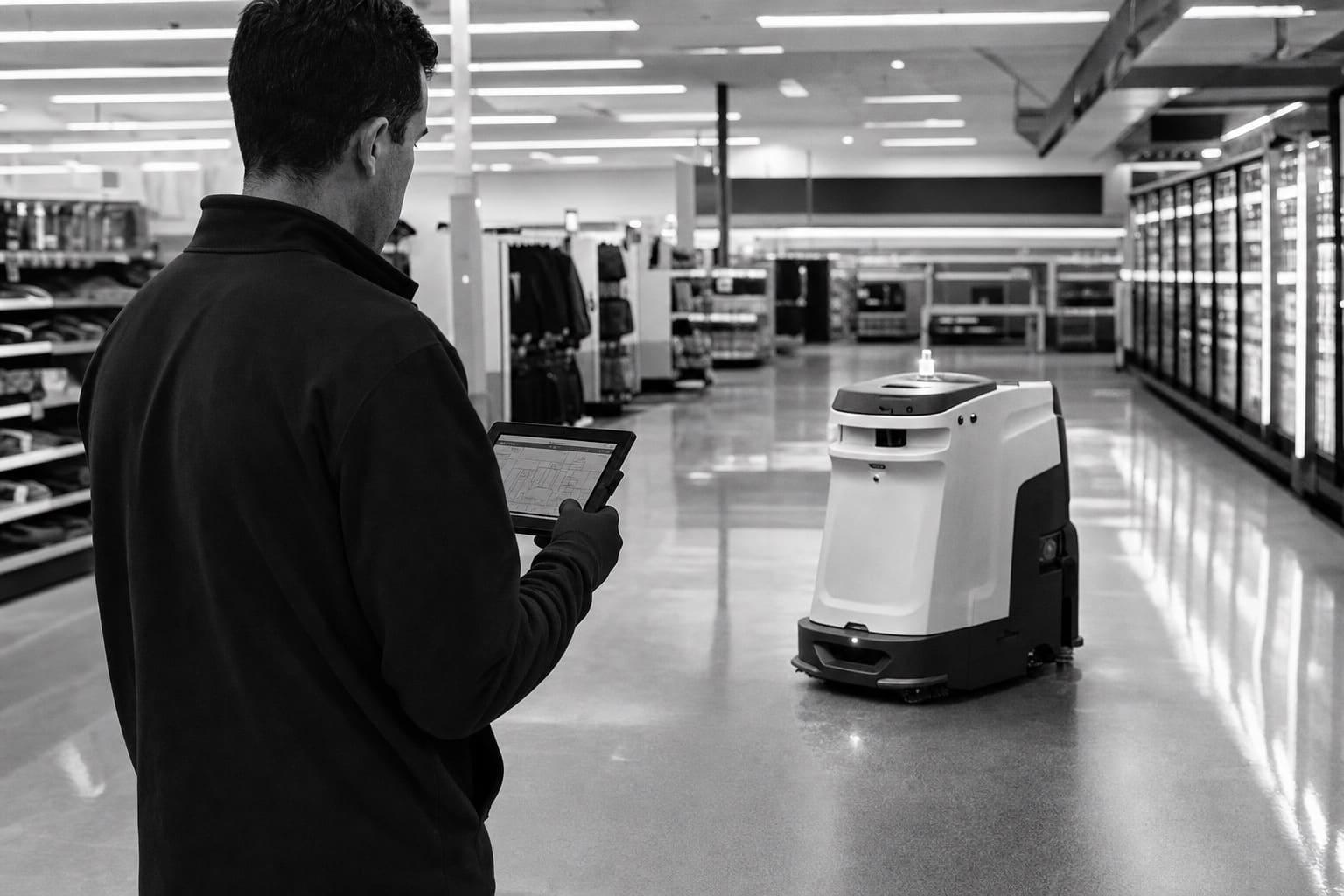
Onboard sensors and cameras map your floors, then the robot navigates and scrubs that map with minimal staff time. Training needs are light. Settle who owns map updates before the floor plan changes.
GET STARTED
Run the robot math on your building.
Square footage and hours in, labor math out. Pilot it on your worst floor, and if it doesn't pencil, we'll say so.
MORE SERVICE AREAS