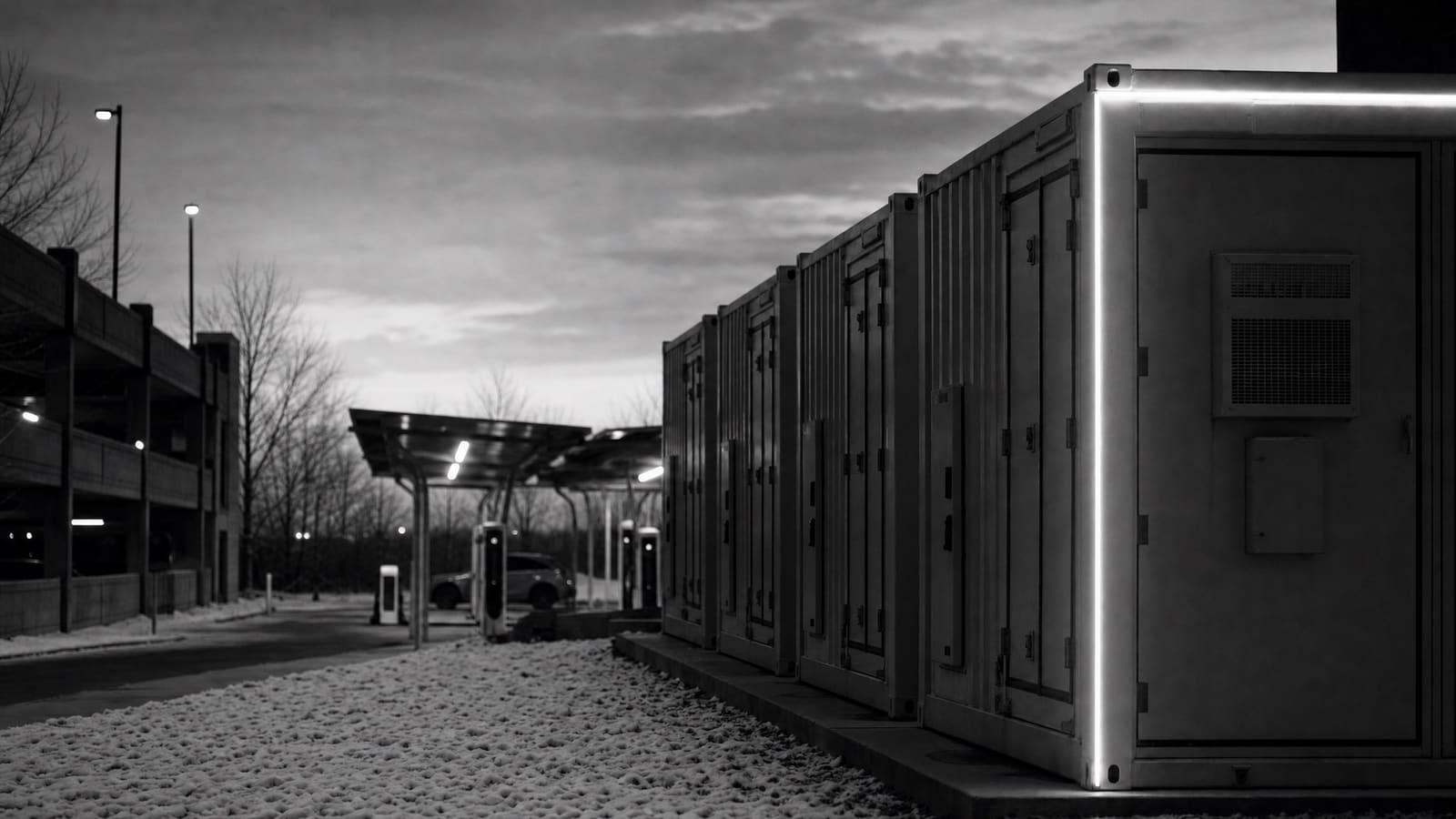
CHICAGO, IL · BATTERY
Battery energy storage systems in Chicago.
Flux Facility designs, installs, and services battery energy storage systems for Chicago commercial buildings, sized off your real demand peaks instead of a catalog page.
Storage that pays for itself.
Commercial batteries earn their keep two ways: shaving the demand peaks that drive your bill, and carrying the building through outages that used to cost you a day. Request pricing on install battery energy storage systems from a single cabinet to containerized BESS on a pad.
The unglamorous parts are where projects die, so price them up front: utility interconnection, permits, NFPA 855 compliance, and commissioning. Pairing with solar or EV charging? One design, one crew, one number.
START HERE
How does a battery energy storage system work in a Chicago building?
A battery energy storage system stores electricity on site at your Chicago commercial building, then releases it when power costs the most or when the utility feed goes down. The batteries charge from the electrical network, or from solar panels if you have them, and discharge on a schedule you control. Two ratings drive the design: power in kW and energy in kWh. Power sets how much load the battery can shave at once. Energy sets how long it can hold that shave. Both belong in the spec. Pull those numbers from your demand billing history before anyone quotes you hardware.
What is the payback on battery energy storage for a Chicago building?
NREL ran real building load profiles through simulated storage systems. Balance of system costs, meaning inverter, containers, interconnects, and engineering, averaged $670 per kW in the same research. That is separate from the cells and it belongs in your budget.
Sizing the system
How do you size a battery energy storage system for a Chicago commercial building?
Set the power rating first · KW Power in kW sets how much peak load the battery can offset at one moment. It comes off your highest measured demand, not your monthly average. Then set the energy rating · KWH Energy in kWh sets how long the system holds that reduction. NREL modeled energy capacity as a share of the energy needed to level a building's load. Watch the power-to-energy ratio · RATIO Cell cost scales with energy and inverter cost scales with power. Systems with a higher power-to-energy ratio cost more, but they return more on demand charge reduction. Every point lost comes straight out of the savings.
PROJECT PLANNING
Lithium-ion or lead acid for a Chicago battery energy storage project?
Cycle life decides the real cost · CYCLE LIFE A lead acid cell rated for 600 cycles at 80% depth of discharge gets replaced sooner, and its lifetime cost per kWh runs significantly higher than lithium-ion. Compare lifetime cost, not sticker price. Chemistry changes what you can do · CHEMISTRY Cell types differ in discharge time, efficiency, specific energy, and cost. Match the chemistry to how long you actually need to hold down a peak. Inverters get priced separately · INVERTER Inverters are largely agnostic to cell type, so they are usually cost estimated on their own. Ask any bidder to break cells and inverters into two line items.
WHAT WE HANDLE
Everything under the battery door.
Site and permitting
What are the site requirements for battery energy storage in Chicago?
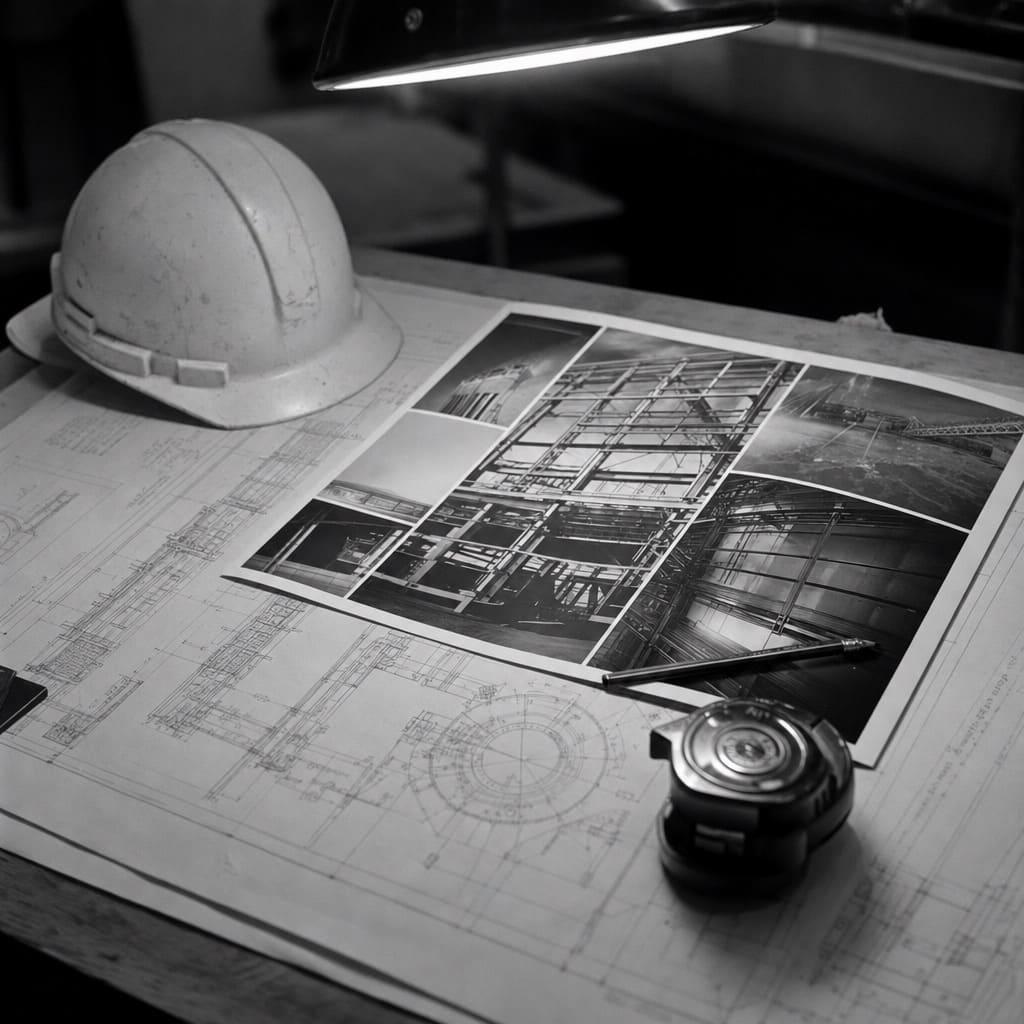
- Put the enclosure near the electrical infrastructure it ties into. Proximity to the service and switchgear is one of the biggest cost and constructability drivers on a battery energy storage system. - Design the pad to move water. - Hold the clearances. Site layout has to leave room for access, maintenance, and the protection features the authority having jurisdiction requires. - Budget the civil scope. Battery storage foundations, secondary containment, trenching, and chemical-resistant coatings are part of the job, not an extra. - Start approvals early. Battery storage projects often require regulatory sign-off before construction can begin, and code minimums come from the authority having jurisdiction.
BEFORE YOU BUY
What should you ask a battery energy storage installer in Chicago?
- Ask them to read your interval and demand billing data first. A battery energy storage quote written before that is a guess at your payback. - Ask who self-performs the civil and structural concrete. Equipment pads, transformer foundations, and containment carry the whole system. - Ask for site-specific safety planning around high-voltage work, plus quality control, testing, and documentation. - Ask for preconstruction support on budgeting, logistics, and procurement before you lock in a system size. - Do not shortlist on lowest bid. A low number that turns into delays, rework, and change orders ends up as the most expensive option.

Project in Chicago?
Request a free estimate. Chicago crews, Chicago pricing, one request.
QUESTIONS
Straight answers.
How long does a battery energy storage system take to pay off in Chicago?
The demand charge applied drives the result, so your building needs its own math.
Do I need approvals for battery energy storage at a Chicago commercial building?
Plan on it. Battery storage projects often require regulatory approvals before construction can begin, and the authority having jurisdiction sets the minimum code requirements the site has to meet.
Can a battery energy storage system carry a Chicago building through an outage?
Yes. The batteries discharge when the grid drops. How long they hold the building up depends on the kWh you buy and which circuits you put behind the system, so decide your critical loads during design.
Can battery energy storage work with solar on a Chicago building?
Yes. A battery energy storage system can collect energy from solar panels or from the electrical network and store it for later use. If solar is planned or already installed, size the two together.
GET STARTED
See what storage does to your bill.
Twelve months of bills is all the modeling needs. We'll show the demand-charge math for free, and tell you straight if it doesn't pencil.