BATTERY ENERGY STORAGE
Containerized BESS.
Megawatt-scale storage that arrives built: batteries, inverters, fire suppression, and controls in one enclosure.
THE FORM FACTOR
Why battery systems ship in containers
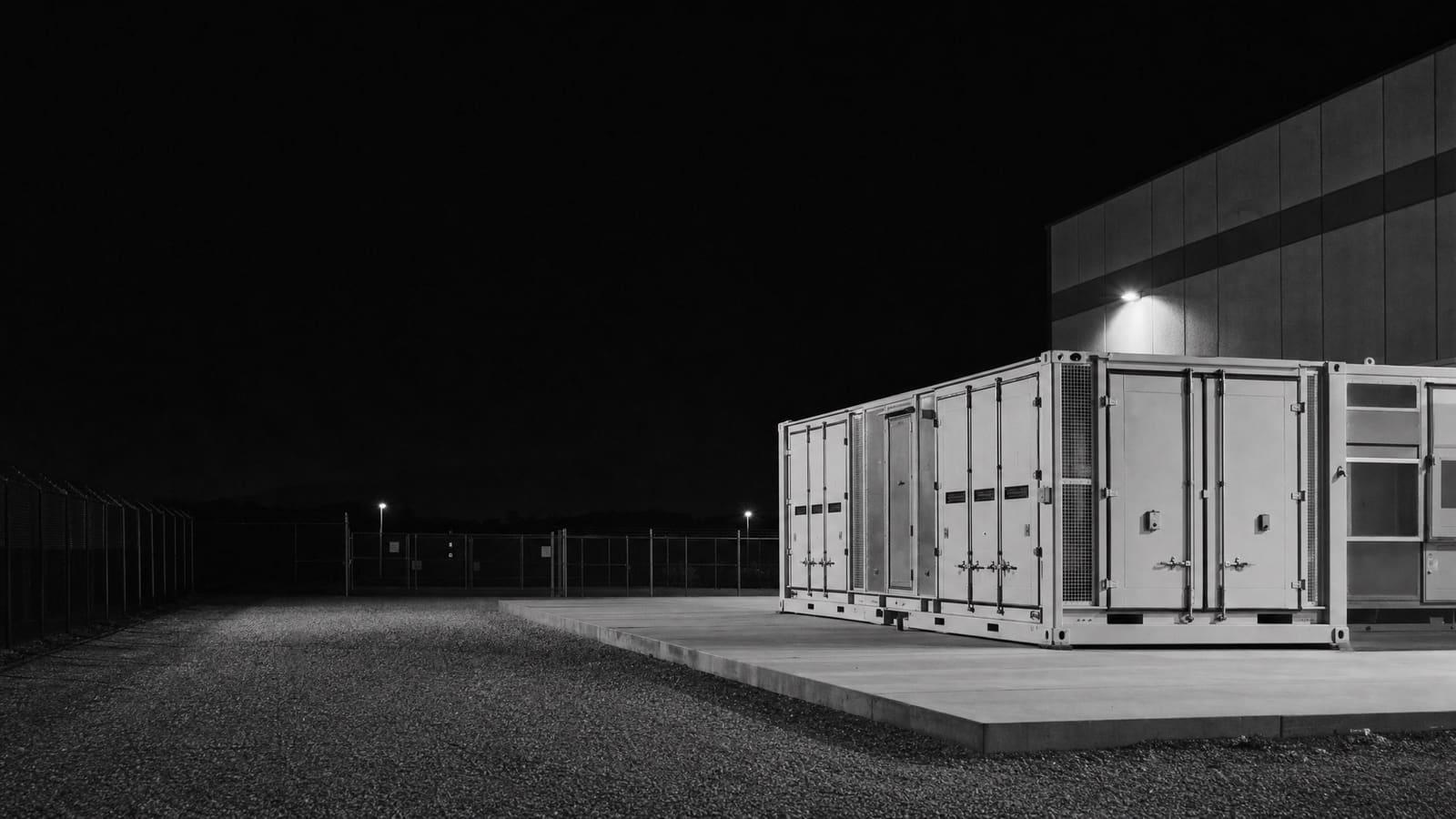
A containerized battery system is a power plant that arrives on a truck: batteries, inverters, fire suppression, and climate control engineered into one enclosure, tested at the factory, and set on a pad with a crane. Site work shrinks to a foundation, conduit, and connections.
Containers are how storage scales past cabinet size. When a project outgrows a row of cabinets, the container consolidates everything - and because the integration happened in a factory instead of a field, quality is consistent and commissioning is faster.
WHY CONTAINERS WIN
Benefits of containerized battery storage
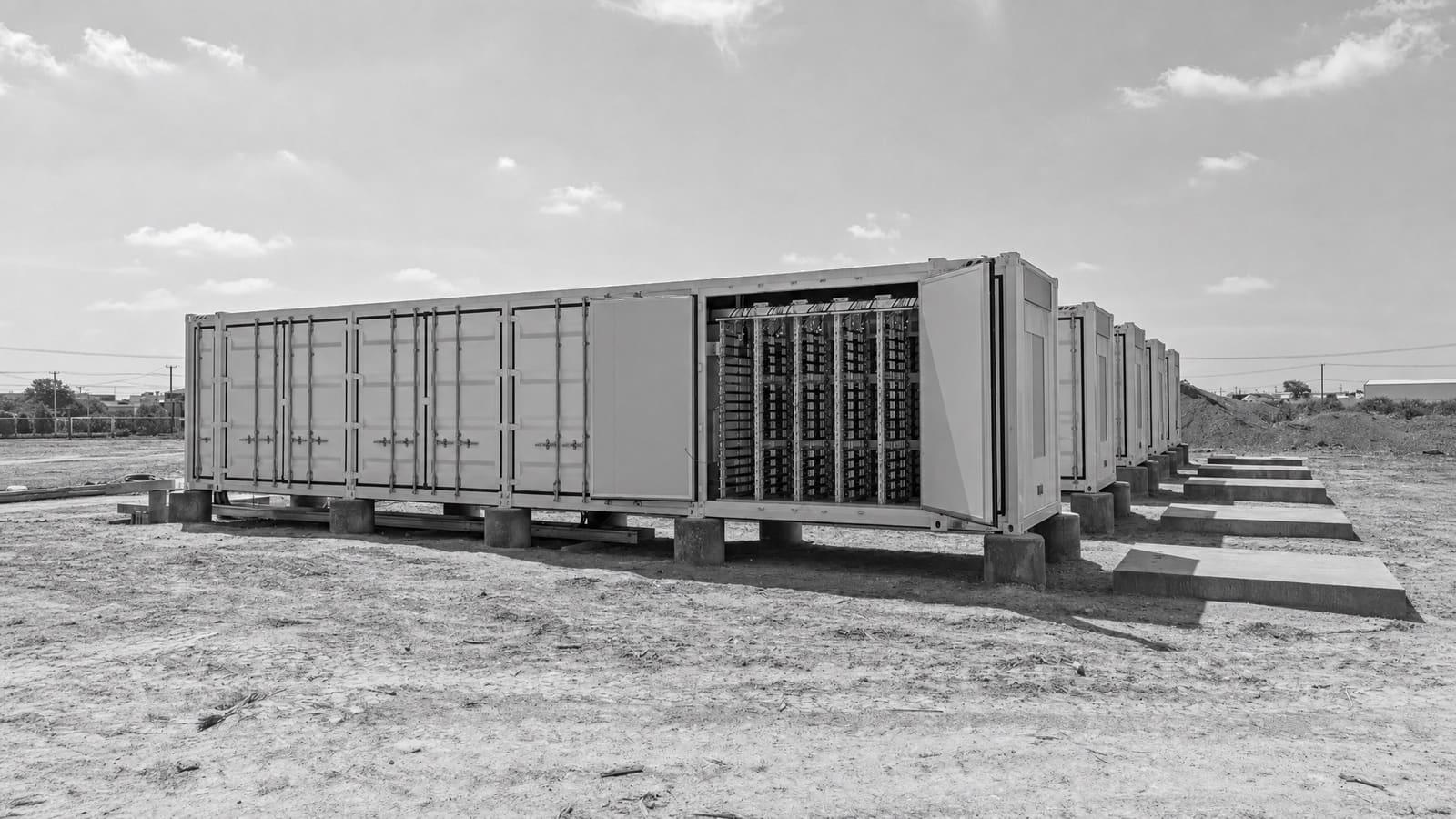
Everything inside the box - racking, wiring, thermal management, suppression - was built and tested as a unit before shipping. Field problems become factory problems, which are cheaper to find and fix.
On site, the schedule compresses: pad, crane, connect, commission. For MW-scale commercial projects, containers are usually the only practical form.
WHAT THEY NEED
Site requirements for containerized batteries
A container needs what any heavy equipment needs: an engineered pad, crane access on delivery day, fire-code clearances around it, and an electrical path sized to its output.
Siting is the design work - setbacks from buildings and lot lines, access for service, and the interconnection route. Get the pad and paperwork right and the delivery day is boring.
AT A GLANCE
Containerized storage at a glance
1 LIFT
TO SET
Factory-built system placed on the pad in a single crane pick.
MW-CLASS
SCALE
Containers carry the projects that outgrow cabinet rows.
FACTORY
TESTED
Integration and QA happen before shipping, not on your site.
Project outgrowing cabinets?
Request containerized pricing. Sizing, siting, and interconnection scoped for container-class storage.
QUESTIONS
Straight answers.
When does a project need a container instead of cabinets?
When capacity outgrows what a cabinet row serves cleanly - typically as projects approach megawatt scale. The container consolidates and simplifies.
What's inside a battery container?
Battery racks, inverters or their connections, thermal management, fire detection and suppression, and controls - integrated and tested at the factory.
What site prep does a container need?
An engineered pad, crane access for delivery, fire-code clearances, and the electrical run. The design work is siting and interconnection.
Are containers safe near buildings?
They're engineered to UL 9540 with suppression on board, and sited to NFPA 855 spacing. The clearance rules are part of the design, not an afterthought.
GET STARTED
Ready to price battery storage?
Request containerized pricing. Container-class storage scoped end to end.