BATTERY ENERGY STORAGE
Commercial microgrids.
Batteries, solar, and generation working as one system that can island when the grid fails.
THE ISLAND
What a commercial microgrid actually is
A commercial microgrid is on-site generation, storage, and controls that can run two ways: connected to the utility on normal days, and as its own island when the grid fails. The controller is the brain - it balances sources and loads in real time and makes the island trick work.
The range is wide: a backup-focused system for one building might run a few hundred thousand dollars, while campus-scale projects reach eight figures. NREL benchmarks commercial projects around $2 to $5 million per megawatt, with generation equipment historically driving 54 to 76 percent of equipment cost. Scope is the price.
THE STACK
Commercial microgrid components
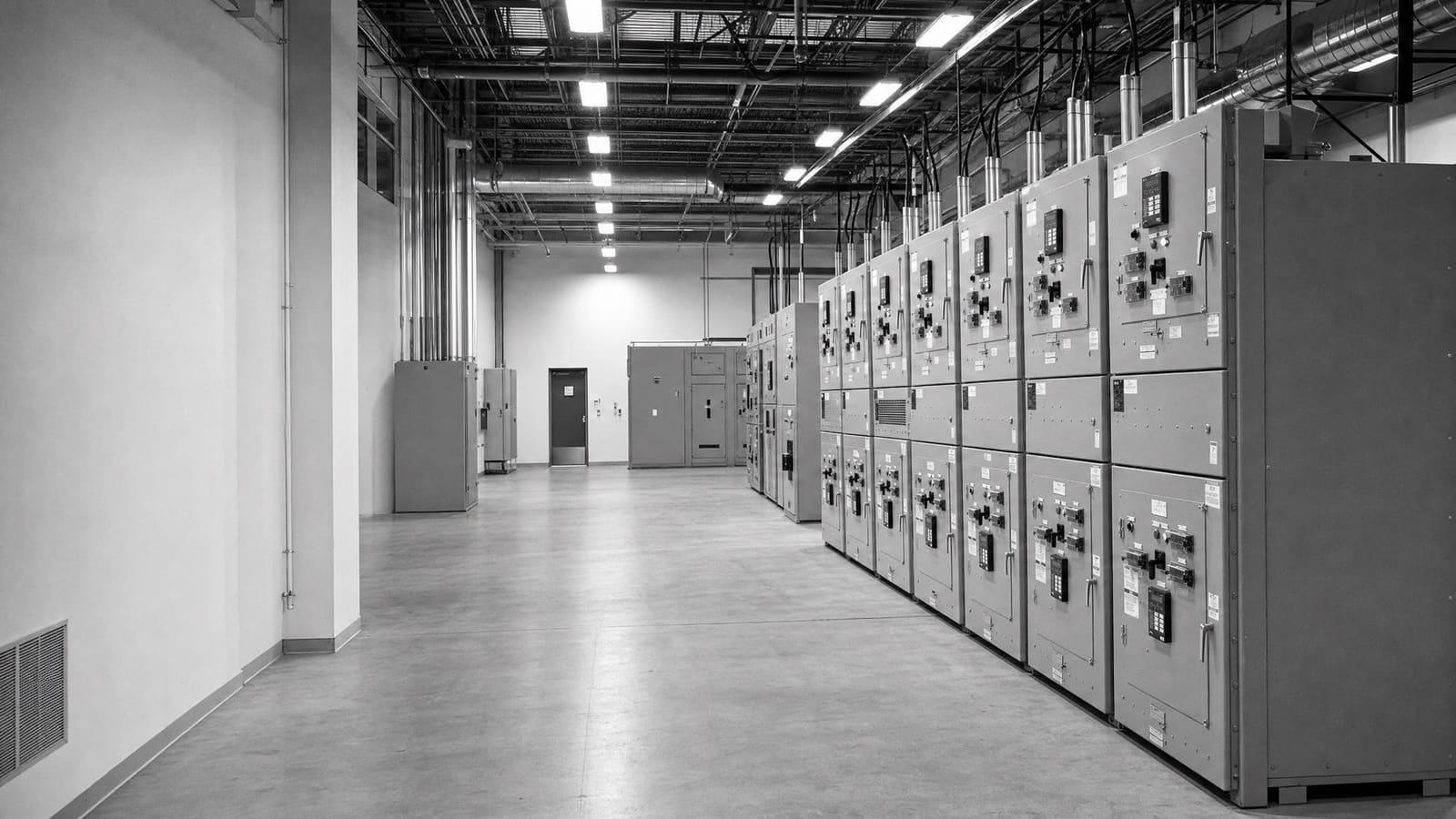
Generation - solar, generators, or both. Storage - the battery that smooths everything and carries the island through transitions. Controls - the switchgear and software that disconnect, balance, and reconnect cleanly.
Hybrid designs pairing renewables with storage run 19 to 35 percent lower lifecycle costs than diesel-only setups, because sunshine keeps displacing fuel every day the grid works.
THE HONEST QUESTION
Do you need a microgrid or a battery
If the goal is riding out hours-long outages and cutting demand charges, a battery alone often does it for a fraction of the cost. The microgrid earns its premium when outages run days, loads are truly critical, or the site wants energy independence at scale.
Grid-connected backup designs cost far less than off-grid-capable ones. Buy the island you need, not the one in the rendering.
THE BENCHMARKS
Microgrid economics at a glance
$2-5M
PER MW
NREL's benchmark range for commercial microgrid projects.
54-76%
GENERATION SHARE
How much of equipment cost the generation stack typically drives.
19-35%
HYBRID SAVINGS
Lifecycle cost advantage of renewable-plus-storage over diesel-only.
Exploring energy independence?
Request an assessment. We'll scope whether a battery, a microgrid, or a phased path between them fits your site.
QUESTIONS
Straight answers.
What does a commercial microgrid cost?
Single-building backup designs start in the hundreds of thousands; campus-scale systems reach eight figures. NREL benchmarks $2-5M per MW for commercial projects.
How is a microgrid different from battery backup?
A battery carries critical loads for hours. A microgrid adds generation and controls to power the site indefinitely - islanded from the grid entirely.
Do microgrids require solar?
No, but hybrid renewable designs run 19-35% cheaper over their life than diesel-only, because the sun offsets fuel every ordinary day.
Can a site start small and grow into a microgrid?
Yes - a battery installed today can become the storage layer of a future microgrid if the controls and interconnection are designed with that path in mind.
GET STARTED
Ready to price battery storage?
Request an assessment. The right-sized island for your site, phased honestly.