
CHARLOTTE, NC · MECHANICAL
Commercial mechanical contractors in Charlotte.
Flux Facility designs, installs, and services HVAC, plumbing, and piping systems for commercial buildings in Charlotte, from pre-war Fourth Ward stock to South End high-rises.
Mechanical work that hits the date.
Whether a build-out needs mechanical from scratch or one system reached its end, the schedule is the job. One request covers plumbing, HVAC, boilers and chillers, and ductwork with the coordination that keeps other trades moving.
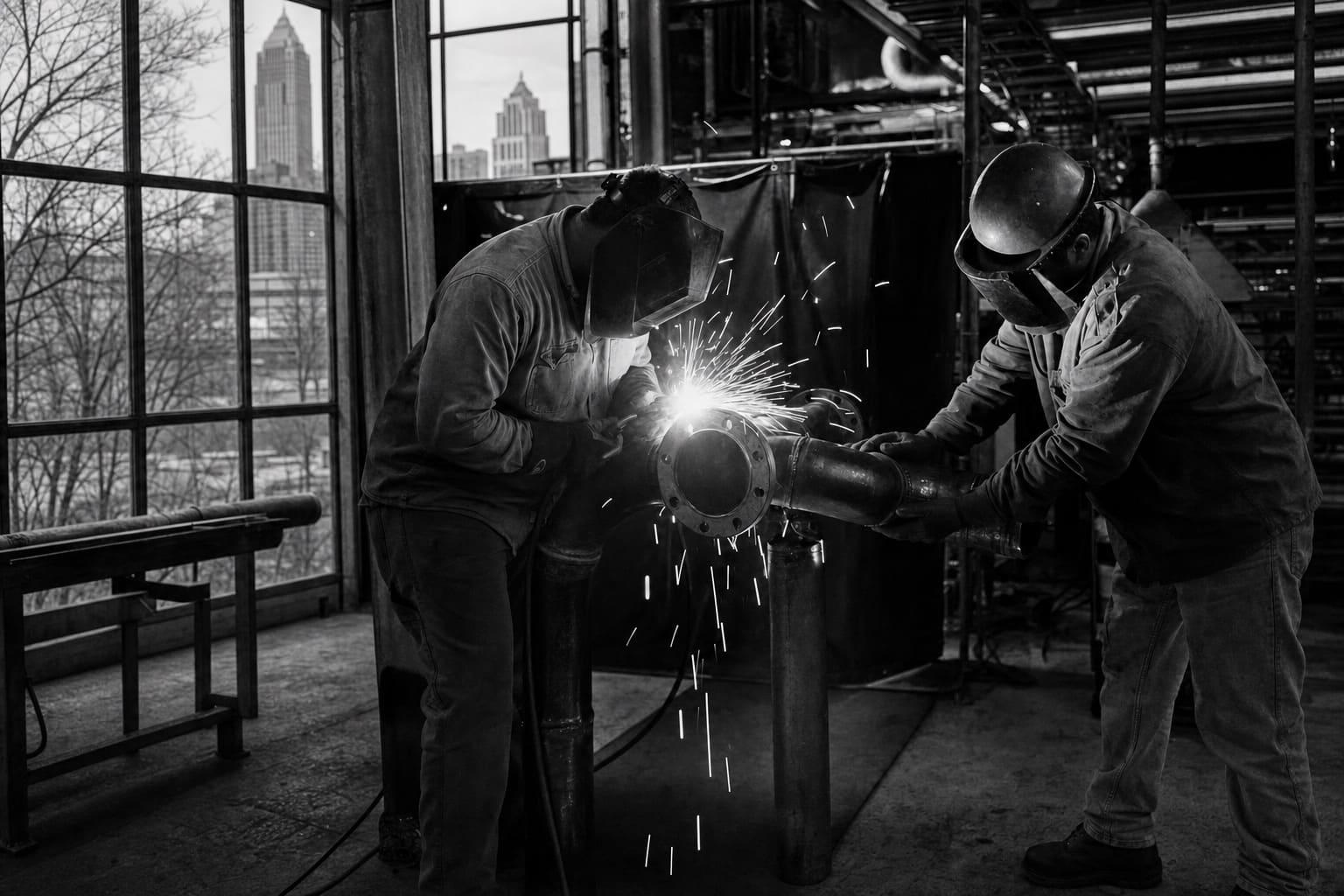
Industrial work is its own discipline: process piping, sheet metal and pipe fabrication, and design-build engineering when the drawings don't exist yet. One point of contact from scope to commissioning, and a number that doesn't move after signing.
START HERE
What does a mechanical contractor do for a Charlotte commercial building?
A mechanical contractor builds and services the systems that make a Charlotte commercial building work: heating, cooling, ventilation, plumbing, and process piping. That covers load math, stamped drawings, permits, install, and the service calls after. One contract holds the whole mechanical scope, so no one points fingers when the rooftop unit and the controls disagree. The commercial stock here runs from pre-war buildings in Fourth Ward to modern high-rises in South End, plus old textile mills turned into mixed-use space. Each era fights back in a different way. Ask how a contractor handles your building's age and its electrical service before you talk price.
Does the mechanical code in Charlotte have local amendments?
Yes. Charlotte adopted the 2018 North Carolina Mechanical Code with local amendments. Those amendments change commercial ventilation rates and refrigerant detection rules. Buildings over 10,000 square feet must meet enhanced outdoor air delivery standards in occupied spaces. That is a sizing decision, not paperwork. A design that misses it fails inspection and stalls the occupancy permit, because your certificate of occupancy depends on passing mechanical inspections. Have the design coordinated with Mecklenburg County inspectors before equipment is ordered, not after it hits the dock.
Before you sign
How do you vet a commercial mechanical contractor in Charlotte?
- Ask for stamped mechanical drawings, equipment schedules, and control logic diagrams. A vague proposal cannot promise code compliance or performance. - Make sure the sizing comes from a Manual N load calculation that counts occupancy density, equipment heat gain, and the building envelope. Not a rule of thumb. - Ask if they measure airflow with calibrated instruments and take duct static pressure readings before quoting. Guessed numbers waste energy and shorten equipment life. - Ask who talks to the building inspectors, and when. Plans reviewed before equipment is ordered avoid permit rejections that push your schedule. - Ask what is in house: engineers, controls, CAD, and which trades they self-perform. Some firms only work in new construction.
PROJECT PLANNING
Design-build or plan-and-spec for a Charlotte mechanical project?
Design-build · DELIVERY One team owns design and install. Design-build and BIM cut cost and delay on mechanical construction, and general contractors often bring the mechanical partner in during preconstruction. Plan and specification · BID WORK An engineer designs it, you bid the install. This fits when drawings are already stamped and the scope will not move. Equipment replacement · REPLACEMENT A failing unit gets swapped. It still needs load math and a permit. The old tonnage is not automatically the right tonnage. Capital and energy upgrades · CAPITAL PLAN System upgrades and energy efficiency work get budgeted as capital projects. Start with a site visit and facility assessment to set a real scope.

WHAT WE HANDLE
Everything under the mechanical door.
CONSTRUCTION & INSTALLATION
DESIGN & PRECONSTRUCTION
Older building limits
What makes a mechanical retrofit hard in older Charlotte buildings?
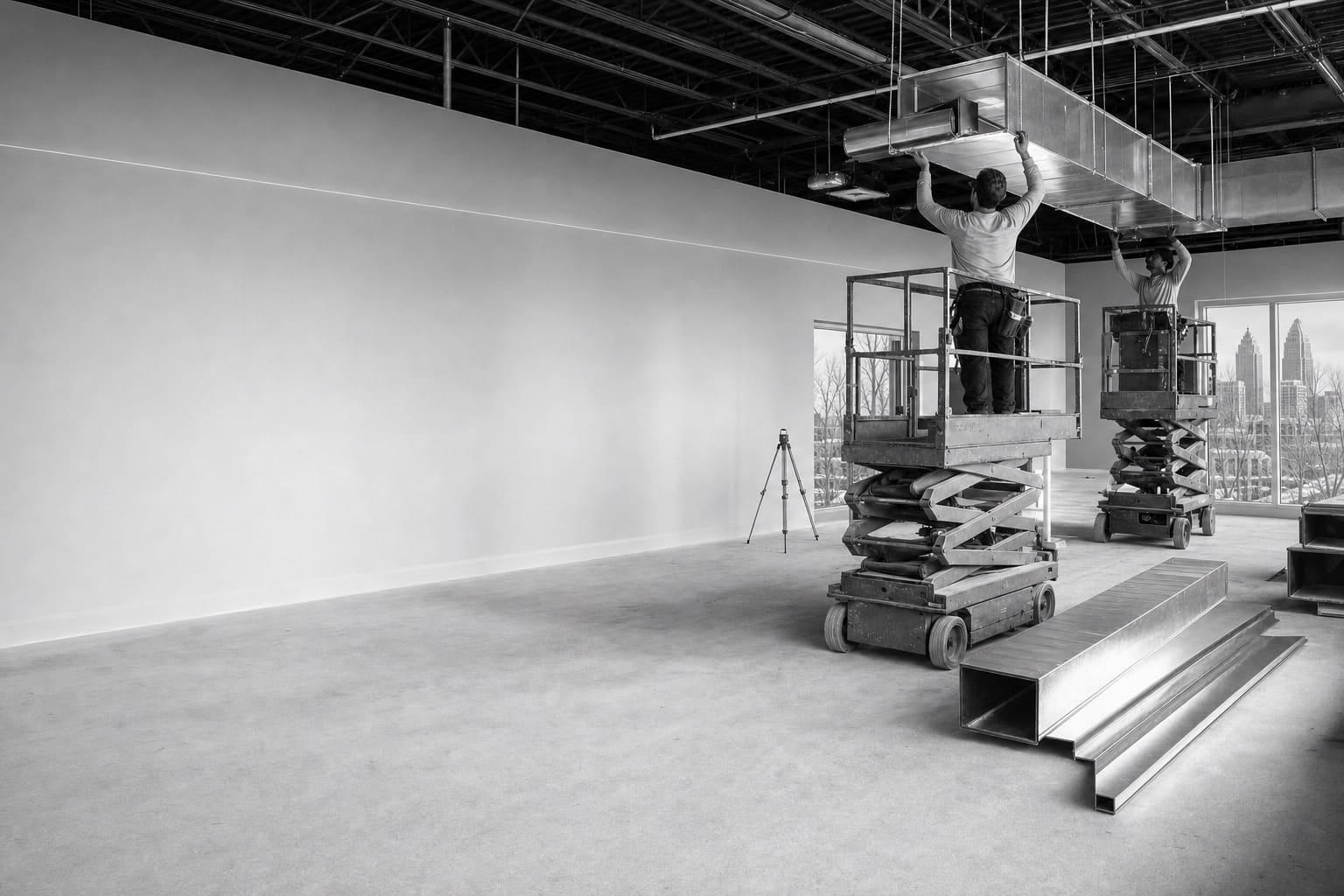
Districts built before modern energy codes · BUILDING VINTAGE Older commercial districts went up before current energy codes. Variable-speed technology can often be retrofit into the existing ductwork, so you skip a full tear-out. Electrical service caps your equipment list · POWER Many older buildings lack the electrical service for modern high-efficiency equipment. Check the service size before you pick a unit, or you pick it twice. Historic rules decide where gear sits · PLACEMENT Historic preservation requirements limit outside equipment placement and how ductwork routes. Settle that in design, not on the day the crane shows up. Mills and warehouses going mixed-use · ADAPTIVE REUSE Adaptive reuse of textile mills and warehouse space needs a system that respects the old architecture and still hits current ventilation standards.
BEFORE YOU BUY
What should a mechanical install in Charlotte pass at inspection?
- Install meets or beats manufacturer specs and North Carolina mechanical code.
- Refrigerant lines insulated so they do not sweat or bleed energy.
- Electrical disconnects mounted within sight of the equipment, per NEC guidelines.
- Condensate drains sloped correctly and ending in a code-approved location.
- Permits pulled for all work that needs inspection, with final sign-off coordinated with the local authority.
- Refrigerant detection handled the way the local code amendments require.
ASKED IN CHARLOTTE
Common questions about commercial mechanical contractors in Charlotte
SHORTLIST
No list can rank that for your building. Judge on code experience, stamped drawings, trades they self-perform, and how early they handle permits.
What is the difference between a general contractor and a mechanical contractor?
SCOPE
A general contractor runs the whole job. A mechanical contractor designs, builds, and services the mechanical systems: heating, cooling, plumbing, and piping.
Who are some commercial HVAC contractors in Charlotte, NC?
VENDOR TYPES
Firms range from HVAC-only shops to full mechanical contractors that also cover plumbing, piping, and building automation. Ask what each one self-performs.
Project in Charlotte?
Request a free estimate. Charlotte crews, Charlotte pricing, one request.
QUESTIONS
Straight answers.
Do I need a permit for commercial mechanical work in Charlotte?
Any work that requires inspection requires a permit, with final sign-off coordinated with local authorities. Your certificate of occupancy depends on passing mechanical inspections.
Which mechanical code applies to commercial buildings in Charlotte?
The city adopted the 2018 North Carolina Mechanical Code with local amendments. Those amendments affect commercial ventilation rates and refrigerant detection requirements.
Does a building over 10,000 square feet need a different design?
Yes. Buildings over that size must meet enhanced outdoor air delivery standards in occupied spaces. That shapes outdoor air sizing and duct routing before you choose equipment.
How early should a mechanical contractor join a Charlotte project?
Before equipment is ordered. Coordinating the design with local inspectors up front prevents permit rejections, and general contractors often add the mechanical partner during preconstruction.
GET STARTED
Plan it once. Build it right.
Send the plans or the nameplate and get a complete installed price: real scope, real lead times, no surprises on the back end.
MORE SERVICE AREAS