ATLANTA, GA · SOLAR
Commercial solar installation in Atlanta.
Flux Facility plans, permits, and installs commercial solar for Atlanta buildings, from roof and parking screening through Georgia Power paperwork and startup.
Start with the building, not the panels.
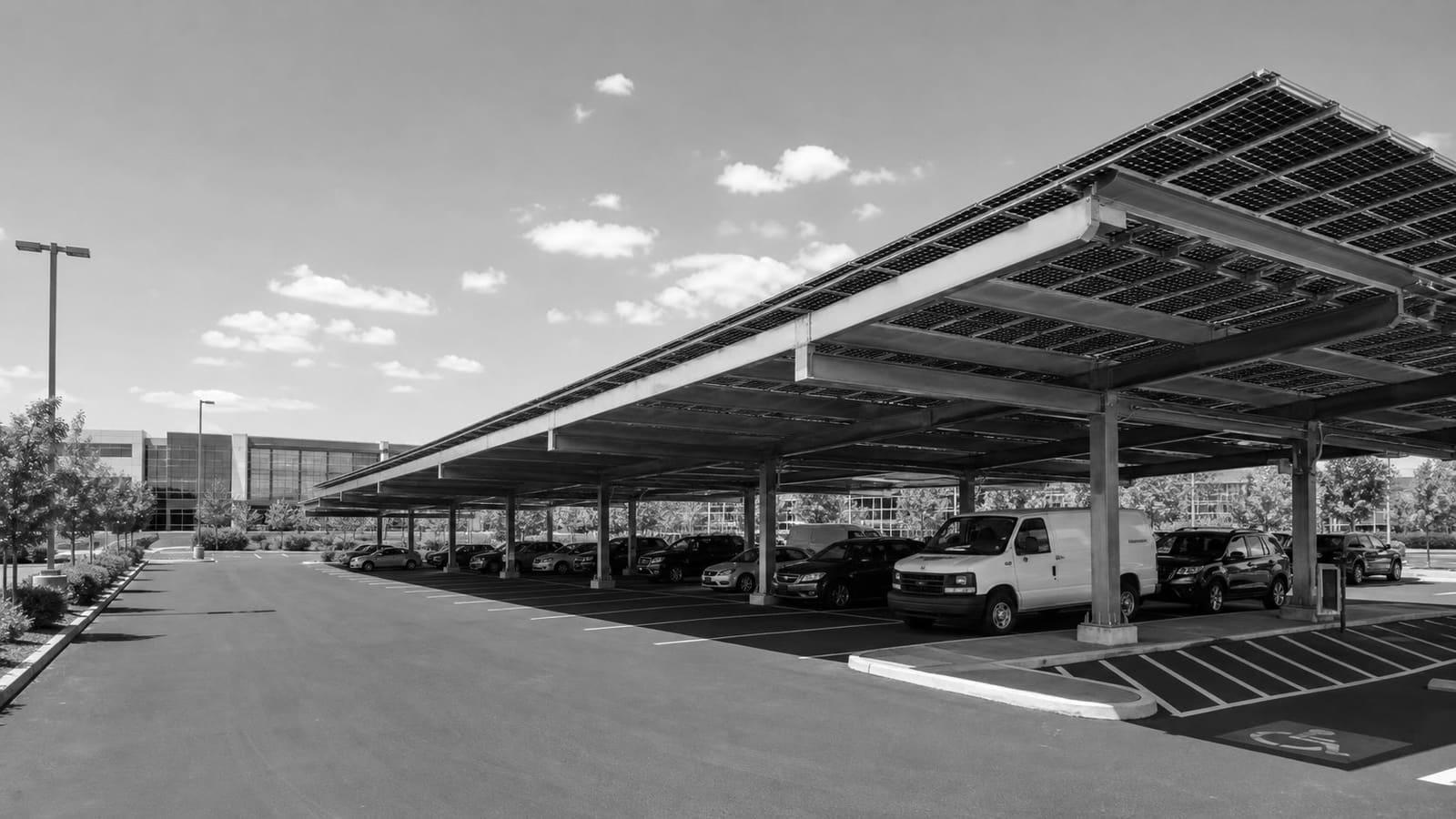
A commercial solar project has to fit the site, the roof, the electrical system, and the utility rules. We start with a solar feasibility study, then compare rooftop solar with solar carports where parking offers the stronger site.
One team carries design, permits, utility interconnection, construction, commissioning, and solar maintenance. We also compare direct ownership with solar financing and PPAs, and add battery storage only when it has a clear job.
START HERE
How does a commercial solar project get planned in Atlanta?
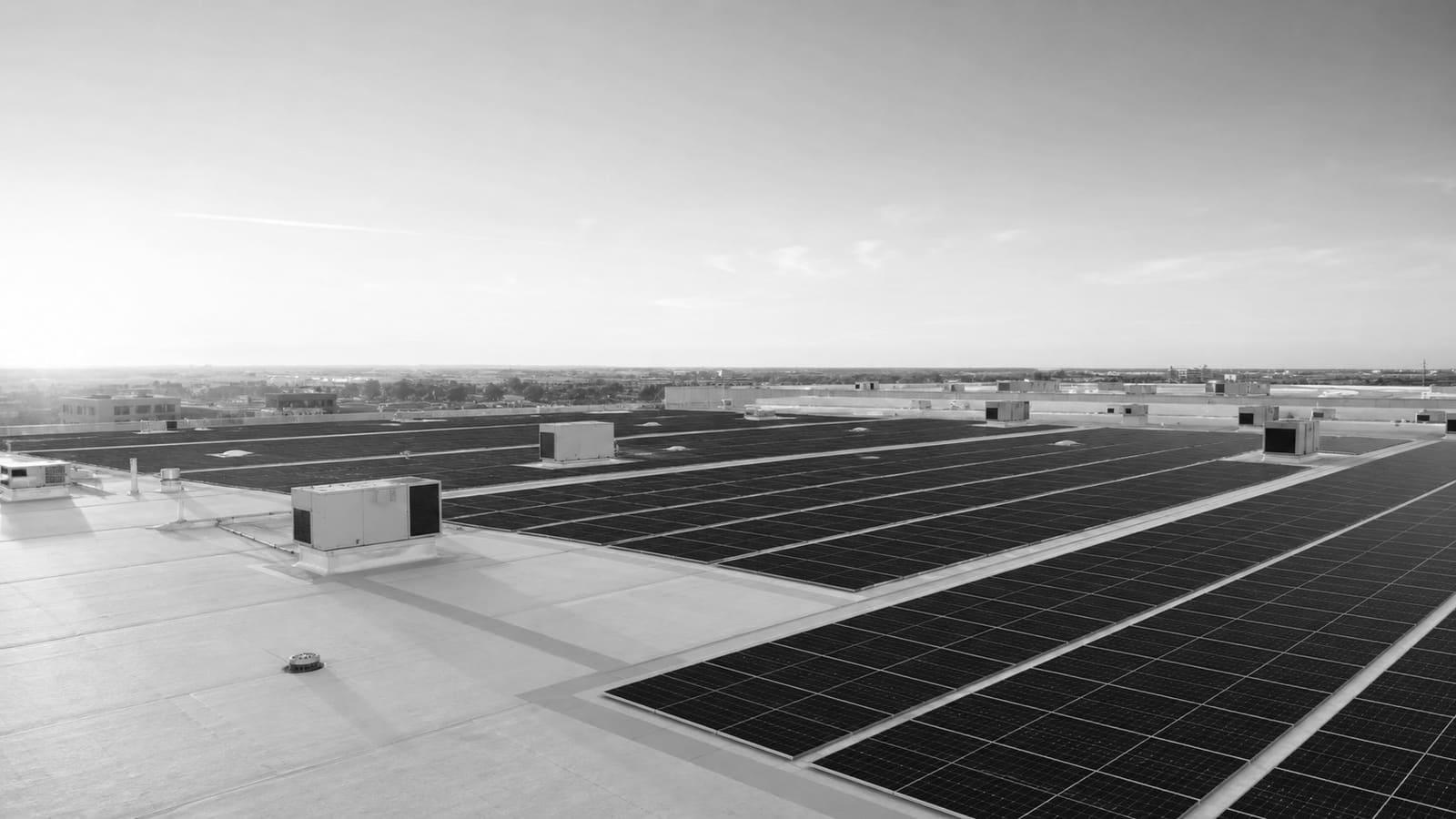
Commercial solar installation puts a working power plant on an Atlanta commercial building, its roof, its parking lot, or open ground beside it. We start with the electric bill, the usable area, the roof or soil under the array, the electrical service, and the path to the utility. Rooftop, ground-mounted, and carport projects each raise different design questions, so we settle the type before anyone draws a layout. Atlanta adds two moving parts: the city permit path and Georgia Power's rules. We run the permit set through the Office of Buildings and keep the utility paperwork on the same schedule as the steel and the wire. Send us the address and one recent bill, and we screen the site, the load, and the utility path before engineering starts.
What do Atlanta permit rules change on a solar job?
Atlanta's Office of Buildings issues the building permit, inspects the work, and enforces the code. Two rules shape our schedule. Effective January 12, 2026, the office temporarily suspended reviewing structural drawings. Structural documents must still be submitted with the permit application, and they are the responsibility of the Engineer of Record. We line up that engineer early for roof attachments and carport foundations. Applications filed before February 1, 2026 are reviewed under the codes in effect at submission. Beginning February 1, new applications must comply with the newly adopted State of Georgia building codes. We check your filing date before drawings are final.
Solar quote drivers
What changes a commercial solar quote in Atlanta?
Your electric bill and load · LOAD Demand is usually billed in dollars per kilowatt per month, set by the fifteen-minute period in each month when your use peaked. Solar trims demand only while it is producing during that peak. Many commercial buildings peak in the afternoon on cooling load, which lines up with strong solar output. We read the bill before we size anything. Usable roof, lot, or ground · AREA Rooftop, ground-mounted, and carport arrays each carry their own design questions and their own life-cycle trade-offs. We measure the area you can actually use, then match the array type to it. A parking canopy and a roof array can both land on the same Atlanta site plan. Shade study before layout · SHADE EPA names a local shading analysis as a way to check a site for solar. We run one across roof planes, parapets, mechanical curbs, and neighboring buildings, then keep modules and wiring strings clear of the shaded areas before drawings go out. Utility path and filing route · UTILITY Net metering, interconnection requirements, incentive structures, and permitting all change by place. We confirm the Georgia Power interconnection path and the Atlanta filing route for your exact address before we commit to a design or a completion date.
WHAT WE HANDLE
Everything under the solar door.
PROJECT PLANNING
How do we set panel tilt and wiring on Atlanta rooftops?
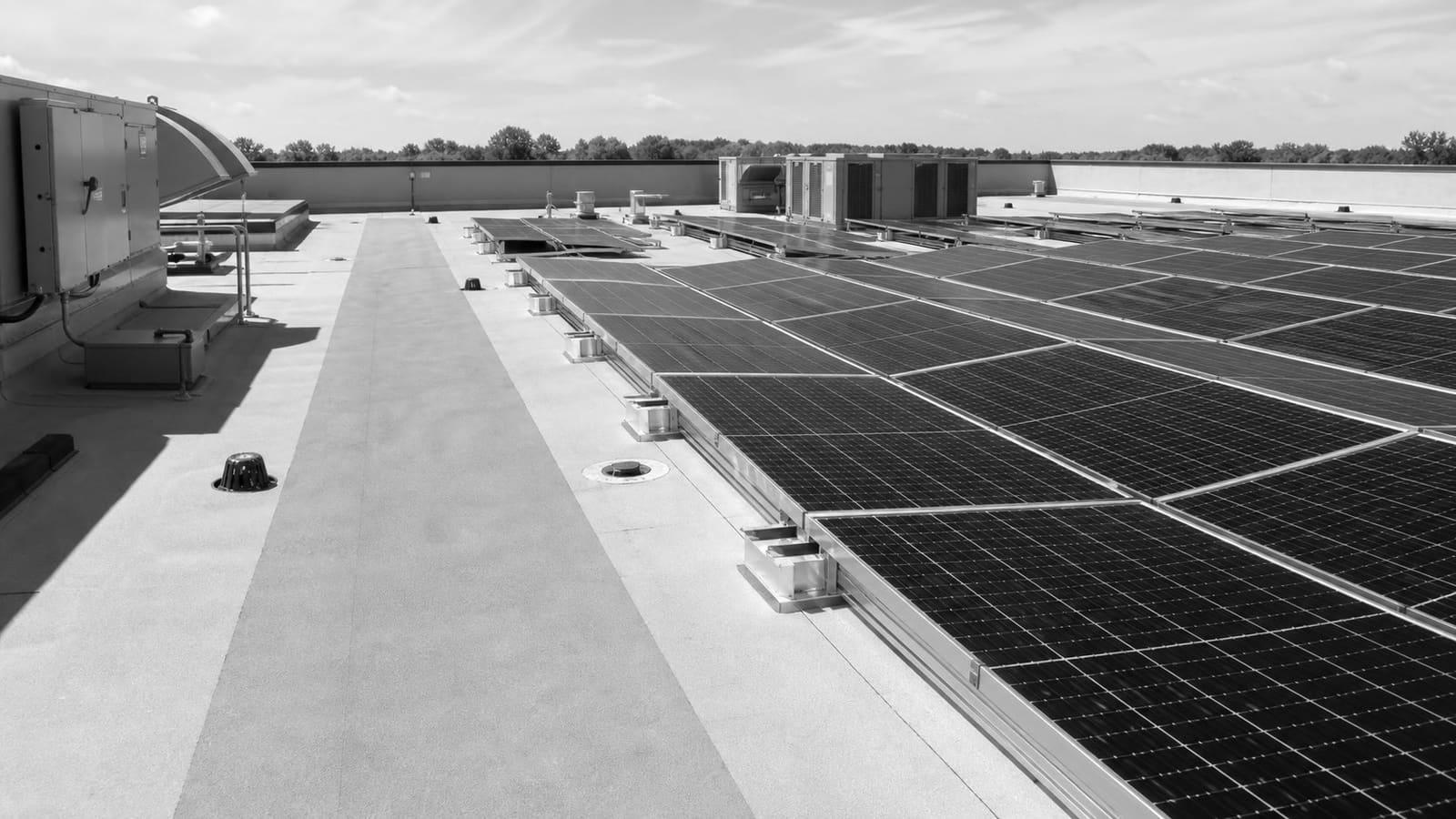
Tilt angle and wind load · TILT In the continental United States, a tilt between 15 and 40 degrees facing south gives the best production. A lower tilt reduces wind load on the panels and can improve production. We weigh both against your roof structure and the ballast the roof can carry. Flush-mounted rows · MOUNTING Panels set flush with the roof are often chosen for appearance and wind load, even when the tilt and direction are not the best for energy. On a visible Atlanta rooftop we price the flush layout and the tilted layout so you can compare them side by side. DC string cable management · WIRING The direct current cables that link panel to panel need routing, support, and protection. DOE publishes best practices for those cables. We put the routing and supports in the drawings so the crew is not inventing them on the roof. Module records for later · RECORDS More than 85% of a solar module is aluminum and glass, both commonly recycled. DOE reports module recycling is still not widely adopted because it costs too much. We log model numbers and quantities in the closeout file, the record set we hand you at the end.
Site review inputs
What should an Atlanta building owner send for a commercial solar review?
- The site address and recent Georgia Power bills, so we can read the rate structure and confirm the account sits in Georgia Power service territory. - Any roof framing drawings, roof warranty documents, and your latest roof report, so the structural engineer starts from real paper instead of guesses. - A photo of the main switchgear and the single-line diagram if you hold one. Interconnection requirements are set by the utility, not by the installer. - Zoning verification for the parcel. Atlanta's Office of Zoning and Development handles it, and we check it before we place carports, fencing, or a ground-mounted row. - How many parking stalls you can give up during construction, plus the delivery and staging access we can use.
BEFORE YOU BUY
How do Georgia Power rebate rules work on an Atlanta commercial project?
- Rebates go to Georgia Power commercial customers for qualifying new energy conservation measures installed in Georgia Power service territory. We confirm which measures on your job qualify before we quote them.
- The 2026 terms cover measures purchased and installed on or after January 1, 2026. We check your install dates against the terms in force.
- Georgia Power highly recommends preapproval before equipment is bought or installed. We can file the application with the specification sheets on your behalf.
- A preapproval letter for an existing building stays valid for 120 days after issuance. For new construction it stays valid for one year. We schedule the work inside that window.
- Invoices should reach Georgia Power within 60 days of project completion, broken out by model number and quantity. We build that breakdown as the work happens, not months later.
QUESTIONS
Straight answers.
Can commercial solar go on a former landfill or industrial site near Atlanta?
Often yes. EPA's RE-Powering work documents rooftop and parking canopy arrays on cleaned-up former industrial land, and a 140-acre solar project covering 33 acres of a capped landfill. We review cleanup conditions and cap restrictions before we design a foundation.
Do we have to buy an Atlanta commercial solar system outright?
No. You can own it, lease it, or sign a power purchase agreement, an energy savings performance contract, or an energy-as-a-service contract, where a renewable energy firm builds, owns, operates, and maintains the system. Third-party ownership with the site owner as the power buyer is allowed only in certain states, so we confirm current Georgia policy before we price that route.
How do we check a solar installer's experience before awarding an Atlanta job?
The NREL best-practice guide for commercial and industrial solar sets a floor of at least three years of company experience in design, engineering, and installation of commercial-scale solar PV, plus project history on commercial, industrial, or utility-scale systems. Ask every bidder for that record in writing. Adherence to the guide is voluntary and self-certified, so verify it yourself.
Who inspects a commercial solar project in Atlanta?
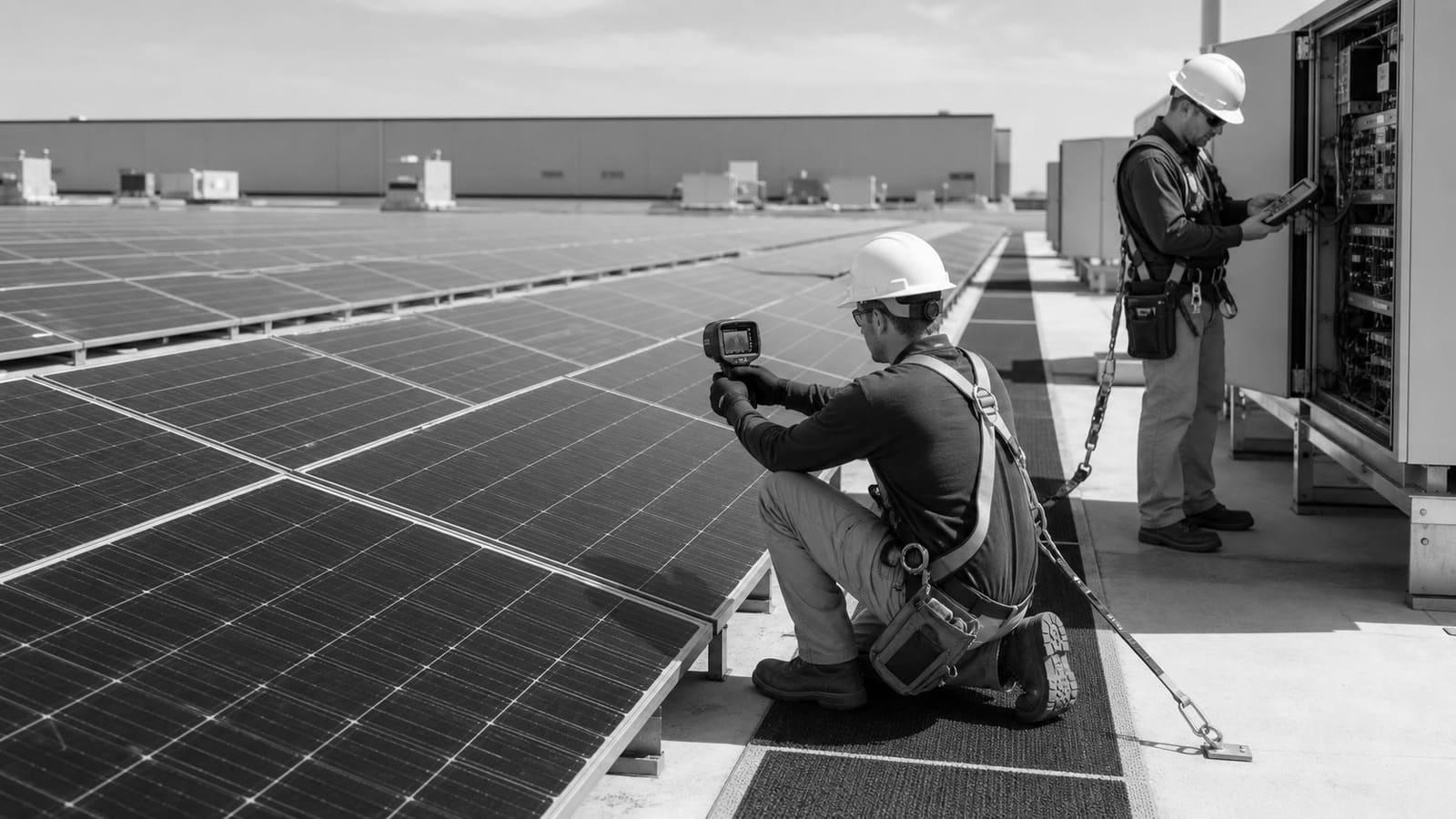
The Atlanta Office of Buildings conducts inspections and code enforcement on permitted construction. If you claim a Georgia Power rebate on qualifying measures, Georgia Power may also inspect the installation and verify it before paying. We keep the site and both record sets ready.
GET STARTED
Tell us about the building.
Whatever the trade, we scope it, price it, and put the right crew on it. Site visits are free, always.
MORE SERVICE AREAS