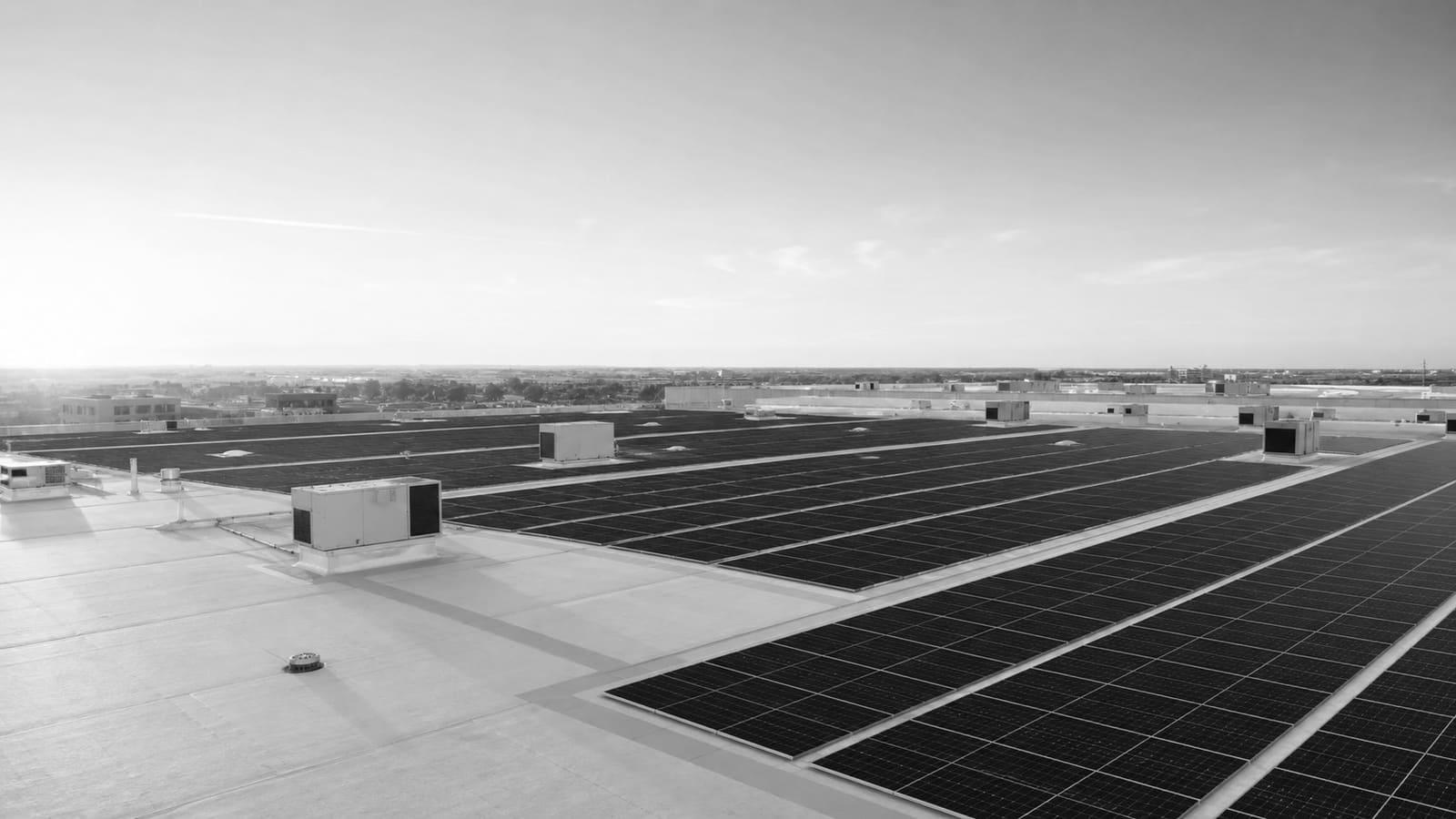
CHARLOTTE, NC · SOLAR
Commercial solar installation in Charlotte.
Flux Facility designs and installs rooftop and parking canopy solar for Charlotte commercial buildings, from the shading study through city permits and utility interconnection.
Start with the building, not the panels.
A commercial solar project has to fit the site, the roof, the electrical system, and the utility rules. We start with a solar feasibility study, then compare rooftop solar with solar carports where parking offers the stronger site.
One team carries design, permits, utility interconnection, construction, commissioning, and solar maintenance. We also compare direct ownership with solar financing and PPAs, and add battery storage only when it has a clear job.
START HERE
How does a solar system work on a Charlotte commercial roof or parking canopy?
Commercial solar installation puts a photovoltaic (PV) system — panels that turn sunlight into electricity — on a Charlotte warehouse roof, office roof, or parking canopy so the building pulls less power off the grid. Flux Facility runs the whole job: shading study, structural and electrical design, City of Charlotte permits, install, and the utility interconnection filing. Two numbers move on your bill. The array cuts the kilowatt-hours you buy, and it can cut demand charges when it is producing during your billed peak. Many commercial buildings peak in the afternoon on cooling load, which lines up with strong solar output. We model your load against that before we size a single panel.
What Charlotte permits and utility approvals does a solar project go through?
A Charlotte solar job runs on two approval tracks at once. We submit the structural and electrical drawings to the City of Charlotte through Commercial Plan Review for the building permit. At the same time, we file the interconnection package with your utility. Interconnection requirements and utility policies differ by region, so we confirm yours in writing before we promise a turn-on date. Both tracks go on one schedule before you sign, and we order equipment against the review dates instead of the install week.
System sizing inputs
How do you size commercial solar for a Charlotte building?
Start with a shading study · DESIGN A local shading analysis is a standard step before a solar layout is set on a site. We record what rooftop units, parapets, stair towers, and neighboring buildings block through the day, then lay panel rows around the shade instead of over it. Demand charges move differently than energy · BILLING Demand charges are billed in dollars per kilowatt per month, set by the 15-minute period in each month when your use peaked. Solar cuts demand only while it is producing in that window. NREL's commercial solar guide gives a planning figure: savings near 10% of rated capacity, so a 1 MW system might average 100 kW of demand reduction. Roof mount or parking canopy · MOUNTING Rooftop arrays and parking canopy arrays are both used on commercial sites. We compare them on structural capacity, roof condition and remaining service life, and how much parking comes out of service during the build. Ownership route sets the number · OWNERSHIP You can buy the system, lease it, or buy the power under a power purchase agreement (PPA), where an outside firm builds, owns, operates, and maintains the array. Third-party ownership with the site owner as the power buyer is allowed only in certain states. We confirm which routes are open to your site before we quote.
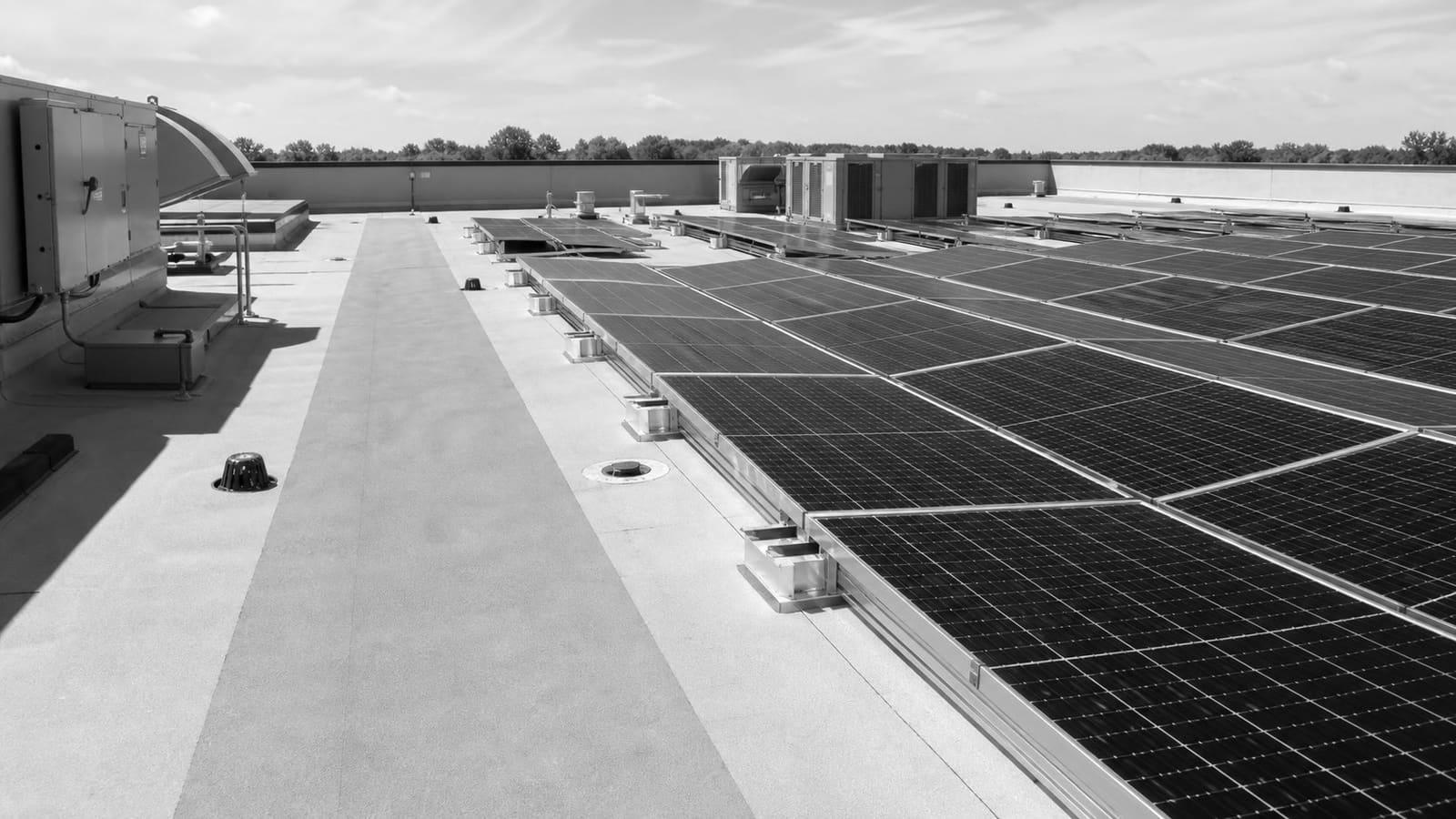
WHAT WE HANDLE
Everything under the solar door.
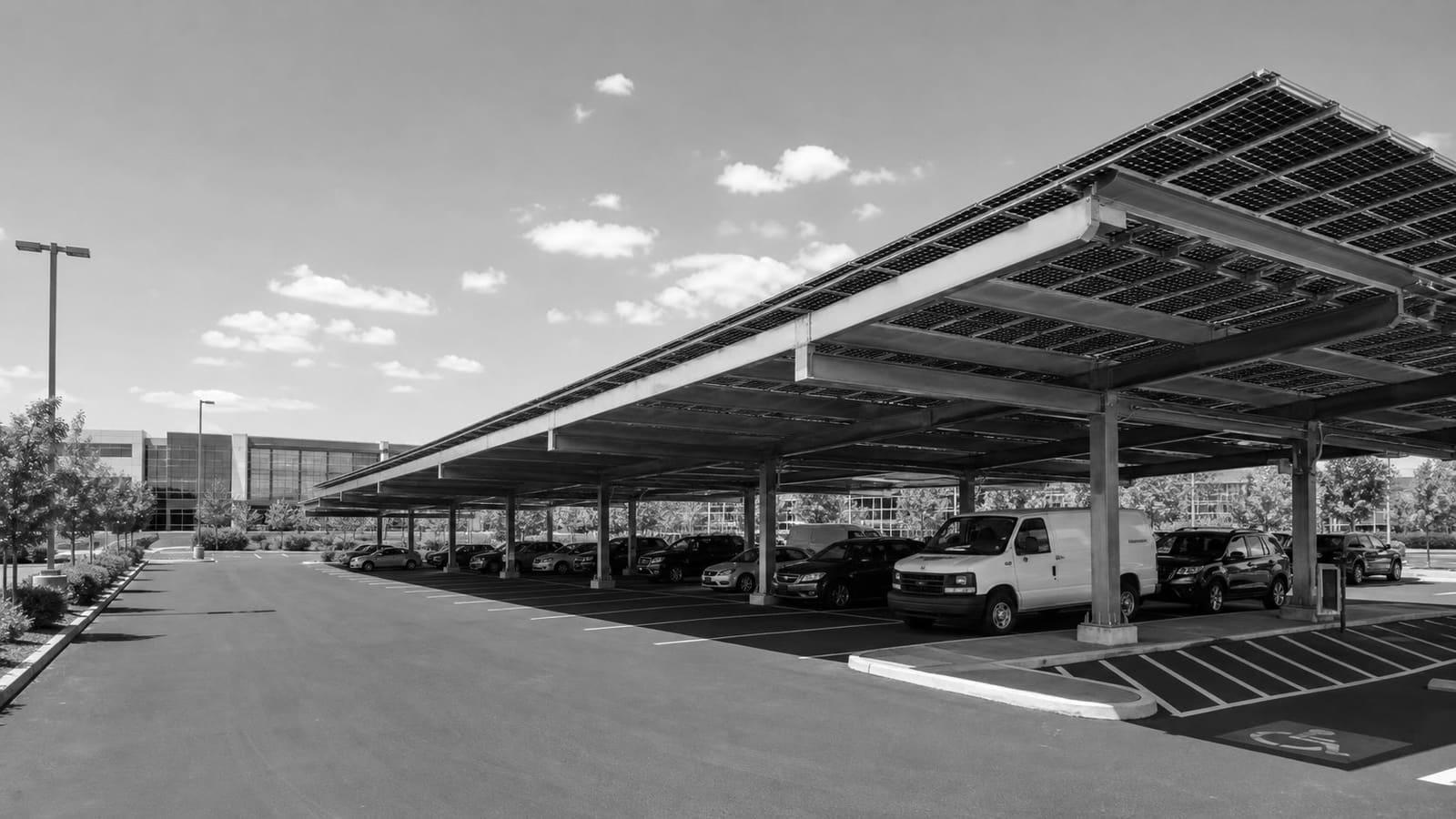
PROJECT PLANNING
How do you vet a commercial solar installer in Charlotte?
Three years of commercial solar work, minimum · EXPERIENCE NREL's best-practice guide for commercial and industrial solar installation sets a floor of at least three years of company experience in design, engineering, and installation of commercial-scale PV systems. Ask a bidder for the project addresses behind that claim. Commercial and industrial project history · TRACK RECORD The same guide asks for solar PV experience on commercial, industrial, or utility-scale projects. Flux works on commercial buildings only. We hand over roof types, system sizes, and which parts of the electrical scope our own crews performed. Nobody audits that checklist for you · DILIGENCE Following the guide is voluntary, and providers self-certify that they met it. The guide tells investors and rating agencies to verify compliance rather than take the claim at face value. Ask any bidder for the documents behind each item before you sign.
Quote prep list
What do we need to quote commercial solar in Charlotte?
- Twelve months of electric bills with the demand charge line included, so we can see when your peak lands during the day. - A roof plan, the structural drawings, and any planned reroof date — we sequence the array behind a reroof instead of setting panels on a membrane you are about to replace. - Your single-line electrical drawing and a photo of the main switchgear nameplate, so we can size the tie-in point. - Whether you already take part in a Duke Energy program. The utility increased financial incentives for customer energy efficiency and demand response programs in the Carolinas, and we confirm current terms with the utility before any incentive goes into your number. - Any addition, repave, or lot restriping planned in the next two years, so canopy footings and conduit routes do not land where that work is going.
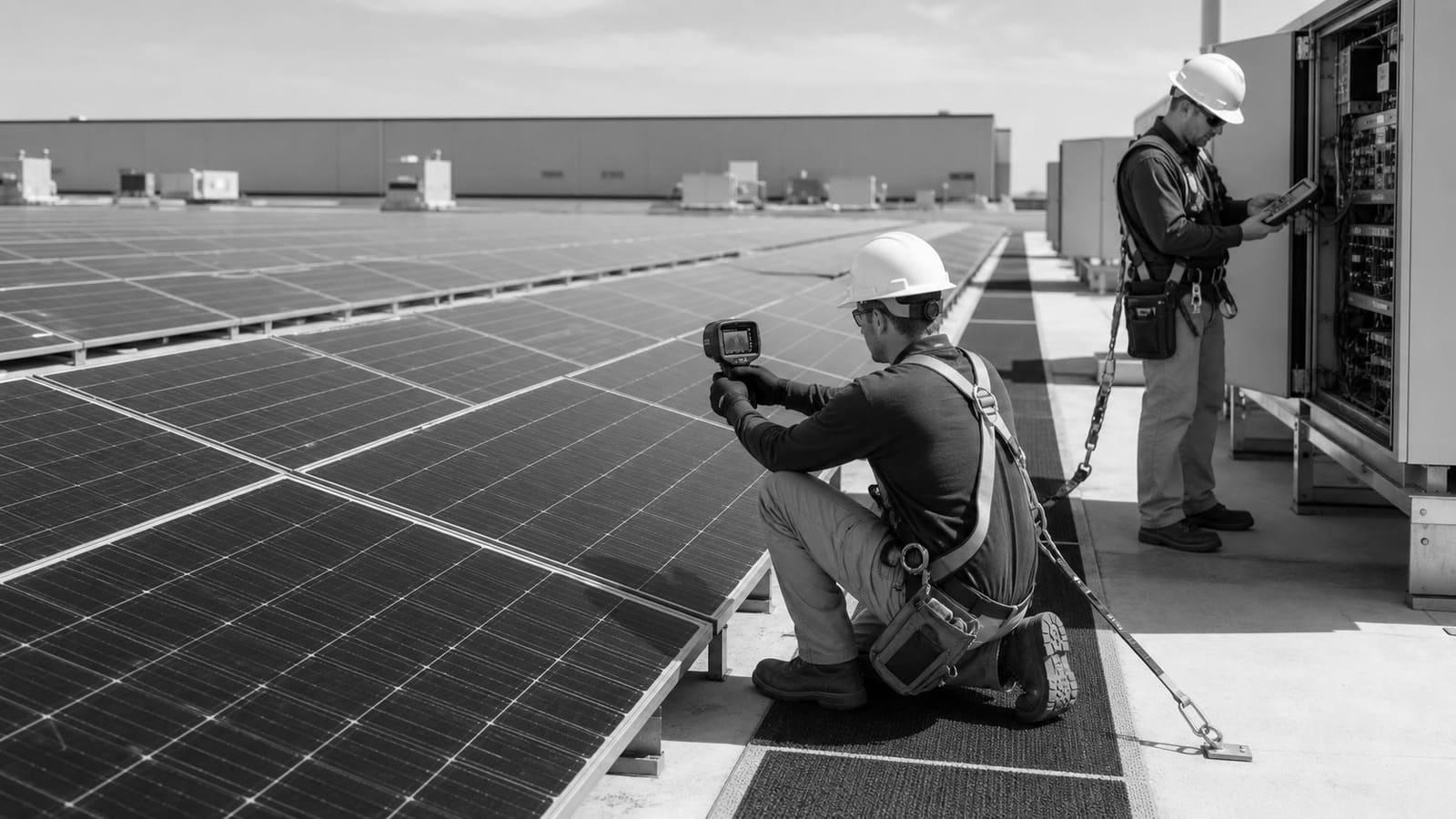
BEFORE YOU BUY
What Charlotte site conditions change a commercial solar install?
Right-of-way work is its own Charlotte permit
PERMITS
Charlotte issues right-of-way use permits and encroachment agreements through the city, separate from the building permit. A canopy footing or a conduit run near a public sidewalk or street goes down that track. We take the parcel through Charlotte Zoning Administration and mark the property line before the layout is fixed.
Capped landfills and former industrial ground
SITE
Solar has been built on capped landfills and cleaned-up industrial property, including rooftop and parking canopy arrays on a redeveloped factory site. A capped or contaminated area on your parcel does not rule out a ground mount by itself. We review the site controls and ground conditions before we lay out rows.
The run from array to switchgear
LAYOUT
We walk the path from the array to your main service, mark the distance, the pavement cuts, and the fire lanes it crosses, then price that run as its own line item. You can weigh it against a shorter roof-mounted layout before you pick.
QUESTIONS
Straight answers.
Who maintains a commercial solar system in Charlotte after startup?
Under a lease or a power purchase agreement, the outside owner builds, owns, operates, and maintains the array. When you own the system, Flux handles inspection, cleaning, and repairs on the schedule you set.
Can Flux add solar while a Charlotte building is still under construction?
Send us the structural and electrical drawings during design. We set roof penetration points, conduit paths, and the tie-in location before the steel and the switchgear are ordered.
Does solar cut our demand charge if our peak is after dark?
Solar reduces demand only while it is producing, so a peak after sunset stays where it is. The array still cuts the kilowatt-hours you buy, and we show energy savings and demand savings as separate lines.
Does net metering apply to a Charlotte commercial solar system?
Net metering and interconnection rules are set by the utility and the state, and they vary widely from region to region. We confirm the current rules with your utility and put that answer in the proposal instead of assuming it.
GET STARTED
Tell us about the building.
Whatever the trade, we scope it, price it, and put the right crew on it. Site visits are free, always.
MORE SERVICE AREAS