ATLANTA, GA · EV CHARGING
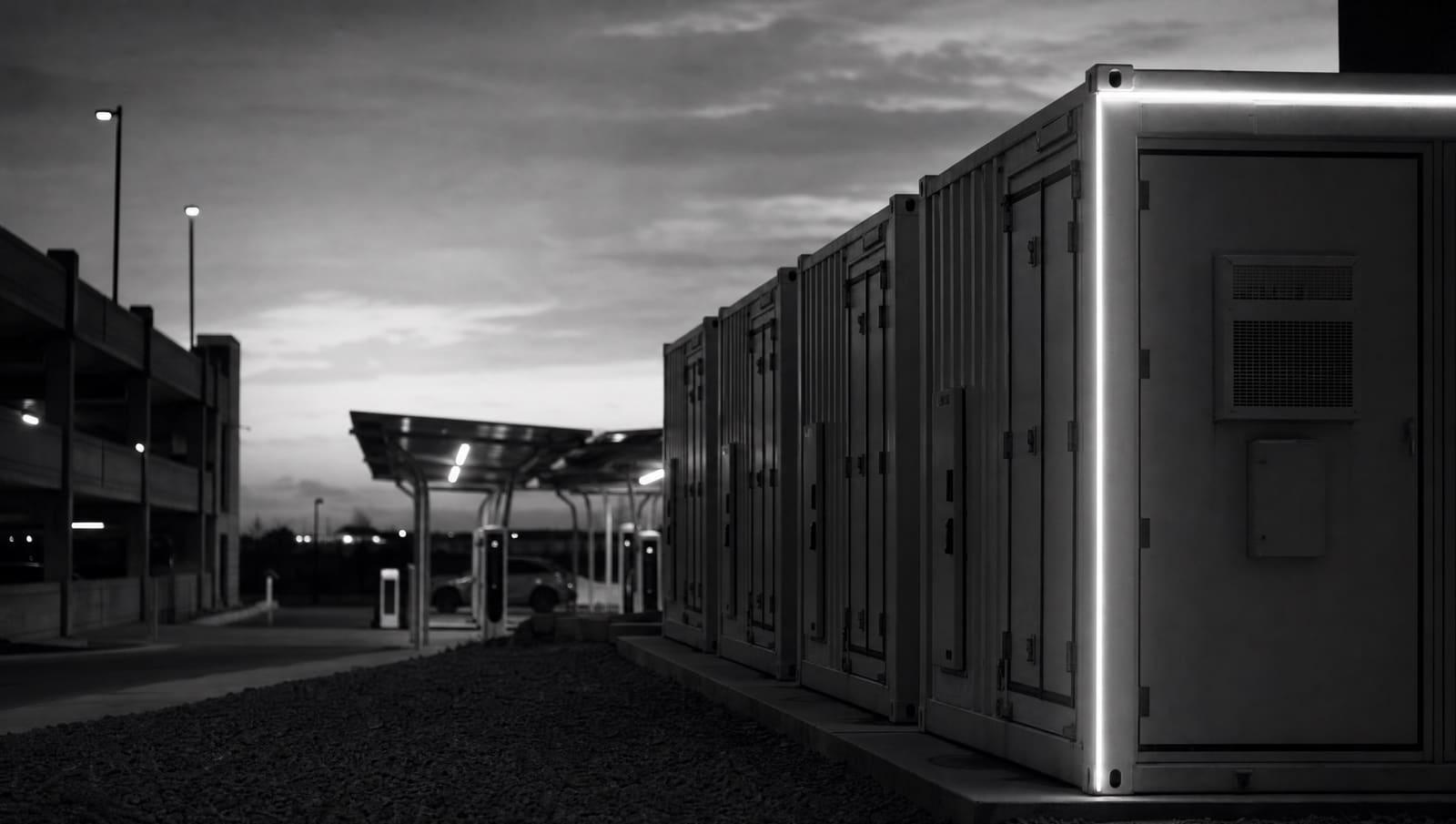
Commercial EV charging installation in Atlanta.
Flux Facility designs and installs commercial EV charging for Atlanta workplaces, retail lots, parking decks, and fleet depots, starting with a load calculation instead of a hardware order.
Chargers that show up on time.
The hard part of EV charging installation isn't the charger, it's the power: service capacity, panel upgrades, trenching, and utility make-ready programs that can cover a surprising share of the cost. Good designs start from your electrical reality, not a brochure.
Good fleet charging plans start from routes and dwell times so vehicles are charged when they roll, and workplace charging gets managed loads so your demand charges don't eat the benefit. Broken chargers kill adoption, so service is part of every proposal.
START HERE
How do Atlanta commercial buildings add EV chargers?
Commercial EV charging installation puts chargers where vehicles already park at your Atlanta building: the employee lot, the parking deck, the retail row, the fleet yard. It also adds the power to run them all day. The chargers are the simple part. Load calculations, service capacity, permitting, and equipment choice are what set your budget. Engineering has to come before purchasing. Commercial EV charging projects go wrong when someone picks hardware first and finds out later that the electrical service cannot carry it. Settle the load calculation, the conduit route, and the permit path first. Then order equipment.
Why does summer peak demand change an Atlanta EV charger load calculation?
Atlanta's hot, humid summers make the load calculation critical. Air conditioning creates huge peak demand from May through September. Add high-draw EV charging on top of that peak and an older electrical service can get pushed past its limit. A load calculation built on average usage looks fine in March and fails in July. Ask any contractor to show the seasonal peak in the math, not just the annual average. NEC Article 625 also classifies EV charging as a continuous load. Breakers and wire must be sized for at least 125% of the charger's maximum current draw, so a 40-amp Level 2 unit needs a 50-amp breaker and conductors. Multiply that across several stalls and the service capacity question answers itself.
Project timeline
How long does commercial EV charging installation take in Atlanta?
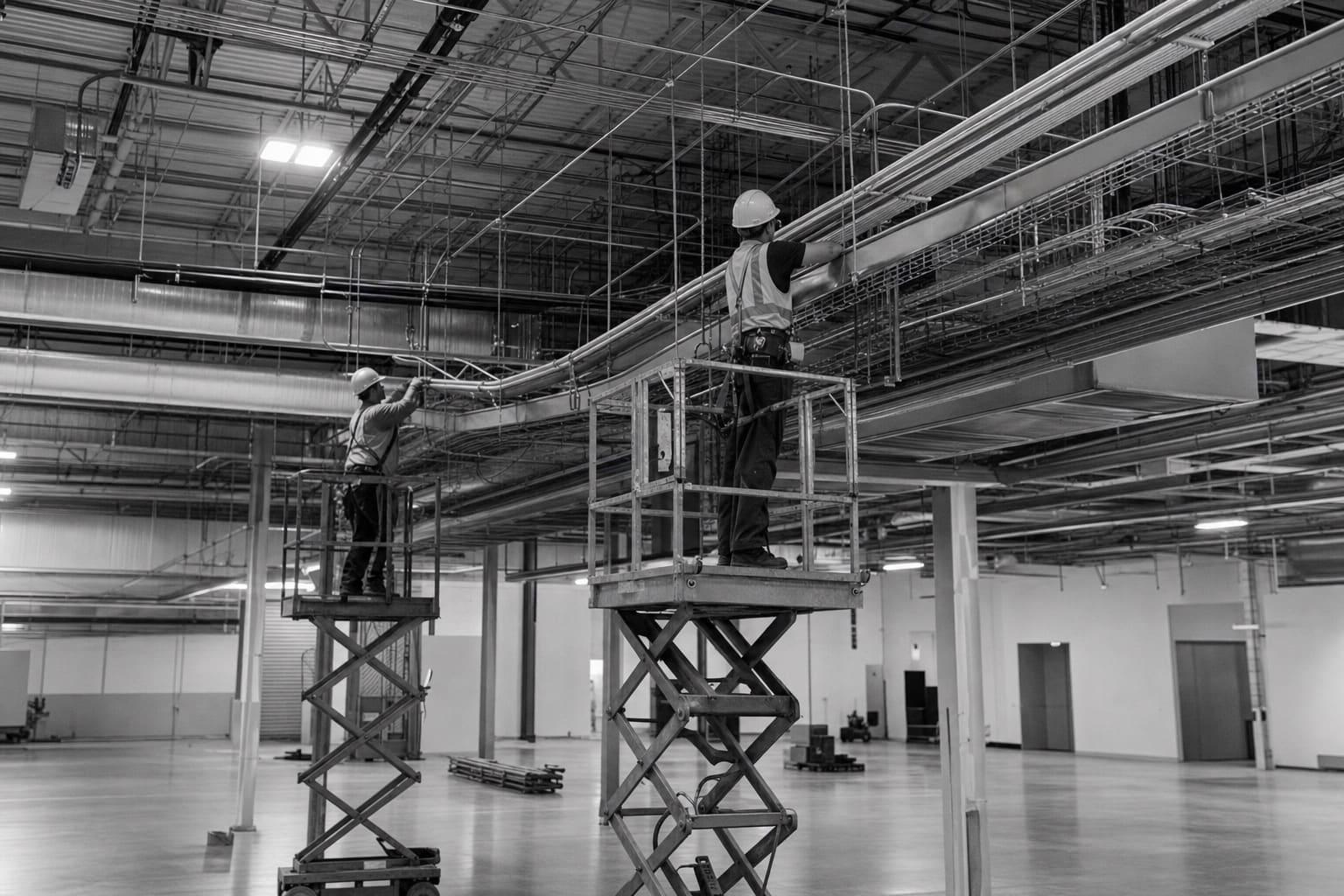
A licensed electrician checks what your existing service actually carries and where the spare capacity sits. Nothing else in the project is worth pricing until this step is done. Stall layout, conduit route, charger count, and power level get locked down here. Engineering comes before purchasing, not after the order ships. Permitting in Fulton County or Gwinnett County swings with project scope and how backed up that office is. Build slack into the schedule at this phase. Level 3 DC fast chargers and networked systems sometimes take longer. Lead time, not install labor, is usually the long pole in a commercial EV charging project. Final inspection and activation add one to two more. Chargers are not live for drivers until that last step clears.
PROJECT PLANNING
Level 2 or DC fast charging for an Atlanta commercial lot?
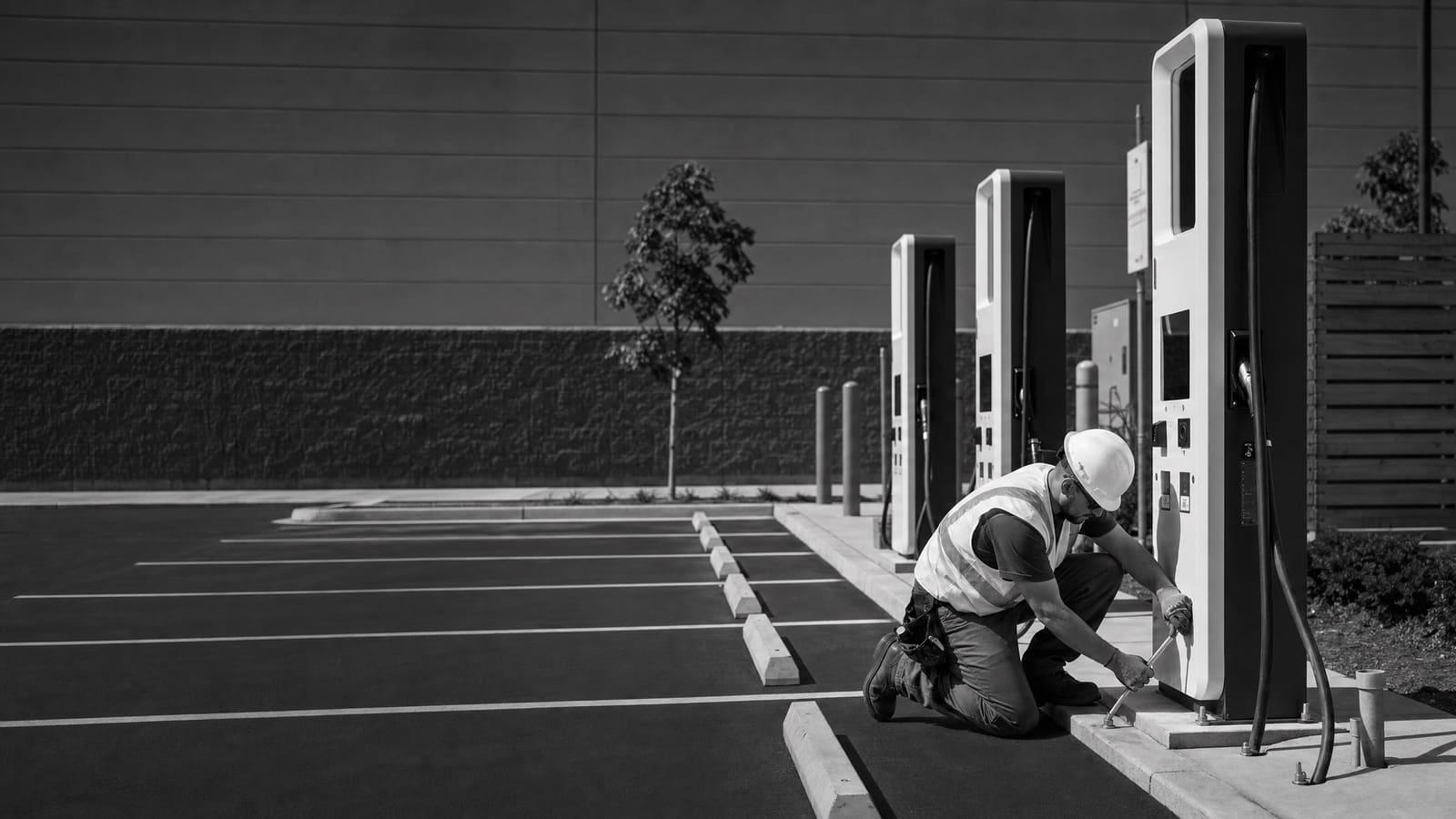
Level 2 at 208V or 240V · MOST SITES Delivers roughly 12 to 50 miles of range per hour of charging. It suits workplaces and retail locations where vehicles sit parked for several hours. Most commercial installations center on Level 2. Level 3 DC fast charging · HIGH TURNOVER Capable of an 80% charge in under an hour. It also demands substantially more electrical infrastructure and costs far more to purchase and install. Level 3 units are most common at highway travel centers and high-traffic fueling stations. How to pick between them · DWELL TIME Match the charger to how long vehicles actually sit. If they park all day at your Atlanta site, Level 2 does the job for less money. If drivers need to be gone in half an hour, plan for DC fast charging and the service work that comes with it.
WHAT WE HANDLE
Everything under the EV door.
Quote checklist
What should an Atlanta commercial EV charging quote include?
- A written load calculation for your Atlanta building's existing service, sized at 125% of each charger's maximum draw the way NEC Article 625 requires for continuous loads. - The permit path named in writing: which county office reviews the job, who files it, and who chases the final inspection. - The conduit and trench route from the panel to the stalls, priced as its own line item instead of buried inside a lump sum. - Any electrical service upgrade called out separately, whether that is a panel, switchgear, or a utility transformer. Those carry the longest lead times and the biggest dollars. - Protective bollards on stalls that see truck or fleet traffic, so one bad turn does not take out a charger and its feeder.

BEFORE YOU BUY
What does an Atlanta fleet depot need for EV charging?
- Enough utility power at the property line. One high-activity Atlanta industrial fleet facility took a 2.5 MVA utility transformer to support high-demand charging without power interruptions.
- A dispenser count planned up front. That same project activated sixteen EV charging dispensers to fully equip the site for fleet electrification.
- Full EVSE infrastructure, not just the charger heads: transformer, switchgear, feeders, and the conduit that ties them together.
- Protective bollards built to take daily fleet traffic and keep trucks from damaging charging equipment.
- A build sequence that keeps the yard working. That Atlanta fleet job was run without disrupting ongoing site activities, and yours should be scoped the same way.
- Headroom for the next phase. High-capacity transformer and switchgear sizing is what lets you add chargers later without tearing the service back open.
ASKED IN ATLANTA
Common questions about commercial ev charging installation in Atlanta
How much should it cost to get an EV charger installed?
COST
Cost tracks your electrical service, not the charger box. A site with spare panel capacity and a short conduit run is cheap. A site needing a transformer and trenching is not.
How much on average does it cost to install an EV charger?
AVERAGES
Published averages come from single-charger jobs and do not predict a commercial Atlanta site with several stalls. Get the load calculation first, then a real per-stall quote.
Does Georgia Power offer a rebate for EV chargers?
REBATES
Our sourcing does not confirm a current utility rebate for commercial chargers. Ask your utility rep directly, and do not budget around a program you cannot verify in writing.
Project in Atlanta?
Request a free estimate. Atlanta crews, Atlanta pricing, one request.
QUESTIONS
Straight answers.
Do I need a permit for commercial EV charging installation in Atlanta?
Yes, and it is a real phase rather than a formality. Around metro Atlanta, permitting in offices such as Fulton County or Gwinnett County can run two to eight weeks depending on project scope and the office's current workload. Failed inspections mean costly rework, so the permit path belongs in the scope from day one.
Can my Atlanta building's existing electrical service handle EV chargers?
Only a load calculation answers that. NEC Article 625 classifies EV charging as a continuous load, so a 40-amp Level 2 charger needs a breaker and conductors rated for at least 50 amps. Multiply that across several stalls and many buildings need a service upgrade before any charger goes in.
How many chargers can an Atlanta fleet site support?
As many as the electrical service can feed. One fleet facility here activated sixteen EV charging dispensers after a 2.5 MVA utility transformer went in. Your number falls out of the load calculation and the utility capacity at your address, not out of a catalog.
Will EV charger installation shut down my Atlanta parking lot?
It should not. A completed fleet installation in the area was sequenced so daily site activity kept running through the work. Expect staged stall closures and short conduit-route interruptions, not a closed lot. Ask any contractor to put the staging plan in the proposal.
GET STARTED
Put a real number on your chargers.
Free site visit, make-ready money screened, and a price that covers the whole job, not just the hardware.
MORE SERVICE AREAS