THE DIRECT ANSWER
What a commercial HVAC replacement actually includes
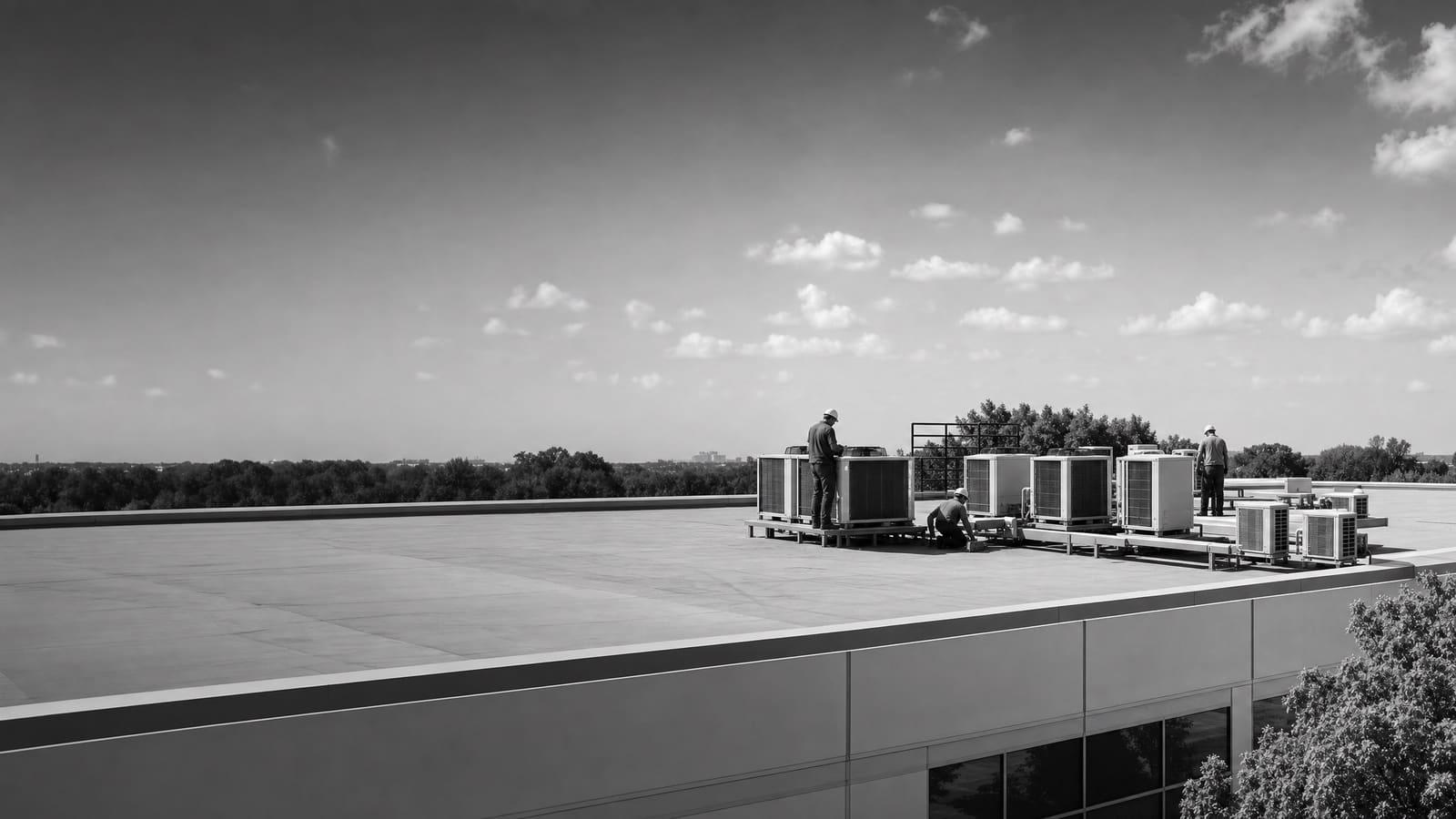
A commercial HVAC replacement covers load confirmation, equipment selection, refrigerant recovery and removal of the old unit, curb or structural work, the crane set, gas and electrical connections, controls integration, permits, and commissioning. Replacement beats one more repair when a unit is past fifteen years, needs frequent service, or no longer holds the space. Old rooftop units waste roughly $900 to $3,700 each per year, and a failure-day swap removes every choice you had about efficiency, timing, and price.
A site review has to verify tonnage against current occupancy, curb size and roof structure, electrical capacity at the unit, crane reach and lot access, and whether existing controls will accept the new equipment.
THE CHOICE
Three ways to handle a failing unit
Most commercial buyers land in one of three places. Which one is right depends on the unit's age, the repair history, and how much the space has changed since the equipment went in.
Repair still wins on units that are young, still efficient, and failing for one identifiable reason. It stops winning when the repairs stack up, when the failure is the compressor or the coil, or when the unit is old enough that the next service call is a coin flip.
Like-for-like replacement is the fastest path back to conditioned space. Same curb, same connections, familiar permit scope, no surprises.
The third option is worth an extra week of thinking: moving up an efficiency tier, or switching to a heat pump rooftop unit, while the roof is already open. Charleston sits in the part of the country where mild winters let heat pump rooftop units carry most or all of the heating season, so the electric option is a real comparison here rather than a hypothetical one.
WHAT MOVES THE NUMBER
The budget lines that actually swing
Installed price on a commercial replacement is mostly driven by things you can see before anyone quotes. These are the lines to ask about, ordered roughly by how much they move a number. Two identical units on two different roofs rarely price the same.
IN PRACTICE
Buy the equipment, not just the install
The equipment decision usually gets made too fast, because it gets made on the day the unit dies. That is how buildings end up with a code-minimum unit chosen for availability and nothing else.
The cleaner approach is to decide the specification before the failure. Pull the age and service history on every unit on the roof, flag anything past fifteen years, and settle now what you would install if it went out next month. Efficiency tier, refrigerant, controls, and whether the replacement stays on gas heat. High-efficiency rooftop units built to the federal performance specification cut energy use by up to half against the older standard, and that gap shows up every month on units that run long hours.
Then check the electric option honestly. A heat pump rooftop unit gives you reverse-cycle heating out of the same box, and Charleston's climate sits in the region where those units can handle most or all of the winter heating demand. What decides it is not opinion: electrical capacity at the unit, physical space on the roof, what happens to the existing gas line, local electricity and gas prices, and whether an incentive is available on the model you want. Answer those five and the choice usually makes itself.
COMPLEXITY
What makes a replacement simple or hard
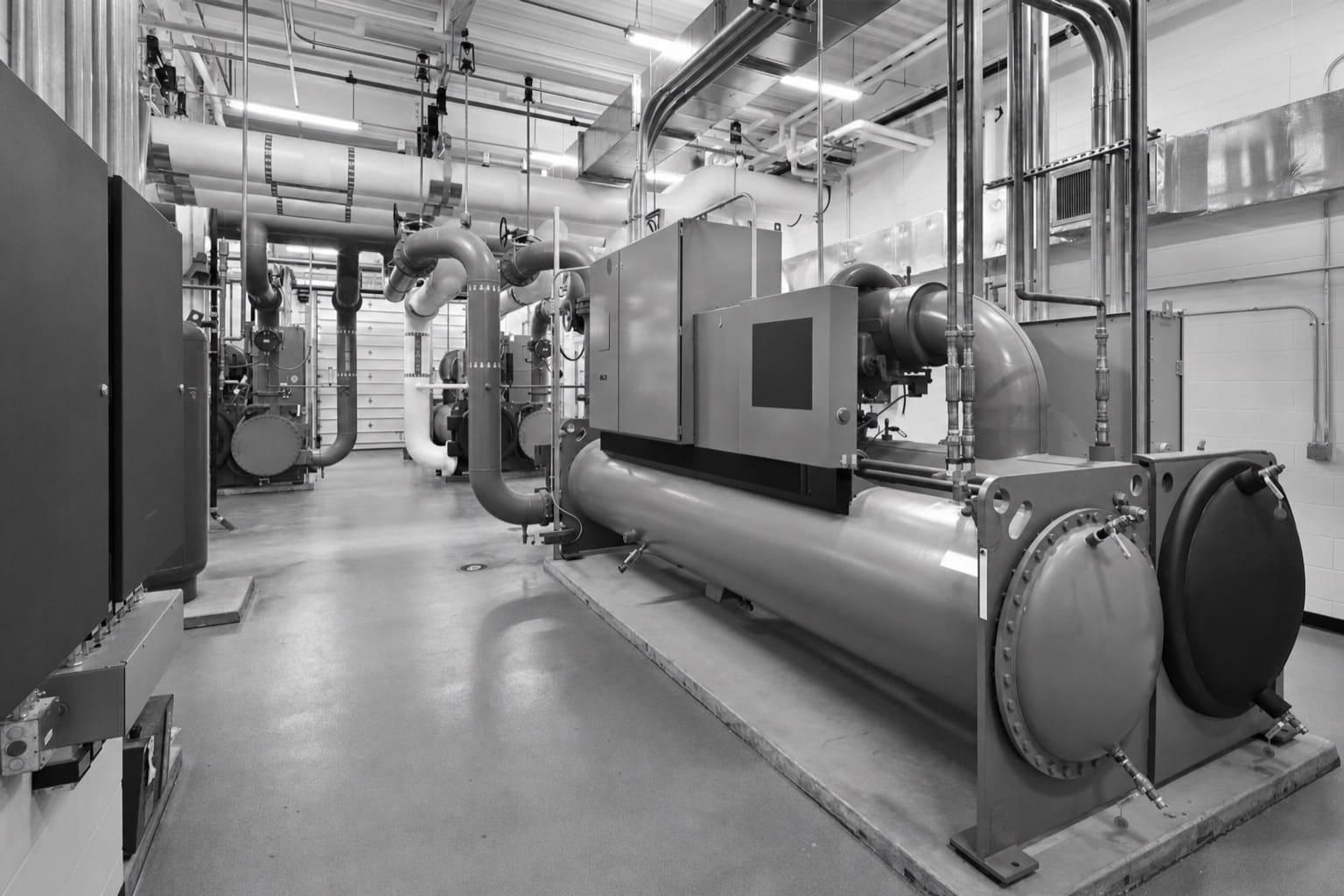
Two replacements at the same tonnage can be a one-morning job or a multi-week project. The difference is rarely the equipment. It is what the building asks the installer to work around.
LOWER COMPLEXITY
Same size, same spot
The replacement matches the old tonnage, lands on the existing curb or a simple adapter, and reuses the same electrical and gas connections. The lot has crane room. Permit scope stays mechanical and electrical, and the visible disruption is a set of coned-off stalls.
HIGHER COMPLEXITY
New footprint or new fuel
Tonnage grows, the unit moves, or the building drops gas heat for an all-electric unit. Now there is structural review, a possible service upgrade, wider permit scope, and a crane plan that has to work around occupied space and tight street access.
SCOPING IT
What a real site review checks
A quote written from a nameplate photo is a starting number, not a price. It is fine for triage during an outage. It is not enough to sign.
The review that produces a real number starts on the roof. Someone measures the existing curb and checks the structure under it, because a different footprint means an adapter or framing. They read the electrical at the unit and confirm available capacity, which is the item that most often turns an all-electric conversion from simple into expensive. They look at gas service, condensate routing, and the line set if the system is split.
Then the review moves off the roof. Where the crane sets up, what it can reach, and how many stalls or lanes go out of service for the morning. Who is inside the building that day and what hours are genuinely available. What the existing controls are, and whether the new unit talks to them without a gateway.
Last, the load itself. A unit installed twenty years ago was sized for the occupancy, lighting, and equipment of twenty years ago. Confirming the load against how the space is used now is what keeps a new unit from repeating the old unit's complaints.
Ask for this before you sign
Measured curb dimensions, the electrical capacity reading at the unit, the rigging and lot-closure plan, the permit scope the installer is pulling, and the commissioning documents you receive at handoff. If a quote cannot name those five, it has not been scoped.
IN CHARLESTON
What Charleston changes about this project
Charleston reviews exterior work more closely than most cities its size, and mechanical permits are part of that. Board of Architectural Review agendas list commercial mechanical and building permits alongside roofing and siding items, and the HVAC entries read the same way: a unit replaced at the same size, in the same location. Commercial tenant upfits that add new HVAC and ductwork show up on those same agendas.
Plan around it. A same-tonnage unit going back in the same spot is the cleanest version of this project on a reviewed property. Moving equipment somewhere it becomes visible, or growing the footprint, is the version that needs lead time in the schedule before anyone books a crane.
The climate helps on the equipment side. Mild winters here put Charleston in the region where heat pump rooftop units can carry most or all of the heating season, so the all-electric option deserves a real look.
Build review time into the schedule
Confirm early whether your property falls under design review, and whether the replacement changes size or location. That answer decides whether the permit path is routine or whether it needs weeks of lead time before equipment is ordered.
OWNERSHIP
Two decisions that outlive the install
The install is a week. Two of the decisions inside it run for the whole service life of the equipment, and they shape what the building costs to operate long after the crane leaves.
The first is refrigerant. New equipment ships on newer low-GWP refrigerants, and EPA rules under Section 608 of the Clean Air Act govern how refrigerant is handled and recycled whenever equipment is serviced or taken out. That affects who is allowed to touch the unit, how the old one comes off the roof, and how you stock parts for a roof now running two refrigerants.
The second is commissioning. Charge, airflow, and control settings verified against spec and documented at handoff. It is the difference between a unit that performs like the model you paid for and one that quietly runs at the efficiency of the unit you just replaced.
REFRIGERANT
A mixed roof is a service plan
Once one unit is replaced, the roof runs two refrigerants. Put that in the service contract, and decide how spare parts and technician coverage get handled before the next failure rather than during it.
DOCUMENTATION
Commissioning protects the warranty
Startup readings, charge, airflow, and control settings recorded and handed over. Without that paperwork, warranty claims get harder and month-two comfort complaints have no baseline to check against.
PLANNING AHEAD
Phasing a roof full of aging units
Buildings rarely have one tired unit. They have five, installed the same year, aging on the same curve. Replacing them one emergency at a time is the most expensive way through it, because every swap happens at the worst possible moment, at whatever price and availability that week allows.
Phasing works better. Rank the units by age, service cost, and what they serve, then replace on a schedule with the worst first. That buys volume pricing, planned crane days that can cover more than one unit, and equipment ordered against lead times instead of against a failure. It also makes the efficiency upgrade affordable, because the premium spreads across a budget cycle instead of landing in one unplanned quarter.
Run the numbers on operating cost, not just installed cost. Old, inefficient rooftop units waste somewhere between $900 and $3,700 each per year, and the units past fifteen years are usually the ones doing it. On a roof with five of them, that is real money that never appears on a repair invoice. Make the incentive check part of procurement too, since utility and federal programs for high-efficiency equipment can change what the better unit actually costs, and they change often enough to be worth verifying at quote time.
THE QUOTE
Five things a comparable quote shows
Two quotes are only comparable when both name the same scope. Ask every bidder for these five in writing before you compare prices. A missing line is not a savings; it is a change order waiting to happen.
01
The equipment, in full
Make, model, tonnage, efficiency rating, refrigerant, and heating type. Not just "new rooftop unit."
02
Availability next to the price
The quoted lead time for that specific model, and what the alternate is if it slips.
03
Everything happening on the roof
Curb adapter, structural work, disconnect, and the refrigerant recovery and disposal of the old unit.
04
The crane and lot plan
Rigging, staging, closure hours, and who coordinates with tenants and the property manager.
05
Permits and commissioning
Which permits the installer pulls, who meets inspectors, and what startup documentation you receive.
Get a defensible number
Price the equipment and the building together.
Send the address, operating target, and target opening date. Flux will identify what must be verified before the project can be priced.
Get a free estimateQuestions
Straight answers.
How do you know when replacement beats another repair?
Age plus repair pattern. Units past fifteen years get expensive to keep, and their failures stop being one-off events. If the compressor or the coil is the problem, or the same unit has been on the service log three times in a year, the repair is buying months. Waiting for full failure also removes your ability to choose efficiency, timing, or price.
Should you replace like-for-like or resize?
Confirm the load either way. If the space and its use have not changed, like-for-like is often correct and it keeps curb work and permitting simple. If occupancy, lighting, or equipment changed, or if the old unit never held the space properly, right-sizing fixes complaints that an identical replacement would just repeat.
Is a heat pump rooftop unit a real option in Charleston?
Yes, and it should be compared rather than assumed. Heat pump rooftop units work best where winters are mild to moderate, and most of the South falls in that range, so they can cover most or all of the heating season. What decides it is electrical capacity at the unit, physical space, the existing gas line, local energy prices, and whether an incentive applies to the model you want.
Does a commercial HVAC replacement need city review in Charleston?
It depends on the property. Charleston's Board of Architectural Review agendas include commercial mechanical permits, and the HVAC items on them are typically described as same-size, same-location replacements. Confirm your property's review status early, because moving or enlarging exterior equipment is what adds time to the schedule.
Who handles the crane, permits, and old refrigerant?
The installing contractor should own all three inside the installed price: the rigging plan and lot coordination, the mechanical and electrical permits with inspections, and recovery of the old refrigerant under EPA Section 608 rules. Get it in writing. Split responsibility is where replacement schedules fall apart.
Sources used for this guide
- [1]betterbuildingssolutioncenter.energy.gov — DOE Advanced Rooftop Unit Replacement Guidance
- [2]betterbuildingssolutioncenter.energy.gov — DOE Commercial Heat Pump Rooftop Unit Replacement Guidance
- [3]betterbuildingssolutioncenter.energy.gov — DOE High-Efficiency Commercial Rooftop Unit Toolkit
- [4]energy.gov — DOE Efficient Commercial Rooftop Air Conditioner Program
- [5]epa.gov — EPA Stationary HVAC Refrigerant Management
- [6]charleston-sc.gov — charleston-sc.gov