THE SHORT ANSWER
What a commercial HVAC replacement actually includes
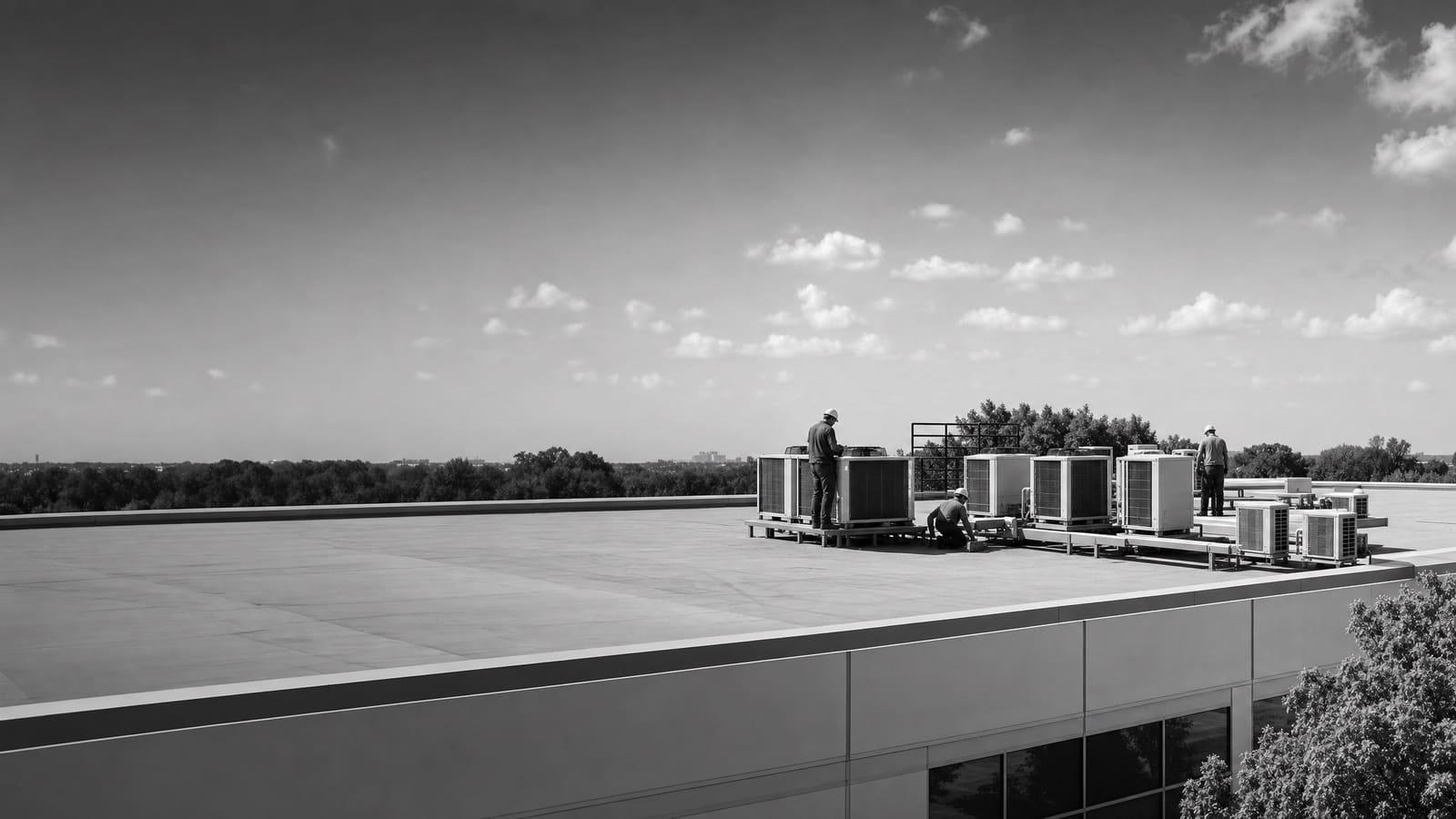
A commercial HVAC replacement covers confirming the load, selecting equipment against real availability, curb and structural work, power and gas connections, controls integration, and commissioning before handoff. Replacement beats another repair once a unit is past about fifteen years, when repairs repeat in the same season, or when it can no longer hold the space. Old, inefficient rooftop units waste an estimated $900 to $3,700 per unit every year, so a tired unit keeps charging you between breakdowns.
A site review has to verify tonnage against how the space is used now, curb size and roof structure, available electrical capacity, and whether existing controls can carry a new unit.
THREE PATHS
The choice that shapes the next fifteen years
Most commercial replacements come down to three paths, and the difference shows up on the utility bill for years, not on the invoice. A like-for-like swap is the fastest route back to conditioned space and the simplest permit set. A high-efficiency unit costs more up front and returns it in energy: DOE's rooftop unit challenge targeted models that cut energy use by up to 50 percent against the older standard, and more than 20 models now exceed that specification. A heat pump rooftop unit adds reverse-cycle heating, which matters if the building heats with gas today and you want one electric system doing both jobs. DOE's guidance is direct about where that fits — heat pump rooftop units suit mild-to-moderate winter heating, and across most of the U.S. South and West they are capable of handling most or all of the winter demand. Your heating load, your electric and gas rates, and what the roof can already feed decide which path is right.
WHAT MOVES THE NUMBER
The lines that separate a swap from a project
Nobody can price a rooftop replacement from a phone call, but you can predict which lines will move. These are the items that turn a clean swap into a longer job.
IN PRACTICE
Choosing equipment before the unit fails
The most expensive replacement is the one you did not plan. DOE's guidance says it plainly: facility managers often delay buying a new rooftop unit until the current one no longer conditions the space, needs frequent maintenance, or fails completely. Replacing an inefficient, underperforming unit proactively is frequently the smarter business move — better than replacement on failure, and often better than a like-for-like swap at the end of the unit's service life.
The reason is that failure removes your choices. When a unit dies in the middle of cooling season, the decision collapses to whatever is available regionally. You lose the efficiency comparison, the heat pump conversation, and any leverage on schedule. A planned replacement gives you time to compare two or three real options with real availability, and to put the crane on a day the building can absorb.
Practically, that means treating age as a trigger rather than a footnote. Once a unit passes fifteen years, put it on a watch list with its service history and its share of the energy bill. When repair costs start repeating in the same season, you are already buying a replacement in installments — you just don't get a new unit at the end.
SCOPE
Same tonnage, very different projects
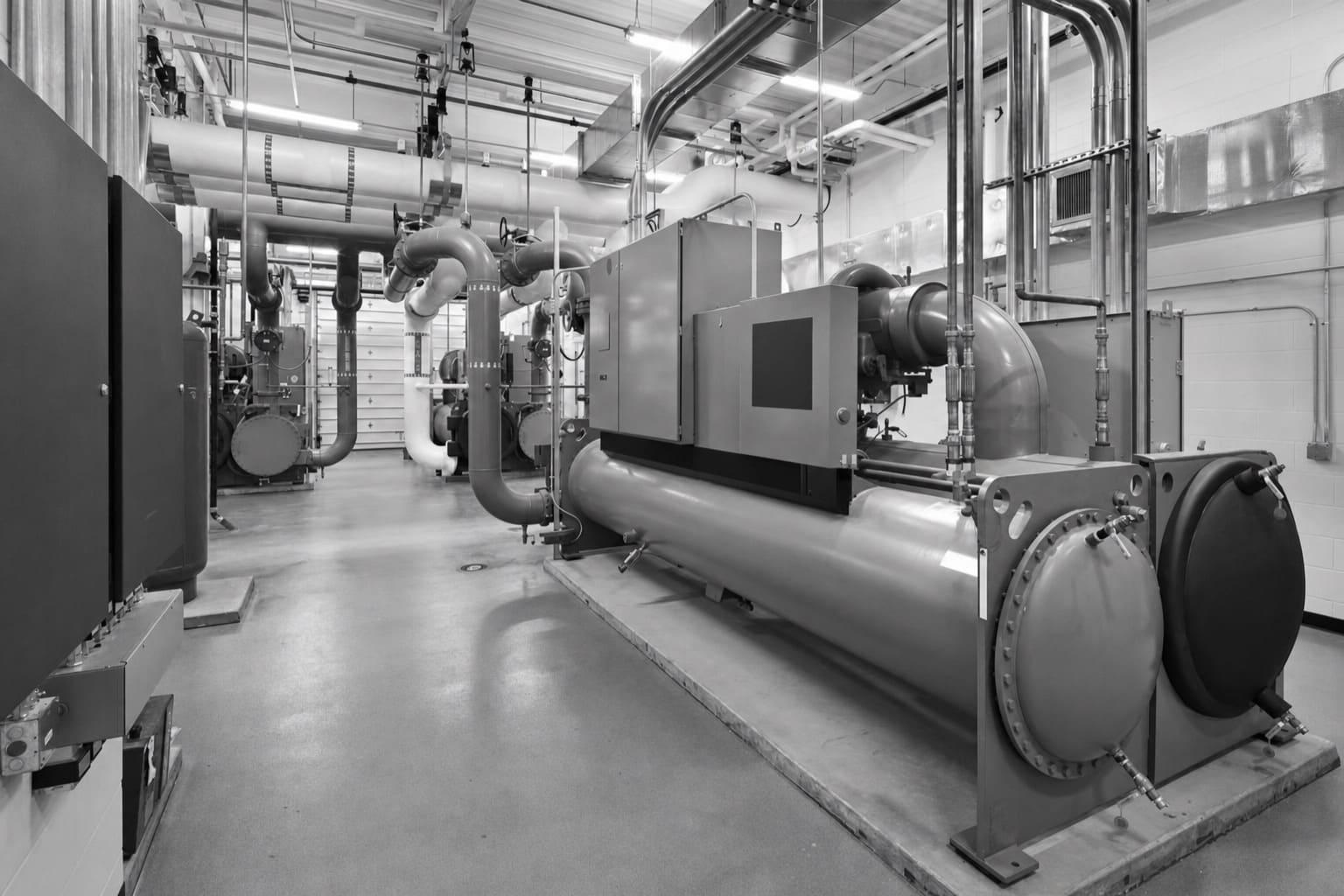
Two replacements can carry identical capacity and still run on different timelines. What separates them is almost never the unit itself.
LOWER COMPLEXITY
Straight swap on an existing curb
Same capacity, matching footprint, open roof access, and a lot that can spare stalls for a morning. Controls are simple or standalone, power is already sized for the unit, and the permit set is routine mechanical and electrical.
HIGHER COMPLEXITY
Capacity change or fuel change
New tonnage, a different footprint, or a move from gas heat to a heat pump. Electrical capacity, structural review, curb adaptation, and building automation all come into scope, and the schedule stretches to match.
BEFORE THE QUOTE
What a real site review has to confirm
A quote written from a nameplate photo is a starting point, not a price. Before anyone commits to a number, someone should stand on the roof.
Start with load. Years of tenants change occupancy, plug load, lighting, and sometimes the envelope. The old nameplate records what the building needed then, not what it needs now. Sizing from it carries forward whatever mistake was already there.
Then infrastructure. DOE's heat pump guidance groups this into three checks that apply to any replacement, not only electric ones: electrical capacity, physical constraints, and gas lines. Is there panel room and feeder capacity for the unit you want? Does the new footprint fit the existing curb, and can the structure carry it? If the gas section is coming out, what happens to the line and the venting?
Finally, the human side. That same guidance flags contractor availability and knowledge as a real constraint, particularly for newer equipment types. Ask who commissions the unit, not just who sets it.
When those answers are missing from a proposal, the number in it is provisional. The change orders show up later, when you have less leverage.
The four answers to get in writing
A confirmed load for today's use, curb and structural fit, available electrical capacity and what happens to the gas line, and who performs startup and commissioning. Get those on paper before comparing prices, or you are comparing different scopes.
OWNERSHIP
Two things that outlast the install
The install is a short chapter. What you own afterward is a long operating decision and a refrigerant strategy across whatever else sits on your roof. Both are easier to handle if they are settled before the unit is ordered.
Efficiency is the first, and it is measurable. DOE estimates that old, inefficient rooftop units waste $900 to $3,700 per unit each year. Through the Advanced RTU Campaign, more than 200 organizations upgraded over 43,000 units and cut a combined $37 million a year from their energy bills. On a roof carrying several aging units, that arithmetic decides sequencing.
The second is refrigerant. EPA regulations under Section 608 of the Clean Air Act govern how refrigerant is handled and recycled in stationary air conditioning and heat pump equipment. That shapes what happens to the old unit and how a mixed fleet gets serviced afterward.
OPERATING COST
The unit you keep is the one you pay for
An aging rooftop unit collects rent every month it stays up there. When several are near end of life, replace the worst performer first and let its savings help carry the next one.
REFRIGERANT
Plan for a mixed fleet
Recovery from the old unit is regulated work, not an afterthought. A new unit on a newer refrigerant also means your service contract and spare-parts plan now cover more than one refrigerant type.
PHASING
Buying replacements in the right order
If your roof has more than one unit near end of life, the question stops being which unit and becomes what order. Replacing everything at once means one permit effort, one crane mobilization, and one disruption. It also means one very large check, and it resets the whole fleet to the same retirement date, which recreates the same problem all over again later.
Phasing usually wins. Rank units by three things you can actually measure: age past fifteen years, repeat service calls, and the spaces that generate the most complaints. Replace the worst first. The energy savings start immediately and help fund the next one.
Procurement follows the same logic. Ask for pricing on the tier you want and the tier below it, with availability attached to each option rather than quoted as a range at the end. There is real choice in the market — more than 20 rooftop models now exceed the high-efficiency specification DOE set with manufacturers. Ask separately which utility or program incentives are open at the time you buy. Incentive programs change and close, so confirm current terms before building them into a budget instead of relying on what was available a year ago.
COMPARING BIDS
Five things every quote should show
Bids only become comparable when they show the same things. Ask every contractor to break out these five, and price differences stop being mysterious.
01
Equipment, tonnage, and efficiency tier
Model number, capacity, and efficiency rating — not just "new rooftop unit."
02
Availability and lead time per option
Stated next to each price, so schedule is part of the decision instead of a surprise after signing.
03
Curb, structural, and roofing scope
Adapter, any framing, and how the roof gets closed back up and warranted.
04
Rigging, permits, and inspections
Who owns the crane day, the lot closure, and every inspection inside the installed price.
05
Startup and commissioning documentation
Charge, airflow, and control settings verified against spec and handed over in writing.
Get a defensible number
Price the equipment and the building together.
Send the address, operating target, and target opening date. Flux will identify what must be verified before the project can be priced.
Get a free estimateQuestions
Straight answers.
When does replacement beat another repair?
Three signals together usually settle it: the unit is past about fifteen years, repairs are repeating within the same season, and the space is no longer holding setpoint. DOE notes that units over fifteen years old can waste substantial energy compared with newer models, and that proactively replacing an underperforming unit is often smarter than waiting for failure.
Should we replace like-for-like or resize the unit?
Confirm the load either way. If occupancy, equipment, and the envelope are unchanged, like-for-like is often correct and keeps the project simple. If the use of the space changed, sizing from the old nameplate just carries the original mistake forward into another fifteen years of operation.
Is a heat pump rooftop unit a realistic option here?
Often, yes. DOE's guidance states that heat pump rooftop units are best suited to mild-to-moderate winter heating, and that across most of the U.S. South and West today's units are capable of meeting most or all of winter demand. The checks that decide it are your heating load, local electric and gas rates, and whether the building's electrical capacity supports the change.
What does a commercial HVAC installation cost?
There is no honest universal price, because tonnage, efficiency tier, curb and structural work, crane access, and controls integration each move the number independently. What you can do is require every bid to break those lines out separately. Two quotes that differ by a wide margin almost always differ in scope, not in labor rate.
How long does the on-site work take?
The set itself is short relative to everything around it. The honest variable is equipment availability, which is why lead time belongs on the quote next to the price rather than being discussed after the contract is signed.
What happens to the refrigerant in the old unit?
It is recovered under EPA Section 608 rules, which govern the handling and recycling of refrigerant in stationary refrigeration, air conditioning, and heat pump equipment. That work should already be priced into the replacement, and the documentation should come back to you with the commissioning package.
Sources used for this guide
- [1]betterbuildingssolutioncenter.energy.gov — DOE Advanced Rooftop Unit Replacement Guidance
- [2]betterbuildingssolutioncenter.energy.gov — DOE Commercial Heat Pump Rooftop Unit Replacement Guidance
- [3]betterbuildingssolutioncenter.energy.gov — DOE High-Efficiency Commercial Rooftop Unit Toolkit
- [4]energy.gov — DOE Efficient Commercial Rooftop Air Conditioner Program
- [5]epa.gov — EPA Stationary HVAC Refrigerant Management