THE SHORT VERSION
What a replacement includes, and when it beats another repair
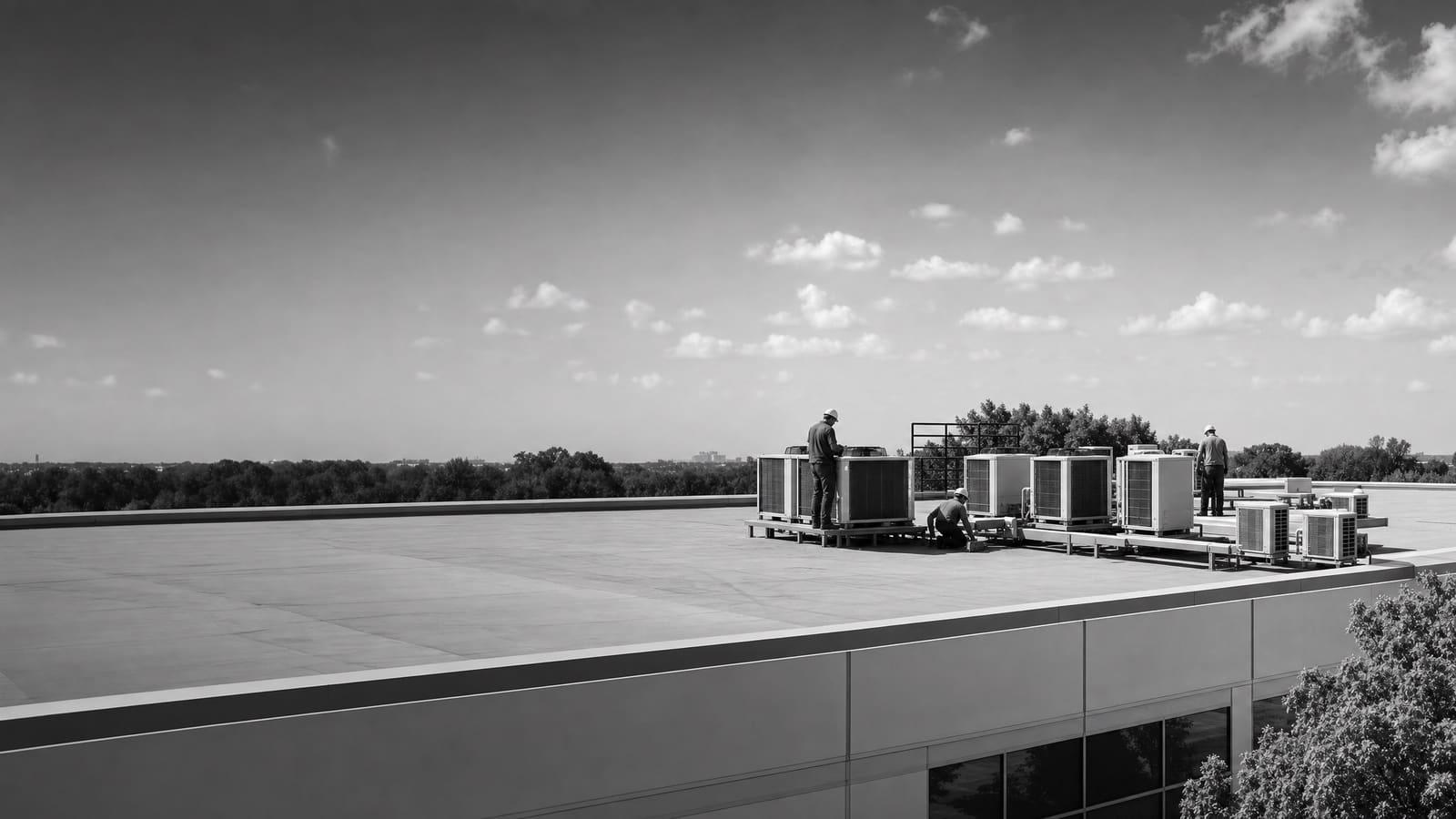
A commercial HVAC replacement means confirming the load your building carries today, selecting equipment against real availability, setting it with a crane, reconnecting power, gas, and controls, then commissioning it to spec. Replacement beats one more repair once a rooftop unit is past about fifteen years and the service calls start repeating. Aging, inefficient rooftop units waste roughly $900 to $3,700 per unit every year, and that number usually settles the argument faster than the last repair bill did.
A site review still has to verify curb size and roof structure, electrical capacity at the unit, gas line status, and crane reach across the lot before any of that becomes a real price.
THREE PATHS
The choice you are actually making
Three paths cover most commercial replacements. The right one depends on whether the building still uses the space the way it did when the old unit was specified.
A like-for-like swap is the fastest route back to conditioned air. It reuses the curb and the existing connections, and it carries forward whatever sizing the old unit had, including a mistake.
A right-sized, high-efficiency unit costs more engineering up front and answers comfort complaints the old box never could. Rooftop units condition close to half of all commercial floor space in the country, so this is where most owners find savings worth chasing.
A heat pump rooftop unit adds reverse-cycle heating and drops the gas burner. Heat pump rooftops are best suited to mild-to-moderate winter heating, which describes coastal Southern California well. The decision hinges on electrical capacity, physical constraints at the curb, and what happens to the gas line.
WHAT MOVES THE NUMBER
Where the money actually goes
These lines move an installed number more than the brand on the nameplate does. Ask which ones your quote has physically verified on site and which are still allowances.
HOW TO BUY IT
Choosing equipment you still like in year ten
Most owners open with the wrong question. It is not which brand goes on the roof. It is what the building needs now and how long you plan to hold it.
Start with the load. A unit specified twenty years ago was sized for the occupancy, lighting, and equipment of that era. Offices got emptier, LED retrofits cut heat, warehouses added packing stations. Sizing from today's use is what makes a replacement feel like an improvement instead of a swap.
Then decide how hard the unit should work for you. Efficiency tiers exist for a reason: high-performance rooftop designs were developed to cut energy use by up to half against the older baseline, and a wide range of models now exceed that specification. Set against $900 to $3,700 of annual waste from a tired unit, the payback math is often short enough to matter.
Last, be honest about the hold period. If the building sells in three years, a like-for-like swap can be the right financial answer even when it is not the best engineering answer. If you are keeping it, buy for the decade.
COMPLEXITY CHECK
Why two replacements on the same street price differently
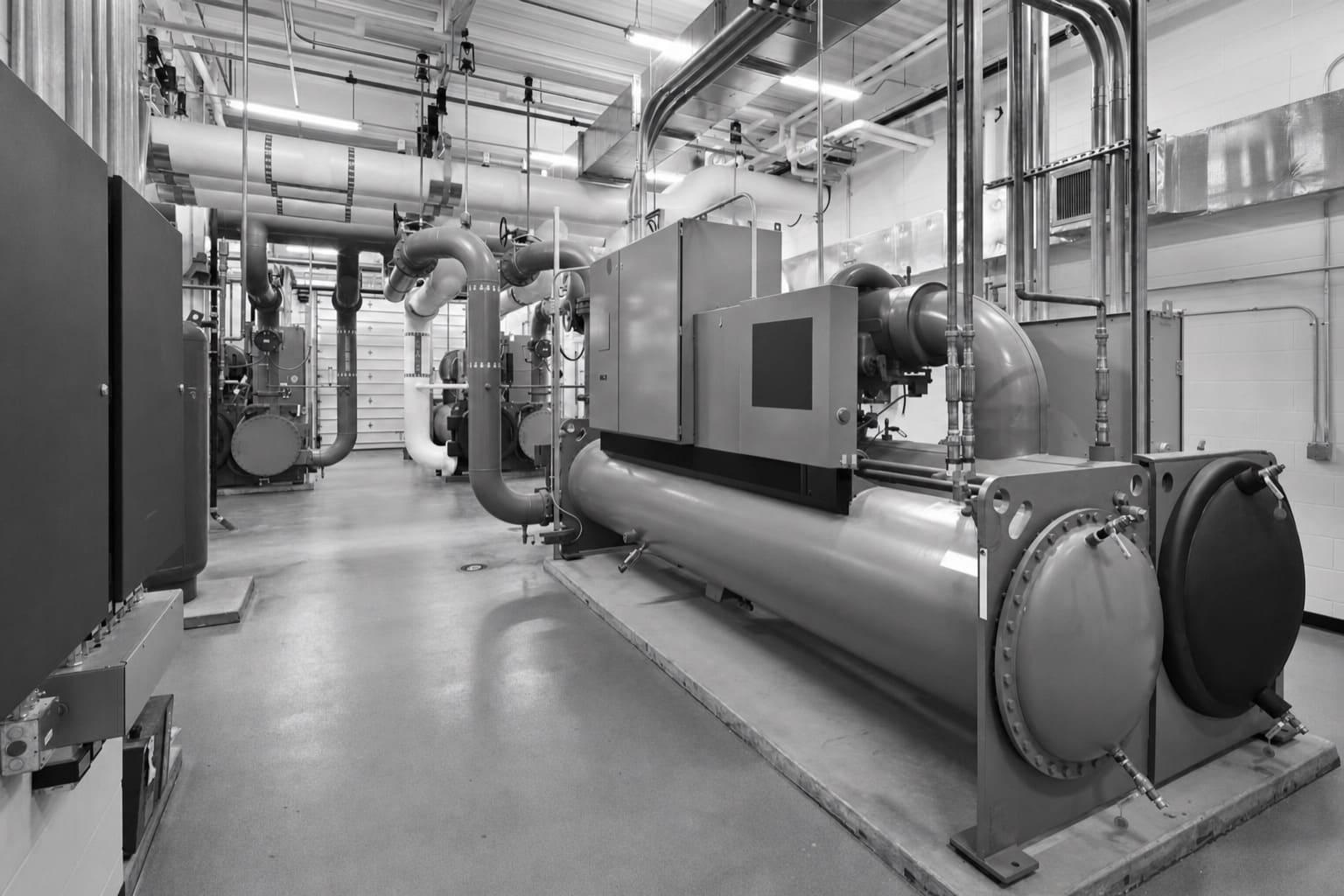
The gap between an easy replacement and a hard one is rarely the equipment. It is what the roof, the lot, and the electrical service demand once the old unit comes off.
STRAIGHTFORWARD
Same size, same curb, open lot
A like-for-like unit lands on an adapter, reuses the existing disconnect and gas line, and the crane parks in an aisle nobody needs on a Sunday morning. Set and connected in a morning, with a simple permit path.
MORE INVOLVED
New size, new service, tight site
Larger tonnage or an all-electric unit can mean structural review, a feeder or panel upgrade, and a longer boom because the only crane position is across the lot. Add controls integration and a phased tenant schedule and the timeline stretches.
BEFORE THE QUOTE
What a real site review covers
A quote written from a photo is a guess. A quote written from the roof is a price. The difference is about ninety minutes of somebody's time, and it is where most change orders get prevented.
On the roof, the review confirms the existing curb dimensions and how the new unit's footprint compares, the condition of the deck and membrane around the unit, and whether the structure carries the new weight. It reads the nameplate for tonnage, voltage, and refrigerant, then checks the disconnect and feeder at the unit instead of trusting a panel schedule nobody has updated.
On the ground, it looks at crane positioning: what the truck can reach, which stalls close, whether power lines or a drive aisle force a longer boom. In an occupied building it also asks when the work can happen, because an early Sunday set prices differently than a Tuesday.
Inside, it confirms how the new unit talks to your controls and who owns that integration. Controls are the quietest source of complaints two months after handoff.
Ask what was measured
Before comparing two numbers, ask each contractor which items they physically verified on site and which are allowances. Two quotes that priced different assumptions are not comparable, no matter how close the totals look.
CARSON SPECIFICS
Permits, the roof, and a mild winter
Plan on permits. California building departments treat mechanical upgrades and repairs as permit work, and re-roofing, whether overlay or tear-off, is its own permit line rather than something folded into the mechanical job.
That matters for sequencing more than for cost. If your membrane is near the end of its life, running the re-roof and the unit swap as one coordinated project saves a second crane mobilization and a second round of new penetrations.
The climate helps the equipment decision. Coastal Southern California sits in the mild-winter band where heat pump rooftop units can carry most or all of the heating load efficiently, so the all-electric option is genuinely on the table here in a way it is not in colder regions. Confirm current requirements with the Carson building counter before the crane date is locked.
Sequence the roof with the unit
If the membrane is near end of life, price the re-roof alongside the replacement. Two permits and one mobilization beats cutting a fresh roof twice inside three years, and it keeps the warranty conversation with one party.
OWNERSHIP
Two decisions that outlive the install
Two decisions outlive the install, and neither one appears on a quote. The first is who benefits. In a leased building, the tenant pays the utility bill while the landlord buys the equipment, so the party who would gain from a high-efficiency unit is often not the party writing the check. Read the lease before assuming the efficiency upgrade is an easy yes.
The second is what happens to the rest of the roof. A single replacement changes the refrigerant, controls, and parts picture for every other unit up there. Plan for that in the service contract instead of discovering it on the next call.
LEASE STRUCTURE
Who pays, who benefits
A triple-net tenant absorbs the energy savings while the owner funds the equipment. Some leases allow capital recovery for efficiency work and many do not. Settle that before the efficiency tier is chosen, not after the invoice lands.
REFRIGERANT
The old charge and the new one
Federal rules govern how refrigerant in stationary cooling and heat pump equipment is handled and recycled, so the old charge is recovered by a certified technician rather than vented. New equipment may run a different refrigerant, which changes parts stocking on a mixed roof.
PROCUREMENT
Phasing, ordering, and the cost of waiting for failure
There are two ways to buy a rooftop replacement: on your schedule, or on the equipment's. Replacing proactively is consistently the better business decision than replacement-on-failure, and it usually beats a like-for-like swap chosen in a panic at end of life. When you pick the date, you pick the equipment, the efficiency tier, the crane window, and the tenant notice. When the unit picks, you take whatever sits in a warehouse.
If you hold more than one building or more than one unit, phase them. Rank by age, service history, and what each unit costs you in energy every year. Replace the worst one first, learn what your roof and lot actually demand, then order the next two with that knowledge and a longer runway.
Check current utility incentives before you order rather than after. Programs change, and eligibility usually depends on the efficiency tier you buy, so the paperwork has to start before the equipment does. Ask your contractor whether they handle the submission or whether that lands on your desk.
THE QUOTE
Five things a comparable quote shows
Two quotes are only comparable when both show the same things. These five make the differences visible, and any contractor should be able to produce all of them without a follow-up call.
01
Equipment, spelled out
Model, tonnage, efficiency tier, refrigerant, and heating type. Not just "new rooftop unit."
02
Lead time next to the price
Real availability for that specific model, and what changes if the date slips.
03
Curb, structure, and roof work
Adapter or new curb, any structural review, and how penetrations get flashed and sealed.
04
Crane, permits, and inspections
Who pulls the mechanical permit, who books the crane, who meets the inspector, and how much of the lot closes.
05
Startup and commissioning, itemized
Charge, airflow, and controls verified against spec, documented, and handed over with warranty registration.
Get a defensible number
Price the equipment and the building together.
Send the address, operating target, and target opening date. Flux will identify what must be verified before the project can be priced.
Get a free estimateQuestions
Straight answers.
When does replacement beat another repair?
Once a rooftop unit passes roughly fifteen years, it can waste substantial energy compared with a current model, and repeat service calls stack on top of that. An aging, inefficient unit runs somewhere around $900 to $3,700 a year in wasted energy on its own. When the repair is significant and the unit is in that age band, replacing on your schedule is usually the better business decision than waiting for the failure.
Should the new unit match the old one's size?
Only if the building still uses the space the way it did when the old unit was specified. Occupancy, lighting, and equipment loads change over twenty years, and a like-for-like swap carries forward any sizing error the original unit had. Confirming the load costs a little engineering time and is what turns a replacement into a fix for the comfort complaints you have been living with.
Is a heat pump rooftop unit a real option in Carson?
Yes, and the climate is the reason. Heat pump rooftop units are most efficient in mild-to-moderate winter heating, and today's models can handle most or all of the winter demand across much of the South and West. The limits are practical rather than climatic: electrical capacity at the roof, physical constraints at the curb, and what you do with the existing gas line.
What happens to the refrigerant in the old unit?
It gets recovered, not vented. Federal regulations govern the handling and recycling of refrigerant in stationary cooling and heat pump equipment, and recovery is done by a certified technician as part of the removal. Ask for that to appear in the scope, along with disposal of the old unit, so it does not resurface later as an extra.
How much does a commercial HVAC replacement cost?
There is no honest universal number, because tonnage, curb and structural work, electrical capacity, and crane access move the total more than the brand does. What can be pinned down is the cost of waiting: a tired, inefficient rooftop unit wastes roughly $900 to $3,700 a year by itself. Get quotes written after a roof visit and compare the line items rather than the totals.
Sources used for this guide
- [1]betterbuildingssolutioncenter.energy.gov — DOE Advanced Rooftop Unit Replacement Guidance
- [2]betterbuildingssolutioncenter.energy.gov — DOE Commercial Heat Pump Rooftop Unit Replacement Guidance
- [3]betterbuildingssolutioncenter.energy.gov — DOE High-Efficiency Commercial Rooftop Unit Toolkit
- [4]energy.gov — DOE Efficient Commercial Rooftop Air Conditioner Program
- [5]epa.gov — EPA Stationary HVAC Refrigerant Management
- [6]californiacity-ca.gov — HVAC Permits