THE SHORT VERSION
What a commercial HVAC replacement actually includes
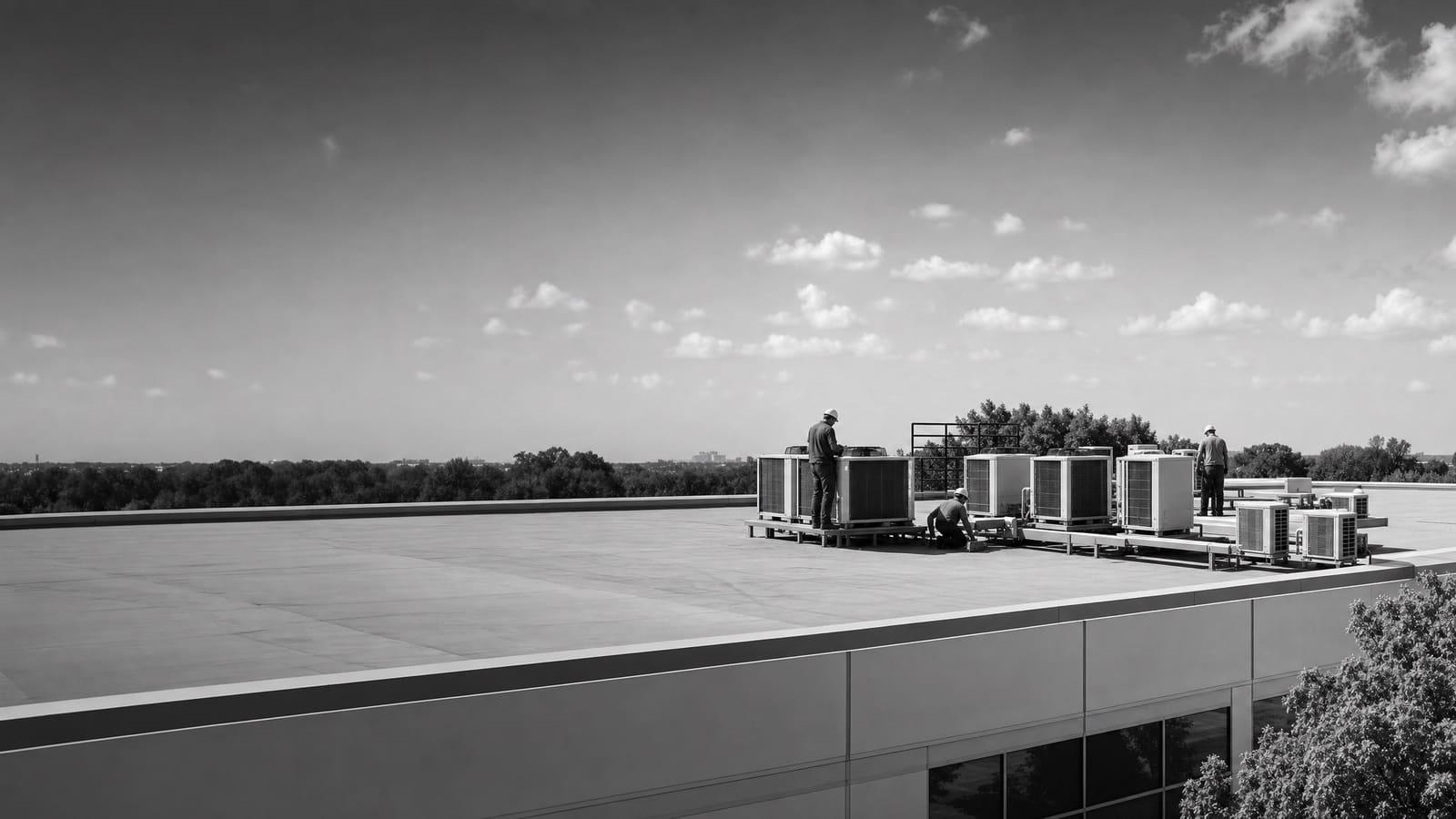
A commercial HVAC replacement confirms the building load, selects equipment, sets the new unit, connects power, gas, and controls, then commissions it against spec. Replacement beats another repair once the unit's running cost has quietly become the real expense. Federal analysis found that old, inefficient rooftop units waste roughly $900 to $3,700 per unit every year, and units past fifteen years are where that waste collects. Planning the swap almost always costs less than replacing on failure.
A site review still sets the number. Tonnage, curb condition, roof structure, crane reach, and the electrical and gas service already on the roof decide what the installed price turns out to be.
THREE PATHS
The three ways this project usually goes
Almost every commercial replacement lands on one of three paths, and the right one depends on how much the building has changed and what you want the next stretch of run hours to cost. A like-for-like swap is the fastest and cheapest to engineer, and it is a fair choice when the space is doing the same job it did when the old unit went up. A high-efficiency replacement costs more at purchase and earns it back in operation; the federal specification behind today's high-efficiency units was written to cut energy use by as much as half against the old standard. A heat pump rooftop unit adds reverse-cycle heating on roughly the same footprint, and it is the path to take if you want heating off gas. That one carries the most homework. Federal guidance screens it on climate and heating load, utility bill impact, electrical capacity, existing gas lines, equipment availability, and whether the local trade knows the equipment. Get those answers before the unit is ordered, not after it lands.
WHAT MOVES THE NUMBER
Where the money actually goes
There is no honest universal price for a commercial rooftop replacement, because the same tonnage costs very different money on two different roofs. These are the lines that swing a quote most.
BUYING GUIDANCE
How to decide before the equipment decides for you
Start with how the building is used today, not with the nameplate on the unit coming down. A rooftop unit that has been up there long enough to fail has usually outlived the floor plan under it. Occupancy changed, lighting changed, plug loads changed. Sizing the replacement off the old tag carries every old mistake forward and locks it in for another equipment lifetime.
The second question is fuel. Heat pump rooftop units are close cousins of standard air-conditioning units and add reverse-cycle heating on the same footprint. Federal guidance screens that choice on a short list: climate and heating load, utility bill impact, building type, equipment availability, electrical capacity, existing gas lines, and whether contractors nearby know the equipment. Heat pumps do their best work where winter heating is mild to moderate, and their heating efficiency slides toward electric resistance as outdoor temperature drops. Where the heating load is real, dual-fuel and cold-climate versions are the ones worth pricing.
Third, decide whether you are replacing on your schedule or the equipment's. Facility teams often wait until a unit stops holding the space or quits outright. Replacing on purpose usually beats both replacement on failure and a like-for-like swap at end of life, because you still get to pick the equipment, the date, and the crane.
SCOPE CHECK
What makes this simple, and what makes it hard
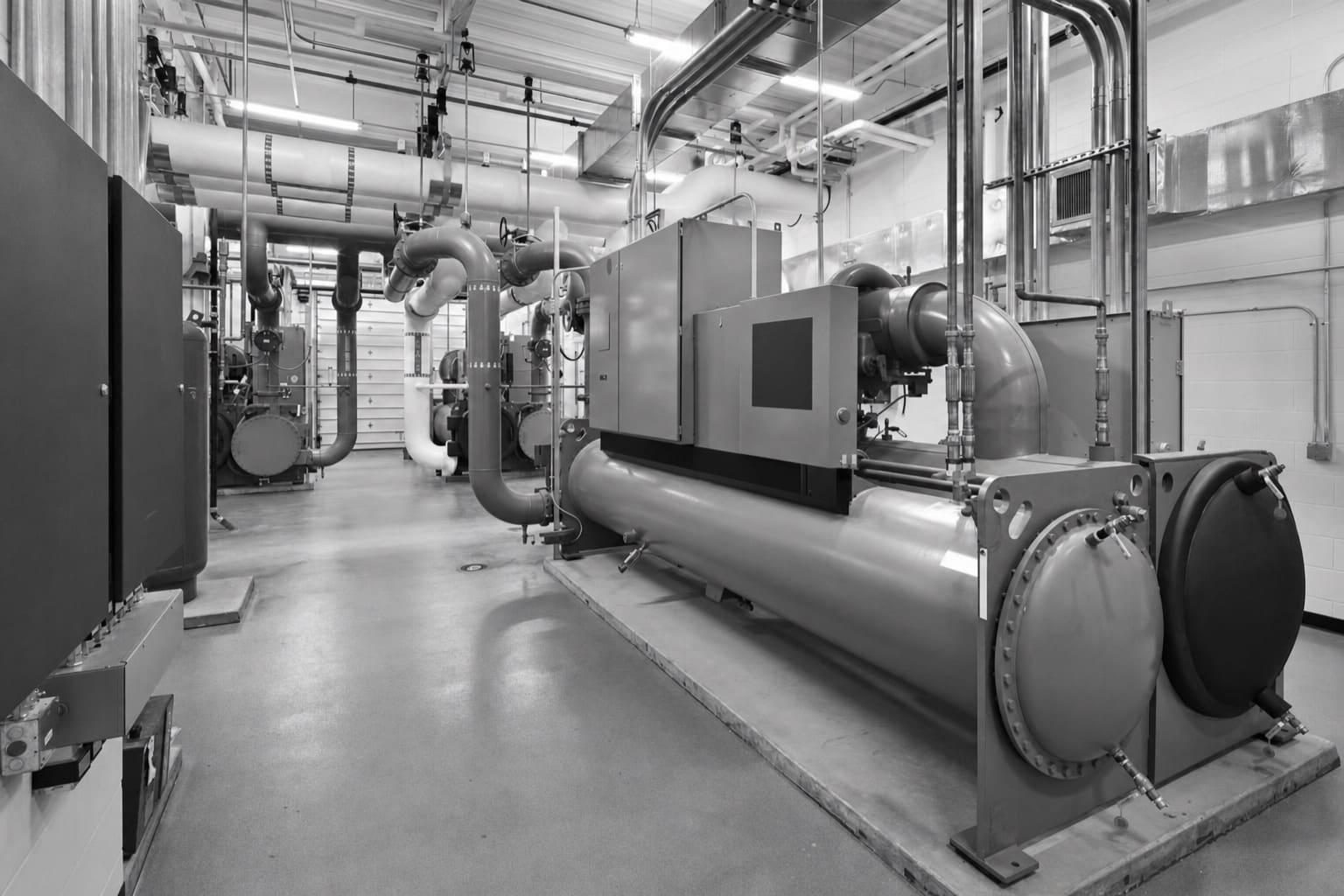
Two jobs with the same tonnage on the nameplate can be a one-morning swap or a multi-week project. The difference is almost never the unit itself. It is what the unit needs from the roof, the panel, and the parking lot.
LOWER COMPLEXITY
Same job, same footprint
Matching tonnage and fuel, an existing curb that takes a standard adapter, service on the roof that already fits the new unit, and a lot with clean crane reach. Engineering is light and the schedule is mostly equipment lead time.
HIGHER COMPLEXITY
Something about the building changed
Switching heating fuel, growing tonnage, or finding the panel has no room. Add tight access, an occupied tenant space, structural review on the curb, or a controls system the new unit has to speak to, and the project needs real sequencing.
THE SITE REVIEW
What a real site review has to verify
A quote written from a photo is a guess. A quote written from a roof visit is a price. The visit should confirm the load the space actually carries now, not the tonnage stamped on a unit installed under a different tenant and a different floor plan.
From there it is a list of physical facts. Curb dimensions and the structure under them. Whether the roof membrane needs patching once the old unit lifts off. Electrical panel capacity and open breaker space, which is the item that most often turns an electric heating option from easy to expensive. Whether gas is present, sized, and staying. How refrigerant will be recovered from the old equipment under EPA Section 608 rules. Crane reach from the nearest usable spot in the lot, and how many stalls that costs for how long.
The last one is operational, not technical: when can the space go without conditioning. That answer sets the crane date, the shift, and sometimes the equipment choice. Any bid that does not name it is quoting a different job than the one you are buying.
Have these ready for the walk
A nameplate photo, the panel schedule, your operating hours, and a straight answer on how long the space can sit without conditioning. Those four items move a rooftop quote from a range to a number faster than anything else you can hand over.
OWNERSHIP
Two questions that outlive the install
The install is a few days. The decisions inside it stay on the roof for the rest of the equipment's life, and they land on whoever pays the utility bill and whoever answers the comfort calls. Both of those are worth settling before the purchase order goes out, because they quietly change which unit is the right unit.
WHO BENEFITS
The split between owner and tenant
If the landlord buys the equipment and the tenant pays the utility bill, the efficiency upgrade costs one party and pays the other. Sort that out first. It is the single most common reason a building keeps buying the cheapest available unit.
WHO SERVICES IT
Parts and knowledge after handoff
Federal guidance treats contractor familiarity as a real selection factor, not a detail. A roof running three unrelated platforms is harder to stock parts for and slower to diagnose than one that was standardized on purpose.
PHASING
Planning a roof, not just a unit
Most commercial roofs do not hold one unit. They hold a fleet, installed in the same year, aging on the same curve. That leaves a choice between replacing each one the week it dies and treating the roof as a program with a sequence and a budget line.
The program version is what large operators have leaned on. Through the federal Advanced RTU Campaign, more than 200 public and private organizations upgraded over 43,000 rooftop units and cut a combined $37 million a year from their energy bills. That result did not come from emergencies. It came from picking units, ordering ahead, and grouping crane days.
For a Carmel building with several units, the practical version is simple. Rank the fleet by age and by how much of the building each unit serves. Replace the worst performer first, standardize on that platform if it holds up, and let the rest follow on a schedule you set. Group two or three swaps onto one crane day when the lot allows it. Order early, because equipment availability is a listed constraint on these projects and not a scheduling detail. And keep the fleet documented, so the next replacement starts from a record instead of another roof visit.
APPLES TO APPLES
Five things a comparable quote shows
Quotes only compare when they cover the same scope. When one bid comes in noticeably cheaper, it is usually missing one of these rather than beating anyone on price.
01
The equipment, spelled out
Make, model, tonnage, efficiency tier, and heating type. Not "a new rooftop unit."
02
Availability and a date
Real lead time for the exact unit quoted, and the crane date that lead time implies.
03
Curb, structure, and roof work
Whether the existing curb is reused or adapted, who patches the membrane, and what happens if the structure needs review.
04
Electrical, gas, and controls
Panel work, disconnects, any gas line change, and how the new unit ties into the controls already in the building.
05
Removal and commissioning
Old unit disposal, refrigerant recovery under EPA Section 608, then startup, airflow, charge, and documented commissioning.
Get a defensible number
Price the equipment and the building together.
Send the address, operating target, and target opening date. Flux will identify what must be verified before the project can be priced.
Get a free estimateQuestions
Straight answers.
When does replacing beat one more repair?
Watch the running cost, not just the repair invoice. Federal analysis put the waste from old, inefficient rooftop units at roughly $900 to $3,700 per unit each year, and units past fifteen years are where that concentrates. Once a unit is in that range and needs regular attention to hold the space, the repair is buying time on an expense that keeps growing.
Should we replace like-for-like or resize?
Confirm the load either way. If the space is doing the same job it did when the old unit went in, like-for-like is often the honest answer and the fastest one. If occupancy, equipment, or the floor plan changed, sizing off the old nameplate carries an old mistake forward for another equipment lifetime.
Is a heat pump rooftop unit the right choice here?
It depends on heating load and infrastructure, and the screen is specific. Federal guidance checks climate and winter heating demand, expected utility bill impact, electrical capacity at the panel, existing gas lines, equipment availability, and local contractor familiarity. Heat pumps are most efficient with mild to moderate winter heating; where heating demand is heavier, dual-fuel and cold-climate models are the versions to price.
What does a commercial HVAC installation cost?
No one can name a real number before seeing the roof, and any bid that does is pricing a different job. The equipment tier and tonnage anchor it, then curb and structural work, electrical capacity, gas line changes, and crane access move it. A site visit that verifies those five items turns a range into a price.
Who handles the crane, permits, and refrigerant?
The installing contractor should own all of it inside the installed price: rigging plan, lot coordination, permits and inspections, recovery of refrigerant from the old unit under EPA Section 608 rules, and disposal. Confirm the quote says so in writing before you sign, because those items are expensive to discover later.
Sources used for this guide
- [1]betterbuildingssolutioncenter.energy.gov — DOE Advanced Rooftop Unit Replacement Guidance
- [2]betterbuildingssolutioncenter.energy.gov — DOE Commercial Heat Pump Rooftop Unit Replacement Guidance
- [3]betterbuildingssolutioncenter.energy.gov — DOE High-Efficiency Commercial Rooftop Unit Toolkit
- [4]energy.gov — DOE Efficient Commercial Rooftop Air Conditioner Program
- [5]epa.gov — EPA Stationary HVAC Refrigerant Management