THE DIRECT ANSWER
What a commercial HVAC replacement includes
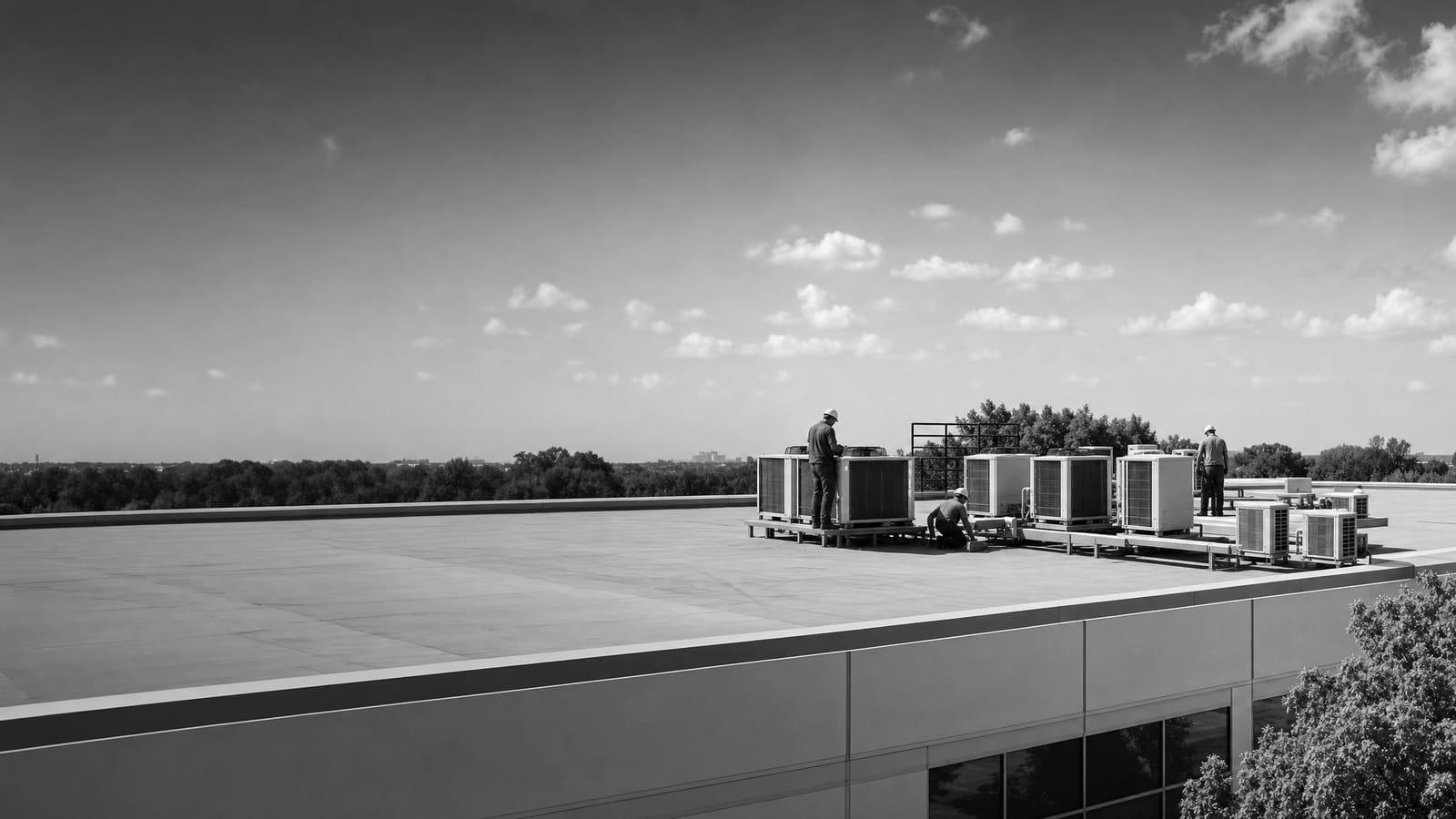
A commercial HVAC replacement covers a load check against how the building is used now, equipment selection, permits, rigging and set, gas, electrical and refrigerant connections, controls, and commissioning. Replacement beats one more repair once the unit is past its efficient years. DOE reports that rooftop units over 15 years old waste substantial energy, and that old, inefficient units waste roughly $900 to $3,700 per unit each year. Put that annual waste next to a rising repair history and the case usually makes itself.
A site review still has to confirm the roof structure and curb fit, electrical service capacity, the gas service, crane access across the lot, and which code items the replacement triggers.
THREE WAYS TO GO
Three replacement paths for a Buffalo roof
Fuel choice is the first real decision, and in Buffalo it is not the same decision it would be in Phoenix. DOE's guidance is direct about why: heat pump heating efficiency falls as the outdoor temperature drops, trending toward parity with electric resistance heat at the low end, so standard heat pump rooftop units are best matched to mild-to-moderate winter heating. Buffalo does not have mild winters. That does not rule electric heat out. It moves the choice toward equipment designed for the cold.
Three paths cover most commercial roofs here. A like-for-like gas unit keeps the scope tight. A dual-fuel heat pump runs on the compressor through the shoulder seasons and hands off to gas when it gets cold. A cold-climate heat pump is built to hold heating capacity at low outdoor temperatures, which is what makes an all-electric roof workable in this climate. Each path changes the electrical and gas work behind the unit, so compare them at installed scope, not at equipment price.
WHAT MOVES THE NUMBER
Budget lines the quote should separate
Two buildings on the same block can quote very differently at the same tonnage. These are the lines that move the number, and a quote should show each of them on its own rather than rolling everything into one price.
HOW TO CHOOSE
Deciding before the unit fails
Most commercial units get replaced the day they quit. DOE's guidance says as much: facility managers often delay until the unit no longer conditions the space, needs constant service, or fails outright. That delay is the expensive choice. A unit that dies in August gets replaced with whatever is available in August, on whatever schedule the freight and the overtime allow.
Planning the same swap months earlier changes three things. You can compare a high-efficiency unit against a base-tier one on paper instead of under pressure. You can find out whether the panel has room for electric heat before that answer forces your hand. And you can file for a rebate or incentive while there is still time to qualify.
The efficiency gap is real money. DOE's high-performance rooftop specification targeted up to 50% less energy use than the standard in place at the time, and through the Advanced RTU Campaign more than 200 organizations upgraded over 43,000 units and reported a combined $37 million a year in lower energy bills. Set that against an old unit wasting $900 to $3,700 a year on its own, and the tier you pick is not a rounding error.
COMPLEXITY CHECK
What makes a replacement simple or hard
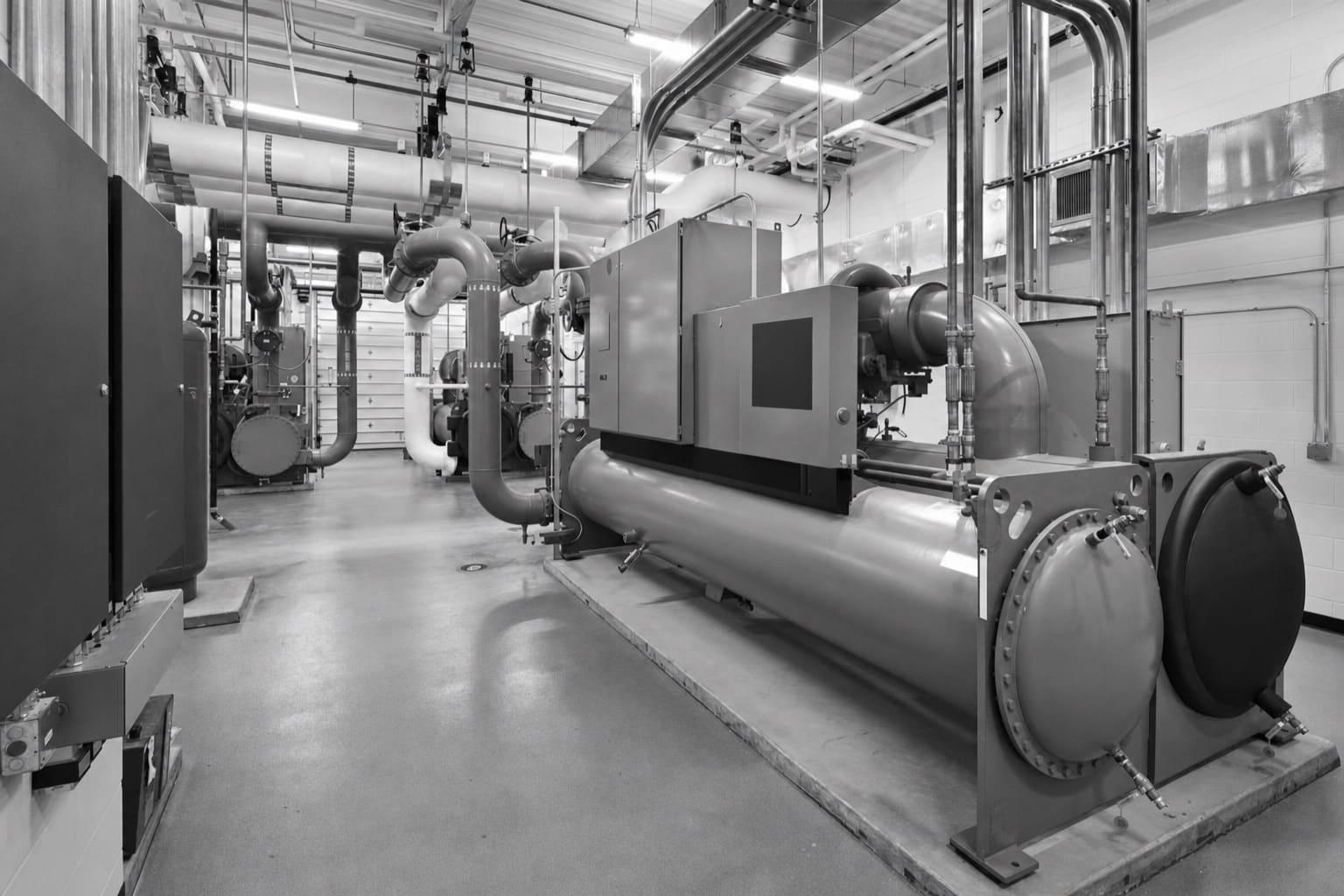
Two replacements at the same tonnage can differ by weeks and by a wide margin on price. What separates them is almost never the unit itself. It is what the unit needs behind it and how hard it is to get onto the roof.
LOWER COMPLEXITY
Same footprint, same fuel
The existing curb takes an adapter, tonnage is unchanged, the panel already carries the load, and the crane can reach from a corner of the lot you can close on a weekend.
HIGHER COMPLEXITY
New fuel, new load, tight site
Switching to electric heat, growing tonnage, or adding weight pulls electrical and structural work into the job. A tight site with no lay-down area can force a night lift or a phased set.
BEFORE THE QUOTE
What the site review has to settle
DOE's heat pump rooftop guidance ends in a checklist, and it works as a template for any commercial replacement, gas or electric. It asks about climate zone, the utility bill impact, the building type and how it is used, equipment availability, infrastructure, contractor knowledge, and available incentives. Infrastructure breaks into the three questions that decide most of the scope: does the electrical service have capacity, do physical constraints on the roof allow the unit you want, and what happens to the gas line.
A useful site review answers those on the roof, not over the phone. Someone should photograph the nameplate, measure the curb, look at how the unit is fed, open the electrical panel, and walk the crane path from the street to the set point. They should note the condition of the roof around the curb, because the patch after the set is part of the job. And they should ask what the space is used for now, since a building that changed tenants, added equipment, or shifted its hours does not carry the load it had when the old unit was picked.
Anything the review cannot confirm belongs on the quote as an allowance with a stated basis.
Ask for the checklist, not a verbal
A contractor who walked the roof can hand you notes: curb dimensions, panel capacity and spare breaker space, gas line size, crane position, and the roof condition at the curb. If those answers are not written down, the price is a guess wearing a number.
BUFFALO SPECIFICS
How Buffalo permits the work
The City of Buffalo issues heating permits by device, and the fee schedule on the city's heating permit application prices each device by type and size. A packaged rooftop unit or air heat pump is $125 at 15 tons and under, and $200 above 15 tons. A water-source heat pump at 5 tons or less is $100. Chillers and cooling towers are $150 at 50 tons and under and $250 above. Boilers run $100 up to 500,000 BTU, $150 from 500,000 to 1 million, and $250 above that. A furnace, condensing unit, or PTAC up to 140,000 BTU is $100.
Two things follow from that structure. Every device is its own line, so a four-unit roof is four lines and not one blanket permit. And the applicant certifies that the application reflects all HVAC work being performed, which means the filing has to match the equipment that actually lands.
Make the permit lines match the equipment list
Ask your contractor for the device list before they file: type, size, and count for every piece of equipment. If the equipment schedule changes after the permit is pulled, the application has to change with it. Verify the current fee schedule with the city when you file.
OWNERSHIP AND OPERATIONS
Two questions to settle before you sign
Two questions get skipped in the rush to a number, and both change what you should buy rather than just what you pay. The first is who captures the savings a better unit produces, and that answer is written in your lease, not in the equipment schedule. The second is whether this is a one-off or the first of five. A single replacement can be judged on its own merits. A roof full of units is a standardization decision, and the model you pick today sets the parts, the refrigerant, and the service plan you live with for years.
WHO PAYS, WHO BENEFITS
Owned or leased
If the tenant pays the utility bill and the owner buys the equipment, neither side has a clean reason to fund the higher-efficiency unit. Settle that in the lease or in a cost-share before the quote, or the base-tier unit wins by default.
ONE UNIT OR FIVE
Standardizing the roof
Mixed makes and refrigerants mean more spare parts, more technician training, and more recordkeeping for whoever services the roof. Choosing one platform now makes the next four swaps faster to quote and simpler to maintain.
PHASING AND LIFETIME COST
Replacing a roof full of units without a shutdown
A roof with several units almost never gets replaced on one purchase order, and it should not be. Rank the units by condition and by what they serve, then replace in a sequence that fits your fiscal years and your seasons. The unit over the server room or the kitchen goes first. The one over dry storage can wait a year.
Order earlier than feels necessary. DOE lists equipment availability as a real planning factor, alongside electrical capacity, gas lines, physical constraints, and whether contractors in your area know the technology you are buying. Availability, not labor, is usually what decides whether a set lands in October or February, and a February lift in Buffalo is a harder day to plan around.
Confirm incentives before you sign the purchase order rather than after. Program offerings change, and some require an application step before equipment is ordered. Then price the decision across the life of the unit instead of the invoice: equipment tier, the annual energy difference, the service contract, the refrigerant type and its parts availability, and what the next unit on that roof will cost when its turn comes.
QUOTE CHECKLIST
Five things a comparable quote shows
Comparable quotes are not the same as identical prices. If two bids show these five things, you can tell which one is actually cheaper and which one moved a cost off the page.
01
Equipment schedule with efficiency tier
Make, model, tonnage, heating type, and rated efficiency for each unit, so two bids can be read line for line.
02
Curb, structural, and roofing work
Adapter, any framing, and the roof repair after the set, named as their own lines rather than folded into a lump sum.
03
Rigging and lot plan
Crane size, staging area, stalls closed, the target date, and who handles the closure and notifications.
04
Electrical, gas, and refrigerant scope
Service or panel work, gas line changes or removal, and certified recovery of the charge in the old unit.
05
Permits, startup, and commissioning
The Buffalo heating permit devices to be filed, inspections, verified charge and airflow, controls setup, and the documents you get at handoff.
Get a defensible number
Price the equipment and the building together.
Send the address, operating target, and target opening date. Flux will identify what must be verified before the project can be priced.
Get a free estimateQuestions
Straight answers.
When does replacement beat another repair?
When the repairs stop being isolated events. DOE notes that rooftop units past 15 years old waste substantial energy, and that old, inefficient units waste roughly $900 to $3,700 per unit each year. Put that annual waste beside the repair history and the payment on new equipment, and the comparison is usually clear.
Do heat pump rooftop units make sense in Buffalo?
They can, but not the standard kind by default. Heat pump heating efficiency drops as outdoor temperature falls, trending toward parity with electric resistance heat, so DOE points standard units toward mild-to-moderate winter climates. Here the realistic options are a dual-fuel unit that hands off to gas in deep cold or a cold-climate unit built to hold capacity at low temperatures.
What permit does the work need in Buffalo?
A city heating permit, filed by device. Buffalo's application prices each device by type and size: $125 for a packaged rooftop unit or air heat pump at 15 tons or less, $200 above that, with separate lines for boilers, chillers and towers, and water-source heat pumps. The applicant certifies the filing covers all HVAC work performed.
What does a commercial HVAC installation cost here?
There is no honest single number, because the equipment is often not the biggest variable. Tonnage and efficiency tier, curb and structural work, crane access, electrical capacity, and gas changes set the total. The one line you can know in advance is the city permit fee, which Buffalo publishes by device type and size.
What happens to the refrigerant in the old unit?
It gets recovered before the unit leaves the roof. EPA regulations under Section 608 of the Clean Air Act govern how refrigerant in stationary refrigeration, air conditioning, and heat pump equipment is handled and recycled. Recovery and disposal should appear on the quote rather than being assumed.
Sources used for this guide
- [1]betterbuildingssolutioncenter.energy.gov — DOE Advanced Rooftop Unit Replacement Guidance
- [2]betterbuildingssolutioncenter.energy.gov — DOE Commercial Heat Pump Rooftop Unit Replacement Guidance
- [3]betterbuildingssolutioncenter.energy.gov — DOE High-Efficiency Commercial Rooftop Unit Toolkit
- [4]energy.gov — DOE Efficient Commercial Rooftop Air Conditioner Program
- [5]epa.gov — EPA Stationary HVAC Refrigerant Management
- [6]buffalony.gov — buffalony.gov