THE SHORT ANSWER
What commercial HVAC replacement includes
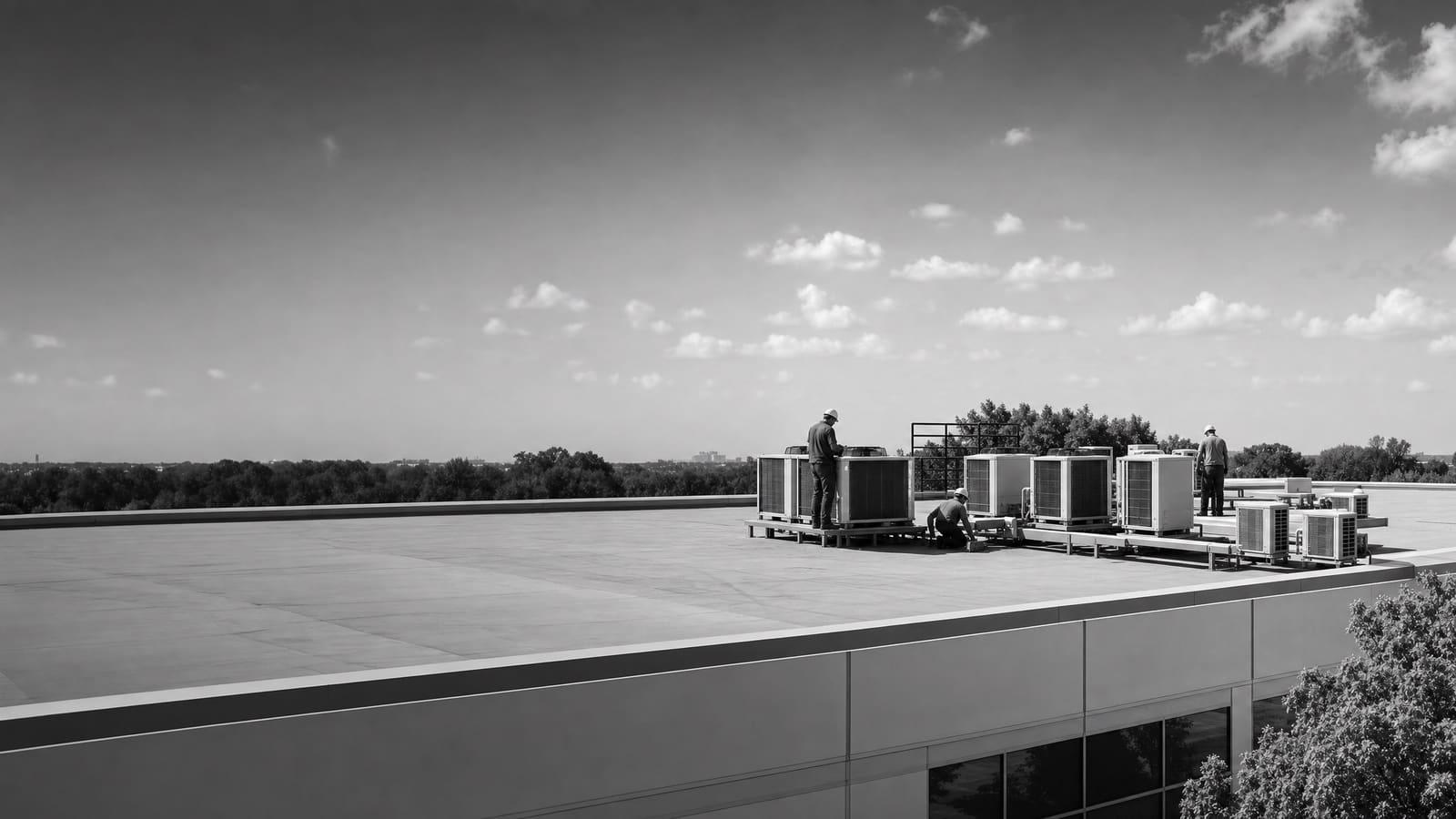
A complete commercial HVAC replacement covers load review, equipment selection, permits, removal, rigging, utility connections, controls, startup, testing, and refrigerant handling. Replacement is often more useful than another repair when an older unit fails often, cannot hold temperature, uses too much energy, or puts operations at risk. DOE guidance notes that rooftop units over 15 years old can waste substantial energy compared with newer models.
A site review must verify capacity, curb condition, roof access, electrical service, gas service, ventilation, controls, drainage, and the space’s current use.
THREE OPERATING CHOICES
Repair, replace in kind, or improve the system
Start with the business problem, not the equipment catalog. A repair may make sense when the failure is isolated, parts are practical to obtain, and the unit still serves the space well. A like-for-like replacement can shorten design work when the old capacity, fuel, curb, utilities, and controls remain suitable. A right-sized or heat-pump replacement takes more study but can correct poor comfort, excessive cycling, changed occupancy, or a mismatch between the system and today’s operating schedule.
Do not let an emergency decide every feature. If a weak unit is still running, compare options before peak demand or a final failure. Planned work gives the team time to confirm the load, check electrical capacity, study utility impacts, coordinate tenants, and order equipment that fits the longer operating plan.
BUDGET STRUCTURE
What moves the installed price
The supplied research does not support one universal installed price. Ask for a site-specific total that separates equipment from the work needed to place it into reliable service.
EQUIPMENT CHOICE
Choose the system around the building
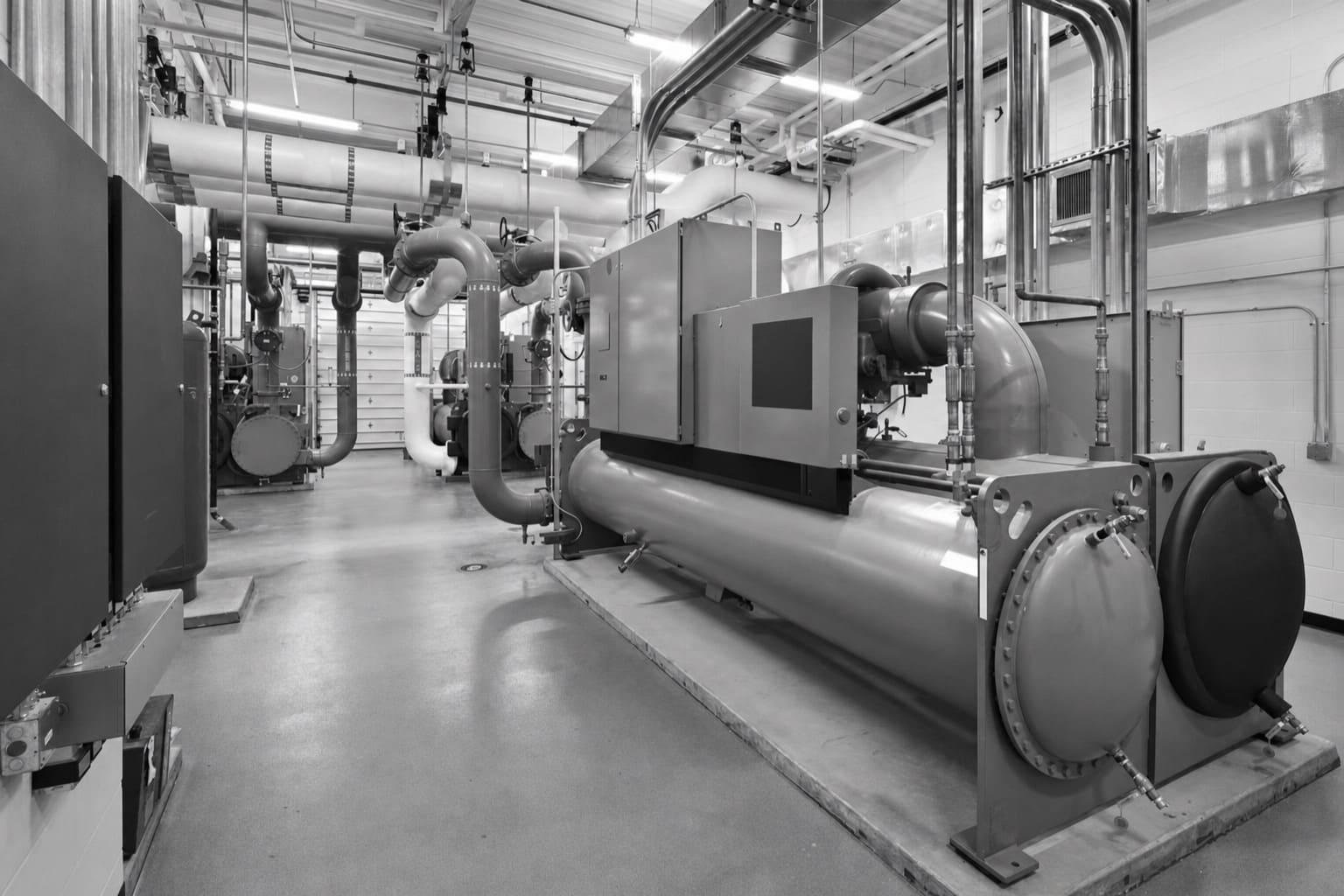
Packaged rooftop units are common in commercial buildings because heating, cooling, ventilation, and controls can be grouped in one roof-mounted cabinet. They can be a practical replacement when the existing ductwork and roof arrangement remain useful. Split systems separate indoor and outdoor equipment. They may fit spaces with limited roof capacity, smaller zones, or an existing split layout. Larger or more complex buildings may use central equipment, multiple zones, or dedicated ventilation systems that need an engineered design.
Fuel choice matters too. A conventional rooftop configuration may use electric cooling with gas heat. A heat-pump rooftop unit provides reverse-cycle heating as well as cooling. DOE guidance says heat-pump suitability depends on climate, electricity and gas prices, emissions goals, building type, equipment availability, electrical capacity, physical limits, and contractor knowledge. Mild-to-moderate winter conditions can favor heat-pump operation, but the buyer still needs a utility and infrastructure review.
Efficiency labels are only part of the decision. Compare ventilation performance, part-load operation, controls, service access, warranty terms, lead time, and compatibility with the roof and electrical system. The best selection is the one that serves the real load and can be maintained without creating new operating problems.
PROJECT COMPLEXITY
A simple swap can become a building project
The old and new units may look similar while requiring very different work. Identify the conditions below before comparing totals or promising an outage window.
LOWER COMPLEXITY
Compatible replacement conditions
The load remains suitable, the curb and duct openings align, roof access is clear, utilities have capacity, controls are simple, and the work can occur during a planned shutdown.
HIGHER COMPLEXITY
Conditions that need more design
Capacity or fuel changes, tight rigging access, damaged curbs, structural questions, electrical upgrades, occupied work, complex controls, ventilation changes, or multiple dependent units increase coordination.
SITE REVIEW
Scope the roof, room, and occupied space
A useful survey begins with the equipment nameplate, model, capacity, fuel, refrigerant, voltage, service history, and known failures. The contractor should then inspect the curb or equipment pad, duct transitions, roof condition, drains, disconnects, gas piping, control wiring, sensors, filters, service clearances, and safe access. Photos help, but they do not replace field measurements.
The occupied space matters just as much. Record operating hours, headcount, process equipment, exterior doors, kitchen or production loads, hot and cold complaints, humidity concerns, and areas that need separate control. If the use has changed since the old unit was installed, copying its nameplate capacity may repeat an old sizing error. Oversized equipment can cycle poorly, while undersized equipment may fail to meet demand.
The review should also map the shutdown. Identify which tenants, rooms, data areas, products, or processes depend on each unit. Decide whether work can happen after hours, whether temporary conditioning is needed, and which areas must remain open. This turns a mechanical replacement into an executable operations plan.
Bring evidence to the survey
Provide nameplate photos, recent repair records, utility information, control screenshots, roof access rules, comfort complaints, and any plans that show ducts or electrical service.
OWNERSHIP VIEW
Look beyond the purchase order
The lowest first price is not always the lowest ownership cost. Energy use, maintenance access, replacement parts, warranty requirements, control quality, refrigerant strategy, and unplanned downtime all affect the result. DOE has documented that older commercial rooftop units can waste energy and that high-efficiency equipment and advanced controls can offer meaningful savings in suitable applications. Those findings support comparison, not a guaranteed result for one Buena Park building.
Refrigerant also belongs in the ownership review. EPA rules govern refrigerant handling, recovery, recycling, and technician practices for stationary air-conditioning and heat-pump equipment. A replacement plan should identify the old and new refrigerants, explain recovery and disposal responsibilities, and consider how a mixed equipment fleet will be serviced.
OWNER-OCCUPIED
Weight operating cost and reliability
Compare energy, maintenance, controls, expected service support, and downtime over the planned holding period.
LEASED OR MULTITENANT
Define comfort and cost duties
Review lease responsibilities, tenant schedules, access rules, billing structure, shutdown notice, and approval steps before ordering.
PROCUREMENT AND PHASING
Plan the work before equipment arrives
A sound project schedule separates design, approval, procurement, enabling work, installation, startup, inspection, and closeout. Confirm availability before selecting a final model. Do not treat a quoted lead time as a guaranteed delivery date unless the agreement says so. Long-lead controls, curb adapters, electrical gear, or specialty accessories can delay an otherwise available unit.
For a building with several aging units, consider a phased plan. Rank equipment by condition, service history, space criticality, efficiency, and replacement difficulty. Units that serve essential operations or show repeated failures may deserve earlier action. Similar units can sometimes be grouped to simplify design, controls, training, filters, and spare-parts planning. Keep enough capacity in service during each phase and avoid stacking every shutdown into the same high-demand period.
Before release, assign responsibility for permits, submittals, roof protection, rigging, utility shutdowns, controls, balancing, inspections, warranty registration, and owner training. Set an approval path for hidden conditions. A clear path prevents a field discovery from turning into an open-ended change order.
QUOTE CHECKLIST
Five things every comparable quote should show
Ask each bidder to price the same written scope. If one quote excludes rigging, controls, permits, or startup, its total is not comparable.
01
Selected equipment
List manufacturer, model, capacity, fuel, voltage, efficiency, refrigerant, ventilation features, accessories, warranty, and stated availability.
02
Complete installation scope
Show removal, recovery, rigging, curb or pad work, ducts, utilities, drains, roof protection, and disposal.
03
Controls and performance
Define sensors, economizer functions, schedules, automation integration, airflow work, startup tests, and commissioning records.
04
Project responsibilities
Assign permits, inspections, engineering, crane coordination, closures, safety controls, shutdown notices, and temporary conditioning.
05
Commercial terms
State exclusions, allowances, change-order rates, payment milestones, delivery assumptions, schedule, closeout documents, and warranty labor.
Get a defensible number
Price the equipment and the building together.
Send the address, operating target, and target opening date. Flux will identify what must be verified before the project can be priced.
Get a free estimateQuestions
Straight answers.
When should a commercial HVAC unit be replaced instead of repaired?
Replacement deserves a serious comparison when failures repeat, comfort cannot be maintained, major parts are difficult to obtain, energy performance is poor, or one more outage would disrupt important operations. DOE guidance identifies rooftop units over 15 years old as a useful group to review because older equipment can waste substantial energy. Age alone does not decide the project. Condition, repair history, load fit, controls, refrigerant, and business risk matter too.
How much does commercial HVAC installation cost in Buena Park?
The supplied research does not establish a reliable Buena Park installed-price range, so a universal number would be misleading. Cost depends on capacity, equipment type, efficiency, curb or pad fit, crane access, structural conditions, utility changes, ventilation, controls, phasing, and permit scope. Compare site-specific proposals built from the same written requirements.
Should the new unit match the old unit’s capacity?
Not automatically. The old nameplate is useful evidence, but the building may have changed. Occupancy, hours, lighting, process equipment, exterior doors, envelope work, and ventilation needs can alter the load. Confirm the present load before ordering. A like-for-like capacity may still be correct, but it should be a checked decision rather than an assumption.
Is a commercial heat-pump rooftop unit a good replacement option?
It can be. DOE guidance says commercial heat-pump rooftop units should be evaluated against climate, utility prices, emissions goals, building type, equipment availability, electrical capacity, physical constraints, gas infrastructure, and contractor capability. Ask for a load review and a utility-impact comparison. An all-electric, dual-fuel, or conventional configuration may fit different operating and infrastructure conditions.
What happens to refrigerant from the old equipment?
The project scope should require proper recovery and identify who handles the removed refrigerant and equipment. EPA Section 608 rules apply to refrigerant practices for stationary air-conditioning and heat-pump systems. Ask the contractor to state the existing refrigerant, the new equipment’s refrigerant, recovery responsibilities, documentation, and the service implications for the rest of the facility’s equipment.
How can a facility reduce disruption during installation?
Map every area served by the unit, choose the shutdown window before ordering, and coordinate roof access, rigging, parking controls, tenant notice, security, and inspections. Complete curb, electrical, control, and duct checks in advance. For critical areas, decide whether temporary conditioning or phased work is required. Do not promise a short outage until the field conditions and startup plan are confirmed.
What should commissioning include?
Commissioning should verify more than basic startup. The record should cover equipment configuration, airflow, filters, refrigerant operation, heating and cooling sequences, ventilation, economizer behavior where included, sensors, schedules, alarms, drains, safeties, and building-control communication. The owner should receive startup records, test results, warranty information, operating instructions, and a list of unresolved items.
Who should handle permits and inspections?
Assign responsibility in the contract before work begins. The proposal should identify who prepares the permit documents, pays fees, coordinates required reviews, schedules inspections, answers correction notices, and provides final approval records. Permit requirements are time-sensitive and location-specific, so the project team should confirm the current Buena Park requirements for the exact scope rather than relying on another city’s rules.
Sources used for this guide
- [1]betterbuildingssolutioncenter.energy.gov — DOE Advanced Rooftop Unit Replacement Guidance
- [2]betterbuildingssolutioncenter.energy.gov — DOE Commercial Heat Pump Rooftop Unit Replacement Guidance
- [3]betterbuildingssolutioncenter.energy.gov — DOE High-Efficiency Commercial Rooftop Unit Toolkit
- [4]energy.gov — DOE Efficient Commercial Rooftop Air Conditioner Program
- [5]epa.gov — EPA Stationary HVAC Refrigerant Management
- [6]californiacity-ca.gov — HVAC Permits