THE DIRECT ANSWER
Commercial HVAC replacement starts with the building, not the old unit
A complete commercial HVAC replacement includes load review, equipment selection, removal, rigging, curb or pad work, utility connections, controls, startup, testing, and closeout records. Replacement is usually more useful than another repair when an older unit has frequent failures, cannot hold comfort, or creates growing operating risk.
A site review must verify actual loads, roof or ground conditions, power, gas, ventilation, controls, drainage, access, and the condition of connected ductwork.
THREE OPERATING CHOICES
Decide what the replacement needs to accomplish
The first choice is not a brand. It is the operating result the building needs. A direct replacement can reduce design work when the space, load, and connections remain suitable. A right-sized upgrade can address comfort trouble or changed occupancy. A heat-pump rooftop unit can add electric heating, but the decision must account for Bloomington winter conditions, electrical capacity, utility rates, backup heat, and the building's emissions goals.
Do not assume the old nameplate proves the correct size. Equipment, lighting, occupancy, operating hours, ventilation needs, and the building envelope may have changed. Compare options with the same load assumptions and service conditions. Otherwise, a lower quote may simply cover less work.
BUDGET STRUCTURE
What moves an installed commercial HVAC price
No supported universal installed price applies to every Bloomington project. Ask each bidder to separate the equipment from the work needed to place it, connect it, control it, test it, and keep the facility operating.
EQUIPMENT CHOICES
Compare systems by how they will operate
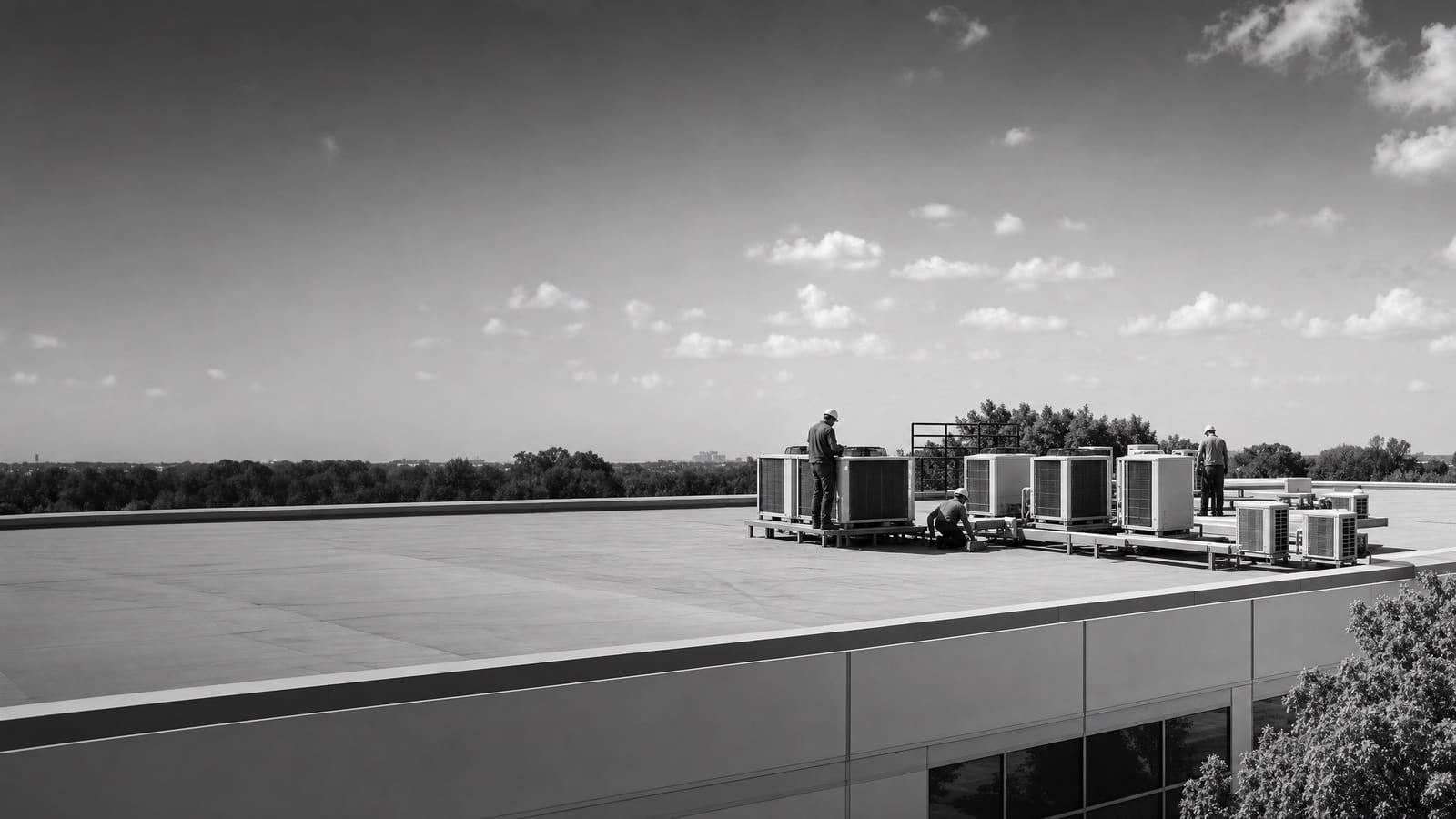
Packaged rooftop units combine major heating, cooling, and air-moving parts in one outdoor cabinet. They are common across U.S. commercial buildings and can simplify replacement when the roof opening, duct layout, utilities, and controls remain compatible. A high-efficiency RTU may reduce energy use compared with an older, inefficient unit, but the owner should compare expected operation rather than rely on an equipment label alone.
A heat-pump RTU provides reverse-cycle heating as well as cooling. Options can include all-electric, dual-fuel, and cold-climate designs. As outdoor temperatures fall, heat-pump capacity and efficiency become important. The proposal should explain the selected unit's cold-weather operation, supplemental or backup heat, defrost behavior, and electrical demand. A dual-fuel approach may retain fuel heat for colder conditions, while an all-electric design can require more electrical capacity.
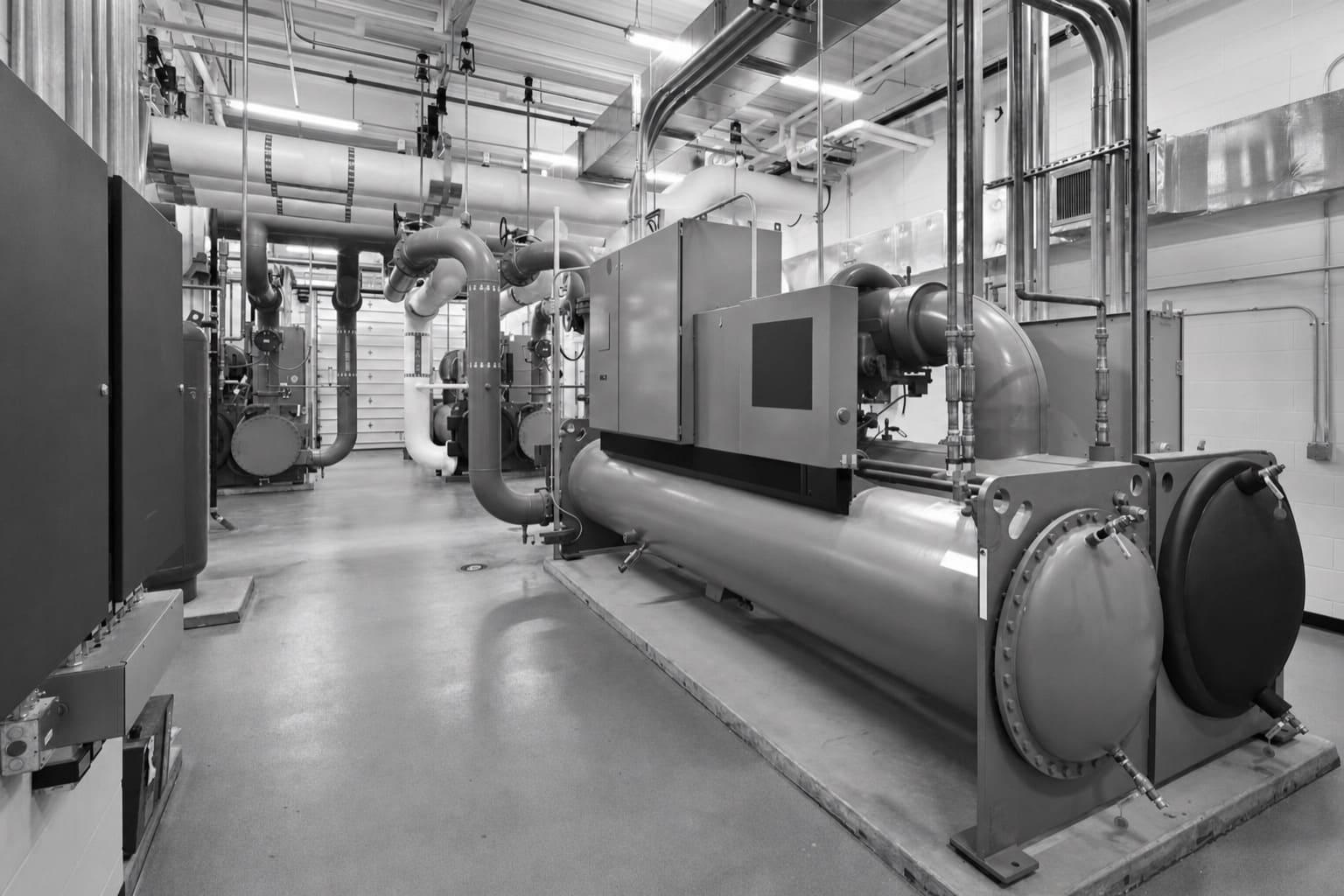
Split systems, indoor air handlers, boilers, chillers, and other central systems need a different scope. Their replacement may involve piping, pumps, water treatment, indoor access, equipment-room work, and longer shutdowns. Make sure every bidder is pricing the same system boundary.
PROJECT COMPLEXITY
A box swap and a system change are different projects
The old and new units may look similar while requiring very different work. Define the conditions before comparing totals, schedules, or warranties.
LOWER COMPLEXITY
Compatible replacement
The existing capacity remains suitable, the curb or pad works, utilities are adequate, controls are straightforward, and the new unit can serve the current airflow and ventilation needs.
HIGHER COMPLEXITY
Changed system or building
Capacity, fuel, voltage, weight, footprint, ductwork, ventilation, controls, or operating use changes. Engineering, structural work, electrical upgrades, and phased shutdowns may be needed.
SITE REVIEW
Verify the conditions that can break the budget
Start with equipment records, service history, utility information, controls documents, and the reason for replacement. Then inspect the unit and everything it depends on. On a rooftop project, that includes the curb, roof condition, service clearances, duct transitions, drains, gas piping, electrical feeds, disconnects, and safe access. The lift plan should identify crane location, reach, staging, parking impacts, overhead conflicts, weather limits, and how the roof opening will be protected.
Inside the building, confirm which zones the unit serves and when they may be offline. Review comfort complaints by location and time instead of treating them as proof that the equipment is too small. Restricted airflow, failed controls, poor balancing, or changed schedules can imitate a capacity problem.
For a heat-pump option, verify available electrical capacity and the proposed source of heat during the coldest operating conditions. DOE guidance identifies climate, utility costs, emissions, building type, equipment availability, infrastructure, contractor knowledge, and incentives as key considerations. Any incentive should be verified at the time of purchase; none is assumed here for August 2026.
Bring evidence to the walkthrough
Useful inputs include nameplate photos, repair history, control screenshots, utility records, floor plans, comfort complaints, operating hours, lease restrictions, roof information, and known electrical limits.
OWNER PRIORITIES
Balance first cost with operating risk
A replacement decision affects more than the construction budget. It changes maintenance needs, comfort risk, utility use, refrigerant service, controls support, and the chance of an unplanned shutdown. Older RTUs that no longer condition the space, fail often, or require repeated maintenance are candidates for proactive review. Planning before failure creates time to compare equipment and infrastructure options.
Refrigerant management also belongs in the ownership plan. Federal rules govern the handling and recycling of refrigerants in stationary air-conditioning and heat-pump equipment. The quote should identify the new refrigerant, recovery responsibilities, and what will happen to refrigerant and oil from removed equipment.
KEEP OPERATIONS MOVING
Plan around occupied hours
Define acceptable outages, temporary conditioning needs, noisy work, loading access, parking impacts, security, and the person authorized to approve schedule changes.
OWN THE NEW SYSTEM
Prepare the maintenance team
Require operating instructions, filters and belt data, control sequences, warranty records, refrigerant information, startup reports, and training for the people who will service the equipment.
QUOTE CHECKLIST
Five things every comparable HVAC quote should show
Put proposals into the same structure before choosing one. If a bidder excludes an item, require the exclusion to be clear and price the missing responsibility separately.
01
Exact equipment and performance
Show model, capacity, heating type, efficiency, voltage, refrigerant, ventilation features, accessories, and approved-substitution terms.
02
Complete installation scope
List demolition, recovery, disposal, rigging, curb or pad work, duct transitions, piping, wiring, drains, insulation, and roof protection.
03
Controls and operating sequence
Define sensors, thermostats, automation points, alarms, economizer functions, programming, integration, testing, and responsibility for final operation.
04
Schedule and business impacts
State procurement assumptions, outage windows, lift plans, closures, temporary service, weather delays, site restoration, and coordination duties.
05
Testing, warranty, and closeout
Include startup, airflow verification, balancing when required, training, manuals, reports, warranties, refrigerant records, and correction of incomplete work.
Get a defensible number
Price the equipment and the building together.
Send the address, operating target, and target opening date. Flux will identify what must be verified before the project can be priced.
Get a free estimateQuestions
Straight answers.
When should a Bloomington business replace a commercial HVAC unit instead of repairing it?
Consider replacement when an older unit fails often, cannot maintain required conditions, depends on hard-to-support parts, or exposes operations to a costly unplanned outage. Compare the repair with the expected remaining service, not only with the price of a new unit.
Should the new commercial HVAC unit match the old capacity?
Not automatically. Confirm the present load and airflow first. Changes in occupancy, equipment, schedules, ventilation, or the building envelope can make the old capacity unsuitable. A direct replacement is sensible only when the existing basis still fits.
Is a heat-pump rooftop unit practical in Bloomington?
It can be, but the design must address cold-weather capacity, efficiency, defrost, backup or supplemental heat, electrical demand, utility rates, and operating goals. Compare all-electric, dual-fuel, and cold-climate options using the same building load.
What should happen during commissioning?
The team should verify correct equipment, safe installation, airflow, temperature response, controls, sensors, ventilation functions, heating and cooling stages, alarms, drains, and the documented operating sequence. The owner should receive startup results and unresolved-item records.
Who should handle refrigerant from the removed equipment?
The contract should assign recovery, handling, documentation, transport, and disposal responsibilities. Refrigerant work on stationary commercial air-conditioning and heat-pump equipment must follow applicable federal requirements.
How can an owner compare commercial HVAC bids fairly?
Give every bidder the same load basis, equipment requirements, site information, controls scope, outage rules, and closeout expectations. Compare exclusions and assumptions line by line. A low total is not comparable if it leaves rigging, controls, electrical work, or testing to others.
Sources used for this guide
- [1]betterbuildingssolutioncenter.energy.gov — DOE Advanced Rooftop Unit Replacement Guidance
- [2]betterbuildingssolutioncenter.energy.gov — DOE Commercial Heat Pump Rooftop Unit Replacement Guidance
- [3]betterbuildingssolutioncenter.energy.gov — DOE High-Efficiency Commercial Rooftop Unit Toolkit
- [4]energy.gov — DOE Efficient Commercial Rooftop Air Conditioner Program
- [5]epa.gov — EPA Stationary HVAC Refrigerant Management
- [6]minneapolismn.gov — Mechanical and Heating Contractors - City of Minneapolis