THE DIRECT ANSWER
What commercial HVAC replacement includes
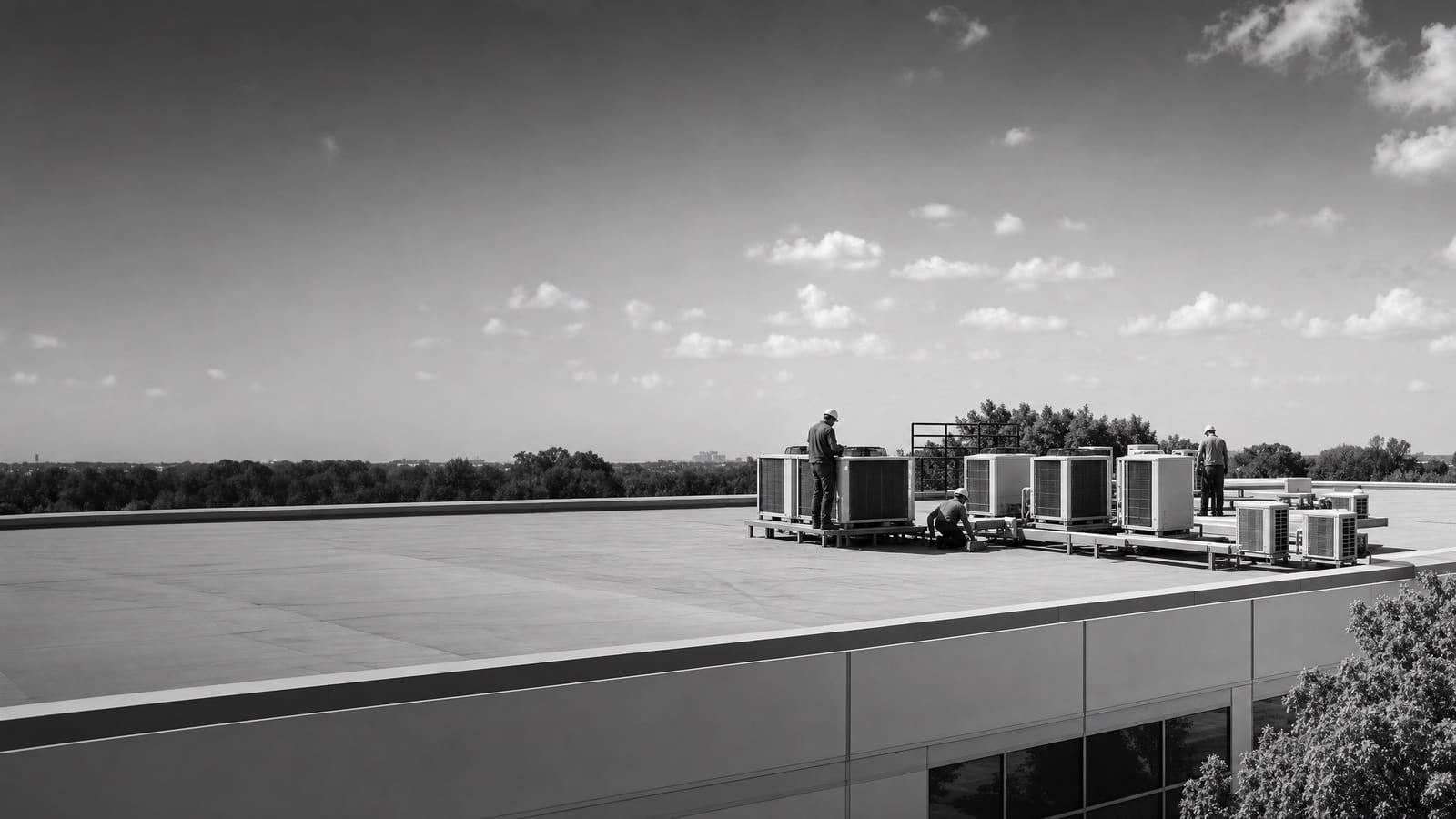
A complete commercial HVAC replacement covers load review, equipment selection, removal, rigging, required connection changes, controls, startup, and commissioning. Replacement often makes more sense than another repair when an older unit needs frequent service, cannot hold comfort, or wastes energy. DOE guidance says rooftop units over 15 years old can be strong candidates for planned replacement.
A site review must confirm capacity, curb or pad fit, electrical service, fuel connections, airflow, controls, access, and the work needed around the new unit.
START WITH THE OPERATING DECISION
Choose a replacement path before choosing a model
The old model number is a starting point, not the full design. First ask whether the space, schedule, occupancy, process equipment, or comfort needs have changed. Then decide whether the project should preserve the current system, correct an old sizing problem, or change how the building heats.
A planned project gives the owner time to compare these paths. An emergency project may narrow the choices to equipment that can restore service soon. Even then, the quote should identify any compromise in efficiency, controls, capacity, or future flexibility.
Compare each path by installed scope, expected operation, maintenance needs, and disruption. The lowest equipment price can become the higher project cost if it needs major electrical work, curb changes, difficult rigging, or controls that do not match the building.
WHAT MOVES THE BUDGET
Price the whole installation, not only the equipment
The supplied research does not support one universal installed price. A useful budget separates the equipment from the work needed to make it fit, operate, and pass a documented startup.
EQUIPMENT CHOICES
Compare rooftop units by how they will operate
Packaged rooftop units serve nearly half of U.S. commercial floor area, so they are a common replacement choice. Their compact layout can simplify a project when the roof opening, duct arrangement, utilities, and controls remain compatible. A high-efficiency unit can also improve part-load operation, but the proposal should explain which features create that improvement. A label alone does not show how the unit will perform in this building.
A standard air-conditioning rooftop unit keeps cooling and heating functions closer to a familiar arrangement. A heat-pump rooftop unit adds reverse-cycle heating. DOE guidance says the heat-pump decision should consider climate, electricity and gas prices, emissions goals, building type, equipment availability, electrical capacity, physical constraints, gas infrastructure, contractor knowledge, and incentives. Those are screening factors, not a promise that one type always wins.
Ask how each option handles peak cooling, winter heating, ventilation, humidity, filtration, and light-load conditions. Also ask what happens during defrost or backup heat operation where those features apply. The final choice should state the heating source, required electrical capacity, control sequence, expected maintenance needs, and any assumptions used in the comparison.
PROJECT COMPLEXITY
Know whether the job is a direct swap or a redesign
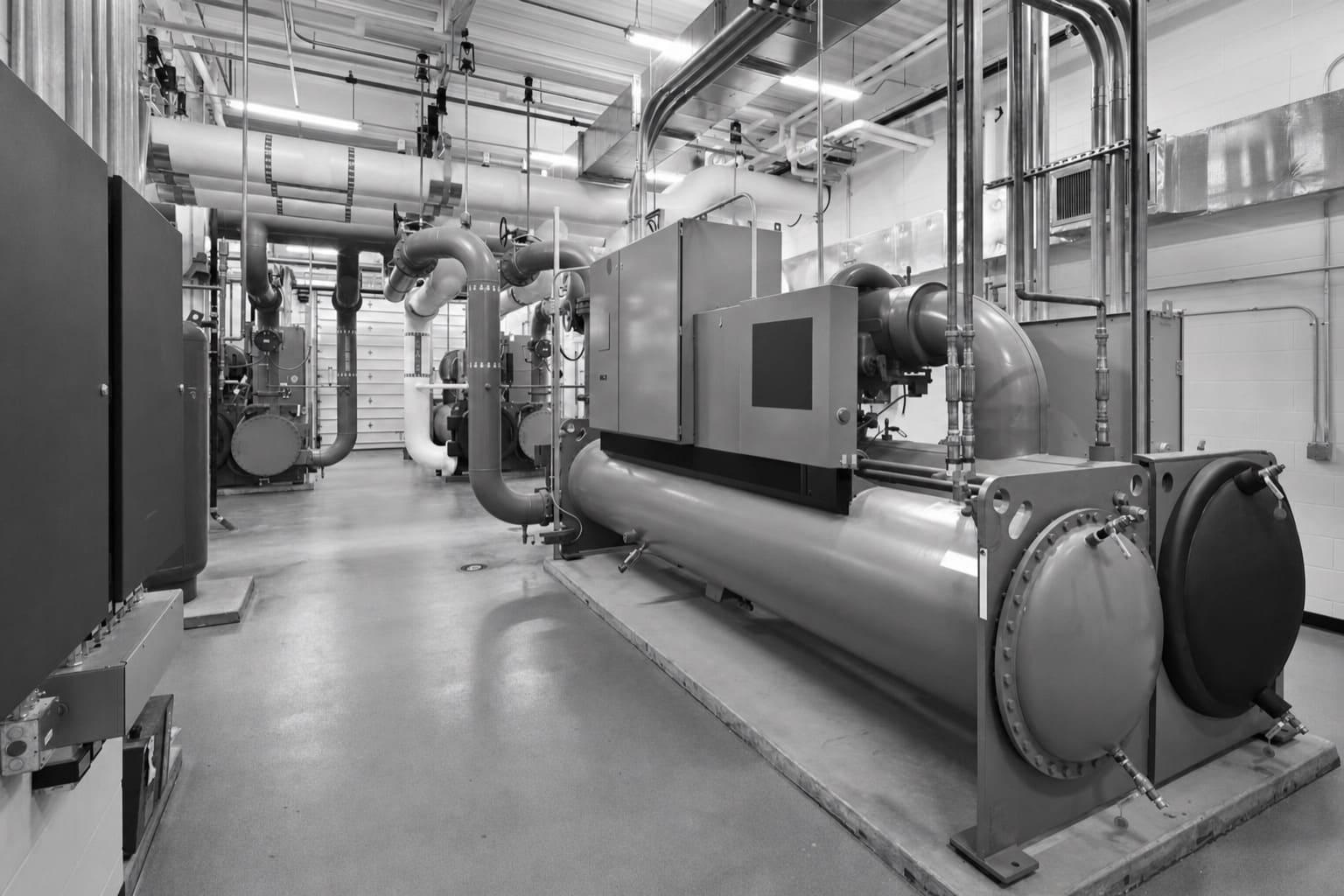
Two units with similar capacity can produce very different installation scopes. The dividing line is often compatibility: whether the new equipment can use the existing support, distribution, utilities, and controls without major changes.
LOWER COMPLEXITY
Compatible replacement
The load remains suitable, access is clear, and the curb or pad, ducts, utilities, drainage, and controls need limited changes. The quote can focus on removal, connection, startup, and verification.
HIGHER COMPLEXITY
Modified system
Capacity, footprint, weight, fuel, voltage, ventilation, ductwork, or automation changes. The project may need added design, coordination, shutdown planning, infrastructure work, and more detailed commissioning.
THE SITE REVIEW
Inspect the system before locking the quote
Start with equipment records and a physical review. Record model and serial information, capacity, heating source, voltage, controls, filter arrangement, service history, and known comfort complaints. Note whether the unit runs continuously, cycles often, leaks refrigerant, loses airflow, or struggles during occupied hours. These details help separate an equipment failure from a distribution or control problem.
Then trace what the replacement must connect to. Review the roof curb or equipment pad, duct transitions, outside-air path, gas piping, electrical disconnect, feeder capacity, condensate route, thermostat or automation points, and safe service clearances. For rooftop work, review lifting reach, staging space, roof access, surface protection, and how the opening will be protected while the old unit is gone.
The review should also test the assumption behind the existing capacity. A nameplate match can repeat an old sizing error. The replacement decision should reflect present occupancy, schedules, internal heat, ventilation demand, envelope conditions, and any planned space changes. If a full calculation is needed, make it a defined deliverable rather than a vague allowance.
Bring useful records
Provide equipment schedules, service reports, utility history, control drawings, floor plans, operating hours, renovation plans, and a list of rooms that run hot, cold, or stuffy.
OWNERSHIP VIEW
Balance urgent service with long-term operation
A replacement affects more than the construction budget. It changes maintenance, parts, controls, energy use, tenant disruption, and the risk of another outage. Owners should decide whether the goal is rapid restoration, a long holding period, portfolio standardization, or a broader energy plan.
DOE reports that older rooftop units may waste substantial energy compared with newer models. Its earlier high-performance rooftop work also showed that advanced units could cut energy use substantially against the standard used for that program. Those findings support careful comparison, but they do not guarantee the same result at every site. Building load, schedules, controls, installation quality, fuel prices, and maintenance shape the outcome.
Use a common decision period for every option. Include expected service, filters, controls support, warranty terms, and likely infrastructure work. If the building may be renovated or sold, avoid paying for features that cannot be used while still protecting reliability and marketable condition.
OPERATING CONTINUITY
Protect occupied hours
Define acceptable outage windows, temporary conditioning needs, noisy work limits, access restrictions, and who communicates with occupants before shutdown and startup.
FLEET STRATEGY
Plan beyond one failed unit
For several aging units, rank condition and criticality. Planned phases can improve purchasing, standardize controls and filters, and reduce replacement-on-failure risk.
PROJECT DELIVERY
Plan procurement, installation, and handoff as one job
Do not schedule the shutdown from a hopeful equipment date. The project plan should show when selections are approved, when equipment is released, which submittals must be reviewed, what field measurements are required, and what must be ready before delivery. Availability matters because a special voltage, heating arrangement, footprint, or control package can narrow the field.
Before installation, confirm the removal route, lift plan, staging area, roof or floor protection, utility shutdowns, and weather protection. Coordinate electrical, gas, duct, drain, roofing, automation, and fire-alarm work where they touch the system. State who disconnects the old unit, who prepares the opening, and who restores every connection. Small gaps between trades are a common source of change orders and delay.
Handoff begins before startup. The contractor should provide equipment data, warranty requirements, filter information, control descriptions, test results, and training. Commissioning should verify airflow, temperatures, refrigerant operation, heating stages, ventilation, sensors, safeties, schedules, alarms, and automation commands that apply to the selected system. A unit that turns on is not necessarily a unit that performs as intended.
COMPARE QUOTES
Five things every comparable proposal should show
Give each bidder the same operating facts and ask for the same scope detail. Then compare exclusions and assumptions beside price instead of trying to reconcile different definitions of a finished job.
01
Exact equipment selection
List capacity, efficiency, heating type, voltage, ventilation, filtration, controls, accessories, warranty, and stated availability.
02
Complete connection scope
Define curb or pad work, ducts, electrical, gas, drains, roofing, controls, insulation, demolition, and disposal.
03
Access and shutdown plan
Show rigging, staging, protection, outage duration, temporary service, occupied-area controls, and responsibilities.
04
Startup and performance checks
Identify airflow, temperature, refrigerant, heating, ventilation, sensor, safety, schedule, alarm, and automation tests.
05
Price boundaries and handoff
Separate allowances, exclusions, alternates, change-order triggers, training, documentation, warranty registration, and final acceptance.
Get a defensible number
Price the equipment and the building together.
Send the address, operating target, and target opening date. Flux will identify what must be verified before the project can be priced.
Get a free estimateQuestions
Straight answers.
When is replacement better than another commercial HVAC repair?
Replacement becomes more useful when an older unit needs frequent repairs, cannot maintain comfort, has a serious refrigerant or component problem, or no longer fits the building load. DOE notes that rooftop units over 15 years old can waste substantial energy compared with newer equipment. Compare the repair cost and likely remaining service against a planned replacement, not only against the equipment price.
Should a commercial rooftop unit be replaced with the same capacity?
Not automatically. The old capacity may remain correct if the space and use are unchanged, but occupancy, schedules, lighting, process equipment, ventilation, envelope work, or renovations can change the load. Confirm the present need before ordering. A direct nameplate match can preserve short cycling, poor humidity control, weak airflow, or rooms that never reach the desired temperature.
Is a heat-pump rooftop unit a good replacement choice?
It can be, but the choice needs a site-specific review. Compare heating loads, electric and gas service, utility costs, emissions goals, physical fit, equipment availability, backup heat, controls, and maintenance capability. An all-electric, dual-fuel, or cold-climate configuration may require different infrastructure. Do not approve the change until the proposal explains those effects.
What should commissioning include after installation?
Commissioning should verify the functions that apply to the installed system, including airflow, supply and return temperatures, refrigerant operation, heating stages, ventilation, drainage, sensors, safeties, schedules, alarms, and building automation commands. The owner should receive results, control information, warranty requirements, and basic operating training.
How should old refrigerant be handled during replacement?
The scope should assign refrigerant recovery and disposal to qualified personnel and require compliance with federal refrigerant-handling rules. EPA Section 608 requirements address the handling and recycling of refrigerants in stationary air-conditioning and heat-pump equipment. The quote should also identify the refrigerant used by the new unit for future service planning.
How can an owner reduce HVAC replacement disruption?
Plan the work around occupied hours and critical spaces. Confirm equipment and supporting materials before shutdown, define lift and staging areas, coordinate every trade, and protect the building opening during removal. For multiple units, phase the work so the building retains useful conditioning where possible. Put outage limits and temporary-conditioning responsibilities in the contract.
Sources used for this guide
- [1]betterbuildingssolutioncenter.energy.gov — DOE Advanced Rooftop Unit Replacement Guidance
- [2]betterbuildingssolutioncenter.energy.gov — DOE Commercial Heat Pump Rooftop Unit Replacement Guidance
- [3]betterbuildingssolutioncenter.energy.gov — DOE High-Efficiency Commercial Rooftop Unit Toolkit
- [4]energy.gov — DOE Efficient Commercial Rooftop Air Conditioner Program
- [5]epa.gov — EPA Stationary HVAC Refrigerant Management