THE SHORT ANSWER
Commercial HVAC replacement and installation in Bloomington.
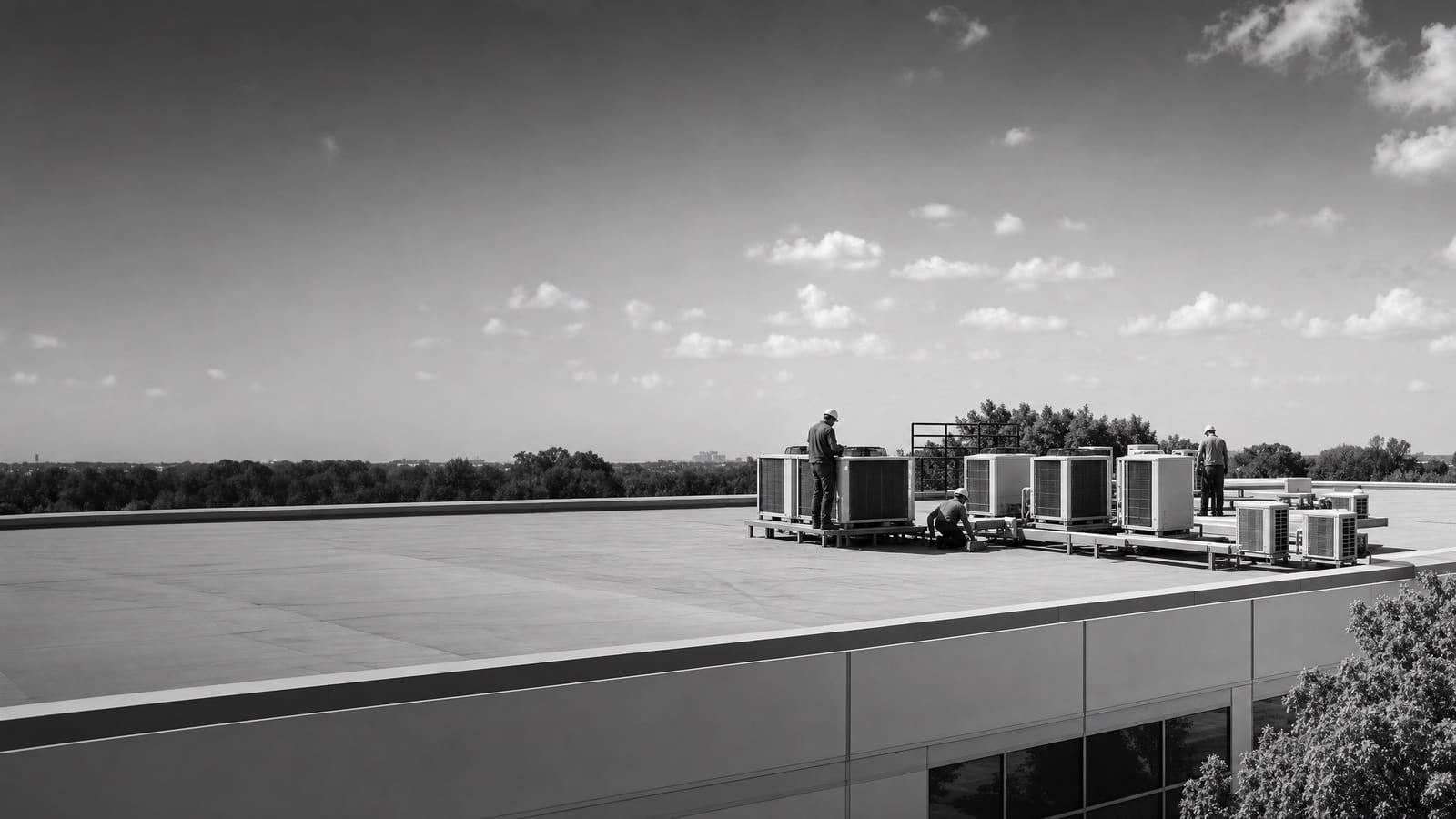
A commercial HVAC replacement includes load review, equipment selection, removal, rigging, connections, controls, startup, testing, and handoff. Replacement is usually more useful than another repair when an older unit fails often, cannot hold the space conditions, or needs major work without solving its efficiency and reliability problems.
A site review must verify capacity, roof and curb conditions, electrical service, fuel connections, ventilation, controls, access, and the building’s operating schedule.
START WITH THE OPERATING DECISION
Choose the replacement path before choosing a model
The old nameplate is a useful starting point, but it should not make the whole decision. A building may have different occupancy, lighting, process equipment, ventilation needs, or operating hours than it had when the existing system was installed. Those changes can alter the heating and cooling load.
A like-for-like replacement may keep design work and connection changes limited. A right-sized upgrade can correct poor temperature control, short cycling, long run times, or uneven zones. A heat pump rooftop unit adds another choice: all-electric, dual-fuel, and cold-climate designs have different electrical, fuel, and operating needs.
Compare each path against the same facts. Ask how it affects comfort, downtime, roof work, power demand, controls, maintenance, and expected utility use. The best selection is the one that fits the building and its actual schedule, not simply the unit with the highest efficiency label.
BUILD THE BUDGET
What changes the installed price
There is no supported universal installed price for a Bloomington commercial system. The quote should separate the equipment from the work needed to place it, connect it, control it, test it, and remove the old unit.
HOW THE PROJECT WORKS
Do the quiet work before the shutdown
The first step is a field survey. Record each unit’s model, capacity, fuel, voltage, controls, service history, and the spaces it serves. Inspect the curb, roof condition, duct connection, drains, outside-air path, disconnect, gas piping, and service clearances. Note recurring comfort complaints and when they happen. A room that struggles only during full occupancy tells a different story than a unit that cannot cool at any time.
Next, confirm the load and select equipment. The contractor or design team should show why the proposed capacity fits. The selection should also address ventilation, heating method, fan control, filtration, sound, physical dimensions, and compatibility with the building controls. If a heat pump is being considered, study electric capacity, low-temperature performance, supplemental heat, gas removal or retention, and utility-bill effects.
Then plan procurement and installation. Confirm submittals, release dates, delivery handling, rigging, roof protection, shutdown windows, temporary conditioning needs, and who coordinates each trade. Crane day should be one controlled part of the project. The work after the lift—connections, startup, airflow checks, controls testing, and documentation—determines whether the new system performs as selected.
SCOPE COMPLEXITY
A box swap and a system change are different projects
Two rooftop replacements can look similar from the parking lot yet carry very different design, trade, and downtime needs. Define which condition applies before comparing prices.
LOWER COMPLEXITY
Compatible replacement
Capacity, fuel, voltage, curb, duct opening, controls, and service access remain compatible. The quote can focus on equipment, rigging, connections, startup, and closeout.
HIGHER COMPLEXITY
Changed building or system
Capacity, heating source, electrical demand, footprint, ventilation, zoning, or automation changes. Expect added survey, engineering, coordination, and commissioning work.
SITE REVIEW
Verify the conditions that cannot be priced from a nameplate
A nameplate photo can identify the existing unit, but it cannot show whether the replacement will fit the roof, power supply, duct system, or operating plan. The survey should measure the curb and openings, confirm roof access and lift reach, inspect the duct transition, and identify water, structural, or clearance problems near the equipment.
Inside the building, confirm which zones the unit serves and how those zones are used. Review schedules, setpoints, ventilation, filtration, exhaust, pressure relationships, and controls. Ask occupants or facility staff where temperatures drift and whether the trouble follows occupancy, weather, or a certain time of day. Review repair history for compressors, heat exchangers, coils, fans, controls, and refrigerant leaks.
The findings should become written assumptions in the proposal. If an item is excluded because it cannot be verified until removal, the quote should state the allowance or change-order method. Clear unknowns are manageable. Hidden unknowns are what turn a simple replacement into a budget dispute.
Bring useful records
Provide nameplate photos, service reports, control screenshots, utility history, roof information, floor plans, tenant schedules, and a list of comfort complaints when available.
EQUIPMENT CHOICES
Compare first cost with the way the building will operate
Commercial rooftop units serve nearly half of U.S. commercial floor area, so owners have many familiar packaged options. High-efficiency equipment can reduce energy waste, but the result depends on sizing, controls, ventilation, maintenance, and operating hours. Older RTUs—especially those beyond 15 years—deserve a planned replacement review when performance is slipping or repairs are becoming frequent.
Heat pump RTUs can provide cooling and reverse-cycle heating. They are not one single design. All-electric, dual-fuel, and cold-climate units place different demands on the building. The comparison should model local utility inputs supplied for the project, expected heating loads, electrical capacity, backup heat, emissions goals, and available equipment. Do not assume that an electric option or a gas option wins at every site.
PACKAGED AC WITH HEAT
Familiar connections
May limit building changes when the existing fuel, power, curb, and controls remain suitable. Still confirm load, efficiency, ventilation, and condition of reused systems.
HEAT PUMP RTU
Heating strategy changes
Can support electrification goals, but requires review of winter capacity, supplemental heat, electric demand, controls, operating cost, and service readiness.
PROCUREMENT AND PHASING
Protect operations while the equipment changes
For a single failed unit, speed matters, but an available unit is useful only if it fits the load and connections. Ask the bidder to identify the exact model, current availability, approved alternatives, and what happens if the delivery date moves. Do not accept an undefined allowance for the main equipment when a firm selection can be made.
For several units, avoid treating the roof as one large purchase. Rank equipment by condition, service risk, space importance, and how failure would affect operations. Replacing the weakest units first can spread capital work while reducing emergency exposure. Grouping compatible units may simplify rigging and mobilization, but only when the outage plan still works for the occupied spaces below.
Evaluate lifetime cost with the same operating assumptions for every option. Include expected energy use, maintenance access, filter and belt needs, controls support, warranty terms, and likely service parts. Historical DOE work found that old, inefficient RTUs could waste significant energy, but that historical range is not a current savings promise for a specific building. A project estimate should use the facility’s own equipment condition, schedules, rates, and load model.
COMPARE QUOTES
Five things every comparable proposal should show
Ask every bidder to use the same basic scope. A low total is not comparable when equipment, rigging, controls, testing, or disposal is missing.
01
Exact equipment selection
List model, capacity, heating method, efficiency, voltage, airflow, filtration, options, availability, and warranty.
02
Complete installation scope
Show removal, rigging, curb work, duct transitions, drains, power, fuel, roof protection, and disposal.
03
Controls and ventilation
Define sensors, schedules, outside air, economizer functions, automation points, programming, and responsibility for integration.
04
Startup and acceptance
Require recorded airflow, temperatures, electrical readings, refrigerant checks, heating tests, alarms, and control sequences.
05
Schedule, exclusions, and handoff
State delivery assumptions, outage plan, exclusions, change process, training, manuals, warranties, and closeout records.
Get a defensible number
Price the equipment and the building together.
Send the address, operating target, and target opening date. Flux will identify what must be verified before the project can be priced.
Get a free estimateQuestions
Straight answers.
When should a commercial HVAC unit be replaced instead of repaired?
Replacement becomes more useful when the unit cannot maintain the required space conditions, breaks down often, has a major failed component, or needs repeated spending without restoring dependable operation. Age alone does not decide it, but DOE guidance notes that RTUs over 15 years old can waste substantial energy compared with newer equipment. Compare the repair cost and likely remaining risk with a planned replacement that also addresses sizing, controls, and efficiency.
Should a replacement match the old unit’s capacity?
Not automatically. The old capacity is evidence, not a new load calculation. Confirm how the building is used now, including occupancy, hours, lighting, process loads, ventilation, and any envelope changes. If those conditions remain similar and the old system performed well, a compatible replacement may make sense. If the unit short-cycled, ran constantly, or left zones uncomfortable, repeating the nameplate capacity may repeat the problem.
What does commissioning include after installation?
Commissioning checks that the installed system operates as selected and controlled. The closeout record should cover fan operation, airflow, supply and return temperatures, heating and cooling stages, electrical readings, refrigerant condition, ventilation settings, drains, safeties, sensors, schedules, alarms, and building automation points. It should also confirm that staff received operating information, warranty documents, and the final equipment data.
Who should handle the crane and rooftop coordination?
The proposal should name one party responsible for the complete rigging plan and coordination. The scope should address lift reach, staging, occupied areas, parking or access restrictions, roof protection, weather decisions, equipment weights, removal, and placement. It should also identify any work that belongs to the roofer, electrician, structural professional, controls provider, or another trade. Responsibility should be clear before equipment is ordered.
Is a commercial heat pump rooftop unit a good replacement choice?
It can be, but the decision needs a site model. Review the building’s heating load, electric service, equipment type, supplemental heat, existing gas infrastructure, control sequence, operating schedule, and utility inputs. DOE guidance distinguishes all-electric, dual-fuel, and cold-climate heat pump RTUs because they do not fit every building in the same way. Compare them with a conventional option under the same load and cost assumptions.
How should refrigerant be handled during replacement?
The contractor should identify the existing refrigerant, recover it with proper equipment, prevent releases, and document how it will be recycled, reclaimed, or disposed of. EPA Section 608 rules govern refrigerant handling in stationary air-conditioning and heat pump equipment. The proposal should also identify the refrigerant used by the new unit so the owner can plan service tools, technician readiness, leak response, and parts support.
How long will the building be without heating or cooling?
The research supplied for this guide does not support one universal outage time. The answer depends on equipment availability, the number of units, curb compatibility, connection changes, controls, testing, roof access, and whether the building can operate in phases. Ask for a written outage sequence showing when the old unit goes offline, when the new unit becomes usable, what could extend the shutdown, and whether temporary conditioning is included.
What warranty details belong in the quote?
The quote should separate the manufacturer’s equipment warranty from the contractor’s labor warranty. It should state coverage periods, registration responsibility, start dates, exclusions, travel or diagnostic charges, and who handles a claim. Ask whether parts availability, refrigerant, crane access, overtime, and controls work are covered. A warranty is easier to use when the owner also receives startup records, model and serial numbers, manuals, and contact information.
Sources used for this guide
- [1]betterbuildingssolutioncenter.energy.gov — DOE Advanced Rooftop Unit Replacement Guidance
- [2]betterbuildingssolutioncenter.energy.gov — DOE Commercial Heat Pump Rooftop Unit Replacement Guidance
- [3]betterbuildingssolutioncenter.energy.gov — DOE High-Efficiency Commercial Rooftop Unit Toolkit
- [4]energy.gov — DOE Efficient Commercial Rooftop Air Conditioner Program
- [5]epa.gov — EPA Stationary HVAC Refrigerant Management