THE DIRECT ANSWER
What a commercial HVAC replacement actually includes
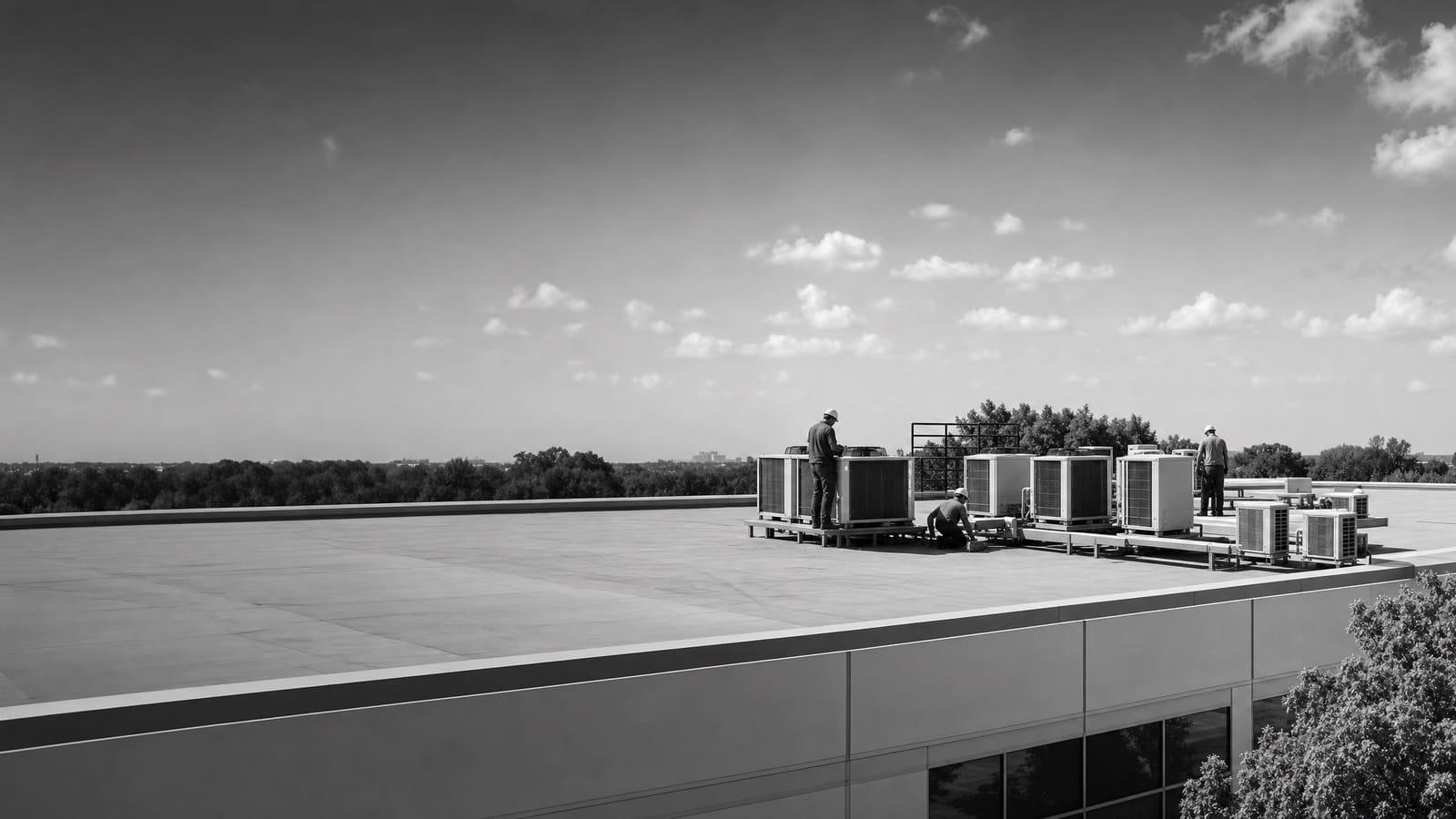
A commercial HVAC replacement is a project, not a swap. It covers confirming the load the building carries today, selecting equipment you can actually get, permitting, setting the new unit, tying in power, gas, and controls, and commissioning the result. Replacement beats another repair once a unit is past 15 years and failing more than once a season. An old, inefficient rooftop unit can waste $900 to $3,700 a year in energy alone.
A site review still has to verify the curb footprint, roof structure, electrical capacity at the unit, gas line size, outside-air requirements, and whether a crane can reach the roof from your lot.
THE DECISION
Three ways to handle a unit at end of life
Most commercial HVAC calls start the same way. A rooftop unit is limping, the season is wrong for it, and someone has to decide whether to spend money on the old machine or the new one.
Three paths are real. You can keep repairing, which is cheapest this week and most expensive per year. You can replace like-for-like on the same curb, which is fast and predictable when the space is used the way it was designed. Or you can replace with a different heating path — a higher efficiency tier, a dual-fuel heat pump, or a cold-climate heat pump — which costs more up front and changes what the building spends every month after.
Waiting until failure removes the third option and usually the second. Replacement on failure means taking whatever is on a truck, at whatever tonnage, with whatever curb adapter can be fabricated fast. Deciding a season early is what keeps the choice open.
WHAT MOVES THE NUMBER
The lines that swing a replacement budget
No two roofs price the same, so ask for the number broken out. These are the lines that move most between a routine swap and a hard one, and the ones a low quote tends to leave off.
CHOOSING EQUIPMENT
Gas heat, dual fuel, or a cold-climate heat pump
Rooftop units condition close to half of all commercial floor space in the country, which is why the equipment question is usually about what goes back on the curb rather than whether to stay with a rooftop at all.
Heat pump rooftop units are mechanically close to the air-conditioning units they replace, with one difference that matters: they run in reverse to heat. Their heating efficiency falls as outdoor temperature drops, and in deep cold it trends toward electric resistance. That is the whole Billings question. A standard heat pump rooftop is a strong fit where winters are mild to moderate, and Montana is not that. What stays on the table here is dual fuel, where the heat pump carries the mild hours and gas heat carries the cold ones, and cold-climate units built to hold capacity lower. Both need the electrical service checked before anyone orders.
If the building stays on gas heat, the upgrade is efficiency tier and controls. High-efficiency rooftop units were developed to cut unit energy use by up to half against the old standard, and today's minimum is already well above what a twenty-year-old unit delivers. Either way, the honest comparison is installed price plus the next fifteen years of operating cost, not the equipment line by itself.
SCOPE
What makes a replacement easy or hard
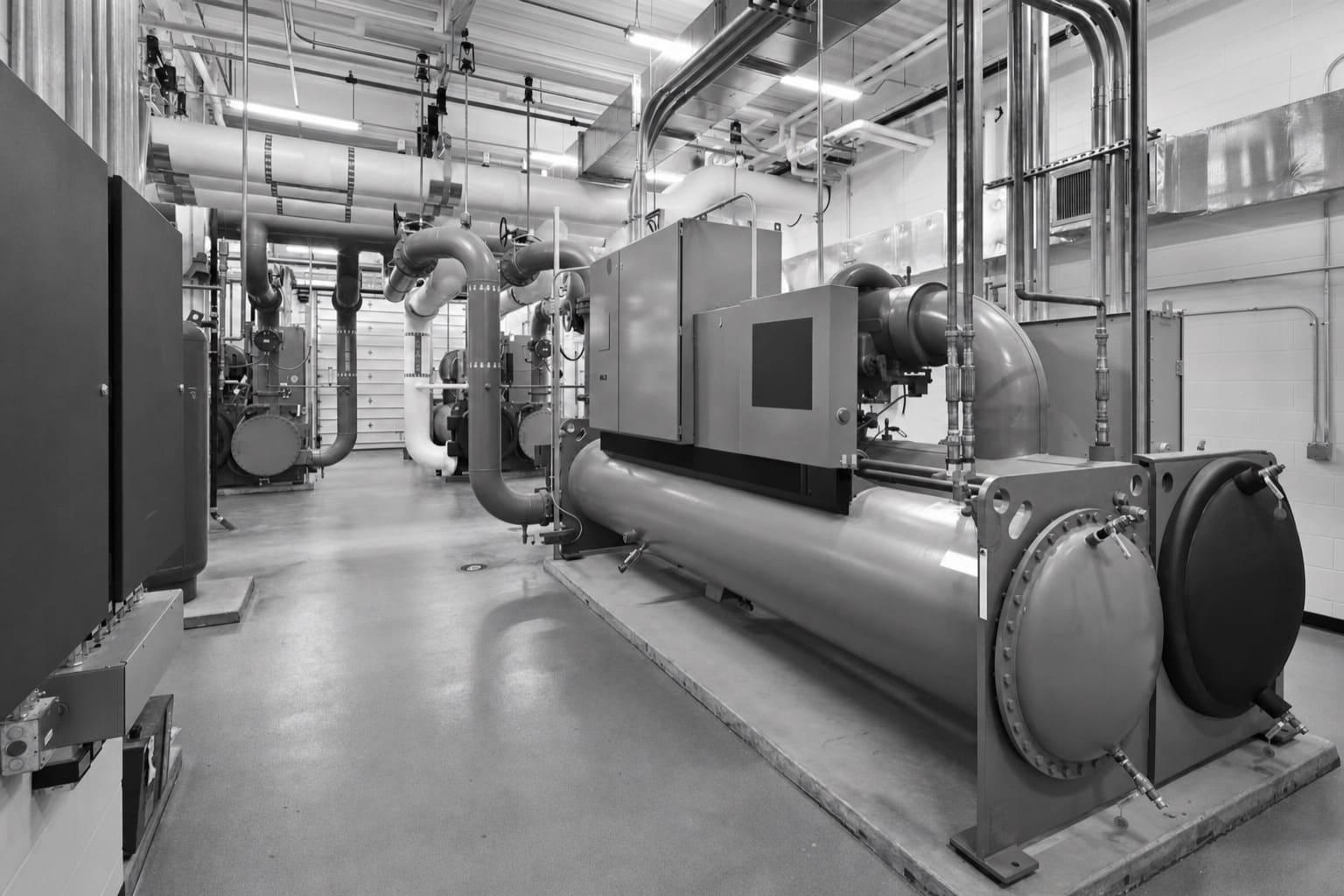
Two buildings can run the same tonnage and land in very different places on price and schedule. The difference is almost never the unit itself. It is the curb, the service, and how the crane gets to the roof.
LOWER COMPLEXITY
Same footprint, same loads
The replacement matches the existing curb, the space is used the way it was designed, gas and electrical service already carry the unit, and the lot gives a crane clean reach. Review is narrow and the set is a morning.
HIGHER COMPLEXITY
New footprint or new heating path
Tonnage changes, a curb adapter or structural review enters, electrical service needs upgrading for a heat pump, ventilation or air-balance work is added, or the roof is only reachable by closing part of the lot. Each one adds review time before it adds cost.
BEFORE YOU ORDER
The site review that decides the price
A useful site review answers a short list of questions, and the federal checklist for rooftop replacement is a good version of it: what the climate demands of the heating side, what the change does to the utility bill, what building type and schedule this is, whether the equipment is actually available, and whether the infrastructure supports it.
Infrastructure is where the surprises live. Three things get measured rather than assumed: electrical capacity available at the unit, the physical constraints of the curb and the roof, and the gas line serving it. A heat pump conversion that pencils on paper can fail on a panel with no room left. A larger unit can pass electrically and fail on curb structure.
The last two items are people and money. Not every crew is deep on heat pump rooftop startup and controls, so ask what the installer has actually commissioned and handed over. And confirm which incentive programs apply to the tier you are specifying before the order is placed, because eligibility follows what you buy.
Ask for this before the quote is final
Nameplate data from the existing unit, measured electrical capacity at the roof, curb dimensions and structural condition, gas line size, and a rigging plan that names the crane position and the stalls it closes.
IN BILLINGS
How this work shows up on the city permit record
Billings commercial building permits are a useful reality check on scope. In the city's own records, HVAC replacement inside a larger tenant project is repeatedly carved out and permitted separately from the remodel it belongs to. One Southgate Drive drive-thru remodel is written up with the landlord responsible for demolition, HVAC replacement, and a water meter upgrade under a separate permit, alongside modify-and-repair work on the existing units specifically to bring in additional outside air. Another permit on Central Avenue covers nothing but exhaust fan and control changes on a kitchen hood to get the air balance right.
The decision that follows is sequencing. If your project is a build-out or a remodel, do not assume the general permit carries the mechanical work. Ask early who pulls the mechanical permit, who owns the equipment, and whether outside-air or air-balance work sits in the same submittal.
One question to settle first
In leased space, get it in writing whether the landlord or the tenant pulls the mechanical permit and owns the replacement. Billings permit records show that split written directly into commercial remodel scope.
OWNERSHIP
Two things that outlive the install
Two questions decide how a replacement feels three years later, and neither one appears on the equipment quote.
The first is who owns the asset and who owns the bill. In leased commercial space, the party paying for the unit and the party paying to run it are often different, which is exactly how an old, inefficient unit survives another decade. If you are a landlord replacing on a tenant's roof, efficiency tier is the thing worth negotiating.
The second is fleet consistency. A building with six rooftop units rarely replaces all six at once, so you run a mixed fleet: different ages, different controls, and new units on newer low-GWP refrigerants while the older ones stay on what they shipped with. That is manageable, but only if the service contract and the spare-parts plan are written for it.
SPLIT INCENTIVE
Who pays to buy versus run it
When the landlord buys the unit and the tenant pays the power bill, nobody funds efficiency. Settle the tier and the cost split during the lease conversation, not after the crane is booked.
MIXED FLEET
Refrigerant and parts planning
The old charge has to be recovered and handled by certified technicians under federal rules. New units arrive on newer refrigerants, so update the service agreement and parts list as each one lands.
PHASING
Replacing a fleet without replacing it all at once
Most owners do not have a single unit. They have four or eight, bought at the same time and therefore aging at the same time. Replacing them all in one season is rarely the plan, and replacing them one failure at a time is worse.
The middle path is to rank the fleet by two numbers you can get before spending anything: age and annual energy waste. Units past fifteen years are the pool. Within that pool, the ones running the longest hours under the heaviest loads are the ones burning the difference between $900 and $3,700 a year. Replace in that order, two or three a year, and each year's savings help fund the next year's set.
Procurement follows the same logic. Buying two units together usually beats buying one twice, the crane comes once, and the rigging and permit work spreads across the set. It also lets you standardize controls, which owners consistently underestimate. One make on one control platform is far cheaper to service than four models chosen by whatever was available the day each unit died. Organizations that ran replacement as a program instead of a series of emergencies upgraded tens of thousands of units and cut real money out of their annual energy bills. The mechanism was ordinary: plan the order, buy ahead of failure.
THE QUOTE
Five things a comparable quote shows
Two quotes are only comparable if they show the same things. When a number looks low, it is usually low because one of these is missing, and it comes back as a change order after the old unit is already off the roof.
01
The unit, spelled out
Make, model, tonnage, efficiency tier, heating type, and refrigerant, not just a line that says replace rooftop unit.
02
Curb and structural scope
Adapter or new curb, any roof framing work, and who carries the cost if structure fails review.
03
Rigging and lot plan
Crane size, set position, stalls or lanes closed, and the date your lot is affected.
04
Permits and inspections
Which permits get pulled, by whom, and whether outside-air or electrical work sits in the same submittal.
05
Commissioning and closeout
Charge, airflow, and control settings verified against spec, documented at handoff, with warranty terms in writing.
Get a defensible number
Price the equipment and the building together.
Send the address, operating target, and target opening date. Flux will identify what must be verified before the project can be priced.
Get a free estimateQuestions
Straight answers.
When does replacement beat another repair?
Once a unit is past fifteen years and failing more than once a season, repairs are buying time rather than value. An old, inefficient rooftop unit can waste $900 to $3,700 a year in energy by itself. A planned replacement also keeps sizing and equipment choice open, which a failure in season does not.
Does a heat pump rooftop unit make sense in Billings?
Heat pump rooftop units are most efficient where winters are mild to moderate, and their heating efficiency drops toward electric resistance as it gets colder. In a Montana winter, the versions worth pricing are dual fuel, where gas covers the cold hours, and cold-climate units built to hold capacity lower. Check electrical capacity before ordering either.
Who pulls the mechanical permit on a leased space?
It has to be decided, not assumed. Billings commercial permit records show HVAC replacement carved out of tenant remodels and permitted separately, sometimes with the landlord named as the responsible party. Settle who pulls the permit and who owns the equipment in writing before the project starts.
Should we replace like-for-like or resize the unit?
Confirm the load either way. If occupancy, hours, and equipment in the space have not changed, like-for-like on the existing curb is usually right and keeps the project simple. If use has changed, resizing fixes comfort complaints the old unit could never resolve, and it is cheaper to catch before the order than after.
What happens to the refrigerant in the old unit?
Federal rules govern the handling and recycling of refrigerant in stationary air-conditioning and heat pump equipment, so the old charge is recovered and handled by certified technicians. It is a small line on the quote, but it should be on the quote rather than assumed.
Sources used for this guide
- [1]betterbuildingssolutioncenter.energy.gov — DOE Advanced Rooftop Unit Replacement Guidance
- [2]betterbuildingssolutioncenter.energy.gov — DOE Commercial Heat Pump Rooftop Unit Replacement Guidance
- [3]betterbuildingssolutioncenter.energy.gov — DOE High-Efficiency Commercial Rooftop Unit Toolkit
- [4]energy.gov — DOE Efficient Commercial Rooftop Air Conditioner Program
- [5]epa.gov — EPA Stationary HVAC Refrigerant Management
- [6]billingsmt.gov — billingsmt.gov