THE DIRECT ANSWER
Commercial HVAC replacement and installation in Auburn.
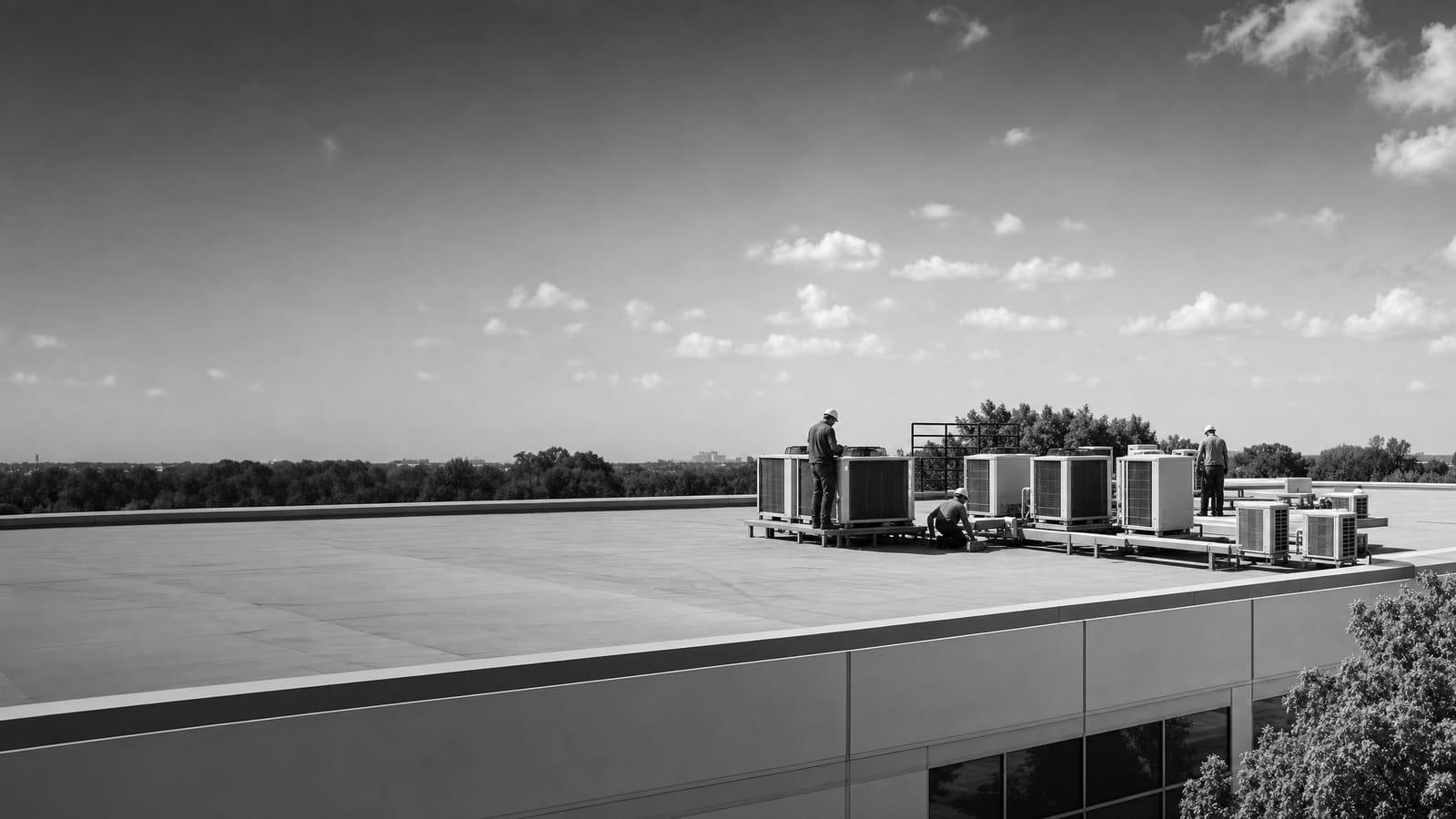
A commercial HVAC replacement includes load review, equipment selection, removal, rigging, connections, controls, startup, and commissioning. Replacement becomes more useful than another repair when an older unit no longer holds comfort, needs frequent service, or puts operations at risk. DOE guidance notes that rooftop units over 15 years old may waste substantial energy compared with newer equipment.
A site review must confirm the present load, curb and roof conditions, electrical service, fuel connections, controls, access, and installation schedule.
FIRST DECISION
Repair now, replace in kind, or redesign?
The right path depends on more than equipment age. Start with service history, comfort problems, energy use, parts access, and the cost of an unplanned outage. A sound repair can make sense when the failure is limited and the rest of the system is healthy. A planned replacement is stronger when breakdowns repeat or the unit can no longer meet the load.
Do not assume the old nameplate is the right answer. Occupancy, operating hours, lighting, plug loads, ventilation needs, and interior layouts may have changed. Replacing the same capacity without checking the load can carry an old sizing error into the next system. A redesign takes more study, but it can solve airflow, zoning, controls, or electrification needs that a direct swap cannot.
BUDGET CONTROL
What changes the installed price?
A useful budget separates equipment from the work required to place it, connect it, control it, and prove that it performs. These lines often create the largest quote differences.
EQUIPMENT CHOICES
Compare systems by the job they must do
Packaged rooftop units combine major heating and cooling parts in one cabinet. They are common across commercial buildings and can simplify replacement when the roof, curb, ducts, and services remain suitable. A higher-efficiency rooftop unit may reduce energy use, but the result still depends on correct sizing, airflow, controls, maintenance, and operating hours.
A heat-pump rooftop unit provides cooling and reverse-cycle heating. DOE guidance says the choice between an all-electric, dual-fuel, or cold-climate model should consider climate, utility rates, emissions goals, equipment availability, electrical capacity, physical limits, gas service, and contractor knowledge. That makes heat-pump selection a building decision, not a simple equipment upgrade. Electrical demand and backup heat deserve review before a gas-fired unit is removed.
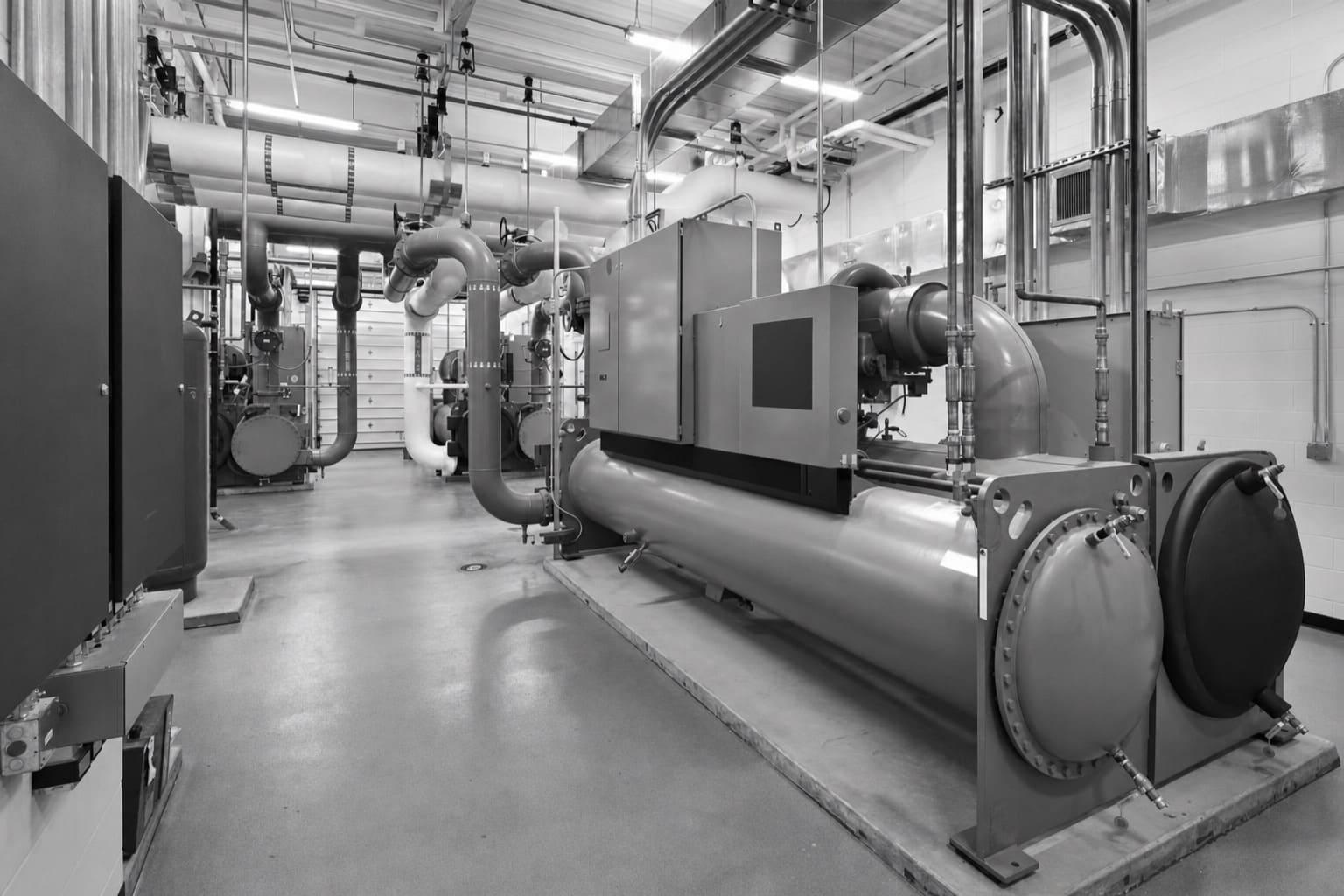
Split systems, variable-refrigerant systems, and central equipment can fit buildings that need more zoning or have limited rooftop options. They can also increase piping, controls, indoor work, and commissioning. Ask bidders to explain why the proposed system fits the load, schedule, maintenance plan, and future use.
PROJECT COMPLEXITY
A box swap and a system change are different projects
Two replacements with similar equipment can carry very different installation scopes. Identify which set of conditions matches your building before comparing prices.
LOWER COMPLEXITY
Close equipment match
The existing curb, ducts, electrical supply, fuel connection, controls, and access remain suitable. The work still needs a load check, safe rigging, startup, and documented testing.
HIGHER COMPLEXITY
Building or system change
Capacity, fuel, voltage, footprint, zoning, ventilation, or controls change. Engineering, structural work, service upgrades, longer shutdowns, or added commissioning may enter the scope.
SITE REVIEW
Turn a replacement request into a buildable scope
Begin with the equipment nameplate, service records, control information, utility history, floor plans, and known comfort complaints. Then inspect the unit, roof or equipment room, duct connections, filters, drains, power, fuel, and control wiring. The review should also note access doors, ladders, roof protection, lift paths, occupied areas, and any shutdown limits.
Next, confirm how the space works today. Record operating hours, occupancy, heat-producing equipment, outdoor-air needs, pressure relationships, and zones that run hot or cold. These facts help test whether the old capacity remains a good fit. They also show whether a replacement should solve a wider airflow or control problem.
Finish the review with an installation plan. Define staging, removal, temporary service needs, trade coordination, weather protection, startup responsibility, and handoff records. If the building must remain open, divide the work by unit or zone and state when each area will lose conditioning. A detailed scope gives bidders the same problem to price.
Start before failure
A planned review gives the owner time to compare equipment, confirm infrastructure, arrange shutdowns, and avoid choosing only what happens to be available during an emergency.
OWNER PRIORITIES
Balance continuity with long-term performance
Installation choices affect both the project week and the years that follow. An owner who focuses only on first price may miss shutdown exposure, maintenance access, controls problems, or added electrical work. An owner who asks only for the most efficient model may also overbuy if the system is poorly sized or rarely runs.
Set the decision rules before bids arrive. State which spaces cannot lose service, which comfort problems must be corrected, how energy or emissions goals will be judged, and who will maintain the new equipment. This makes tradeoffs visible and gives the project team a clear basis for selection.
OPERATIONS
Protect occupied spaces
Plan work by unit, zone, or shift. Define shutdown windows, temporary measures, communication, access control, and a response plan if startup takes longer than expected.
OWNERSHIP
Make the system maintainable
Check filter access, service clearances, control support, technician familiarity, parts strategy, warranty steps, and the records needed for future troubleshooting.
PHASING AND PROCUREMENT
Buy the installation, not just the equipment
For several aging units, rank replacements by condition, service history, load importance, and outage impact. Phasing can spread capital work and keep more of the building available. It can also create a mixed fleet, so decide whether common controls, filters, parts, and service procedures matter. Replacing units in a planned group may simplify rigging and mobilization, but only when the building can support the shutdown plan.
Ask when the quoted equipment will be released, what substitutions are allowed, and which features must remain equal. Do not approve a substitute from capacity alone. Compare heating method, efficiency, fan control, ventilation functions, dimensions, weight, electrical data, sound, controls, service access, and warranty terms.
Treat refrigerant handling as part of the project. EPA rules under Section 608 govern refrigerant handling and recycling for stationary air-conditioning and heat-pump equipment. The quote should identify who recovers refrigerant, how the old equipment is removed, and what records will be delivered. For a mixed fleet, record the refrigerant used by every new unit so future service planning stays clear.
COMMISSIONING
Do not stop when the new unit turns on
Startup proves that equipment can run. Commissioning checks whether it runs as intended in the building. The team should verify power, rotation where applicable, refrigerant condition, drainage, filters, belts, dampers, airflow, heating and cooling stages, sensors, safety devices, alarms, schedules, and control commands. Testing should cover more than one operating mode when the system has staged or variable operation.
The owner should receive startup forms, test results, control sequences, equipment data, warranty information, and operating instructions. Record final settings instead of leaving them only inside a controller. If an issue appears later, these records help a service technician separate an installation problem from a new failure.
Set a closeout process for open items. List who will correct each item, how performance will be retested, and when the owner accepts the work. Training should cover normal operation, alarm response, filter and maintenance needs, seasonal changes, and whom to call. A clean handoff reduces the chance that a good installation drifts into poor performance.
QUOTE CHECKLIST
Five things every comparable quote should show
Put each bid into the same format. A low total is hard to judge when exclusions, equipment features, or testing duties are hidden.
01
Exact equipment
List model, capacity, heating type, efficiency, options, availability, warranty, and accepted substitutions.
02
Complete installed scope
Show demolition, curb, ducts, rigging, power, fuel, drains, controls, roofing, and disposal.
03
Assumptions and exclusions
State access limits, hidden conditions, structural work, service upgrades, and owner-provided items.
04
Schedule and shutdowns
Show procurement milestones, site duration, outage windows, phasing, and delay responsibilities.
05
Testing and closeout
Define startup, commissioning, corrections, training, manuals, warranties, and final acceptance.
Get a defensible number
Price the equipment and the building together.
Send the address, operating target, and target opening date. Flux will identify what must be verified before the project can be priced.
Get a free estimateQuestions
Straight answers.
When should a commercial rooftop unit be replaced instead of repaired?
Replacement deserves a full review when the unit has frequent failures, cannot hold comfort, uses hard-to-source parts, or creates an unacceptable outage risk. DOE guidance also notes that rooftop units over 15 years old can waste substantial energy compared with newer models. Age alone does not settle the choice. Compare the repair, the remaining condition of the system, expected operating needs, and the business impact of another failure.
Should the new commercial HVAC unit match the old capacity?
Not until the current load is checked. The old unit may have been oversized, undersized, or selected for a use that no longer exists. Occupancy, schedules, interior layouts, lighting, equipment, ventilation, and building improvements can change the load. A close equipment match may still be right, but the quote should explain how capacity was confirmed instead of relying only on the old nameplate.
Is a commercial heat-pump rooftop unit a good replacement option?
It can be, but it needs an infrastructure and operating review. Compare all-electric, dual-fuel, and cold-climate options against heating loads, electrical capacity, physical space, existing gas service, equipment availability, utility costs, emissions goals, and maintenance support. The proposal should also show any backup heat and electrical work. A heat pump should be selected as a complete building solution, not as a label change.
What should happen during a commercial HVAC site visit?
The review should document the existing unit, service history, roof or mechanical-room conditions, curb, ducts, drains, power, fuel, controls, access, and lifting route. It should also cover occupancy, schedules, ventilation needs, comfort complaints, shutdown limits, and future changes to the space. The result should be a written basis for equipment selection, installation scope, phasing, and commissioning.
How can an owner compare commercial HVAC installation bids?
Require each bidder to identify the exact equipment and the same scope lines. Compare capacity, heating type, efficiency, options, warranty, controls, rigging, curb work, ducts, roofing, electrical work, fuel work, startup, commissioning, schedule, and exclusions. Ask how substitutions will be reviewed. A bid that omits a necessary trade or closeout duty may look lower without representing a lower completed project cost.
What records should the owner receive after installation?
Request approved equipment data, startup forms, commissioning results, final control sequences, setpoints, warranty documents, operating instructions, maintenance requirements, and refrigerant information. The package should also record corrections made during closeout and any open responsibility. These documents help the facility team operate the system, protect warranty coverage, plan service, and diagnose later comfort or control problems.
Can several aging HVAC units be replaced in phases?
Yes. Rank units by condition, repair history, importance to operations, and the effect of an outage. Then plan each phase around equipment availability, rigging, occupied zones, and budget timing. Phasing can reduce disruption, but it may leave the owner with different controls, filters, parts, and refrigerants. Set fleet standards before ordering so each phase supports the long-term maintenance plan.
Sources used for this guide
- [1]betterbuildingssolutioncenter.energy.gov — DOE Advanced Rooftop Unit Replacement Guidance
- [2]betterbuildingssolutioncenter.energy.gov — DOE Commercial Heat Pump Rooftop Unit Replacement Guidance
- [3]betterbuildingssolutioncenter.energy.gov — DOE High-Efficiency Commercial Rooftop Unit Toolkit
- [4]energy.gov — DOE Efficient Commercial Rooftop Air Conditioner Program
- [5]epa.gov — EPA Stationary HVAC Refrigerant Management