THE NUMBER
What commercial EV charging costs in Oceanside
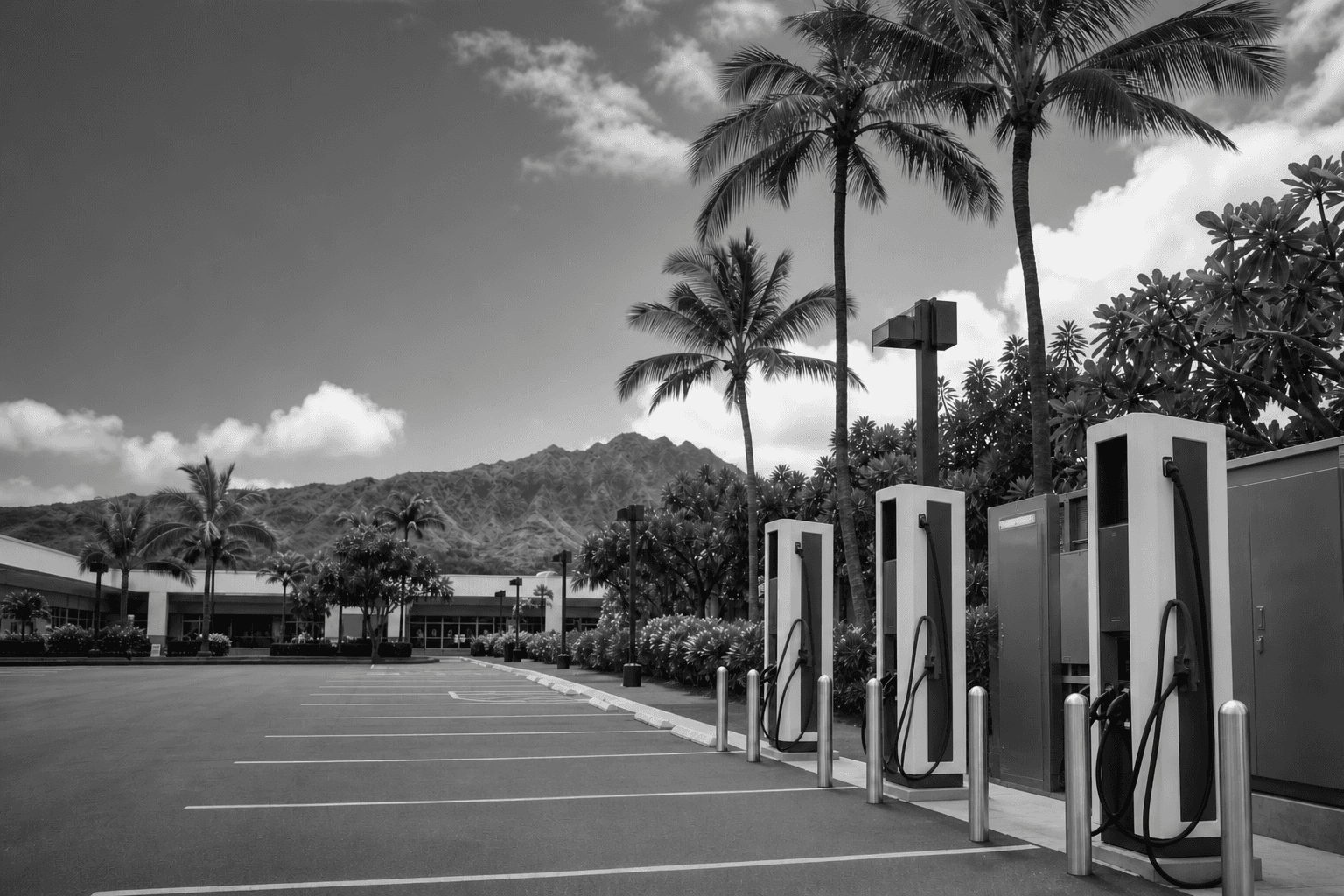
Equipment sets the floor. A single-connector Level 2 unit runs $400 to $6,500, and a DC fast charger runs $10,000 to $40,000 before anyone touches the site. Basic Level 2 installation in Southern California has been priced around $1,500 to $1,700 per unit, and that figure covers simple wiring only — not commercial-grade hardware, not a service upgrade, not a run across the parking lot. Those three things are where commercial budgets actually move.
Planning benchmarks, not an Oceanside quote. Distance from the electrical room, spare panel capacity, pavement restoration, and port count all move the final number.
PICK THE LEVEL FIRST
Three ways to charge, three different budgets
The first cost decision is not brand. It is how long vehicles sit. Charging level should follow dwell time, because paying for speed nobody uses is the most common way a commercial budget gets wasted.
The split is clean. Workplaces and multifamily buildings should look at Level 1 and Level 2. Public-facing hosts should look at Level 2 and DC fast charging. Fleets have a fourth option worth pricing: instead of a pedestal at every stall, install 120- or 240-volt receptacles and use portable Level 1 or Level 2 units stored in the vehicles. That lowers project cost, and a failed portable unit gets swapped instead of repaired in place.
Price at least two of these before you commit. The gap between a receptacle-based fleet yard and a DC fast installation is not a percentage difference. It is a different project, a different electrical service, and a different permit.
WHERE THE MONEY GOES
The lines that move between two identical sites
A comparable quote separates the equipment from the work around it. These are the lines that swing the most between two Oceanside properties buying the same chargers.
BEFORE YOU COMPARE BIDS
Start with the panel, not the price list
Three questions sit at the top of every serious installation checklist: how close the stalls are to incoming electricity, whether metering has to change, and what the utility says about upgrades to service and equipment. Answer those before you collect bids, and the bids become comparable.
Then decide the count twice. Pick the number of ports you need now, and the number you expect in five years. Conduit, panel space, and trench capacity are cheap to oversize while the trench is open and expensive to add later. Future expansion belongs on the siting plan for exactly that reason. It is the one place where spending more today reliably lowers lifetime cost.
Networking is the third fork. A networked charger lets you track charging load separately from the rest of the building, set access rules, and collect payment at the unit. It also carries an ongoing fee. If the chargers serve employees or tenants and you are not selling electricity, non-networked hardware with simple access control can be the cheaper honest answer. Settle that before you buy, because changing your mind later usually means new equipment.
WHY QUOTES DIVERGE
The same chargers, two very different numbers
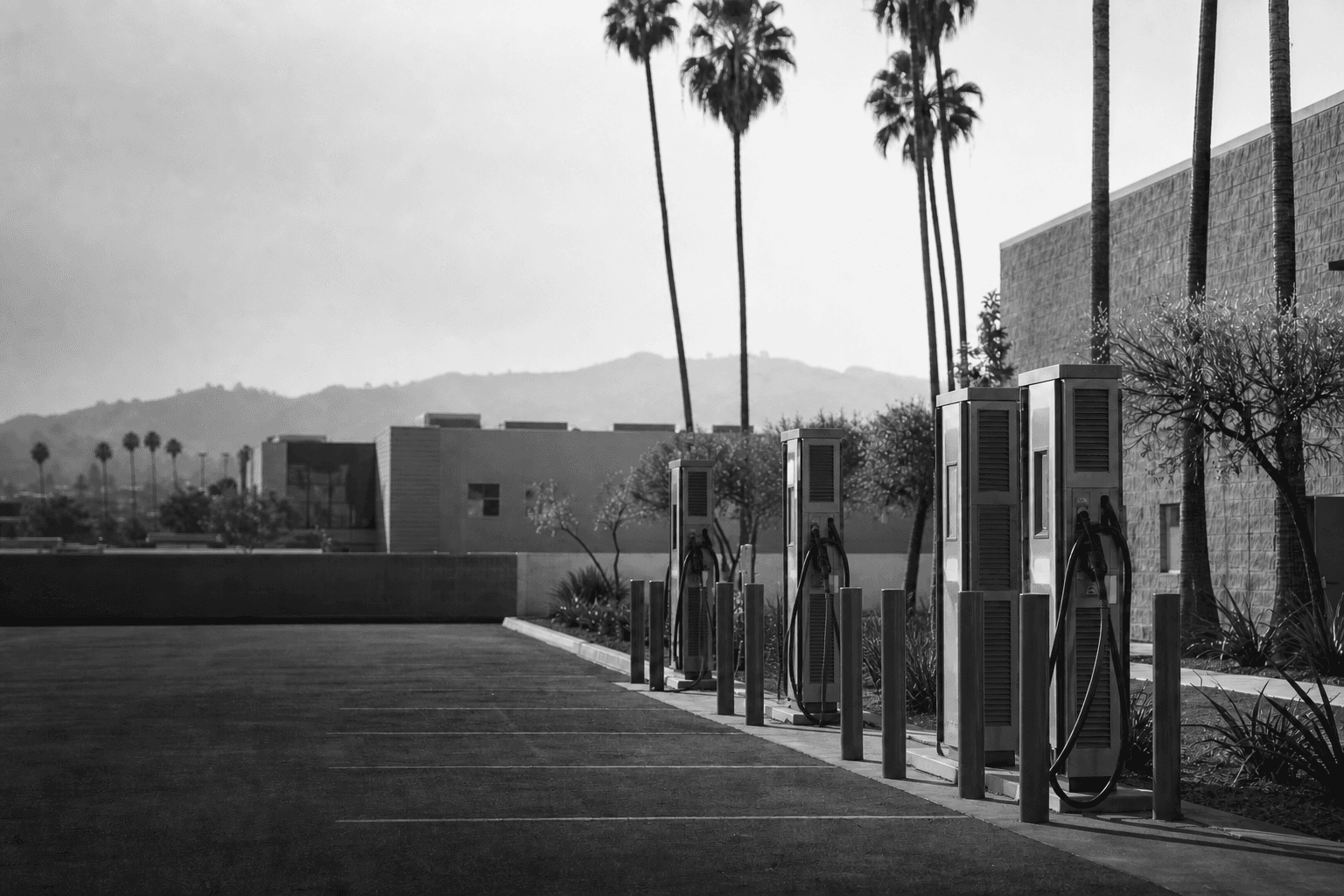
Two Oceanside properties can buy identical chargers and get quotes that are not close. The difference is almost never the hardware. It is what the site makes the electrician do to reach the stalls.
LOWER COMPLEXITY
Short runs, spare capacity
Stalls sit near the electrical room. The panel has spare amps. Conduit runs along a wall or through landscape instead of cut pavement. Level 2 on a wall mount or short pedestal. This is the quote that lands at the bottom of the range.
HIGHER COMPLEXITY
Long runs, tight service
Stalls sit across the lot from a full panel. Now you are buying trenching, pavement cutting and restoration, new panel or service work, and utility coordination on a schedule you do not control. DC fast charging puts you here almost by definition.
SCOPING THE JOB
What a real site review looks like
A useful site review is short and physical. Someone walks the lot with the panel schedule, measures the distance from the service to the candidate stalls, checks what sits under the pavement between them, and confirms the parking layout still works once stalls are dedicated. That walk is what turns a range into a number.
Sequence matters as much as scope. Engage the utility early to identify installation needs and costs, including upgrades to electrical service and equipment. That conversation sets your schedule as much as your budget. Confirm permit and inspection requirements at the same time, because inspection scheduling is a common reason a finished install sits unused.
Explore incentives before you lock the budget, not after. Programs are applied for, approved, and then built against. Money is rarely paid backward on work already done. Ask every bidder to price the same scope, in the same order, with the same assumptions about who pulls permits and who coordinates with the utility. If one bid is dramatically lower, it is usually missing the trench, the panel, or the restoration.
What the walk should produce
One page: distance from service to stalls, spare panel capacity in amps, what the conduit path crosses, port count now and at buildout, and whether the chargers will be networked. Every bid prices against that page.
OCEANSIDE CONDITIONS
Two things that shape the number here
The first is the rate you will be billed on. Charging costs include per-kilowatt-hour charges plus demand charges, which are typically set by the highest 15-minute average draw in a billing period. DC fast charging is far more likely to trigger those than Level 1 or Level 2. Some utilities offer time-of-use rates or other rate incentives for charging infrastructure owners, so ask what applies before you size the system. On a low-utilization site, the rate structure can matter more than the hardware.
The second is the coast. Weather exposure is a standard siting factor, and marine air is the daily condition here. Enclosure rating, mounting, and cable management are worth specifying rather than accepting as delivered.
One call to make early
Ask the utility what rate the chargers land on and whether a time-of-use or EV-specific option exists. Then ask what the highest 15-minute draw of your proposed configuration would be. Those two answers together tell you the real operating cost.
OWNERSHIP
Who owns the chargers changes the cost shape
Buying the equipment outright reduces overall cost and gives you full control of pricing and access. It also makes you responsible for every repair, warranty question, and replacement. Letting a provider own and maintain the hardware moves that risk onto a contract, usually with a recurring fee or a share of revenue attached.
Either way, put maintenance responsibility in writing. Decide up front whether the site host, the charging network, or the installer owns a broken connector, and make the agreement name a response time, a repair time, and an uptime requirement. Routine upkeep is minimal. Repairing a charger that has fallen out of warranty is not. Settle ownership before hardware selection, because it drives warranty terms, network commitments, and who is standing in the parking lot when a unit goes down.
OWN IT
Site host owns and maintains
Lower overall cost and full control of pricing and access. You carry repairs, warranty administration, and replacement — so read the warranty term before you read the price.
OUTSOURCE IT
Provider owns the hardware
Less capital and less risk, paid for over time. Make the contract name response time, repair time, and an uptime requirement, not just a phone number to call.
THE LONG NUMBER
Phasing, recovery, and what runs every year
Price the decade, not the purchase. Plan on maintenance of up to $400 per charger per year, and know that extended warranties on DC fast chargers can run over $800 per charger per year. Add network fees if you are collecting data or payment. Those numbers are small next to the trench, but they repeat every year, and they are the part most first quotes leave out.
Phase the build where the site allows it. Trench once, size the conduit and panel for the full buildout, and energize only the ports you need now. Fleets should also time equipment delivery against vehicle delivery. Chargers sitting idle for a year are capital doing nothing, and vehicles arriving before chargers are worse.
On recovering cost, hosts can charge by kilowatt-hour, by session, by length of time, or through a subscription. More than twenty percent of public charging is still free to use, and free is a legitimate choice if the chargers exist to hold tenants or draw customers. Just make it a decision rather than a default.
One note on the federal side. The 30C charging credit closed to new projects on June 30, 2026, and eligibility was always tied to specific census tracts rather than whole cities. Build the budget on installed cost and treat any remaining program money as upside.
COMPARING BIDS
Five lines every quote should show
Bids only compare when they itemize the same way. Ask each bidder for these five lines, in dollars, on one page. Anything folded into a single lump-sum number is hiding the line most likely to change.
01
Equipment, itemized
Model, connector count, network subscription if any, and the warranty term in years.
02
The electrical run
Trench footage, conduit, wire, pavement cutting, and restoration, priced separately from the chargers.
03
Service and panel work
Panel additions, service upgrade, metering changes, and what the utility has confirmed versus what is still assumed.
04
Permits, inspection, and utility coordination
Who pulls what, what it costs, and how long inspection is expected to take.
05
Year-one and recurring costs
Activation, network fees, maintenance plan, and extended warranty pricing after the included term ends.
Keep planning locally
Related EV charging pages in Oceanside
Get a defensible number
Price the equipment and the building together.
Send the address, operating target, and target opening date. Flux will identify what must be verified before the project can be priced.
Price my chargersQuestions
Straight answers.
How much does a commercial Level 2 charger cost in Oceanside?
The unit itself runs $400 to $6,500 per single connector. Basic Level 2 installation in Southern California has been priced around $1,500 to $1,700, but that reflects simple wiring only. Commercial sites add the run to the stalls, any panel or service work, and pavement restoration on top of it.
Why does DC fast charging cost so much more?
The hardware alone is $10,000 to $40,000 per unit, and the electrical service behind it is a different class of work. It is also the level most likely to trigger demand charges, which are typically set by your highest 15-minute average draw in a billing period.
What does it cost to keep commercial chargers running?
Budget up to $400 per charger per year for maintenance, plus network fees if the chargers are networked. Annual extended warranties on DC fast chargers can exceed $800 per charger. Routine upkeep is minimal, but repairing a unit that has fallen out of warranty is not.
Can we lower the cost without cutting ports?
Often, yes. Instead of a pedestal at every stall, install 120- or 240-volt receptacles and use portable Level 1 or Level 2 units stored in the vehicles. Trenching once and oversizing conduit and panel space for the full buildout is the other reliable savings, because reopening pavement later costs more than sizing it right the first time.
Is the federal EV charger tax credit still available?
Not for new projects. The 30C credit closed on June 30, 2026, and projects placed in service by then still claim it at filing. Eligibility was always tied to qualifying census tracts rather than whole cities, so coverage varied block by block. Build your budget on installed cost and let utility and state programs carry the incentive side.
Sources used for this guide
- [1]afdc.energy.gov — Alternative Fuels Data Center: Procurement and Installation for Electric Vehicle Charging Infrastructure
- [2]irs.gov — IRS Alternative Fuel Vehicle Refueling Property Credit
- [3]winsparking.com — Fleet EV Charging in Denver, CO | Wins Parking
- [4]promatcher.com — EV Charging Station Cost - Los Angeles, California
- [5]afdc.energy.gov — Alternative Fuels Data Center: Operation and Maintenance for Electric Vehicle Charging Infrastructure
- [6]afdc.energy.gov — U.S. DOE AFDC Electric Vehicles for Fleets