DIRECT ANSWER
EV charging installation cost in Phoenix.
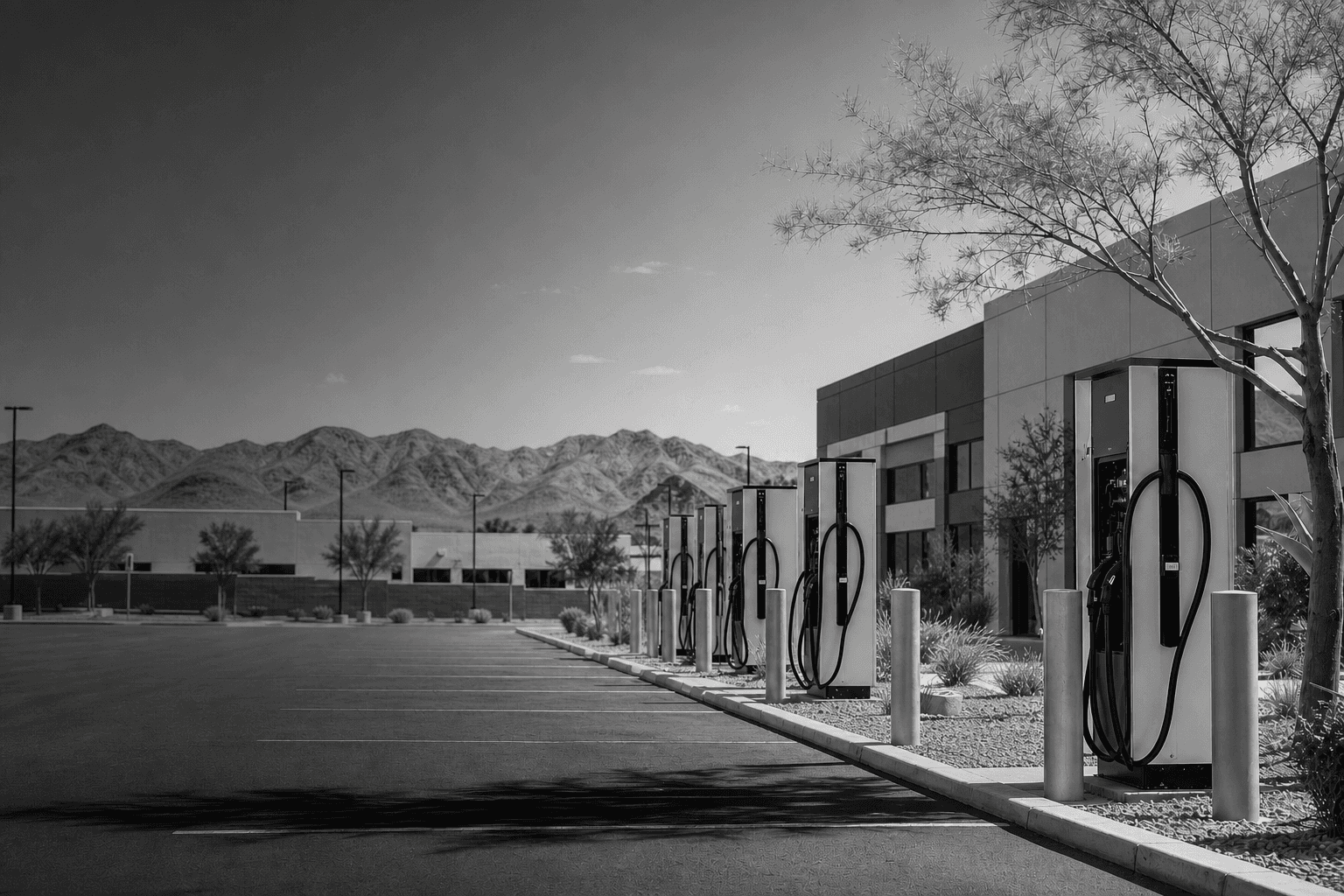
For planning, Level 2 equipment can cost $400 to $6,500, with installation from $600 to $12,700. DC fast charging equipment can cost $10,000 to $40,000, with installation from $4,000 to $51,000. These ranges apply to a charger, not a full multi-port project. A Phoenix site quote must also cover design, permits, electrical capacity, construction, networking, and commissioning.
These are planning benchmarks, not a Phoenix quote. Charger power, port count, panel capacity, utility work, cable distance, trenching, pavement repair, and permits can move the price.
FIRST DECISION
Match charging speed to how the property works
The lowest equipment price is not always the lowest project cost. Start with how long vehicles stay parked and how much energy they need before leaving. Workplaces, apartments, hotels, and many fleet yards can often use Level 2 charging because vehicles remain parked for hours. DC fast charging fits short stops, public charging, or fleet operations that need vehicles back on the road sooner.
More power can raise costs beyond the charger. It may require larger conductors, added switchgear, a service upgrade, or utility coordination. It can also affect the electric bill. A mix of charger types may work better than giving every space the highest available power. Review vehicle schedules, daily mileage, parking time, and expected use before selecting equipment. This keeps the EV charger installation tied to an operating need instead of a product wish list.
BUDGET MECHANISM
The main lines that build the installed price
A useful budget separates the charger purchase from the work needed to deliver safe power and return the site to service.
EQUIPMENT CHOICES
Compare ports, power, and controls—not just charger boxes
A charger price can describe one unit, one connector, or one port. Those are not always the same thing. Ask how many vehicles can charge at once and whether available power is shared. A dual-port station may serve two spaces, but its controls may divide power when both vehicles connect. That may be fine when cars remain parked for a long time. It may not meet a fleet departure schedule.
Networked chargers add remote status, access rules, driver payments, pricing controls, and use data. They can help a public garage, apartment operator, or large fleet manage charging. They also bring software, communication, and service costs. A non-networked charger can be simpler when access is controlled and payment is not needed. The tradeoff is less operating data and fewer remote tools.
Mounting matters too. Wall units may reduce pedestal and concrete work when suitable parking is close to a building. Pedestal units can fit open lots but need foundations and protection. For outdoor Phoenix locations, confirm the equipment’s operating temperature, enclosure, cable storage, screen visibility, and communication method. Read the warranty terms and replacement process before approving the model.
SITE CONDITIONS
What makes one project simple and another expensive
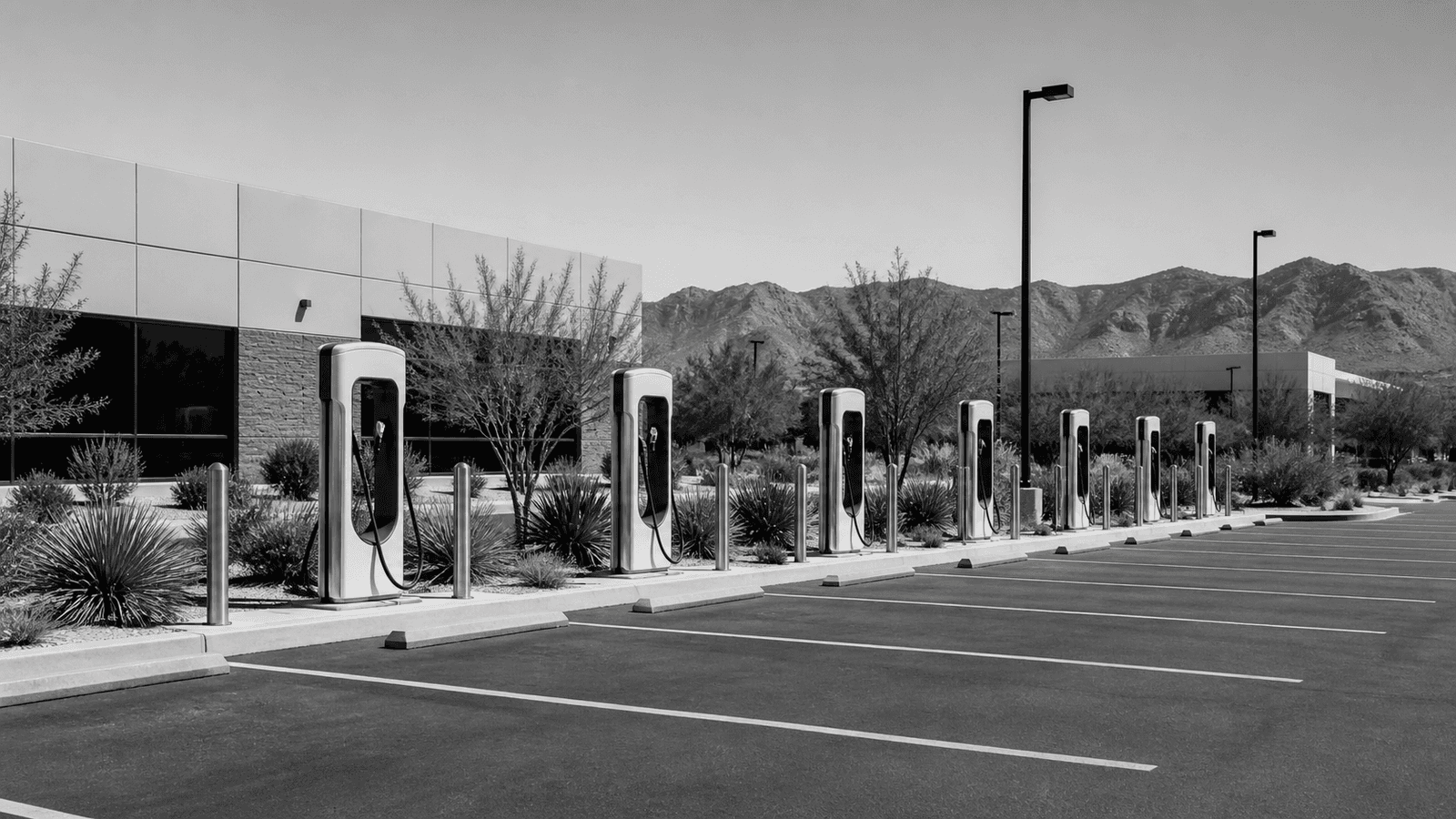
Two properties can buy the same charger and receive very different installation prices. The difference is often between the electrical room and the parking space.
LOWER COMPLEXITY
Capacity and parking line up
The panel has usable capacity, chargers sit near the power source, the route stays above ground, and little pavement or landscaping needs repair.
HIGHER COMPLEXITY
Power and construction expand
The work needs service upgrades, new distribution equipment, long underground runs, utility changes, traffic control, or major surface restoration.
SITE REVIEW
Confirm electrical capacity before choosing the final charger
A panel label does not prove that spare capacity is available. The project team should review the service, panels, breakers, transformers, existing loads, and planned building growth. Charging several vehicles at once can create a very different load than adding one station. Fleet projects should also model vehicle arrival times, departure needs, daily travel, and charging windows.
If capacity is tight, the answer is not always a full service upgrade. Managed charging can limit or schedule charger output so the site stays within an approved power level. This can help a facility use existing capacity while still meeting vehicle needs. The control plan must be based on real dwell time and required energy, not just the total number of parking spaces.
Location affects the same decision. Moving chargers closer to existing power can reduce conduit, wire, trenching, and surface repair. Yet the closest spaces may not be the best spaces for access, operations, or future growth. Compare several layouts before fixing the design. A good commercial EV charging plan balances electrical cost, parking use, accessibility, driver flow, and expansion.
Bring useful records to the walkthrough
Provide electrical drawings, panel schedules, utility bills, parking plans, vehicle duty cycles, proposed charger locations, and any planned building or fleet expansion.
PHOENIX PLANNING
Include city review and utility steps in the schedule
Phoenix requires commercial building permits for nonresidential construction, including remodels and tenant improvements. The city provides commercial plan review, permit, inspection, application, and checklist resources. Electronic plan review and online inspection tools are also available. Your contractor should identify the required review path and show responsibility for submissions, corrections, inspections, and closeout.
Utility coordination should begin before equipment is ordered when the load may exceed present capacity. The utility review can uncover service or equipment work that changes both price and lead time. It can also help the owner study rate effects. DC fast charging is more likely than Level 2 charging to trigger demand-related costs, so operating cost belongs in the design decision.
SRP customers should check eligibility before purchase
SRP has published program requirements for charger, DC fast charger, and prewiring rebates. Eligibility, equipment rules, installation dates, customer status, and preapproval requirements apply. Do not deduct a rebate until approval is confirmed.
AFTER INSTALLATION
Budget for ownership, not only construction
The capital quote gets the chargers working. The operating plan keeps them useful. Electricity cost depends on charger type, charging time, use, and the property’s utility rate. Network fees, payment processing, maintenance, warranty coverage, and repairs may continue each year. Charging controls can help shift flexible fleet charging to better times and reduce avoidable peaks.
Maintenance responsibility should be written down. Routine work includes keeping equipment clean, storing cables safely, checking parts, and troubleshooting faults. Owners should also set response and repair expectations. General maintenance may reach $400 per charger each year, while annual extended warranties for DC fast chargers can cost more than $800 per charger. Actual terms vary by equipment and provider.
OPERATING COST
Electricity and network services
Compare rate effects, charging schedules, software fees, payment costs, data access, and the party that receives charging revenue.
RELIABILITY
Warranty and maintenance
Set uptime goals, response times, repair duties, spare-part plans, cable care, and coverage after the original warranty ends.
BUYING STRATEGY
Phase the project without paying twice
A first phase can limit risk when future use is uncertain. Install the chargers needed now, then prepare selected spaces for later growth. Good preparation may include panel space, conduit routes, pull points, foundations, communications, or reserved electrical capacity. The right work depends on the approved long-term design. Empty conduit in the wrong place does not create useful savings.
Set expansion triggers before construction. Use vehicle orders, charger use, queue time, tenant demand, or fleet energy needs to decide when another phase starts. Network data can show how often stations are used and whether vehicles remain connected after charging. That helps the owner add the right kind of capacity instead of repeating the first purchase.
Compare lifetime cost on the same operating period and scope. Include equipment, installation, utility work, software, electricity, maintenance, warranties, payment fees, and expected replacement work. Treat incentives as a separate line because approval and timing may change. If financing or a charging-as-a-service structure is offered, identify who owns the equipment, controls pricing, receives revenue, pays for repairs, and carries the contract if the property changes hands.
QUOTE CHECKLIST
Five items every comparable quote should show
Ask each bidder to price the same equipment, power plan, site limits, and closeout duties. Otherwise, a low bid may only be a smaller scope.
01
Exact equipment
List manufacturer, model, power, ports, connectors, mounting, cable length, network, warranty, and lead-time assumptions.
02
Electrical scope
Show load calculations, panels, breakers, transformers, switchgear, conduit, conductors, metering, controls, and utility responsibilities.
03
Civil and parking work
Define trenching, boring, concrete, bollards, striping, signage, accessibility work, landscaping, traffic control, and surface restoration.
04
Permits and closeout
Assign design, applications, fees, corrections, inspections, testing, commissioning, training, record drawings, and final documentation.
05
Exclusions and ongoing fees
State allowances, unknown conditions, change-order rates, network charges, payment fees, maintenance, warranties, taxes, and rebate treatment.
Keep planning locally
Related EV charging pages in Phoenix
Get a defensible number
Price the equipment and the building together.
Send the address, operating target, and target opening date. Flux will identify what must be verified before the project can be priced.
Price my chargersQuestions
Straight answers.
How much does a commercial Level 2 charger cost to install in Phoenix?
For early planning, Level 2 equipment can cost $400 to $6,500, and installation can cost $600 to $12,700 for a charger. A multi-port Phoenix project can also need design, permits, trenching, new distribution equipment, utility work, networking, and surface repair. A site review is needed before setting the project budget.
How much does commercial DC fast charging cost?
DC fast charging equipment can cost $10,000 to $40,000, with installation from $4,000 to $51,000 for a charger. The range is wide because power delivery can require larger electrical equipment and utility involvement. It may also create higher operating costs, including demand-related charges.
What is usually excluded from a charger equipment price?
An equipment price may exclude design, freight, taxes, permits, utility work, panels, transformers, switchgear, conduit, wire, trenching, foundations, bollards, striping, network activation, commissioning, and pavement repair. Ask for a complete scope and a clear exclusions list.
Can managed charging reduce installation cost?
It can help when vehicles have flexible charging times and the site has limited capacity. The system can schedule or divide power instead of allowing every charger to run at full output at once. The plan still needs an electrical review and must provide enough energy before each vehicle leaves.
Does a Phoenix commercial EV charger project need a permit?
Phoenix requires commercial building permits for nonresidential construction such as new work, remodels, and tenant improvements. The exact review path depends on the project scope. The quote should assign responsibility for plans, permit submissions, corrections, inspections, and closeout.
Are commercial EV charging rebates available in Phoenix?
Eligibility depends on the electric utility, customer type, equipment, installation timing, and program rules. SRP has published incentives for eligible business charging projects, but preapproval and other requirements apply. Confirm approval before ordering equipment or subtracting any rebate from the budget.
Should a workplace or fleet choose Level 2 or DC fast charging?
Choose based on parking time and required energy. Level 2 often fits vehicles parked for hours or overnight. DC fast charging can fit short stops or between-shift charging when rapid turnaround matters. A fleet schedule and load study can show whether faster charging is worth the added capital and operating cost.
Sources used for this guide
- [1]afdc.energy.gov — Alternative Fuels Data Center: Procurement and Installation for Electric Vehicle Charging Infrastructure
- [2]phoenix.gov — Commercial and Multifamily Building
- [3]srpnet.com — Business electric vehicle (EV) charger rebate | SRP
- [4]afdc.energy.gov — Alternative Fuels Data Center: Operation and Maintenance for Electric Vehicle Charging Infrastructure
- [5]afdc.energy.gov — U.S. DOE AFDC Electric Vehicles for Fleets
- [6]phoenix.gov — PDD Online Services User Manual