Direct answer
Commercial EV charger installation in Oceanside.
A commercial EV charger installation starts with a site and electrical assessment. It then moves through charger selection, utility coordination, design, permitting, construction, inspection, network setup, commissioning, and turnover. Level 2 charging often connects through commercial distribution equipment. DC fast charging creates a larger power and utility scope, so it needs earlier electrical planning.
The site review must verify available power, parking use, equipment locations, cable routes, communication needs, accessibility, and room for later expansion.
Operating plan
Choose charging around vehicles and parking time
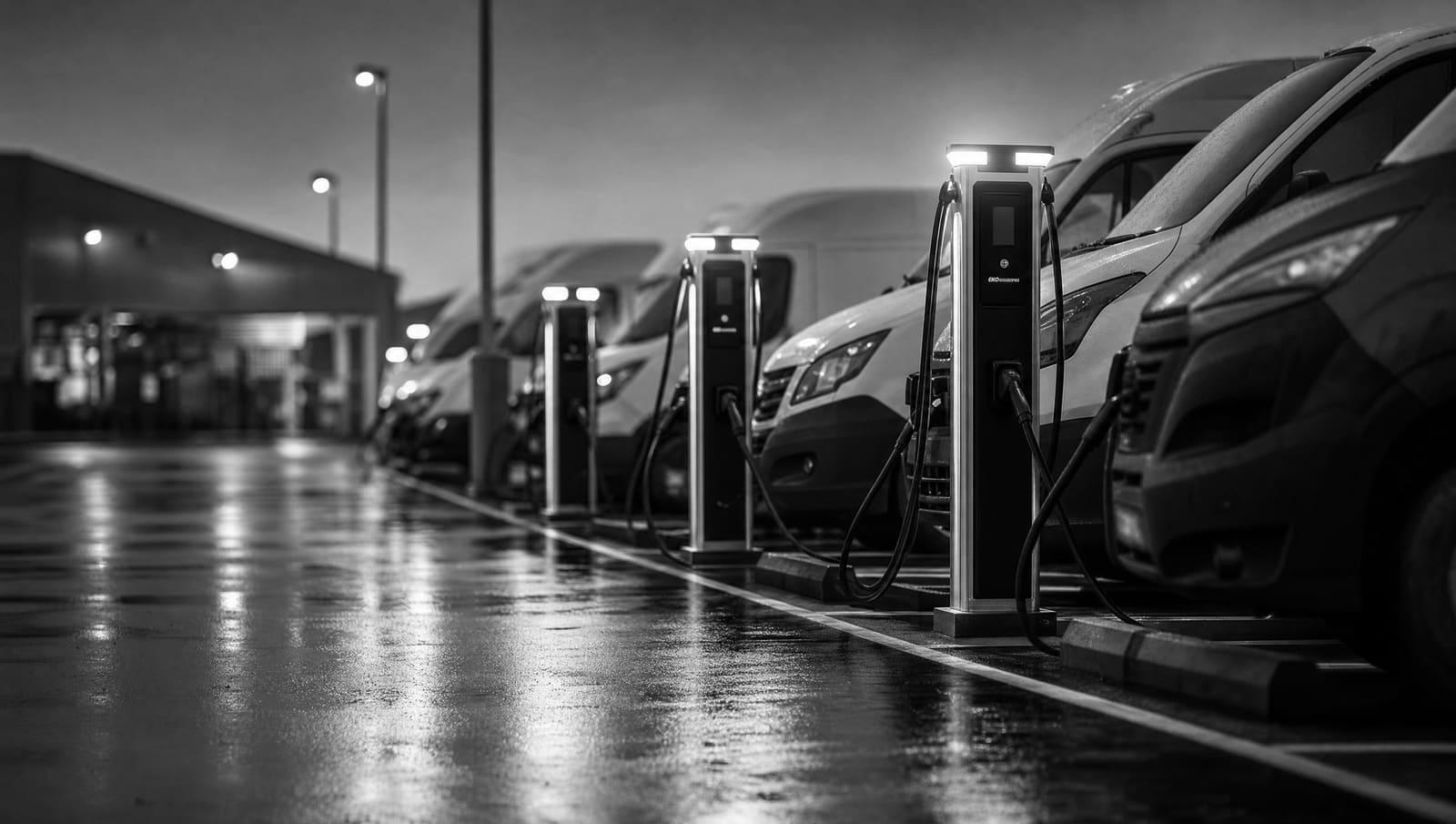
Start with the job each charger must perform. A workplace may need cars ready after several hours. A fleet may have a fixed return window and a firm departure time. Public charging may need payment, clear access rules, and dependable driver support.
These needs affect charger power, port count, networking, and electrical demand. Installing the fastest available equipment is not always the best answer. Higher power can increase service, distribution, cooling, and construction needs. A better plan gives each vehicle enough energy before it leaves. It also avoids having every charger draw full power at the same time when that is not required.
Document expected users, arrival times, parking duration, daily energy needs, and growth before equipment is selected. That operating profile gives the designer a useful basis for the electrical plan.
Project budget
What belongs in the installation budget
The charger is only one budget line. Compare the complete installed scope, including the work that delivers power, restores the site, activates the stations, and keeps them useful.
Equipment choice
Level 2 and DC fast charging create different projects
Level 2 equipment supplies AC power to the vehicle, where onboard equipment converts it for the battery. It is commonly considered for workplaces and other settings where vehicles remain parked. The installation may include dedicated circuits, panels, pedestals or wall mounts, conduit, conductors, communication, and protective equipment. Several ports can also use network controls to share available capacity.
DC fast equipment converts power outside the vehicle. That changes much more than charging speed. The project may need larger conductors, switchgear, transformers, utility work, equipment pads, cooling provisions, and stronger protection from vehicle traffic. Delivery and energization planning also become more important.
Select equipment after the usage and electrical studies, not before them. Confirm connector needs, rated output, simultaneous demand, mounting style, cable reach, network compatibility, payment needs, warranty, parts support, and communication method. Ask whether essential functions will still work if network service is interrupted. The right choice is equipment the property can power, operate, maintain, and expand.
Complexity check
What makes one installation easier than another
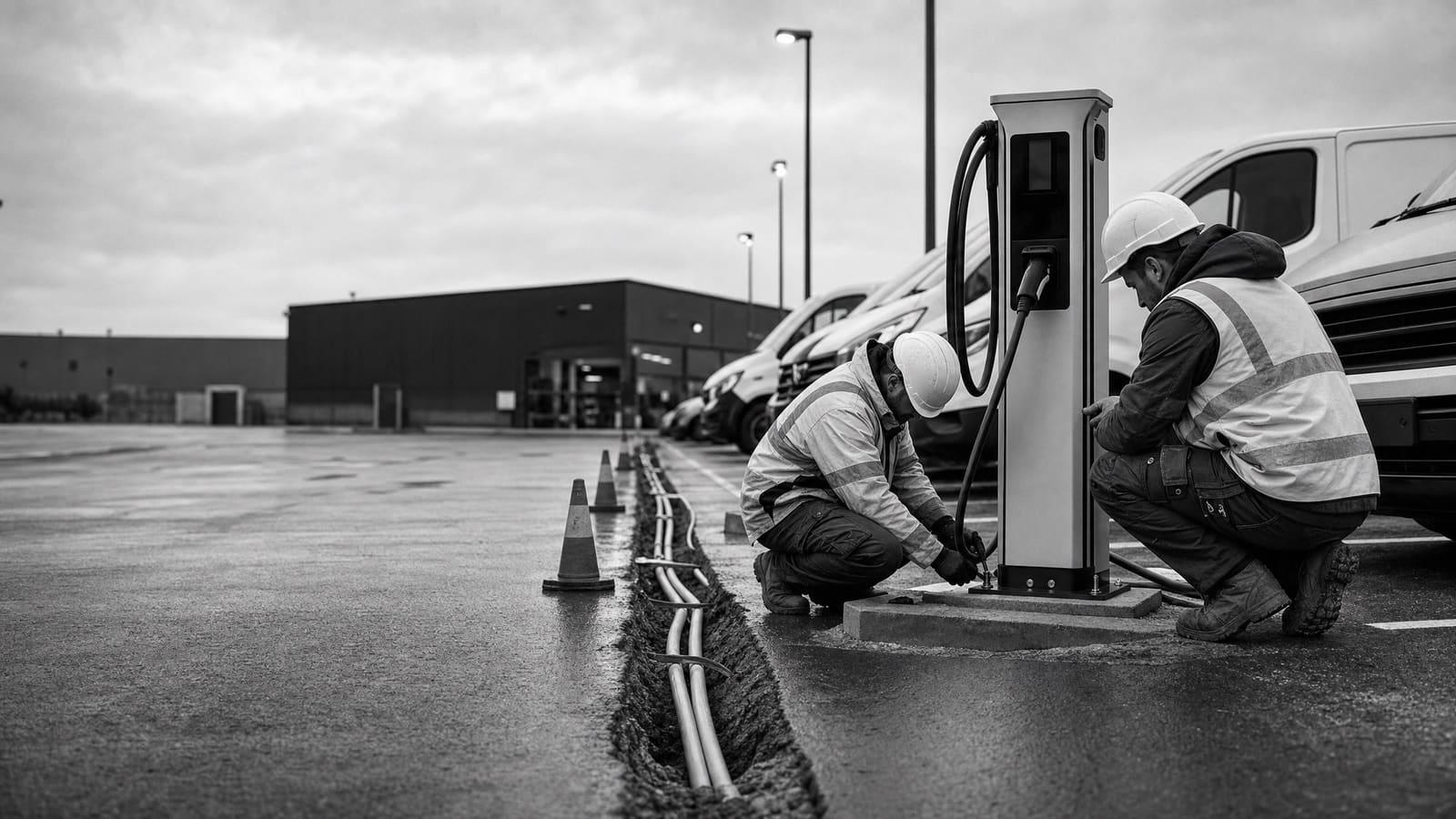
Two projects with the same port count can require very different work. Electrical capacity, routing, parking layout, communication, and utility involvement determine the real installation scope.
Lower complexity
Capacity and parking align
Available distribution capacity, short electrical routes, workable mounting locations, reliable communications, and limited pavement work can keep design and construction focused.
Higher complexity
The site needs new infrastructure
Service changes, long trench routes, constrained equipment space, DC fast charging, extensive surface restoration, or difficult phasing require more coordination and design.
Site assessment
Study the whole path from utility power to each vehicle
A useful assessment begins at the electrical service and follows power through the building distribution system to the proposed charging spaces. The reviewer should record service and panel information, existing loads, spare positions, equipment condition, meter arrangement, and practical locations for new distribution equipment. A load study may be needed before capacity can be confirmed.
The parking review should measure routes rather than drawing straight lines across a plan. Existing pavement, landscaped areas, structures, traffic lanes, drainage features, and occupied spaces can affect how conduit reaches the chargers. Mounting locations must protect equipment while allowing cables to reach the intended vehicles without creating an avoidable hazard.
The assessment should also test the operating assumptions. Confirm who will charge, when vehicles arrive, how long they stay, and how much energy they need. Review access control, payment, data collection, wireless or wired communication, signage, security, maintenance access, and future ports. These facts support a design that can be priced and built.
Ask for documented assumptions
The assessment should state the proposed charger count, power level, simultaneous demand, electrical source, routing concept, civil work, communication method, and expansion allowance.
Ownership and operations
Decide who controls the chargers after turnover
Commercial charging includes more than installed hardware. The owner needs clear responsibility for equipment, software, electricity, driver access, pricing, support, maintenance, and data. These choices belong in procurement because they affect hardware compatibility and continuing expenses.
For networked stations, define which reports matter and who can change prices, access lists, power limits, and operating hours. For fleet or workplace use, decide how drivers are enrolled and how charging conflicts are handled. Also define the response when a port stops working. A useful handoff names the support contact, warranty path, monitoring process, and party responsible for repairs.
Owner-operated
Keep policy and vendor control
The property controls equipment and operating rules but must manage software, support, warranties, electricity, and maintenance responsibilities.
Service arrangement
Assign defined operating duties
A provider may handle selected functions, but the agreement should identify fees, data access, response duties, equipment ownership, and exit terms.
Procurement and phasing
Build the first phase without blocking the next one
Plan near-term ports and likely expansion together. Future work may be easier when the first phase reserves electrical space, identifies equipment locations, and installs useful pathways during open-trench construction. That does not mean buying every charger now. It means making deliberate choices about conduit, panels, controls, and physical space before finished surfaces are restored.
Procurement should follow the approved basis of design. Confirm equipment delivery, substitutions, network terms, warranty coverage, commissioning duties, and required contractor qualifications before release. Utility needs and permitting requirements should also be checked before relying on an installation date. Incentives and tax rules are time-sensitive, location-dependent, and subject to eligibility conditions; verify current terms directly before including any benefit in the financial decision.
Compare total ownership needs as well as construction. Include software, connectivity, electricity-rate effects, payment processing, inspections, preventive maintenance, repairs, replacement parts, and staff time where they apply. For broader budget planning, review commercial EV charging cost factors, then require the project quote to replace general assumptions with site-specific scope.
Quote review
Five items every comparable quote should show
Require the same boundaries from every bidder. A low number is not comparable when electrical work, civil restoration, activation, or closeout remains outside the proposal.
01
A defined design basis
Show charger count, output, demand assumptions, electrical source, locations, routing, and future allowance.
02
Clear scope boundaries
List engineering, utility coordination, permits, equipment, labor, civil work, network setup, and exclusions.
03
Allowances and unit rates
Identify uncertain quantities, restoration assumptions, and how approved changes will be priced.
04
A milestone schedule
Separate design, approvals, procurement, construction, inspection, energization, and commissioning.
05
Testing and turnover
Include functional tests, network activation, training, warranties, records, and support contacts.
Keep planning locally
Related EV charging pages in Oceanside
Get a defensible number
Price the equipment and the building together.
Send the address, operating target, and target opening date. Flux will identify what must be verified before the project can be priced.
Price my chargersQuestions
Straight answers.
What does commercial EV charger installation include?
A complete scope can include site assessment, load review, charger selection, design, utility coordination, permitting, electrical and civil construction, equipment mounting, networking, inspection, commissioning, training, and turnover records. The proposal should state which party owns every task.
Should a commercial property choose Level 2 or DC fast charging?
Choose from the vehicle schedule and energy need. Level 2 often fits vehicles parked for hours. DC fast charging may fit short turnaround needs, but it can require a much larger electrical and utility scope. Some sites use both.
Can several chargers share available electrical capacity?
Network controls may manage how several ports use available capacity. The design still needs a load assessment, a defined maximum demand, compatible equipment, and an operating plan that gives vehicles enough energy before departure.
When should the utility become involved?
Engage the utility during planning when the project may affect service capacity, metering, rates, transformers, or other utility equipment. Early coordination helps identify requirements and dependencies before equipment is ordered or construction dates are promised.
What should happen during commissioning?
Commissioning should verify safe energization and test every port through a real or simulated charging session. Networked functions, access rules, payment features, communications, power controls, and reporting should also be checked before turnover.
How should a property plan for future chargers?
Estimate likely port growth before designing the first phase. Review service capacity, panel space, conduit pathways, equipment areas, communication coverage, parking layout, and control options. The quote should separate work installed now from capacity merely reserved for later.
What records should the owner receive?
Turnover should include approved drawings, equipment information, test results, inspection records, warranties, network credentials, operating instructions, support contacts, and maintenance responsibilities. Keep these records available for service work and later expansion.
How can buyers compare commercial EV charging quotes?
Give each bidder the same design assumptions and require clear inclusions, exclusions, allowances, equipment details, network terms, schedule dependencies, commissioning, and turnover. Compare the total installed and operating scope, not only the charger price.
Sources used for this guide
- [1]afdc.energy.gov — Alternative Fuels Data Center: Procurement and Installation for Electric Vehicle Charging Infrastructure
- [2]betterbuildingssolutioncenter.energy.gov — DOE Better Buildings Commercial EV Charging Infrastructure Guide
- [3]driveelectric.gov — Public electric vehicle charging infrastructure playbook · Joint Office of Energy and Transportation
- [4]energy.gov — DOE Federal Workplace Charging Program Guide