DIRECT ANSWER
Commercial EV charger installation in Austin.
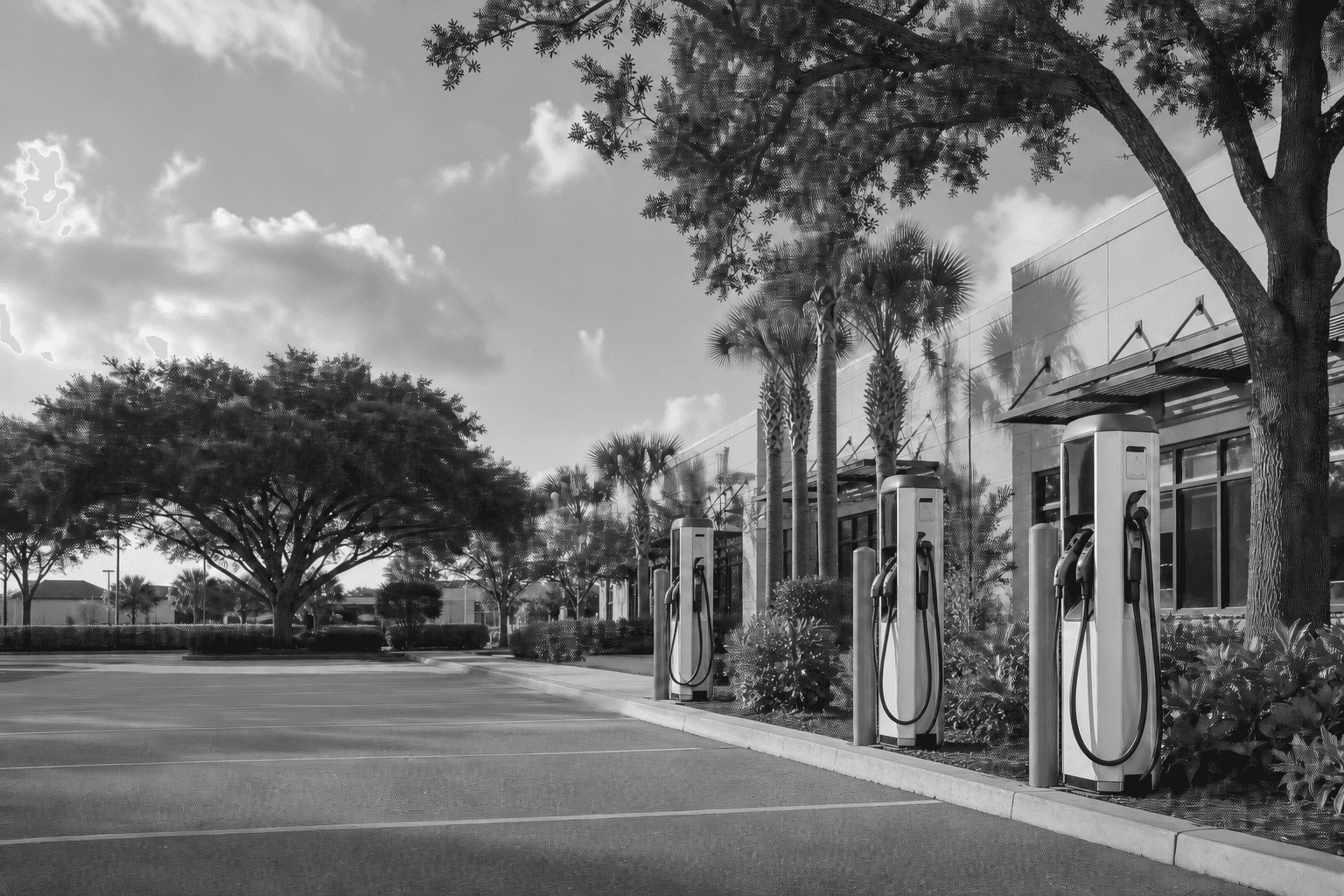
A complete commercial installation covers the site and electrical assessment, charger selection, utility coordination, engineered design, permitting, construction, inspection, commissioning, and turnover. Level 2 charging often fits longer parking stays. DC fast charging serves faster turnover but can require much more power, larger equipment, and earlier utility involvement.
The site review must verify usable electrical capacity, cable routes, parking access, drainage, communications, and room for future chargers.
START WITH USE
Make three operating choices before selecting hardware
Start with the vehicles and schedule, not a charger catalog. Ask who may use each port, how long vehicles normally remain parked, and how much energy each vehicle must receive before departure. These answers shape charger power, port count, access rules, and network needs.
Level 2 charging is often a practical match when vehicles remain parked for hours. DC fast charging may suit public charging or commercial vehicles that must return to service sooner. The faster option changes more than the charger. It can change service capacity, transformer needs, equipment space, cooling, construction, and the utility schedule.
Then decide how charging will be managed. A private fleet may need driver authorization and vehicle records. A workplace may need employee access rules. A public station may need payment, pricing, uptime monitoring, and customer support. Define these functions before procurement so the electrical design and software plan support the same operating model.
QUOTE DRIVERS
Where installation scope can grow
Equipment is only one budget line. A useful estimate separates the charger purchase from the electrical, civil, network, utility, and closeout work.
PROJECT PATH
How a commercial charging project moves from survey to service
The first field visit should document the electrical service, panels, transformer information, demand data, parking layout, possible equipment pads, communications, and the route between power and parking. The team should also record operating hours and areas that cannot be closed during construction. This survey becomes the basis for site design and an initial load review.
Next, the owner and designer settle the charging program. They select the charger class, number of ports, mounting method, access rules, network functions, and expansion plan. The electrical design can then define circuits, protection, conduit, conductors, disconnects, metering, and any distribution upgrades. Utility coordination should begin early when added load or service changes may be involved.
After design and procurement, the project proceeds through required reviews, permits, construction, and inspections. Field work may include pads, bollards, trenching, pavement restoration, signage, striping, communications, and electrical installation. Commissioning should confirm safe startup, vehicle charging, network connection, access controls, payment functions when used, and remote monitoring. Turnover should include approved drawings, equipment records, warranties, credentials, training, and a maintenance contact.
COMPLEXITY CHECK
The same port count can produce very different projects
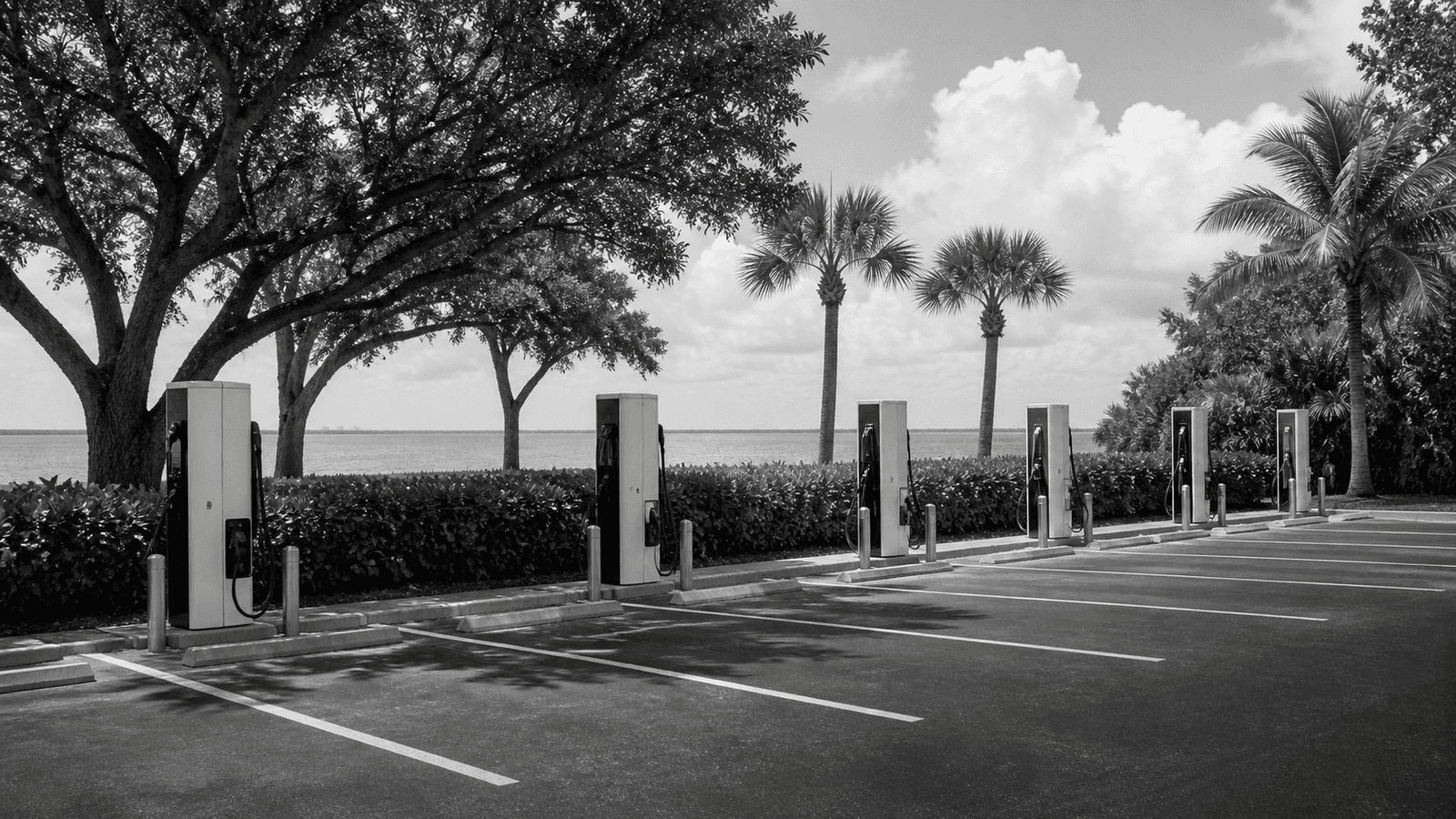
Charger quantity alone does not define installation difficulty. Power availability, distance, site work, operating constraints, and the selected charging speed often matter more.
LOWER COMPLEXITY
Capacity and parking align
Existing distribution has usable capacity, Level 2 chargers sit near the electrical source, cable routes are clear, communications are available, and construction can occur without major disruption.
HIGHER COMPLEXITY
Power or civil work expands
DC fast charging, long underground routes, service upgrades, new utility equipment, exterior alterations, tight access, or phased shutdowns add design, coordination, and schedule risk.
SITE REVIEW
Verify the building can support the charging plan
An electrical assessment should do more than read the main service label. The project team needs to understand existing loads, usable panel space, conductor and equipment ratings, service configuration, and the charging load expected at the busiest time. Available capacity may determine whether the first plan works as drawn or needs a different approach.
If capacity is limited, the choices can include reducing charger output, installing fewer ports in the first phase, scheduling fleet charging, using load management, or planning an electrical upgrade. Managed charging can divide available power among connected vehicles, but it must still meet the operating goal. A fleet that needs every vehicle ready at the same departure time may require a different design than cars parked through a full workday.
The physical survey matters just as much. Confirm trench routes, pavement types, drainage, clearances, equipment protection, accessible movement, wireless or wired communications, and the location of future ports. A short route can reduce site disturbance, but charger placement must still work for drivers and normal property operations.
Bring useful records to the survey
Provide electrical drawings, utility bills or interval data, panel schedules, parking plans, fleet schedules, operating hours, and any known renovation or expansion plans.
AUSTIN REVIEW
Let the permit path shape the schedule
Austin Development Services explains that Commercial Plan Review determines required inspections and may add reviews after an application is submitted. That makes an early scope check important. Charger work that affects a structure, exterior conditions, electrical systems, or the public right-of-way may involve different reviews and permit paths.
Before setting construction dates, define the charger locations, electrical changes, equipment pads, trenching, pavement work, and any exterior building modification. The application package should match the field scope. Permit activation, site access, inspections, and correction work also belong in the schedule. Because codes and city procedures can change, confirm current requirements for the property and exact scope before filing.
One concrete Austin decision
If trenching or construction may disturb the public right-of-way, identify that boundary early because Austin lists separate permits for excavation and temporary right-of-way use.
AFTER STARTUP
Decide who owns the daily charging operation
A working charger is also an operating system. Someone must manage users, pricing, station status, software accounts, repairs, warranties, and energy use. Put those duties in writing before turnover.
Ownership can remain with the property, sit with a charging provider, or be divided among parties. The right structure depends on control, staffing, data needs, and tolerance for recurring fees. Review the hardware warranty separately from network service and field labor. Also decide who responds when a connector is damaged or a station loses communication. A practical maintenance plan should state response contacts, inspection tasks, spare-parts expectations, and escalation steps.
PROPERTY CONTROL
Owner-managed charging
The owner keeps more control over equipment, pricing, access, and data, while accepting more responsibility for software administration, support, maintenance, and vendor coordination.
SERVICE MODEL
Provider-supported charging
A provider may handle more network and operating tasks, but the buyer should review contract length, fees, data access, service levels, equipment compatibility, and exit terms.
BUY FOR THE SITE
Compare equipment by function, not just rated power
For Level 2 charging, compare actual output, single- or dual-port design, cable reach, connector support, pedestal or wall mounting, environmental rating, network options, access controls, and serviceability. Confirm that the chosen equipment works with the electrical design and the vehicles expected at the site. See the Level 2 planning guide for longer-dwell applications.
For DC fast charging, examine vehicle compatibility, power sharing, cabinet layout, cooling, cable handling, protective equipment, communications, and manufacturer service coverage. Rated power is not a promise that every vehicle will accept that amount. Vehicle limits and battery conditions affect charging. The site also needs enough electrical capacity to support the operating plan. Review DC fast charging before treating it as a simple upgrade from Level 2.
Procurement should protect the whole system. Confirm lead times for chargers, switchgear, transformers, pedestals, and communications hardware before fixing the construction sequence. If the first phase is smaller than the long-term plan, price useful make-ready work now: spare conduit, panel space, pad capacity, communications pathways, and documented future circuit routes.
COMMISSIONING
Do not treat power-on as project completion
Commissioning proves that the installed system performs as intended. Each port should be inspected and tested with compatible vehicles or approved test equipment. Verify charging starts and stops correctly, protection devices operate as designed, connectors and cables are secure, and labels match the final circuits. Networked stations also need communication, user authentication, pricing, payment, data reporting, remote commands, and fault alerts checked.
The owner should receive a clean turnover package. It should include approved or record drawings, equipment data, serial numbers, warranties, inspection records, software account ownership, administrative credentials, network subscriptions, support contacts, and basic operating instructions. Staff training should cover normal use, emergency response, resetting allowed faults, reporting damage, and contacting service.
Set an acceptance list before construction ends. Open items should have an owner, due date, and retest requirement. This keeps small software or labeling problems from becoming long-term operating gaps and gives the facility team a clear standard for final acceptance.
Protect access after handoff
Confirm the property—not only an installer or departing employee—controls administrator accounts, station records, network settings, warranty documents, and support contacts.
BID CHECK
Five items every comparable quote should show
Ask each bidder to price the same defined scope. Allowances and exclusions should be visible, so a low total does not hide missing work.
01
Equipment and operating basis
List charger models, quantities, output, ports, mounting, network functions, and intended users.
02
Electrical and civil scope
Define panels, protection, conduit, conductors, pads, trenching, bollards, striping, signage, and restoration.
03
Utility and permit responsibilities
Name who prepares submissions, pays fees, answers comments, schedules inspections, and coordinates utility work.
04
Schedule and assumptions
Show design, review, procurement, shutdown, construction, inspection, and commissioning milestones.
05
Closeout and ongoing costs
Include testing, training, warranties, drawings, software fees, support terms, and maintenance responsibilities.
Keep planning locally
Related EV charging pages in Austin
Get a defensible number
Price the equipment and the building together.
Send the address, operating target, and target opening date. Flux will identify what must be verified before the project can be priced.
Price my chargersQuestions
Straight answers.
Should an Austin commercial property choose Level 2 or DC fast charging?
Choose from the operating need. Level 2 often fits vehicles parked for hours, such as workplace or overnight fleet charging. DC fast charging may fit faster turnover, but it can require more electrical capacity, larger equipment, added cooling, and earlier utility coordination.
What happens during a commercial EV charging site assessment?
The team reviews the electrical service, existing loads, panels, parking, cable routes, pavement, drainage, communications, equipment protection, accessibility needs, operating hours, and future expansion. It should also confirm who will charge and how much energy vehicles need before leaving.
Will commercial EV charger installation require an electrical upgrade?
Not always. The answer depends on existing distribution, usable capacity, charger output, port count, and when vehicles charge. If capacity is tight, the design may use managed charging, lower output, project phasing, scheduled charging, or a service upgrade.
What permits are needed for a commercial EV charger project in Austin?
Requirements depend on the exact electrical, structural, exterior, civil, and right-of-way scope. Austin Commercial Plan Review determines required inspections and may add reviews after submission. Confirm current requirements before filing or committing to construction dates.
When should the electric utility become involved?
Begin utility coordination during planning when the project may add significant load, change electrical service, require utility equipment, or expand later. Utility findings can affect the design, site layout, project scope, and schedule.
What should happen before the chargers are accepted?
Each port should be commissioned. Test charging, safety functions, communications, access controls, payment features when used, monitoring, and fault reporting. The owner should also receive drawings, inspection records, warranties, credentials, training, and service contacts.
How should a property plan for more chargers later?
Define the long-term port count during the first design. Consider spare conduit, distribution space, communications routes, pad capacity, future cable paths, and managed charging. The first phase should not block parking or electrical routes needed for later phases.
Are commercial EV charging incentives guaranteed to be available?
No. Incentives, tax credits, eligibility areas, funding limits, and deadlines can change. Verify every program against current official rules before using it in a budget. Treat possible funding as a documented adjustment, not as a substitute for a complete project price.
Sources used for this guide
- [1]afdc.energy.gov — Alternative Fuels Data Center: Procurement and Installation for Electric Vehicle Charging Infrastructure
- [2]betterbuildingssolutioncenter.energy.gov — DOE Better Buildings Commercial EV Charging Infrastructure Guide
- [3]driveelectric.gov — Public electric vehicle charging infrastructure playbook · Joint Office of Energy and Transportation
- [4]energy.gov — DOE Federal Workplace Charging Program Guide
- [5]austintexas.gov — Interactive Guide to the Commercial Building Application | Austin Development Services | AustinTexas.gov