
DIRECT ANSWER
What commercial EV charger installation includes
Commercial EV charger installation in Columbus starts with a site and electrical assessment. The project then moves through charger selection, utility coordination, engineering, permitting, equipment purchasing, construction, inspection, commissioning, and staff turnover. Level 2 charging often fits longer parking stays. DC fast charging can require much more power, larger equipment, added utility work, and a different construction plan.
The site review must verify available capacity, electrical routing, parking use, charger demand, network needs, accessibility, protection, drainage, and room for expansion.
OPERATING PLAN
Make three choices before selecting equipment
Start with the people and vehicles the chargers must serve. Employees may remain parked for hours, while fleet vehicles may have fixed return times and required departure charge levels. Public users may expect clear access rules, payment support, reliable networking, and visible instructions.
Next, decide how quickly energy must reach each vehicle. More power is not always more useful. If vehicles sit most of the day, several managed Level 2 ports may serve the site better than a smaller number of high-power units. A fleet with short turnaround windows may justify DC fast charging, but the electrical and utility scope can grow sharply.
Finally, choose who owns daily operation. Define who sets access, handles driver questions, monitors faults, pays network fees, reviews energy use, and arranges repairs. These choices shape the hardware, communications, warranty, and service terms that belong in the installation quote.
QUOTE DRIVERS
Where installation scope can change
A useful budget separates charger hardware from the work needed to deliver power and operate the site. These lines reveal why two similar charger counts can produce very different projects.
SITE AND POWER
Design the installation before buying chargers
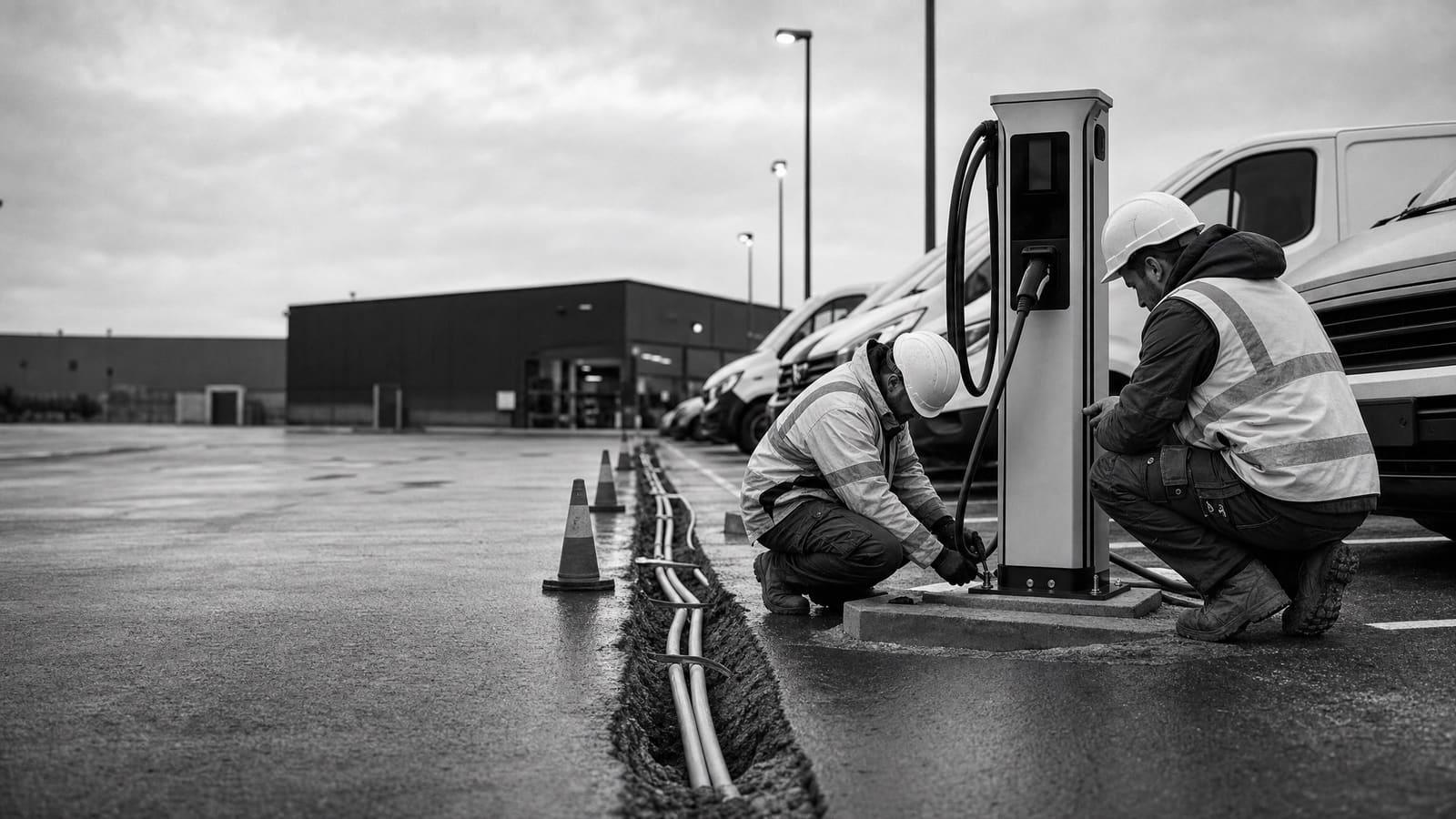
A charger is only the visible end of the project. Behind it may be a new circuit, protective devices, a panel or switchboard connection, conduit, conductors, communications, foundations, bollards, signs, striping, and restored pavement. The design should show where every major part goes and how technicians can reach it later.
Begin at the building’s electrical distribution system. Review service information, panel ratings, existing loads, available spaces, and the route to the parking area. The assessment should also consider expected charging at the same time as other building loads. When spare capacity is limited, load management may let chargers share available power. It does not remove the need for engineering, but it can change the size and timing of upgrades.
Then study the parking area. Short electrical routes can reduce disruption, but the closest spaces are not automatically the best spaces. Check traffic flow, pedestrian movement, accessible use, cable reach, equipment protection, drainage, snow-clearing paths, wireless or cellular service, and future expansion. A clear site design should connect these parking conditions to the electrical plan before equipment is ordered.
COMPLEXITY CHECK
Level 2 and fast-charging projects follow different paths
Both charger types require safe electrical design, permits, installation, inspection, and startup. The key difference is how much power the site must deliver and how quickly vehicles need it.
LOWER COMPLEXITY
Level 2 near usable building power
A project is simpler when vehicles park for long periods, capacity is available, conduit runs are short, communications are reliable, and the work avoids major pavement or utility changes.
HIGHER COMPLEXITY
DC fast charging or constrained service
Complexity rises with high power, short vehicle turnaround, new utility equipment, long underground routes, tight switchgear space, payment systems, extensive protection, or construction that affects active traffic.
PROJECT DEVELOPMENT
Move from site review to a buildable scope
The first visit should produce more than a charger count. It should record the electrical source, likely connection point, proposed parking spaces, routing options, surface conditions, communications, operating hours, and known site restrictions. The team can then compare charging demand with the building’s available capacity and prepare a concept that can be priced and reviewed.
Utility contact should begin when the proposed load may affect service or utility equipment. The request needs a clear load estimate and intended operating profile. Utility findings can influence charger power, project phases, electrical equipment, and schedule. Keep utility work as a named dependency rather than hiding it inside a broad allowance.
Once the concept is accepted, the project moves into detailed design and permitting. Equipment selections should be coordinated with electrical requirements before purchasing. Construction then covers electrical and civil work, mounting, protection, communications, labeling, and surface restoration. After required inspections, commissioning should confirm that each port powers a vehicle, communicates as intended, follows access or payment rules, and reports faults. Turnover should include records, training, warranties, and support contacts.
Ask for one accountable scope
The proposal should state who handles design, utility communication, permit submissions, inspections, equipment delivery, construction, network activation, testing, training, closeout documents, and unresolved site conditions.
COLUMBUS PERMITS
Put plan review ahead of construction
Columbus begins its permit process with an application and any plans required for approval. The City routes the submitted material to the departments needed for the work. Construction may begin after the required reviews are approved and the permit is issued. The project team can track the application after a record is created.
That sequence matters when ordering chargers, scheduling excavation, or promising an opening date. Build permit preparation into the design schedule, and confirm which electrical, building, or related submissions apply to the actual scope. If the property is within a historic district or commission area, check whether design review and a Certificate of Appropriateness are required before permits can be obtained.
Protect the permit timeline
Columbus says permitted work must begin within one year or the permit may expire, and progress cannot stop for more than six months. Confirm current requirements before scheduling.
OWNERSHIP
Plan for the system after construction
Commissioning is the start of operations, not the end of the decision. Commercial chargers combine electrical equipment, software, communications, parking rules, and user support. A buyer should know which party is responsible when a port loses network service, a payment fails, a cable is damaged, or a driver blocks a space.
Review the warranty and service path before selecting hardware. Confirm response procedures, replacement-part access, software support, data ownership, network renewal terms, and any limits on changing providers. A maintenance plan should also cover physical inspection, cleaning, cable condition, protective equipment, labels, and fault review. Clear ownership keeps small issues from becoming long outages.
HOST MANAGED
More control, more internal duties
The property team can control access and policy directly, but it must assign staff for monitoring, user support, vendor contact, fee review, and charger maintenance.
SERVICE MANAGED
Less daily work, more contract review
A service provider may handle network and support tasks. Compare contract length, recurring charges, uptime terms, data access, escalation steps, and what happens when the agreement ends.
PROCUREMENT
Buy for the next phase without overbuilding today
A first phase should solve a defined operating need and preserve practical expansion choices. The design can identify future spaces, conduit routes, panel positions, communications, and electrical capacity without installing every charger at once. This is often called make-ready planning. It is most useful when the drawings show exactly which future work is included and which work remains uncertain.
Compare proposals on total scope, not charger count alone. One bidder may include trench restoration, protective posts, network activation, testing, and permit support while another excludes them. Equipment lead times and utility dependencies should also be separated from contractor-controlled work. A schedule is more useful when it shows design, review, purchasing, utility work, construction, inspection, and commissioning as distinct stages.
Treat incentives and tax credits as time-sensitive. Eligibility can depend on the site, buyer, equipment, labor, placed-in-service date, and current program rules. Verify any claimed benefit with the current program administrator or a qualified tax adviser before using it to approve the project. The installation should still make operational sense if an expected benefit changes.
BID CHECKLIST
Five items every comparable quote should show
Ask bidders to price the same written scope and list assumptions, allowances, exclusions, and owner duties. That makes differences visible before contract award.
01
Charging outcome
State users, vehicles, ports, power levels, access rules, payment needs, and expected operating hours.
02
Electrical and utility scope
Identify connection points, capacity assumptions, upgrades, metering, load controls, and utility responsibilities.
03
Civil and parking work
Show routing, trenching, foundations, protection, signs, striping, accessibility work, and surface restoration.
04
Permits and commissioning
Assign design, submissions, revisions, inspections, network setup, functional tests, training, and closeout records.
05
Commercial terms
List equipment, labor, allowances, exclusions, schedule dependencies, warranties, recurring fees, and change-order rules.
Keep planning locally
Related EV charging pages in Columbus
Get a defensible number
Price the equipment and the building together.
Send the address, operating target, and target opening date. Flux will identify what must be verified before the project can be priced.
Price my chargersQuestions
Straight answers.
Do commercial EV chargers in Columbus require permits?
The required permits depend on the work. Columbus requires an application and any plans needed for review before the applicable permit is issued. Confirm the current electrical, building, zoning, and design-review path for the property before construction.
Should a commercial property choose Level 2 or DC fast charging?
Choose based on dwell time and required vehicle readiness. Level 2 often suits employees, tenants, and other drivers who park for hours. DC fast charging may fit short stops or rapid fleet turnover, but it can bring greater electrical, utility, equipment, and construction needs.
What should happen during an EV charging site assessment?
The assessment should review users, parking flow, accessible use, charger locations, electrical service, building loads, routing, pavement, communications, equipment protection, drainage, operating hours, utility needs, and future expansion. It should end with documented assumptions and a clear next step.
Can load management avoid an electrical service upgrade?
Sometimes it can reduce or delay an upgrade by sharing available capacity among chargers or responding to building demand. It is not a guaranteed substitute. The electrical review must confirm the available capacity, charging requirement, control method, and acceptable operating limits.
When should the electric utility join the project?
Contact the utility during planning when the proposed charging load may require service changes, new metering, transformer work, or other utility facilities. Early coordination helps separate utility dependencies from design, permit, purchasing, and construction tasks.
What happens after the chargers are installed?
The team should complete required inspections and commission every port. Testing should cover vehicle charging, communications, access or payment rules, monitoring, and fault reporting. Turnover should include training, warranties, equipment records, network details, and service contacts.
How can a Columbus property prepare for more chargers later?
Reserve practical future spaces and document possible conduit routes, panel positions, communications, and capacity needs. A phased plan should distinguish infrastructure installed now from work deferred to a later phase, so expansion does not rely on vague promises.
Are commercial EV charging incentives guaranteed?
No. Credits and incentive programs can change, expire, run out of funds, or apply only to certain sites and project dates. Verify current eligibility and application timing before purchase, and do not treat an estimated benefit as approved funding.
Sources used for this guide
- [1]afdc.energy.gov — Alternative Fuels Data Center: Procurement and Installation for Electric Vehicle Charging Infrastructure
- [2]betterbuildingssolutioncenter.energy.gov — DOE Better Buildings Commercial EV Charging Infrastructure Guide
- [3]driveelectric.gov — Public electric vehicle charging infrastructure playbook · Joint Office of Energy and Transportation
- [4]energy.gov — DOE Federal Workplace Charging Program Guide
- [5]columbus.gov — Get or Track a Building Permit - City of Columbus, Ohio