THE NUMBER
What commercial EV charging costs in Waterbury
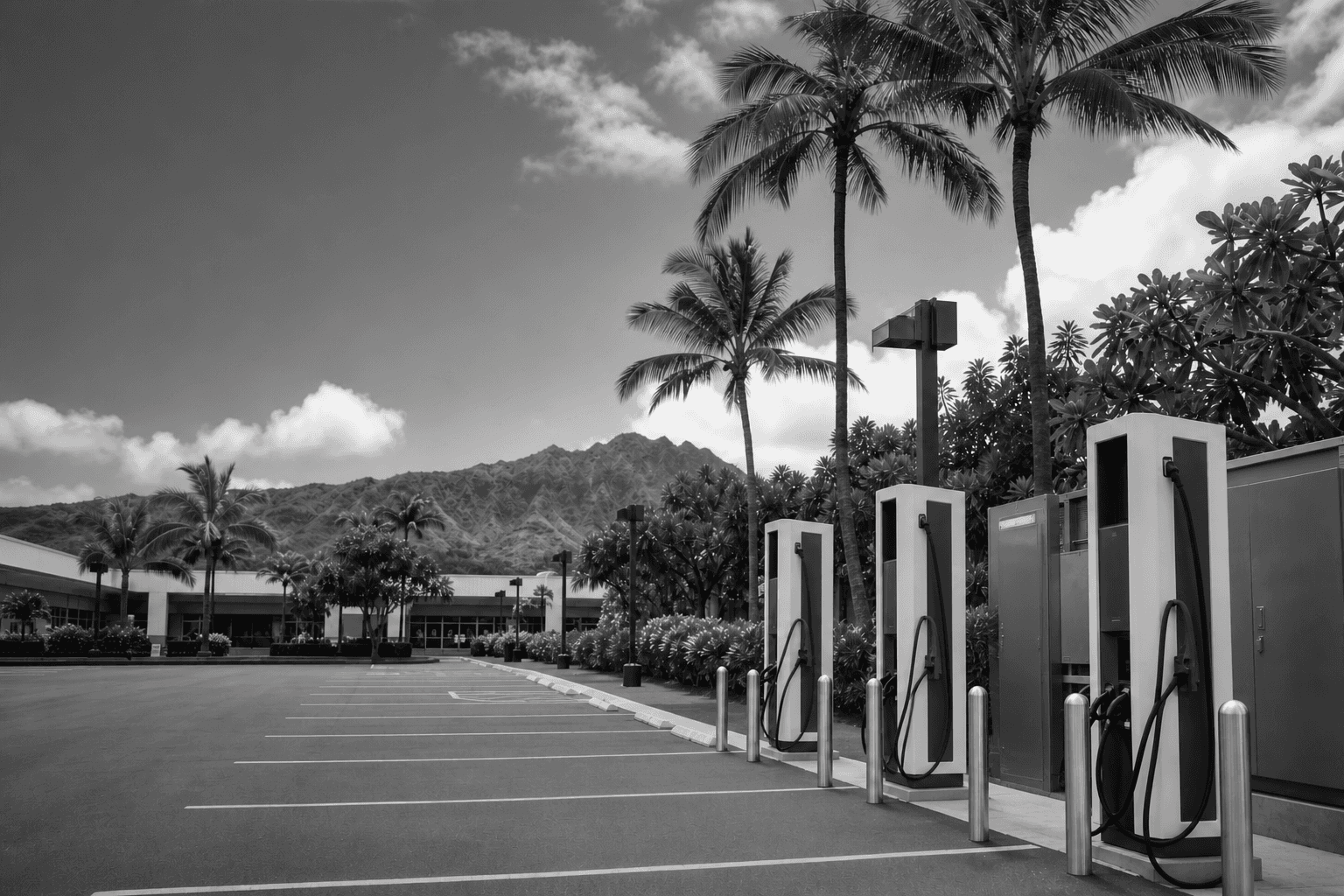
Most Waterbury businesses spend $2,500 to $7,000 per installed Level 2 port. The charger is the smaller half of that: a single-connector Level 2 unit runs about $400 to $6,500, and the rest is electrical work, permits, and restoration. DC fast charging is a different class of project. Hardware alone runs $10,000 to $40,000 per unit, and installed costs start near $40,000 once the service work is priced honestly.
A site walk has to confirm three things before that range narrows: spare capacity in the existing panel, the distance from the electrical room to the stalls, and whether the run crosses pavement.
WHAT TO INSTALL
Three operating choices, and how they price
The right equipment follows how long vehicles sit still, not how fast the charger sounds. Waterbury commercial buildings mostly fall into three patterns: fleet vans parked all night, employees and tenants parked all day, and customers parked for an hour.
Dwell time decides the level. A van sitting nine hours gains nothing from fast charging, and paying for it wastes both hardware and service capacity. A retail visitor parked for forty minutes gains almost nothing from Level 1. Federal guidance points workplaces and multifamily properties toward Level 1 and Level 2, and public charging hosts toward Level 2 and DC fast.
Get this wrong and the cost shows up twice, once in the install and again on the monthly bill. DC fast charging is far more likely than Level 1 or Level 2 to trigger demand charges, which utilities typically set from the highest fifteen-minute average use in a billing period.
THE LINE ITEMS
What belongs in a complete quote
A quote that only lists chargers is not a quote. These are the lines that decide whether a project lands at the bottom of the range or triples it. Ask for each one priced separately so you can see where the money actually goes.
BUYING GUIDANCE
How to price a Waterbury charging project
Start at the electrical room, not the parking lot. The first question any competent contractor answers is how many spare amps the building actually has and what the service can carry. That single answer separates a straightforward install from a project that needs a new panel, a larger transformer, or a service connection upgrade back toward the utility. Everything else in the quote follows from it.
The second question is distance. Conduit and wire are cheap per foot compared with what it costs to open and close pavement, so the stalls closest to power are almost always the cheapest stalls. Federal siting guidance puts proximity to incoming electricity near the top of the list, alongside weather exposure, wireless connectivity for networked units, and room to expand. Those are not soft preferences. They are the difference between adding four ports later for the price of pulling wire and re-trenching the whole lot.
Third, decide how much future you are buying now. Oversized conduit, a larger panel, and connection points to additional parking spaces cost far less installed once than retrofitted twice. Connecticut's commercial program treats that futureproofing as an eligible cost, but it counts against the per-site incentive cap, so size the buildout to what you will realistically use in a few years.
SITE CONDITIONS
Why two buildings quote three times apart
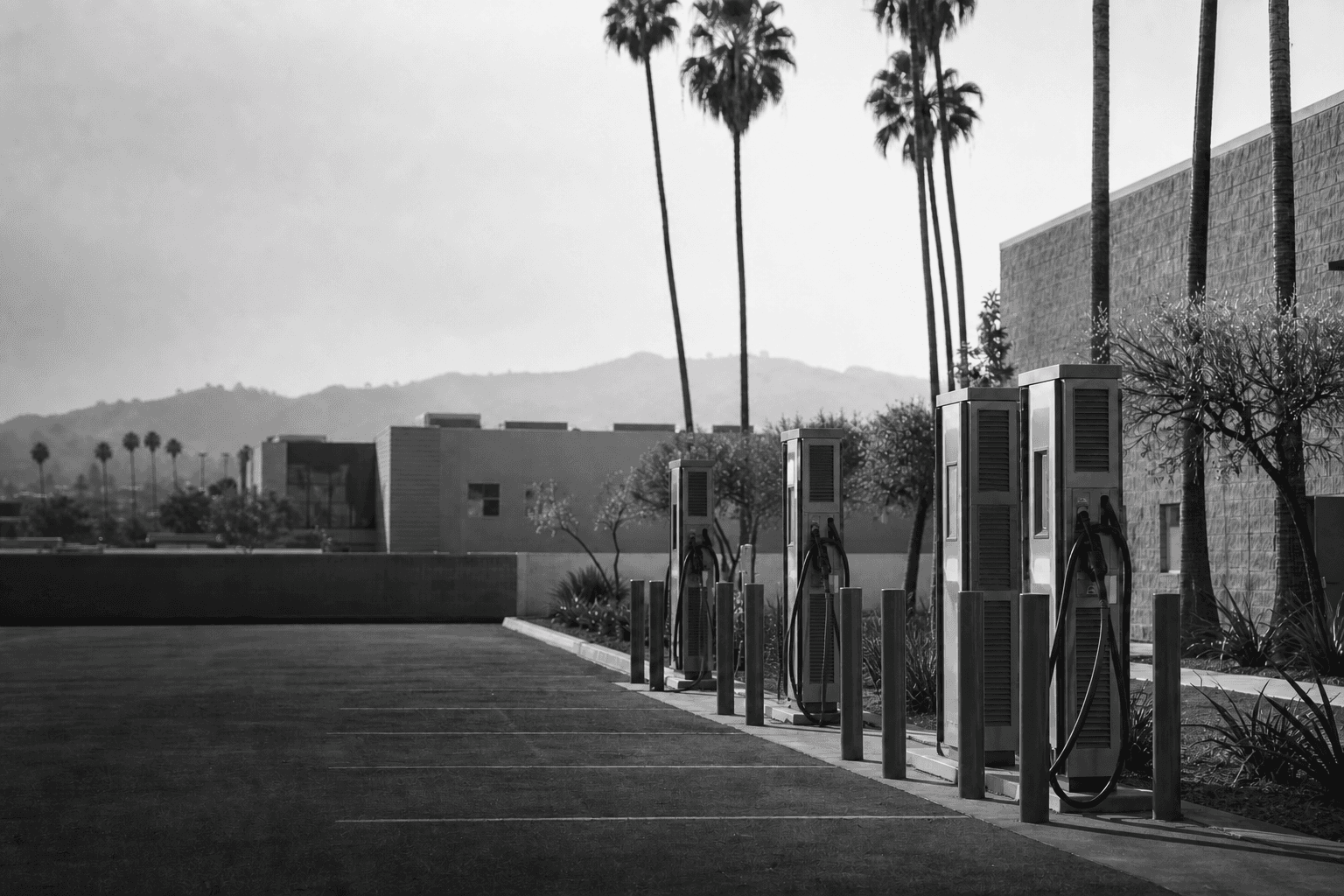
Two properties on the same Waterbury street can come back with wildly different numbers for the same four ports. The difference is rarely the charger. It is what stands between the service and the stall.
LOWER COMPLEXITY
Straightforward sites
Spare capacity in the existing panel, stalls within sight of the electrical room, and a run that stays on grass or follows an existing walkway. Surface lots with a short, clean path to power price near the bottom of the range.
HIGHER COMPLEXITY
Sites that escalate
A full panel, a long run across occupied parking, or stalls on the far side of a drive aisle. Add a service upgrade or a new transformer and the utility timeline, not the contractor, sets your schedule. DC fast almost always lands here.
SITE REVIEW
What the walk has to confirm
A real site review is short and unglamorous. Someone opens the panel, reads the nameplate, counts available breaker positions, and measures the actual path from that panel to the stalls you want to serve. They check whether the path crosses asphalt, where the meter sits, and whether the site has the wireless connectivity a networked charger needs. They ask what else in the building is planned, because a rooftop unit or a tenant fit-out competes for the same amps.
Bring the utility in during this stage, not after. Federal guidance is explicit that engaging the utility early identifies installation needs, upgrade costs, and rate impacts before a design is locked. In Connecticut, the commercial program requires a contractor proposal that breaks out both the charging station and the make-ready infrastructure cost, so the estimate you collect for budgeting is the same document the program reviews.
Settle ownership at the same time. Under the state program, the site host owns the charger and is responsible for maintaining and servicing it for a minimum of five years. That is a five-year operating commitment attached to a one-day purchase decision.
Ask these before the design is locked
How many spare amps does the panel have today? How far is the run, and does it cross pavement? Who carries maintenance in years one through five? Three questions at the walk prevent most of the change orders that surface later.
WATERBURY CONTEXT
What Connecticut changes about the math
Connecticut runs a statewide commercial EV charging program through its electric utilities, and it aims at the exact line that hurts most. Make-ready money covers the electrical infrastructure supporting a charging station, including the service connection between the local substation and transformer and the supply infrastructure between the meter and the service panel. In some cases that rebate covers up to 100 percent of the make-ready cost. A separate rebate offsets part of the Level 2 or DC fast charger purchase, up to a per-site cap, and anything above the cap is yours.
Confirm which utility serves the property before planning around any of it, then read the eligible-cost list closely. Trenching, oversized conduit, larger panels, and connection points for future stalls can qualify, but they consume the same site cap the chargers do.
Apply with the proposal in hand
The program expects a contractor proposal that separates charging station cost from make-ready cost, plus the supporting documentation listed on the form. Getting that paperwork right the first time is the difference between a funded project and one stuck in processing.
AFTER INSTALL
Two decisions that outlive the install
The install takes a week. The operating model lasts a decade, and two choices decide what charging really costs your building after the contractor leaves: who owns the hardware, and how you price the electricity moving through it.
Neither is a technical question. Ownership sets who eats a failed charger in year six. Pricing sets whether the ports are an amenity, a cost-recovery line, or a small revenue stream. Connecticut's commercial program leans the first one for you, since the site host owns the charger and carries service responsibility for at least five years, so plan the maintenance budget as part of the purchase. On pricing, more than one in five public ports still runs free, and for a workplace or tenant amenity that is often the right answer. If you do bill, the common structures are per kilowatt-hour, per session, per hour, or by subscription.
OWNERSHIP
Own it or host it
Owning reduces total cost and gives you control over pricing and uptime, but every out-of-warranty repair lands on you. Settle in writing whether the host, the network, or the installer handles maintenance, with a response time and an uptime requirement.
OPERATING COST
Electricity and demand
Per-kilowatt-hour charges are only part of the bill. Demand charges are typically based on the highest fifteen-minute average use in a billing period, and DC fast charging is the most likely to trigger them. Time-of-use rates can soften that.
OVER TIME
Phasing, procurement, and the ten-year number
Most Waterbury buildings should not install every port they will eventually want. They should install the infrastructure for all of them and energize a smaller number now. The expensive, disruptive work is trenching and conduit, and doing it once for eight stalls while populating four is almost always cheaper than doing it twice for four. The exception is when futureproofing pushes the project past the incentive cap, which is why the sizing conversation and the incentive conversation have to happen together.
On procurement, larger organizations may need a formal solicitation, and public entities usually do. Even when you do not, have two or three contractors bid the same defined scope: same port count, same stall locations, same make-ready assumptions. Bids on different scopes are not comparable, and the lowest number in the pile is often the one that left out restoration or the panel.
Then run the ten-year number rather than the install number. Add maintenance of up to $400 per charger per year, network fees per port, and warranty coverage, since extended DC fast warranties can exceed $800 per charger annually. Set that against what the ports return, including fleet fuel savings at light-duty EV operating and maintenance costs averaging about 6.1 cents per mile, plus tenant retention and customer dwell time.
COMPARING BIDS
Five lines every quote should show
Two quotes are only comparable when both show the same lines. Ask every bidder to break the project into these five, in dollars, before you compare totals.
01
Equipment, itemized
Make, model, port count, connector type, and unit price for each charger, listed separately from labor.
02
Make-ready electrical
Trenching footage, conduit and wire, panel work, and any transformer or service upgrade, each priced as its own line.
03
Surface restoration
Pavement cutting, patching, striping, signage, bollards, and wheel stops. This is the line that quietly disappears from cheap bids.
04
Permits and coordination
Who pulls the permit, who schedules inspection, and who manages the utility application and its timeline.
05
Year-one operating cost
Network subscription per port, warranty terms and length, maintenance response time, and the uptime the contractor will commit to.
Keep planning locally
Related EV charging pages in Waterbury
Get a defensible number
Price the equipment and the building together.
Send the address, operating target, and target opening date. Flux will identify what must be verified before the project can be priced.
Price my chargersQuestions
Straight answers.
How much does one commercial Level 2 charger cost in Waterbury?
Plan on $2,500 to $7,000 per installed port. The unit itself runs $400 to $6,500 for a single connector, and the rest is the electrical run, permits, and restoration.
Why does DC fast charging cost so much more?
The hardware alone runs $10,000 to $40,000 per unit, and the electrical service behind it is a different class of work. It is also the level most likely to trigger demand charges once it is running.
Can rebates really cover the expensive part?
Connecticut's commercial program targets make-ready infrastructure and in some cases covers up to 100 percent of that cost, with a separate rebate offsetting part of the charger purchase up to a per-site cap.
Is the federal 30C charging credit still available?
No. The alternative fuel vehicle refueling property credit applied to qualifying property placed in service on or before June 30, 2026. Projects that met that date in an eligible census tract still claim it at filing, but new installs should budget without it.
What should I budget after the install?
Up to $400 per charger per year for maintenance, plus network fees per port. Extended warranties for DC fast chargers can run over $800 per charger per year.
Sources used for this guide
- [1]afdc.energy.gov — Alternative Fuels Data Center: Procurement and Installation for Electric Vehicle Charging Infrastructure
- [2]irs.gov — IRS Alternative Fuel Vehicle Refueling Property Credit
- [3]aaaesct.com — Bridgeport EV Charger Installation | Tesla & All Brands | AAA
- [4]eversource.com — Connecticut Electric Vehicle Charging Program
- [5]afdc.energy.gov — Alternative Fuels Data Center: Operation and Maintenance for Electric Vehicle Charging Infrastructure
- [6]afdc.energy.gov — U.S. DOE AFDC Electric Vehicles for Fleets