Direct answer
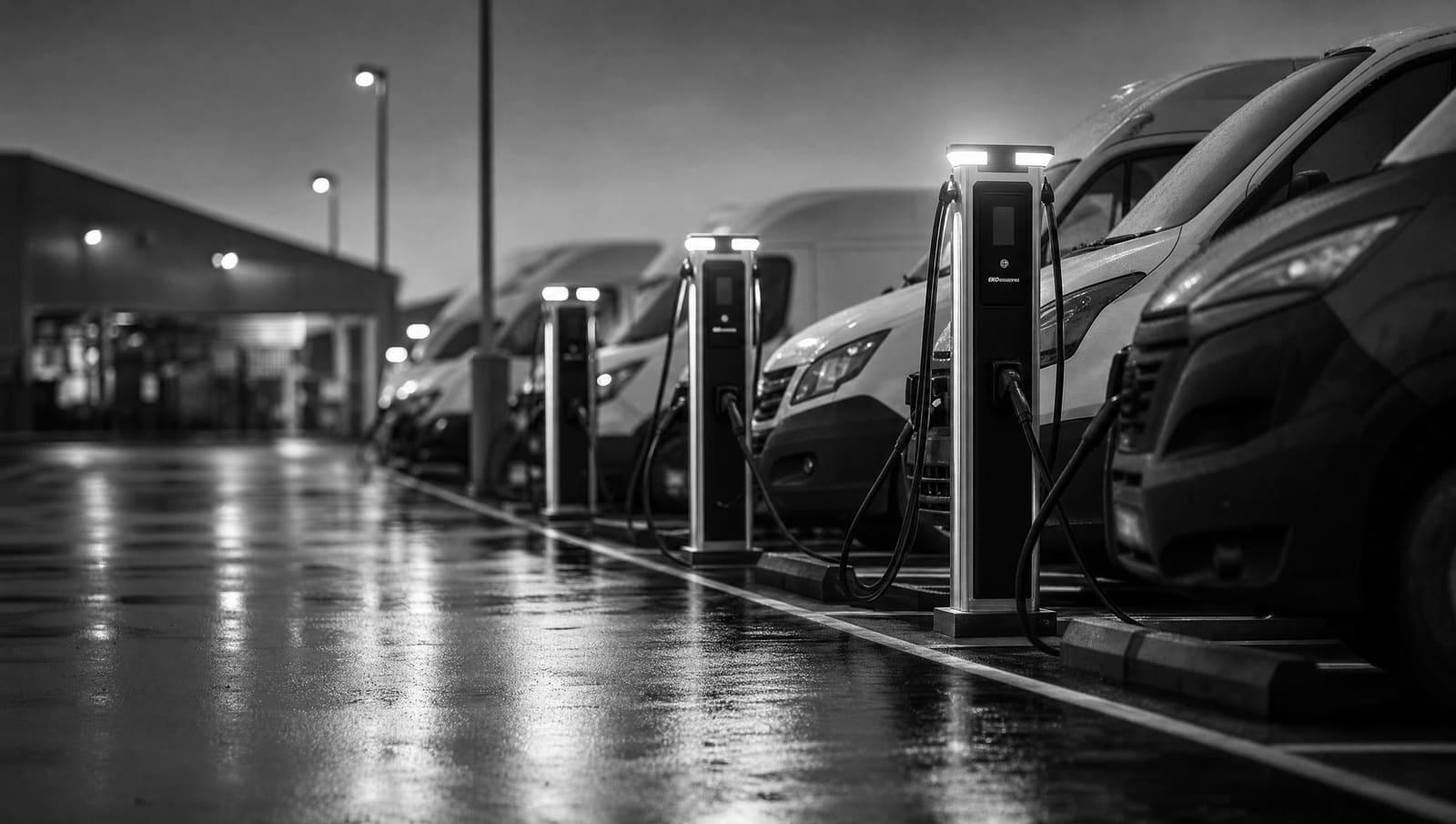
Commercial EV charger installation in Santa Fe.
A commercial installation starts with the vehicles, parking schedule, electrical system, and path to each charging space. The project then moves through equipment selection, utility coordination, design, permitting, construction, charger setup, testing, and turnover. Level 2 usually serves vehicles parked for hours. DC fast charging supports shorter stops but can require a larger electrical and utility scope.
The site review must verify usable electrical capacity, charger locations, cable reach, construction routes, communications, accessibility needs, and future expansion.
Operating plan
Make three choices before selecting a charger
Start with how the charging spaces must work each day. A workplace may need many cars to gain useful energy during a long shift. A fleet may need certain vehicles ready before a fixed departure. A public station may need access control, payment, clear signs, and faster turnover. These are different operating problems, even when the equipment looks similar.
Next, decide who may charge and who pays. Options can include free employee charging, assigned fleet access, tenant billing, or paid public use. That choice affects networking, account setup, data collection, and ongoing fees.
Finally, decide what the first phase must support and what later phases may add. Empty conduit, electrical space, and a planned equipment layout can make expansion less disruptive. The right plan does not simply install the largest charger available. It delivers enough energy during the time each vehicle is parked while protecting the building's other electrical needs.
Project budget
What changes the installation quote
The charger is only one line in a commercial proposal. Electrical capacity, routing, civil work, communications, and operating requirements can change the scope.
Equipment choice
Level 2 and DC fast charging solve different jobs
Level 2 equipment connects to commercial AC power, while the vehicle converts that power for its battery. The supplied federal guidance describes commercial Level 2 equipment in a broad range from 5 kW to 19.2 kW. Actual charging depends on the station, the vehicle, and the battery state. Level 2 often fits vehicles that remain parked for hours because each port can add energy throughout the stay.
DC fast equipment performs the conversion outside the vehicle and delivers DC power to the battery. That supports faster turnover, but it changes the installation plan. The electrical demand can be much larger. Utility coordination, new distribution equipment, equipment pads, cooling needs, and a service upgrade may enter the scope. Vehicle compatibility and connector choices also deserve careful review.
Do not compare equipment only by its maximum rating. Ask how much energy each vehicle needs, when it arrives, when it must leave, and how many vehicles may charge together. A managed Level 2 design may serve a large parking group without every port drawing full power at once. A fleet with short dwell windows may justify faster equipment. The operating schedule should choose the charging system—not the other way around.

Complexity check
Some sites are simple; others need early utility work
The visible charger does not reveal the full construction effort. The electrical source, route to parking, operating model, and power level determine project complexity.
Lower complexity
Existing capacity and a clear route
A project is easier when suitable distribution capacity is available, charging spaces sit near power, communications are reliable, and the first phase needs modest charging power.
Higher complexity
New service, civil work, or fast charging
Complexity rises when the plan needs utility upgrades, new switchgear, long underground routes, pavement restoration, payment systems, or high-power DC equipment.
Site assessment
What a useful commercial site review should answer
A site review should begin at the electrical service and end at the charging spaces. The reviewer should document the service, meters, panels, major loads, available breaker space, and the proposed source for charging. A load study may be needed to show how charging fits with the building's present demand. If the existing system cannot support the plan, the team should compare load management, a smaller first phase, and electrical upgrades.
The parking review should confirm stall use, vehicle flow, cable reach, mounting locations, signs, protection from vehicle contact, and an accessible path where required. The route survey should identify walls, ceilings, roofs, landscaped areas, pavement, and other obstacles between power and parking. Networked chargers also need a dependable communications plan.
The result should be a written basis of design, not a quick charger count. It should state the expected users, dwell windows, energy goal, simultaneous demand, equipment type, construction assumptions, approval path, and expansion plan. That information lets bidders price the same project and helps the owner spot missing work.
Ask for an assumptions log
The proposal should list what was verified, what remains unknown, who owns each open item, and how a changed assumption could affect price or schedule.
Ownership and operations
Decide who owns the hardware and who keeps it working
Commercial charging continues after construction. The owner needs a clear plan for network accounts, electricity costs, driver support, station monitoring, software updates, repairs, warranties, and replacement parts. Payment and data features can be valuable, but they also create recurring services and administrative work.
Ownership models can place different duties on the site host, equipment provider, network company, or another operator. Read the agreements closely. Confirm who controls pricing and user data, who answers driver calls, whether the station can change networks, and what happens when a subscription ends. These choices belong in procurement because they can affect equipment compatibility and lifetime cost.
Owner-operated
More control, more responsibility
The facility may control access and pricing but must manage accounts, maintenance, support, warranties, and vendor relationships.
Third-party operation
Shared duties, contract dependence
A provider may handle some daily tasks, but the agreement should define fees, data access, uptime duties, term, and exit options.
Procurement
Phase the project around useful capacity, not empty promises
A strong first phase serves a known group of vehicles and leaves practical paths for growth. Forecast near-term demand, but avoid buying every future charger before use is clear. The design can reserve panel space, conduit routes, communications, and parking layout while installing only the ports needed now. This can reduce future demolition without forcing the owner to pay early for idle hardware.
Compare proposals on lifetime operation as well as construction. Include network subscriptions, payment processing, communications, electricity-rate effects, preventive maintenance, repair response, warranties, and replacement planning. Ask how the proposed controls limit charging demand and what happens if communications fail. Also confirm whether reporting meets the needs of facilities, finance, fleet, or sustainability teams.
Incentives and tax treatment are time-sensitive. The federal Alternative Fuels Data Center directs businesses to an eligibility locator for the infrastructure tax credit, but eligibility depends on the location and current rules. Treat any possible credit as a separately verified funding item, not as a discount assumed in the base contract. For a deeper view of project price structure, see commercial EV charging cost.
Quote checklist
Five things every comparable quote should show
Require each bidder to price the same design assumptions and separate optional work. A short equipment total is not a complete installation quote.
01
Defined charging outcome
Users, vehicles, dwell windows, port count, power, access, payment, and future phase.
02
Complete electrical scope
Load study, panels, protection, metering, conduit, conductors, controls, labeling, and utility responsibilities.
03
Complete site scope
Trenching, restoration, pads, mounting, barriers, signs, communications, parking work, and stated exclusions.
04
Approvals and turnover
Design responsibility, permit work, inspections, testing, network activation, training, warranties, and closeout records.
05
Schedule and commercial terms
Milestones, equipment lead assumptions, allowances, change rules, recurring fees, maintenance options, and payment terms.
Keep planning locally
Related EV charging pages in Santa Fe
Get a defensible number
Price the equipment and the building together.
Send the address, operating target, and target opening date. Flux will identify what must be verified before the project can be priced.
Price my chargersQuestions
Straight answers.
What does commercial EV charger installation include?
A complete scope can include site and electrical assessment, charging design, utility coordination, permit documents, equipment procurement, electrical and civil construction, charger mounting, networking, inspections, commissioning, training, and turnover records. The proposal should name exclusions and assign responsibility for every open item.
Should a commercial property choose Level 2 or DC fast charging?
Choose from the vehicle schedule. Level 2 often fits employees, tenants, visitors, or fleet vehicles parked for hours. DC fast charging fits short dwell windows and rapid turnover, but it may require much more electrical infrastructure. Some sites benefit from a mix.
Can chargers fit on the existing electrical service?
Possibly, but the answer requires an electrical review. The team should compare existing capacity, building demand, proposed charger load, and simultaneous use. Load management or a phased installation may reduce peak demand. If those measures cannot meet the operating goal, distribution or utility upgrades may be needed.
When should the utility become involved?
Engage the utility during planning when the proposed load could affect service capacity, metering, rates, transformers, or other utility equipment. Early coordination helps identify studies, responsibilities, costs, and schedule dependencies before equipment is ordered.
Do commercial chargers need networking?
Not always. Networking is useful for access control, payment, usage data, remote monitoring, and load management. It can also add subscriptions, communications requirements, and vendor dependence. Define the operating need before paying for network features.
How should a buyer compare installation proposals?
Give each bidder the same charging goals and site assumptions. Then compare the electrical and civil scope, equipment, utility responsibilities, approvals, testing, recurring fees, maintenance, schedule, exclusions, and expansion provisions. Resolve large allowances and vague exclusions before award.
Should the first project include capacity for future chargers?
The design should consider future ports even if they are not installed now. Reserved electrical space, planned conduit routes, communications, and a workable parking layout may prevent later demolition. The amount of preparation should follow a realistic expansion plan.
Are tax credits or incentives available for a Santa Fe project?
Programs and eligibility rules can change. Federal guidance provides a location eligibility tool for the infrastructure tax credit, but the site and current rules must be checked before relying on it. Verify every incentive, deadline, and application requirement during budgeting.
Sources used for this guide
- [1]afdc.energy.gov — Alternative Fuels Data Center: Procurement and Installation for Electric Vehicle Charging Infrastructure
- [2]betterbuildingssolutioncenter.energy.gov — DOE Better Buildings Commercial EV Charging Infrastructure Guide
- [3]driveelectric.gov — Public electric vehicle charging infrastructure playbook · Joint Office of Energy and Transportation
- [4]energy.gov — DOE Federal Workplace Charging Program Guide