THE NUMBER
What commercial EV charging costs in Melbourne
Commercial Level 2 charging usually runs about $3,500 to $18,000 per port installed. The charger itself is the smaller piece: a single Level 2 unit costs roughly $400 to $6,500, and a DC fast charger costs about $10,000 to $40,000 before any site work. Installed, DC fast dispensers commonly land between $75,000 and $350,000 each. The distance between hardware price and installed price is your electrical work.
A site review has to settle three things before that range narrows: spare capacity in the existing service, the distance from the panel to the stalls, and what the utility requires to feed the load.
PICK THE JOB FIRST
Three ways commercial sites run chargers
Start with how long vehicles sit, not with how fast a charger can go. Dwell time decides the charging level, and the level decides most of the budget.
Workplaces, multifamily buildings, and fleet yards usually do fine on Level 1 and Level 2, because the vehicles are parked for hours anyway. Public-facing sites — retail, hospitality, anywhere people stop briefly — are where Level 2 and DC fast both come into play, and where the choice gets expensive fast.
There is also a cheaper fleet pattern worth knowing. Instead of a pedestal at every stall, some sites install 120- or 240-volt receptacles and use portable Level 1 or Level 2 units stored in the vehicles. It lowers project cost, adds flexibility, and a failed unit gets swapped instead of serviced.
Whichever you pick, size the design for the vehicles you expect in three years, not the two sitting in the lot today.
THE LINE ITEMS
What sits inside a commercial charging budget
Every commercial quote is built from the same handful of pieces. Hardware is the line buyers focus on and usually the one that varies least. The lines under it are where two honest bids on the same building separate.
HOW TO BUY IT
Where the money actually goes
The charger is rarely the reason one quote doubles another. The run is. Every foot between your electrical room and the stall is conduit, wire, and labor, and if that path crosses pavement, someone has to open it and put it back. Two identical chargers can price very differently on two buildings a mile apart for that reason alone.
Capacity is the second swing. If the existing service has spare amps, chargers connect to what you already own. If it does not, the project grows a subpanel, a service upgrade, or utility work, and that line can dwarf the hardware. Check it before you shop equipment, because the answer can change which level of charging makes sense at all.
The third factor is how many ports run at once. Load management lets several ports share a circuit and still finish overnight instead of each one pulling full power. On fleet and workplace sites where vehicles sit for hours, that single design choice often removes the need for a service upgrade entirely.
TWO SITES, TWO PRICES
What makes a site cheap or expensive
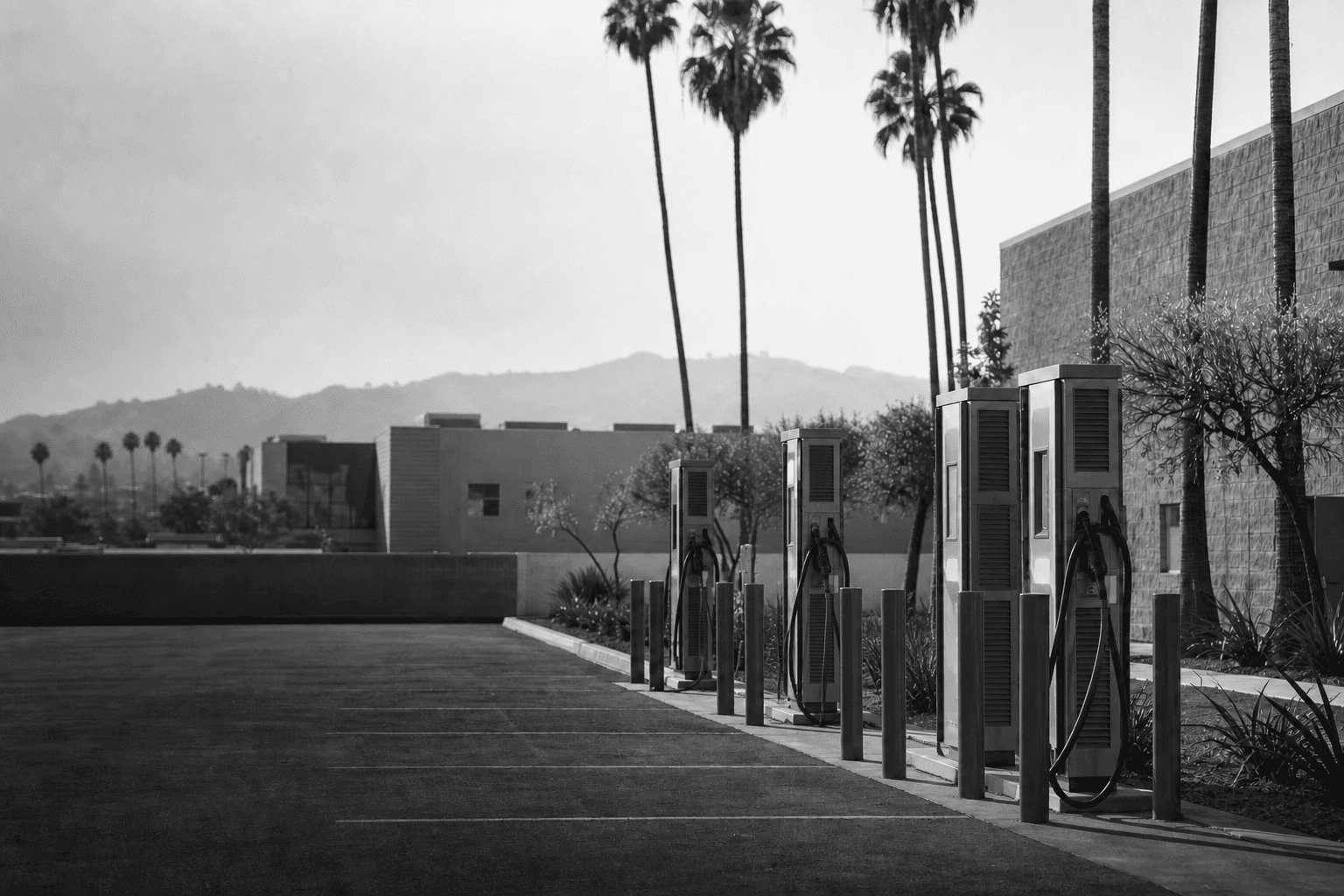
Same charger, same city, very different invoice. Before anyone prices hardware, look at where your power sits and how far it has to travel. These two profiles cover most commercial buildings in Melbourne.
LOWER COMPLEXITY
Power is already close
Stalls near the electrical room, spare capacity in the existing service, and a path that stays on landscape or an existing chase. Short run, no service upgrade, and Level 2 ports land near the bottom of the installed range.
HIGHER COMPLEXITY
Power is far away or maxed out
Stalls across the lot, a full panel, or a load that needs new utility service. Now you are buying pavement cuts, restoration, capacity work, and a utility timeline that sets your energize date instead of you.
BEFORE YOU SIGN
What a site review has to settle
Two quotes for the same building can both be honest and still differ by a wide margin, because they assumed different work. The way to compare them is to make everyone price the same site.
That starts with a real walk. Someone has to open the panel, read the nameplate, and look at what is actually available rather than what the drawings claim. They need to measure the run from that panel to the stalls you have chosen, note what surface it crosses, and confirm where the meter and any new equipment would sit.
The utility conversation should start that same week. Service upgrades and new transformers are the long pole on most projects, and utility timelines are not something a contractor controls. Getting the load question in front of the utility early is how a four-month project stays a four-month project.
Last, decide the port count before pricing. Adding two ports to a drawing costs far less than adding them to a finished lot, and it changes whether load management or a service upgrade is the right answer.
Ask for this in writing
The panel's measured spare capacity, the run length in feet, the surfaces that run crosses, and whether the price assumes any utility work. If a quote does not name those four things, it is an estimate dressed up as a bid.
OWN IT OR HOST IT
Two decisions that outlive the install
Two choices made at signing follow the site for a decade: who owns the equipment, and who pays to run it. Both are far easier to settle before a contract exists than after a charger goes dark.
Whatever you choose, put maintenance responsibility in writing. Routine care is light — storing cables so they are not damaged, checking parts, keeping units clean — but a repair outside warranty is not. A workable agreement names a response time, a repair window, and an uptime requirement, and says plainly whether the site host, the network, or the installer owns each one.
OWNERSHIP
Buy the equipment or host someone else's
Owning outright is the lower total cost and gives you full control of pricing and access, but every repair after the warranty term is yours. Provider-owned models trade some of that control for someone else carrying uptime and repairs.
OPERATING COST
Rates, demand charges, and driver pricing
Commercial power is not a flat per-kilowatt-hour bill. Demand charges are billed on your highest fifteen-minute average draw, and DC fast charging triggers them far more readily than Level 2. Some utilities offer time-of-use rates worth asking about.
PHASE IT
Build for the ports you will need later
Trenching is the part you only want to pay for once. If a second phase is anywhere in view, the cheapest version of it is conduit installed now, while the ground is already open. Spare conduit and a larger feeder cost a fraction of a second mobilization, and they turn a future expansion into a pull-and-terminate job instead of a construction project.
Then look past the install date. A charger has running costs: electricity, network software at roughly $15 to $40 per port each month, and maintenance that owners should budget at up to $400 per charger a year. DC fast equipment adds more, with extended warranties that can run over $800 per charger annually, and it draws hard enough to move your demand charge.
Incentives belong in the plan early, not at the end. Utility and state programs generally have to be applied for before construction starts, and federal charging credits have always depended on the census tract and on the date equipment is placed in service. Confirm what is actually live with your tax advisor before you count it against the budget.
COMPARE FAIRLY
Five things a comparable quote shows
A quote you can actually compare shows its assumptions. Ask every bidder to break these out as separate lines, so a low number is low for a reason you can see rather than a reason you find later.
01
Hardware, by model
Make, model, power output, connector type, enclosure rating, and warranty term for every unit.
02
The electrical run
Distance in feet, trench or existing path, conduit and wire size, and who restores the surface afterward.
03
Capacity work
Measured spare capacity, plus the cost of any subpanel, service upgrade, or utility work the design requires.
04
Permits and utility coordination
Who files, which fees are included, and where approvals sit in the schedule.
05
Year-one operating cost
Network subscription per port, activation fees, the maintenance plan, and what the warranty still covers after twelve months.
Keep planning locally
Related EV charging pages in Melbourne
Get a defensible number
Price the equipment and the building together.
Send the address, operating target, and target opening date. Flux will identify what must be verified before the project can be priced.
Price my chargersQuestions
Straight answers.
How much does one commercial Level 2 port cost installed in Melbourne?
Plan on roughly $3,500 to $18,000 per port. Sites with stalls near the panel and spare capacity land at the low end. Long runs, pavement cuts, and panel work push toward the top of that range.
Why does DC fast charging cost so much more?
The hardware alone runs about $10,000 to $40,000 per unit, and installed dispensers commonly land between $75,000 and $350,000. The electrical service required to feed that load is a different class of work than a Level 2 circuit.
What should I budget after the chargers go live?
Network software at roughly $15 to $40 per port per month, maintenance of up to $400 per charger a year, electricity including demand charges, and payment processing. DC fast extended warranties can exceed $800 per charger annually.
How long does a commercial charging project take?
Four to nine months from contract to energized chargers is a common range, and it stretches when the utility has to upgrade service. Permitting and utility coordination, not construction, usually set the date.
Do I have to charge drivers to use the stations?
No. More than twenty percent of public charging is free to use. If you do collect fees, common structures are by kilowatt-hour, by session, by time, or by subscription, and the right one depends on why the chargers are there.
Sources used for this guide
- [1]afdc.energy.gov — Alternative Fuels Data Center: Procurement and Installation for Electric Vehicle Charging Infrastructure
- [2]irs.gov — IRS Alternative Fuel Vehicle Refueling Property Credit
- [3]santibanservicesgroup.com — Commercial EV Charging in Houston: 2026 Infrastructure & Installation Guide - Santiban Services Group
- [4]winsparking.com — EV Charging Station Installation in Tampa, FL | Wins Parking
- [5]afdc.energy.gov — Alternative Fuels Data Center: Operation and Maintenance for Electric Vehicle Charging Infrastructure
- [6]afdc.energy.gov — U.S. DOE AFDC Electric Vehicles for Fleets