LOUISVILLE, KY · SOLAR
Commercial solar installation in Louisville.
We design and install solar arrays for Louisville offices, plants, stores, warehouses, and other commercial sites.
Start with the building, not the panels.
A commercial solar project has to fit the site, the roof, the electrical system, and the utility rules. We start with a solar feasibility study, then compare rooftop solar with solar carports where parking offers the stronger site.
One team carries design, permits, utility interconnection, construction, commissioning, and solar maintenance. We also compare direct ownership with solar financing and PPAs, and add battery storage only when it has a clear job.
START HERE
What should Louisville businesses know before installing solar?
Commercial solar installation in Louisville starts with the building’s energy use, demand charge goal, and open roof or ground space. We use those facts to choose a rooftop array, ground-mounted system, or solar canopy. A site with too little usable space is a poor fit for the planned system size. Panel angle also matters. A south-facing tilt from 15° to 40° can support strong production in the continental United States. A lower tilt can cut wind load. A steeper tilt can shed more snow, but it adds wind load. We weigh that tradeoff for each commercial site.
Plan for Louisville rain and snow
Louisville averages about 46 inches of rain and 13 inches of snow per year. That exposure changes array design. A steeper panel angle can help shed snow, but it also raises wind load. A lower angle can reduce wind load and may improve solar production. We compare panel angle, roof layout, and mounting choice before the design is set. The result guides the rack plan and helps the buyer choose between a rooftop array, ground mount, or solar canopy.
Site fit checks
Commercial solar installation choices for Louisville buildings
Energy-use record
SIZE
We use the building’s energy use to set the target system size. A larger load may call for more panel area or a different array type.
Demand charge goal
LOAD
We name the demand charge reduction goal before design. It changes the array plan and whether battery storage belongs in the project.
Usable solar area
FIT
We compare open roof, ground, and parking canopy space. Too little usable area means the planned array does not pass the site-fit check.
Panel angle
ANGLE
We compare a 15°–40° south-facing tilt with wind and snow needs. A steeper angle sheds more snow but adds wind load.
WHAT WE HANDLE
Everything under the solar door.
PROJECT PLANNING
Which solar array fits a Louisville commercial site?
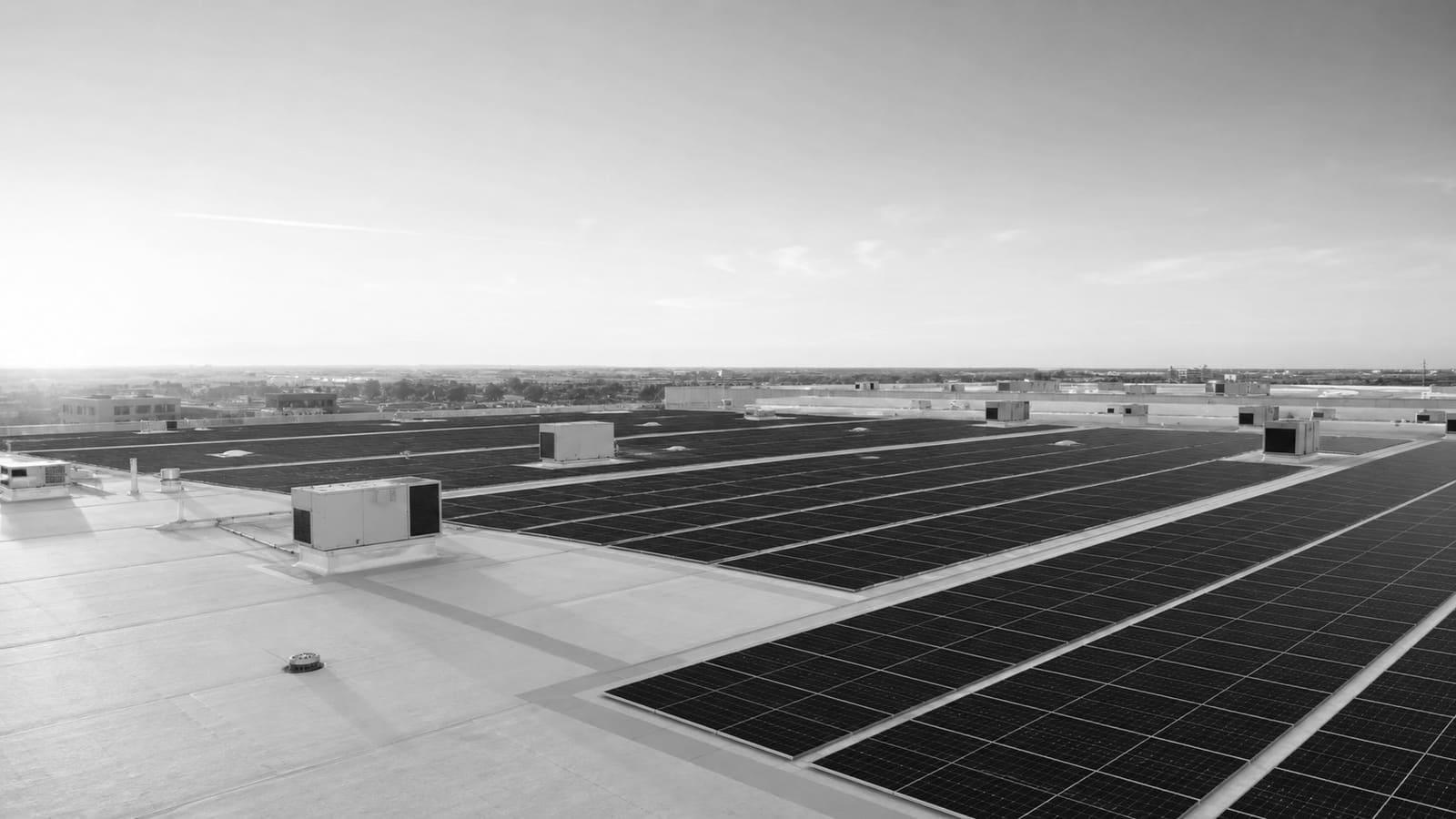
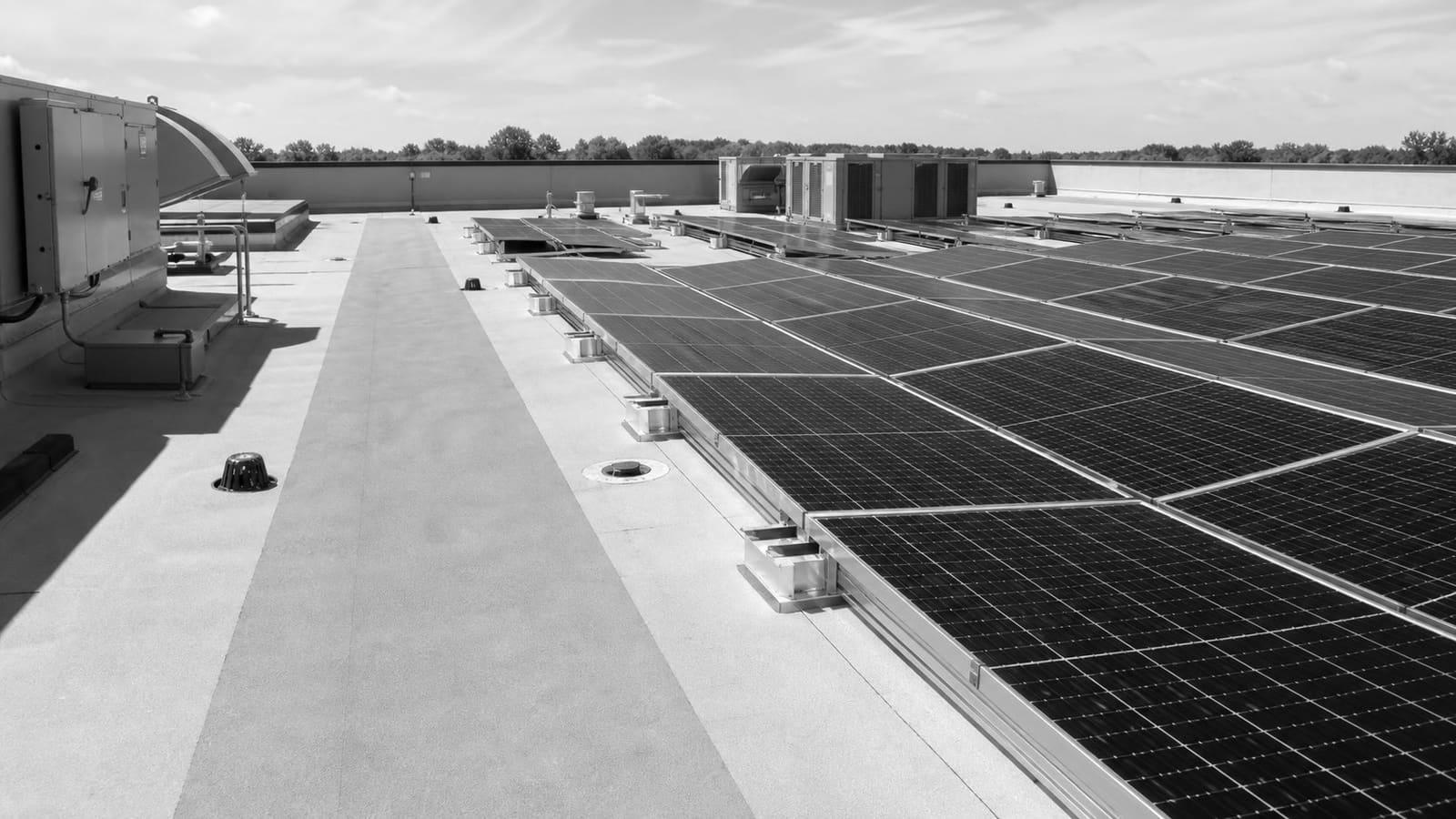
Rooftop array
ROOF
Choose this option when the building has enough usable roof area. A flush layout may lower wind load, even when its angle is not best for production.
Ground-mounted array
GROUND
Choose this option when open land gives the project more usable panel area than the roof. Available ground space changes the possible system size.
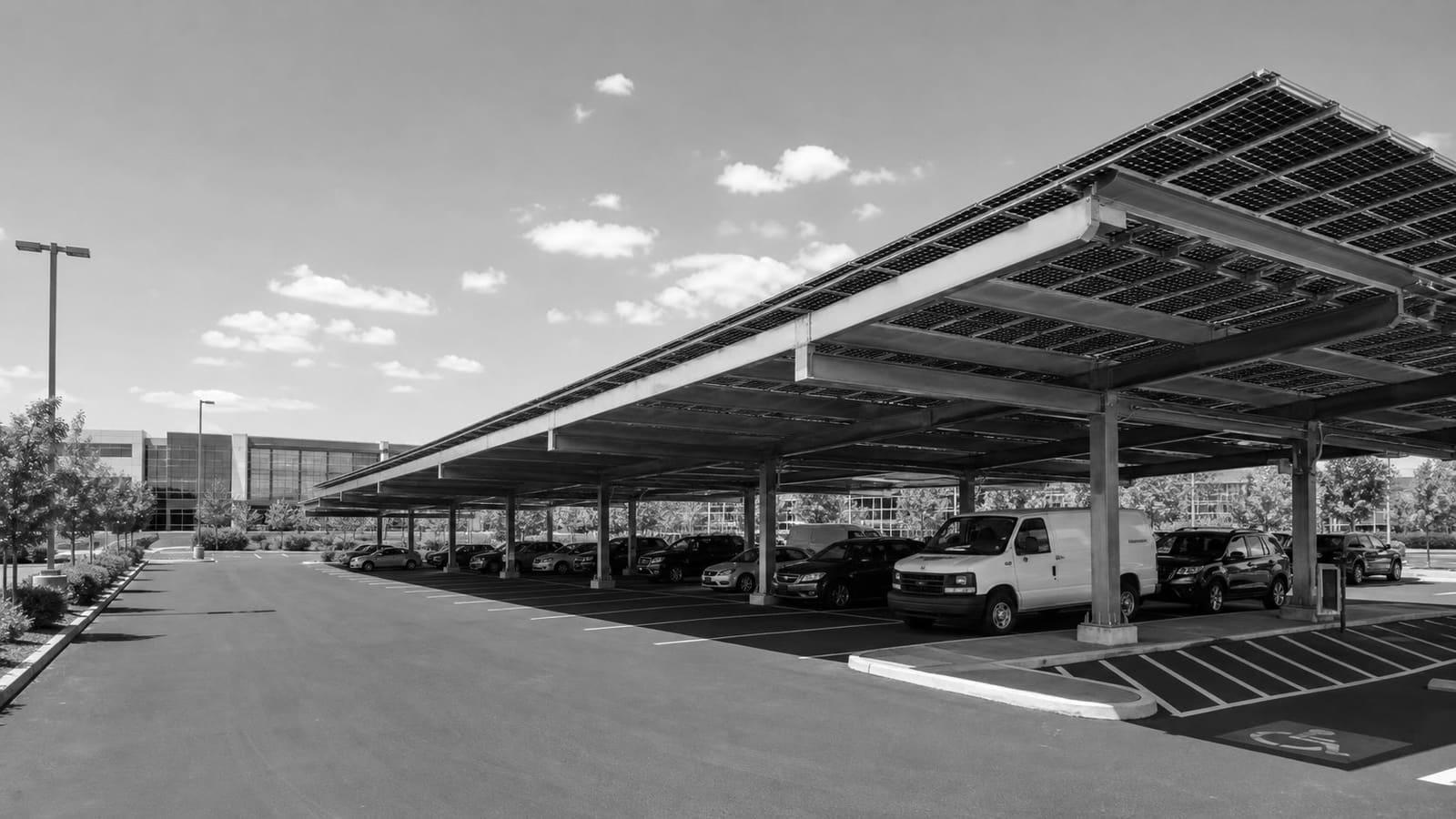
Solar canopy
CANOPY
Choose this option when parking space can hold the array. It moves panels off the roof and changes the mounting plan.
Battery storage
STORAGE
Add storage when backup power or demand charge reduction is a set goal. Without either goal, storage needs a separate business case.
Permit path
Commercial solar installation permits in Louisville
- Confirm the Louisville business and trade license status before choosing an installer. It changes whether the vendor can operate in the city.
- Identify the building permit needed for the project. The permit path can change the project schedule.
- Check whether zoning approval applies to the chosen rooftop, ground, or canopy layout. A zoning issue can force a layout change.
- Confirm contractor registration before work starts. A missing registration is a vendor pass/fail condition.
BEFORE YOU BUY
How Louisville operators should plan solar output and loads
- Record the facility’s demand charge reduction goal. It changes system sizing and the case for battery storage.
- Decide whether grid outages must be covered. That choice changes whether backup storage is included.
- Compare the load plan with the LG&E and KU Business Demand Response program. The program can call for targeted cuts with at least 60 minutes of notice.
- Confirm that the site can hold a demand response event for 4 to 8 hours. If it cannot, do not base the operating plan on that program.
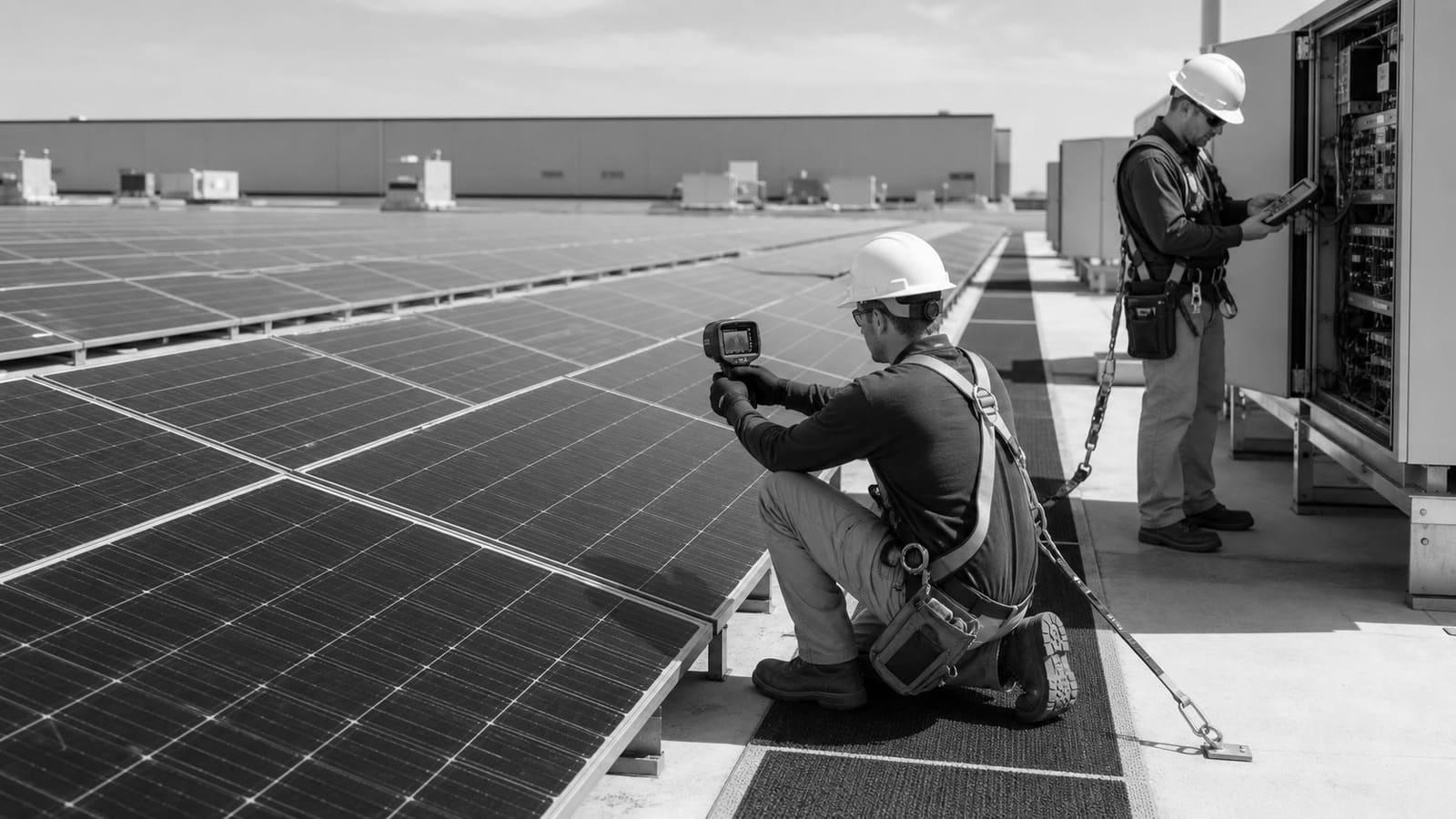
- Set ongoing monitoring and maintenance duties in the project scope. That choice changes who tracks array output after startup.
QUESTIONS
Straight answers.
Can Flux install solar on a Louisville commercial roof?
Yes, when the roof has enough usable area for the target system. We compare roof space with ground and parking canopy options before setting the layout.
How does Louisville snow affect panel design?
Louisville averages about 13 inches of snow per year. A steeper panel angle can shed more snow, but it also adds wind load.
Does a Louisville solar project need local permits?
Commercial construction projects may need Louisville permits and zoning approval. We identify the permit path for the chosen rooftop, ground, or canopy layout.
Should a Louisville facility add battery storage?
Battery storage may fit when backup power or demand charge reduction is a clear goal. Facility load, outage needs, and available space shape that choice.
GET STARTED
Tell us about the building.
Whatever the trade, we scope it, price it, and put the right crew on it. Site visits are free, always.
MORE SERVICE AREAS