LEXINGTON, KY · SOLAR
Commercial solar installation in Lexington.
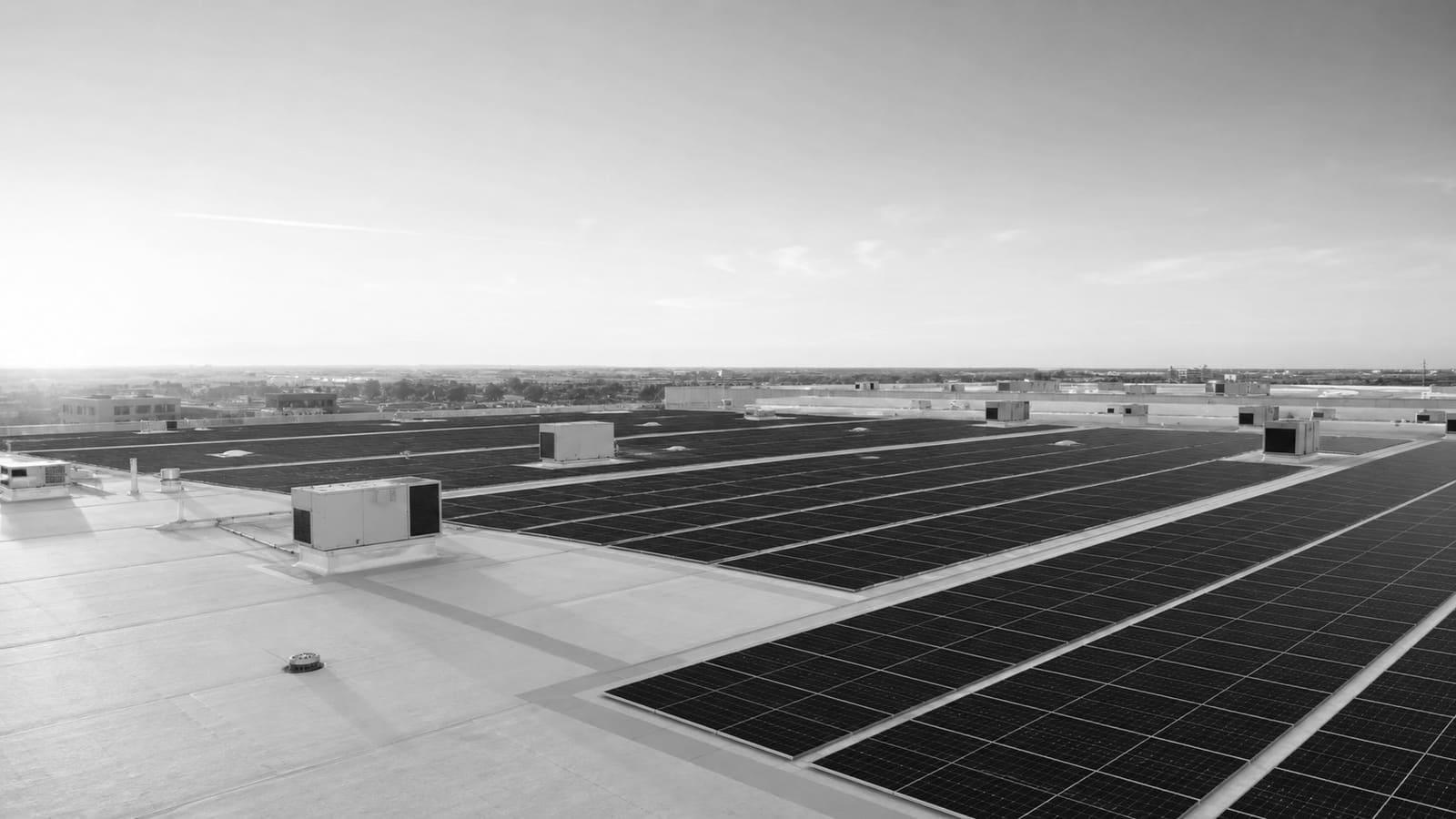
We plan solar arrays for Lexington commercial buildings, from roof or site fit through installation and commissioning.
Start with the building, not the panels.
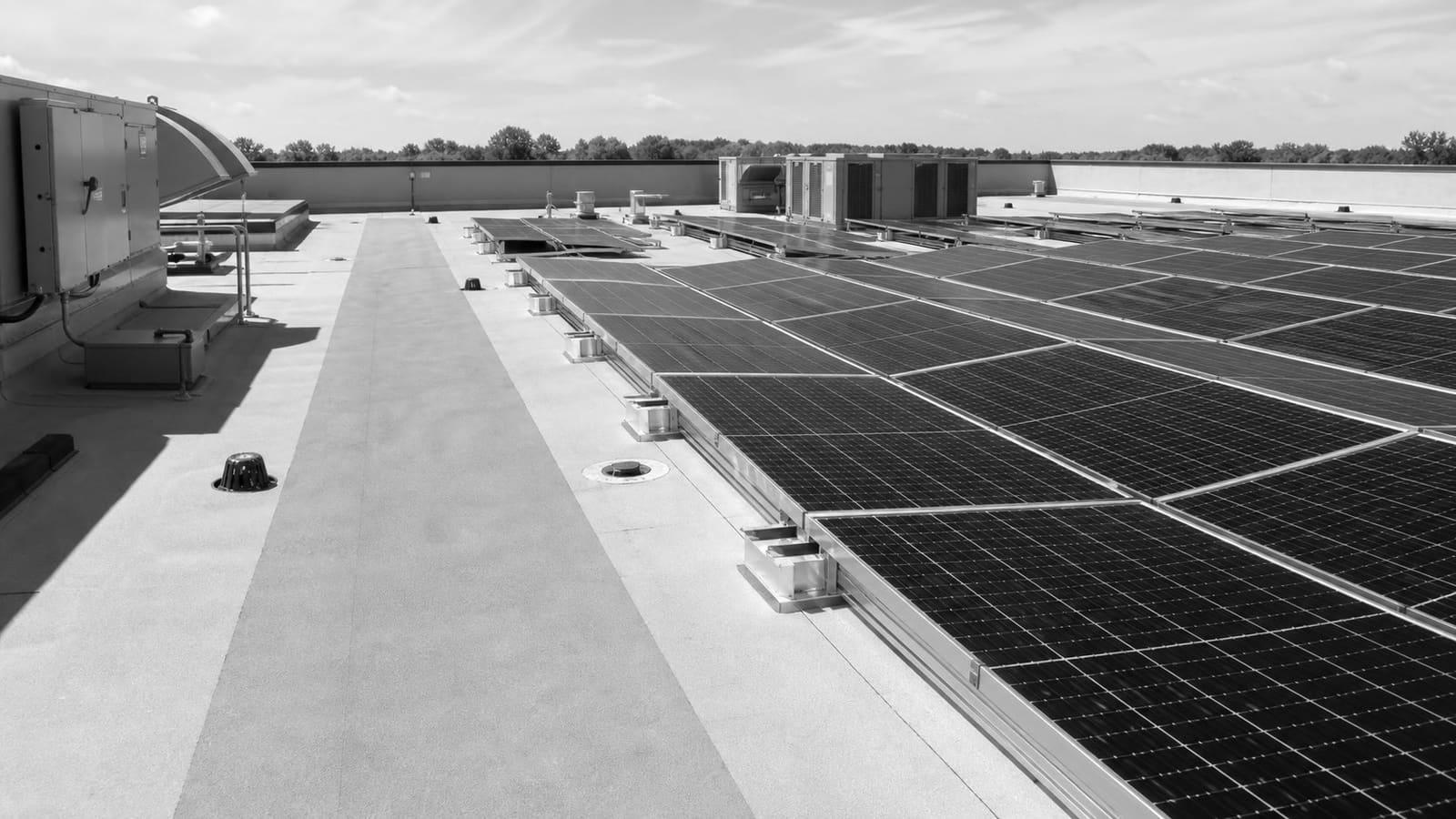
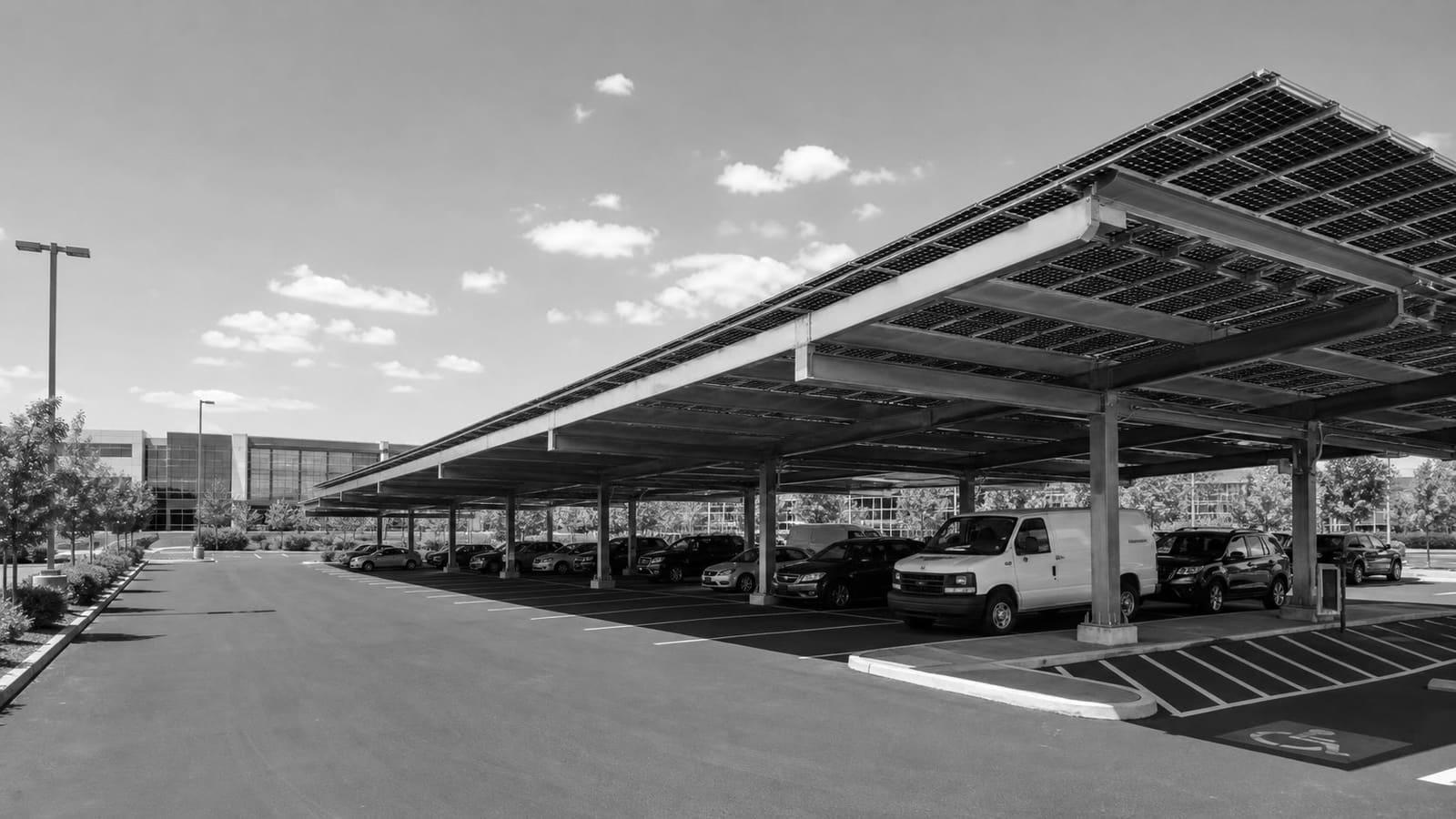
A commercial solar project has to fit the site, the roof, the electrical system, and the utility rules. We start with a solar feasibility study, then compare rooftop solar with solar carports where parking offers the stronger site.
One team carries design, permits, utility interconnection, construction, commissioning, and solar maintenance. We also compare direct ownership with solar financing and PPAs, and add battery storage only when it has a clear job.
START HERE
What should Lexington businesses check before installing solar?
Commercial solar installation in Lexington starts with the building’s energy use, available space, and operating goals. We use those facts to choose a rooftop array, ground-mounted array, or solar canopy. A poor fit is a site where the available area cannot support the planned array or its expected output. We then set the panel angle, mounting plan, permit path, and commissioning checks. The total cost will vary with facility size, energy use, and the chosen system. Battery storage can be considered when outage support is part of the operating goal.
Confirm the permit and license records separately
Commercial building improvements in Fayette County are routed through the Lexington-Fayette Urban County Government Division of Building Inspection. Electrical work also follows the local permit path. A Kentucky electrical license record is not proof that a permit was issued. Before work starts, we confirm the permit authority, the electrical license record, and the business name on the contract. Each record answers a different buyer question.
Site Fit Checks
How we size commercial solar installation in Lexington
Facility energy use
SIZE
We use the building’s energy-use record to shape array size. Higher or lower use changes how much solar capacity should be considered.
Usable installation area
FIT
We check whether the roof, open land, or parking area can hold the planned array. Limited usable area can rule out an array type or make the site a poor fit.
Array format
TYPE
We compare rooftop panels, ground-mounted panels, and solar canopies. Roof condition, open land, and parking use change the right format.
Outage goal
BACKUP
We confirm whether the facility needs power support during grid outages. That decision changes whether battery storage belongs in the project scope.
WHAT WE HANDLE
Everything under the solar door.
PROJECT PLANNING
How Lexington weather changes solar panel design
Panel tilt
ANGLE
A south-facing tilt from 15° to 40° can support strong production in the continental United States. We balance that range against the building and mounting plan.
Snow shedding
SNOW
Lexington averages about 14 inches of snow per year. A steeper panel angle can shed snow better, but it also raises wind load.
Wind load
WIND
A lower tilt or flush roof layout can reduce wind load. That tradeoff may lower solar exposure compared with a more favorable angle.
Rain exposure
RAIN
Lexington averages about 48 inches of precipitation per year. We account for outdoor exposure when choosing the array layout and mounting approach.
Permit Records
What permits affect commercial solar installation in Lexington?
- Confirm that the Lexington-Fayette Urban County Government Division of Building Inspection is the permit authority for the commercial building improvement.
- Confirm the electrical permit path for the Fayette County site before installation begins.
- Check the Kentucky electrical contractor, master electrician, or electrician license record tied to the project team.
- Match the licensed business name to the name on the solar contract; a license record alone does not prove that a local permit was issued.

BEFORE YOU BUY
What should Lexington buyers receive at solar commissioning?
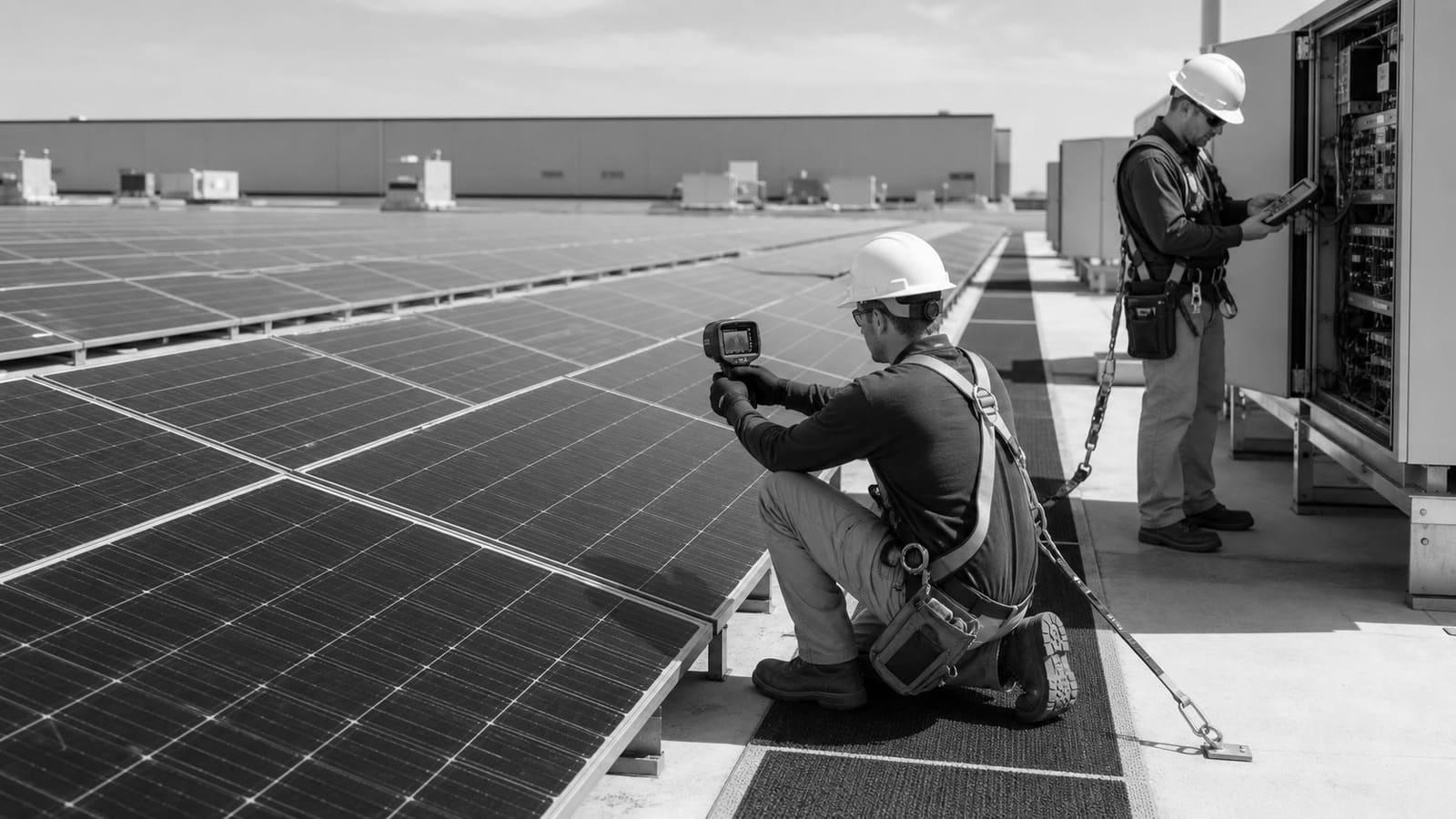
- A recorded check that the installed array matches the selected rooftop, ground-mounted, or canopy design.
- A recorded check of panel tilt and orientation, since both affect solar exposure and wind load.
- A commissioning record that shows the photovoltaic system was installed and checked before handoff.
- A clear maintenance and monitoring plan for the installed commercial array.
- A written scope for battery storage when outage support is included; if backup is not a goal, keep it outside the base scope.
QUESTIONS
Straight answers.
Which solar array types can work for a Lexington commercial building?
We can consider rooftop arrays, ground-mounted arrays, and solar canopies. Available roof area, open land, parking use, and facility energy needs guide the choice.
Does Lexington snow affect panel angle?
Yes. Lexington averages about 14 inches of snow per year. Steeper panels can shed snow better, but they also face more wind load.
Who handles commercial solar permits in Fayette County?
Commercial building improvements are routed through the Lexington-Fayette Urban County Government Division of Building Inspection. Electrical permits are a separate record to confirm.
Can incentives be included in the buying decision?
Potential utility rebates and Solar Renewable Energy Credits may be available. We confirm actual eligibility before including any benefit in the project decision.
GET STARTED
Tell us about the building.
Whatever the trade, we scope it, price it, and put the right crew on it. Site visits are free, always.
MORE SERVICE AREAS