
COMMERCIAL ENERGY · AUTOMATION · FACILITY SERVICES
Commercial contractors in Chicago.
Flux Facility handles commercial construction, tenant improvement build-outs, and building repairs for Chicago facilities, from the Loop and Fulton Market to Cook and DuPage counties.
WHAT WE DO
From energy audits to robot repair.
Energy
Find the waste, fund the fix.
Energy audits
Audit cost & pricing
Efficiency consultants
ALL ENERGY →
Battery
Storage that pays for itself.
BESS installation
Battery backup
Containerized BESS
ALL BATTERY →
EV
Charging that shows up on time.
EV charging installation
Fleet charging
Workplace charging
ALL EV →
Robots
Automation that earns its floor space.
Cleaning robots
Autonomous floor scrubbers
Security robots
ALL ROBOTS →
Mechanical
The big installs, built right.
HVAC installation & replacement
Ductwork installation
Sheet metal & pipe fabrication
ALL MECHANICAL →
Maintenance
The trades that keep buildings alive.
HVAC service
Electricians
Roofing
ALL MAINTENANCE →
Not sure where it fits?
Reach out. We scope it and put the right team on it, whatever the trade.
CHICAGO BY THE NUMBERS
What Chicago does to buildings.
24"
2732K
PEOPLE STRONG
Chicago commercial buildings keep a growing market running.
START HERE
What makes commercial construction in Chicago different?
Commercial contractors handle the build, repair, and upgrade work that keeps Chicago offices, retail spaces, warehouses, schools, and healthcare campuses running. That covers ground-up construction, tenant improvement build-outs, and the smaller fixes owners keep pushing off. Chicago has its own rules. The city licenses general contractors, and separate city licenses cover electrical, plumbing, mason, elevator mechanic, and drain layer work. Permits run through the Chicago Department of Buildings. Sandblasting, grinding, or chemical washing needs a Department of Public Health permit. A contractor who does not know that split will stall your schedule.
Vetting checklist
How do you vet a general contractor in Chicago?
- Confirm the firm holds a current City of Chicago general contractor license. It covers permitted construction, demolition, and building rehabilitation.
- Ask which trades are carried in-house. Electrical, plumbing, mason, elevator mechanic, and drain layer work each need their own city license.
- Check that the general liability policy comes from an insurer authorized to insure in Illinois with an A.M. Best rating of B+ or higher.
- Confirm the policy covers bodily injury, personal injury, property damage, and completed operations. Coverage above $1 million can combine primary and excess or umbrella policies.
- Ask which subcontractors will schedule inspections with the Department of Buildings. Those subs have to be listed on the permit.
Chicago cost drivers
What drives commercial project costs in Chicago?
Union and prevailing-wage labor
Budget
Chicago is one of the strongest union, prevailing-wage construction markets in the country. Plan for a 1.10 to 1.25x regional labor multiplier. You get deep skilled-trade benches for it.
42-inch frost depth
Structure
Footings have to reach below Chicago's 42-inch frost depth. Soft lake clay often pushes a site into deep or caisson foundations. That decision lands in the budget early, not late.
Wind load and energy code
Code
The city adds its own wind-load amendments and runs an aggressive energy code. Both shape the envelope and the mechanical package before drawings are sealed.
Zoning and permit path
Schedule
Chicago zoning and permitting is complex and runs through the alderman's office. A suburban site goes through Cook, DuPage, Lake, Will, Kane, or McHenry county instead. The path sets your schedule.

POWER & AUTOMATION
Battery storage, EV charging, and robots that work.
Commercial buildings are adding batteries, chargers, and floor robots faster than most contractors can keep up. We design and install battery energy storage systems, handle utility interconnection, and build EV charging from a pair of stalls to a full fleet depot.
On the automation side, we deploy cleaning and security robots that pay for themselves in labor, then keep every piece of it running. Planning any of this? Get in touch and get a real number for your building.
Get in touchHOW IT WORKS
From first call to finished work.
01
Get in touch
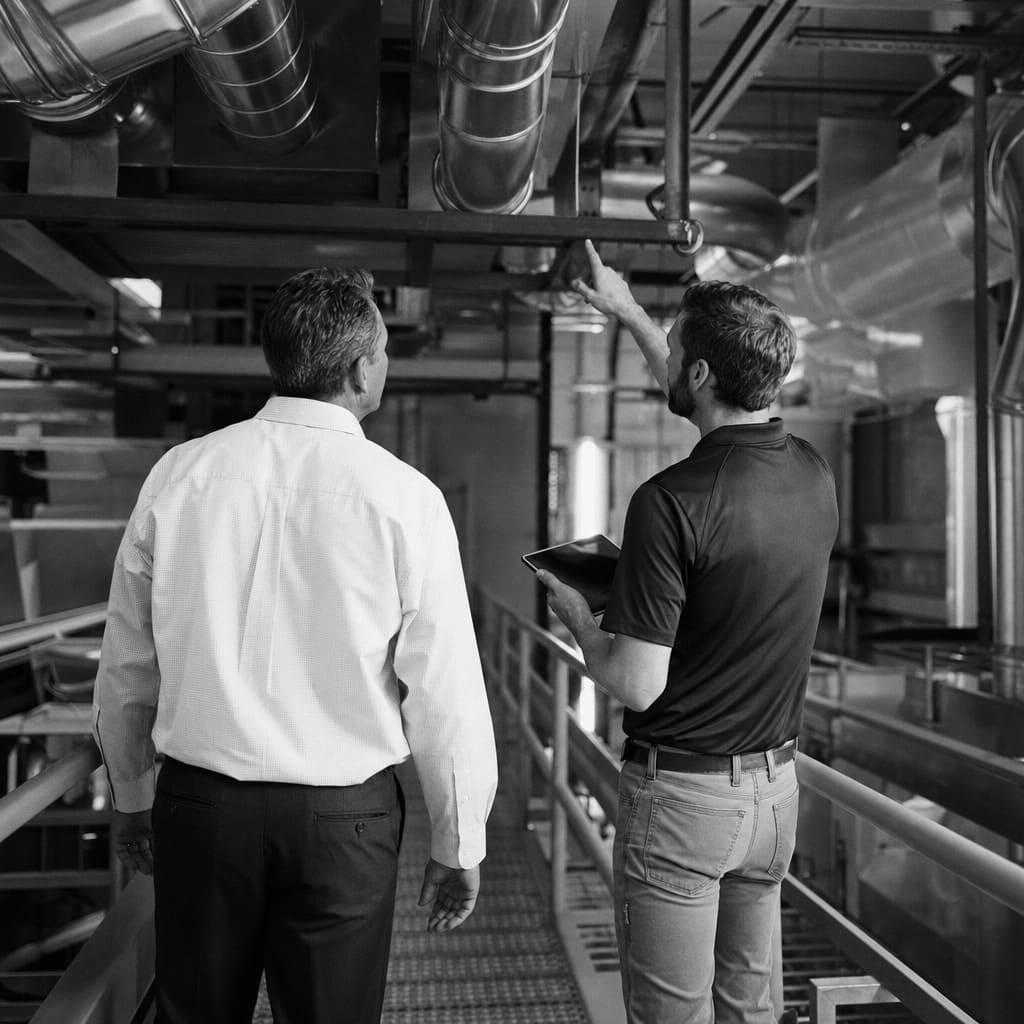
Tell us the building and the problem. Two minutes, no phone tag.

02
Get a scoped proposal
We assess the site, engineer the fix, and put a real price on it.
03
The work gets done
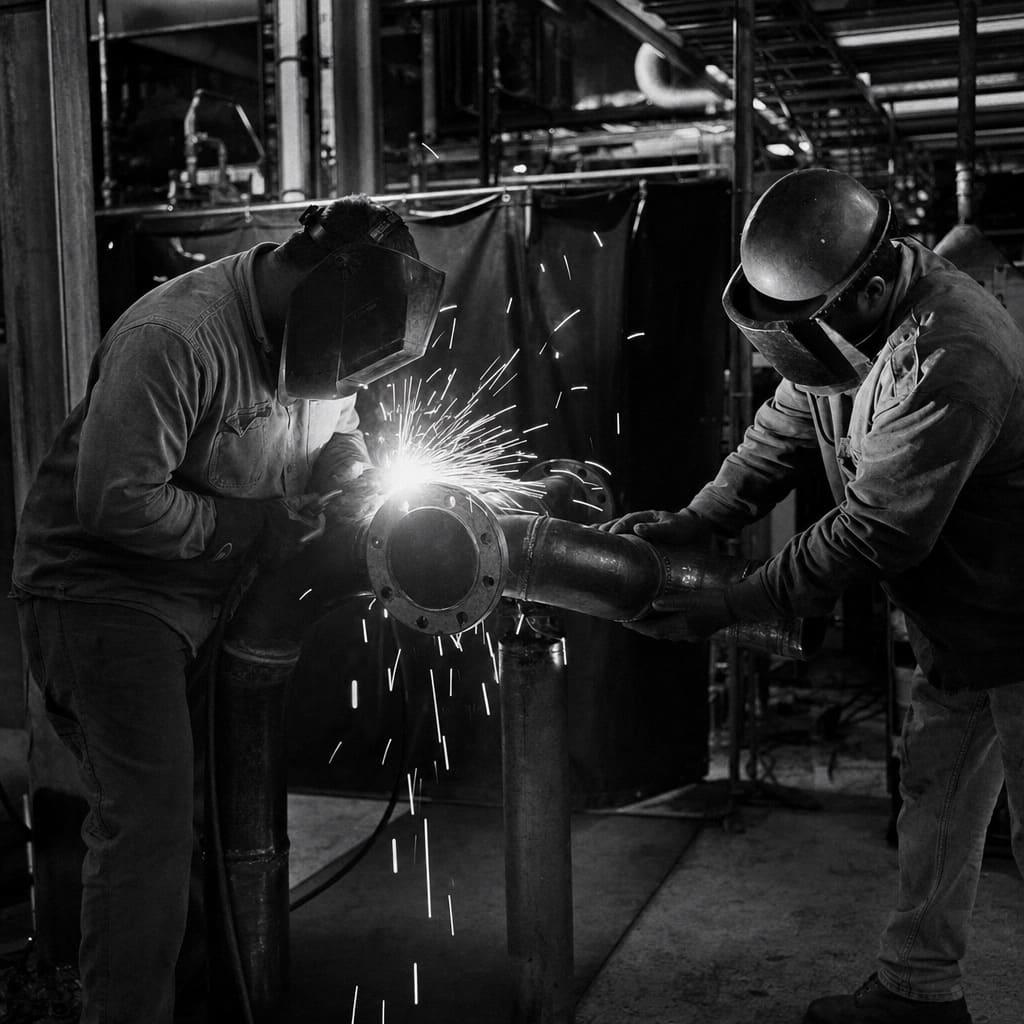
Vetted, insured local crews, with one point of contact from scope to done.
WHY FLUX
One call covers the whole building.
Every trade, one contact
Mechanical, electrical, energy, robots. You deal with one person from scope to done.
Licensed local crews
Insured crews from your market, vetted before they walk your site.
A real price, fast
Free site visit, scoped proposal, and a number you can take to your board.
Built for what's next
Battery storage, EV charging, and facility robots alongside the trades you already buy.
THE CORE TRADES
The trades that keep a building running.
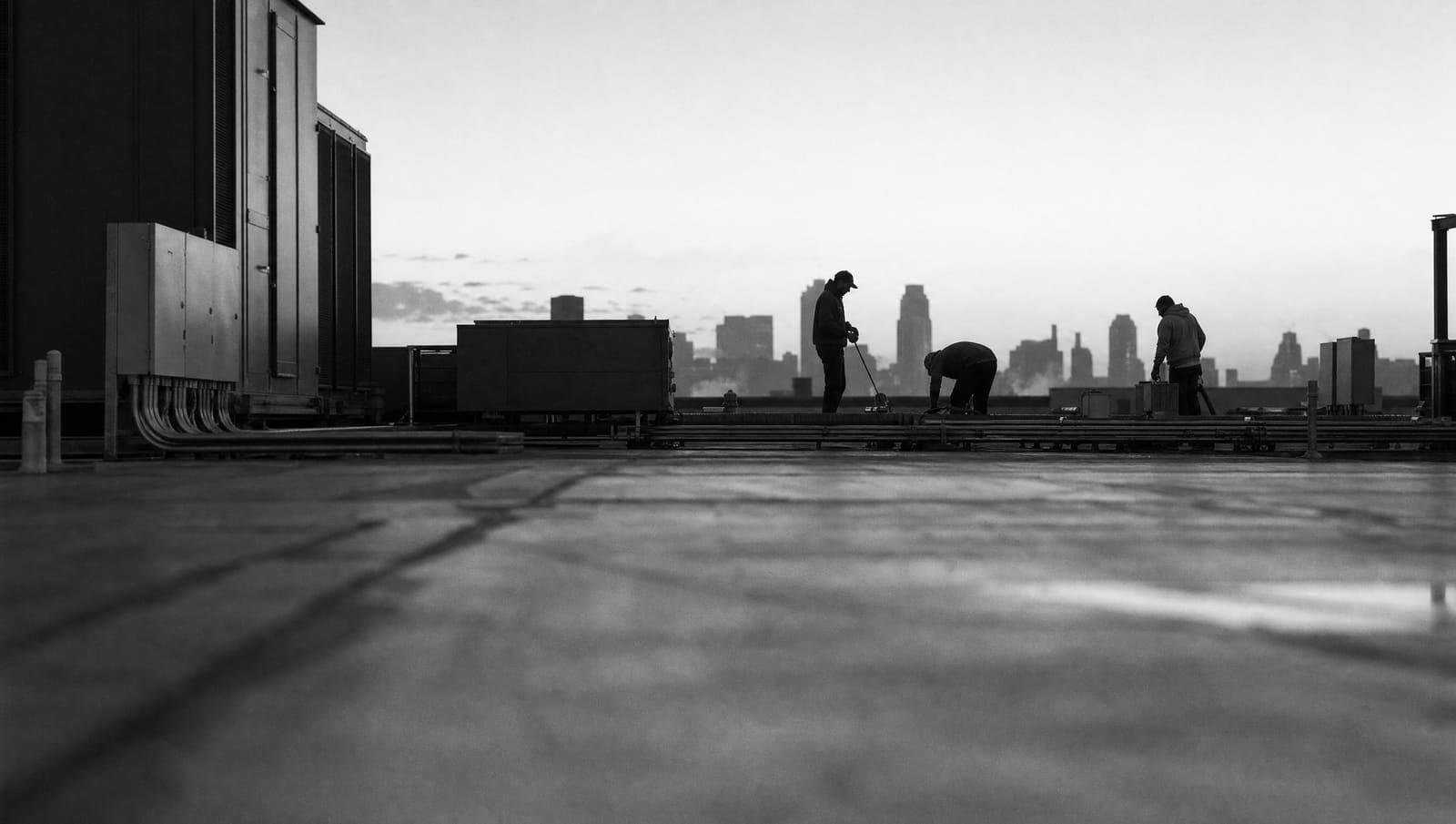
HVAC, plumbing, electrical, roofing. The unglamorous work is most of the job, and slow contractors are where it costs you. Our mechanical crews handle installs and replacements, from rooftop units to boilers, chillers, and process piping.
Maintenance covers the rest: service calls, electricians, roofing, fire and life safety, landscaping, and snow. Not sure where to start? An energy audit finds the waste and funds the fix.
Get in touchWHO WE SERVE
Every kind of commercial building.
Office & corporate
Tenant comfort, uptime, and energy costs under control.
Industrial & manufacturing
Process piping, automation, and the power to run it.
Warehouse & logistics
Docks, floors, charging, and robots that earn their space.
Retail & hospitality
Fast fixes and clean installs that never touch open hours.
Healthcare & medical
Code-first work in buildings that can't go down.
Multifamily & HOA
One contact for the whole property, every trade.
POPULAR PROJECTS
What we get asked for most.
QUESTIONS
Straight answers.
Does Chicago require a licensed general contractor for commercial work?
Yes. A City of Chicago general contractor license covers permitted construction, demolition, and building rehabilitation done by the licensed business, its employees, and its subcontractors. Subcontractors working under a licensed GC's supervision and control do not need the GC license themselves. Work that is exempt from a building permit under Section 14A-4-402 of the Chicago Construction Codes Administrative Provisions is handled differently.
Which permits does a Chicago commercial project need?
It depends on the scope. Sewer work needs a permit from the Department of Buildings. Sign, building, and demolition (wrecking) permits also come from the Department of Buildings. Sandblasting, grinding, or chemical washing needs a permit from the Department of Public Health. Some sites also fall under a stormwater management plan required by the Stormwater Management Ordinance.
How much does union labor add to a Chicago build?
Chicago is one of the strongest union, prevailing-wage markets in the country, and that shows up as roughly a 1.10 to 1.25x regional labor multiplier. The trade-off is high-capacity crews with real depth in every discipline. Coordinating signatory subcontractors and prevailing-wage compliance is part of running the job here.
Is a lighting upgrade worth it in an older Chicago commercial building?
Often, yes. The U.S. Department of Energy reports LED lighting can cut electricity use by up to 75% compared with traditional lighting, and longer fixture life lowers maintenance cost. Older commercial buildings across Chicagoland are upgrading electrical and lighting to meet current efficiency standards, which extends asset life and reduces operating risk.
GET STARTED
One call away.
Tell us the building and the problem. We bring the plan, the price, and the crew. Site visits are free, always.
MORE SERVICE AREAS