The direct answer
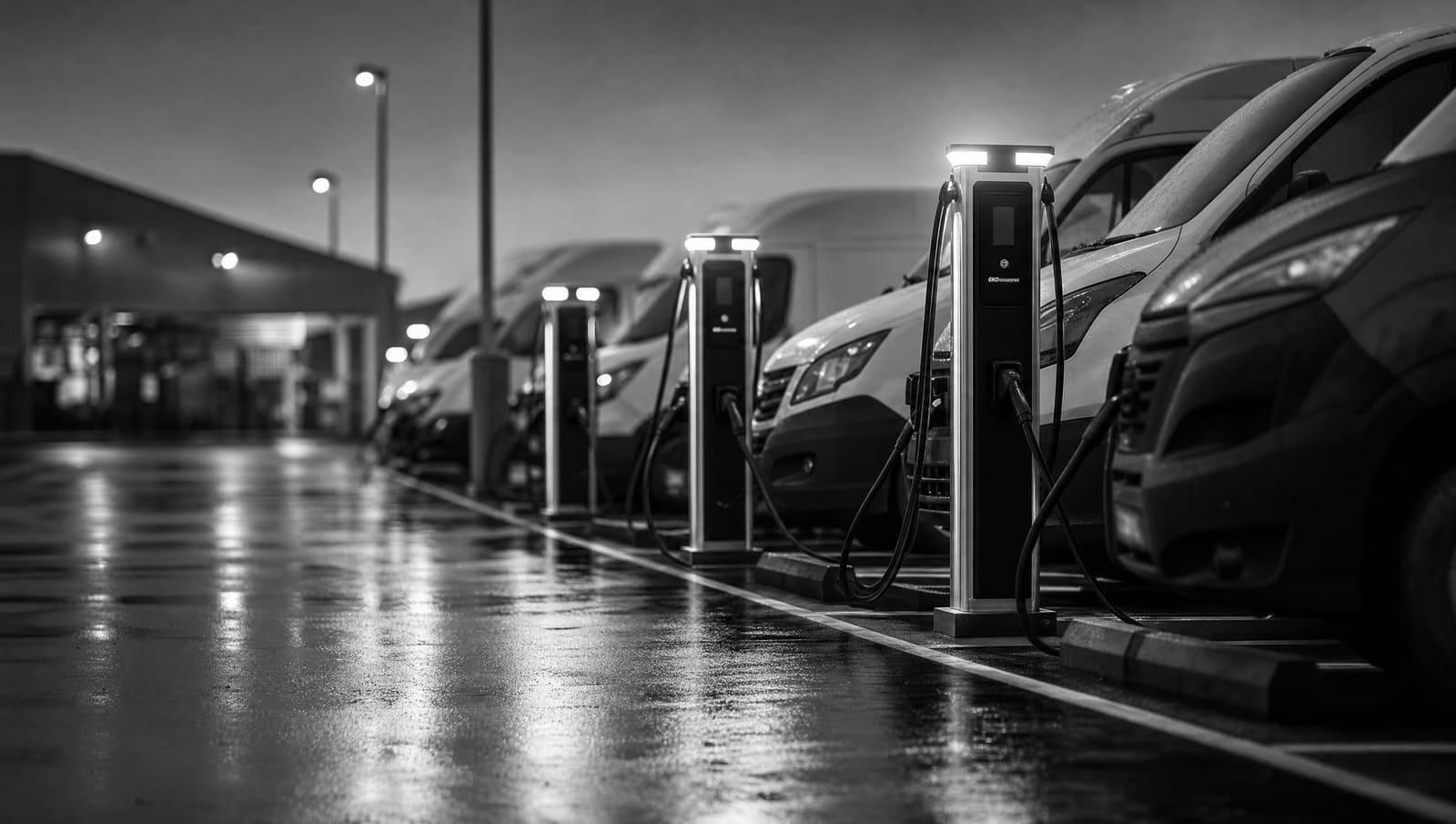
Commercial EV charger installation in Westminster.
A complete commercial installation starts with vehicle needs, parking use, a site survey, and an electrical load assessment. It then covers equipment selection, utility coordination, design, permitting, make-ready construction, charger installation, inspection, network setup, testing, and turnover. Level 2 usually serves vehicles parked for hours. DC fast charging requires a higher-power plan for rapid turnover.
The site review must verify service capacity, panel space, electrical routes, parking layout, communications, accessibility needs, and room for future chargers.
Choose the operating model
Start with vehicles and parking, not a charger catalog
Charging speed should follow the time each vehicle can stay parked. Workplace drivers, tenants, visitors, and overnight fleet vehicles may have hours to charge. Level 2 can fit that pattern while placing a smaller demand on the building than fast charging. Vehicles that must return to service quickly may justify DC fast charging, but its higher power can change the utility, electrical, civil, and equipment scope.
Next, decide who may use each port and what the site must track. A private fleet may need driver or vehicle access without public payment. Workplace charging may need employee rules and usage records. Public charging may require payment, pricing, network service, signage, and customer support. These choices affect hardware, communications, software fees, and turnover procedures.
Finally, set the first phase and the planned buildout. Installing every charger now is not always necessary. However, sizing pathways, panels, pads, and communications for later phases can reduce repeated site work.
Build the budget
The quote should price the whole installed system
Charger hardware is only one line. Review commercial EV charging cost as a site-wide project that includes electrical, civil, utility, software, and operating work.
Equipment selection
Level 2 and DC fast charging create different projects
Level 2 equipment supplies AC power to the vehicle, where onboard hardware converts it for the battery. It is a practical starting point when employees, tenants, guests, or fleet vehicles stay parked for meaningful periods. A Level 2 project still needs a proper load assessment. Several ports operating together can create a large building load, especially when each unit is designed to run at full output.
DC fast equipment converts power outside the vehicle and sends DC power toward the battery. This supports faster turnover, but the installation may require more substantial distribution equipment, service work, utility review, cooling, protective equipment, and space. The selected power should reflect vehicle acceptance limits and operating needs. A larger nameplate alone does not guarantee that every vehicle will charge at that rate.
Connector compatibility also belongs in procurement. The charging equipment must serve the vehicles expected during the project’s useful life. Confirm connector types, cable reach, simultaneous power behavior, network support, warranty terms, replacement access, and whether key functions continue during a communications outage. For public use, also define payment and support before purchase. For fleets, verify that software can show vehicle readiness and alert staff when charging fails.

Complexity check
What makes one installation easier than another?
The charger count does not tell the whole story. Existing capacity, distance to parking, construction surfaces, communications, utility work, and operating rules determine the real scope.
Lower complexity
Capacity and parking align
The building has usable electrical capacity, the panel is near the stalls, conduit has a clear route, communications are reliable, and Level 2 charging matches long dwell times.
Higher complexity
Power or civil work leads
The plan requires fast charging, added service capacity, long trenching, pavement restoration, new distribution equipment, utility construction, payment systems, or work around active parking.
Site assessment
Turn the operating goal into a buildable scope
Begin with the vehicles. Record how many need energy, when they arrive, how long they remain parked, how far they travel, and when they must leave. For a fleet, include the least flexible routes and the vehicles that return with the lowest charge. For workplace or public use, estimate demand without assuming that every space needs maximum power at once.
Then inspect the electrical system from the incoming service to the proposed stalls. Review available records, service and panel ratings, existing loads, spare spaces, equipment condition, meter arrangements, and shutdown limits. Trace realistic conduit routes and note concrete, asphalt, landscaping, drainage, traffic, and protected work areas. Confirm where pedestals, wall units, bollards, signs, and communications equipment can fit without creating poor cable reach or blocking normal access.
The assessment should produce a concept plan, not just photographs. It should show port locations, charging level, estimated electrical demand, routing, major equipment, networking needs, construction limits, utility questions, and a phased buildout. These findings let the design team and utility evaluate the same project.
Ask for a load plan
The plan should show the assumed charger demand, existing building load, any managed-charging strategy, required upgrades, and the capacity reserved for later phases.
Ownership and operation
Decide who owns the equipment and who keeps it working
Commercial charging adds responsibilities after construction. The owner may buy the equipment and contract separately for networking and service. Another model may bundle equipment, software, operation, or maintenance. Compare the full term, data access, payment handling, warranty process, support hours, replacement choices, and what happens if the network agreement ends.
Also write simple operating rules. State who can charge, when vehicles must move, whether users pay, who handles blocked spaces, and who receives fault alerts. Assign one person or team to review station status and escalate repairs. A charger that has power but cannot authorize a session is still unavailable to its users. The ownership plan should cover both electrical failures and network or payment failures.
Owner-controlled
More choice, more coordination
The facility controls equipment and vendor decisions but must manage software, warranties, maintenance, payment rules, and future replacements.
Bundled service
Simpler administration, longer commitments
A provider may combine services, but the buyer should examine recurring fees, data rights, response duties, contract length, and exit terms.
Procurement and phasing
Buy for reliable service and planned growth
A useful request for proposal describes the operating result, site facts, and division of responsibility. Give bidders the same port count, charging use, power assumptions, future phase, access model, site hours, and known electrical information. State whether the price must include engineering, permits, utility coordination, civil work, restoration, communications, commissioning, training, warranties, and maintenance. Otherwise, a low bid may simply omit work another bidder included.
Evaluate equipment as part of a system. Confirm listing and compatibility requirements during design, along with cable management, mounting, impact protection, replacement lead times, network functions, and warranty procedures. Ask whether power can be shared across ports and how the system responds when communications fail. Managed charging may help control combined demand, but it must still deliver enough energy before vehicles leave.
Plan expansion where it has clear value. Spare conduit, pull boxes, equipment space, and an organized distribution design may support later ports. Do not assume that reserving physical space also reserves electrical capacity. Document both. Before relying on any incentive or tax benefit, verify current eligibility, location rules, deadlines, covered costs, and application timing. Treat funding as confirmed only after its current terms have been checked for the specific site.
Compare proposals
Five items every comparable quote should show
Ask each bidder to price the same defined outcome. Clear inclusions, exclusions, assumptions, and responsibilities matter more than a single total at the bottom.
01
A defined basis of design
Show charger quantity, output, mounting, connectors, networking, access model, and future phase assumptions.
02
Electrical and civil scope
List panels, protection, conduit, conductors, trenching, pads, bollards, signage, restoration, and shutdown work.
03
Utility and approval responsibilities
Name who handles utility coordination, design documents, permit submittals, corrections, inspections, and final approvals.
04
Schedule and procurement risks
Separate design, review, equipment, utility, construction, inspection, activation, and contingency assumptions.
05
Turnover and operating costs
Include testing, network activation, training, documents, warranties, software fees, maintenance options, and response responsibilities.
Keep planning locally
Related EV charging pages in Westminster
Get a defensible number
Price the equipment and the building together.
Send the address, operating target, and target opening date. Flux will identify what must be verified before the project can be priced.
Price my chargersQuestions
Straight answers.
What is included in commercial EV charger installation?
A complete scope can include site assessment, electrical load review, charging design, utility coordination, permits, panels and protective equipment, conduit, conductors, trenching, foundations, charger mounting, signage, communications, inspection, network activation, test sessions, training, and turnover documents. The quote should state every inclusion and exclusion.
Should our facility install Level 2 or DC fast chargers?
Choose from vehicle dwell time and required turnaround. Level 2 often fits vehicles parked for hours. DC fast charging fits cases where vehicles must gain energy and leave sooner. Fast charging can require much more electrical and utility infrastructure, so confirm the operating need before designing around it.
Can load management avoid an electrical service upgrade?
It may help by controlling how several chargers share available power. It does not create capacity, and it must still meet each vehicle’s departure need. A load assessment should compare existing demand, proposed charging demand, managed operation, future growth, and the practical limits of the current service.
When should the electric utility join the project?
Bring the utility in during planning when the project may affect service capacity, metering, rates, transformers, or other utility-owned equipment. Early coordination helps define responsibilities and identify work that can affect design and schedule before equipment is ordered.
Do commercial chargers need internet service?
Not every charger needs a network, but connected service may be needed for access control, payment, reporting, remote monitoring, updates, or fleet management. Confirm the available connection and test its reliability at the parking area. Also ask what charging functions remain available during an outage.
How should we plan for more chargers later?
Define the expected buildout during the first design. Review future electrical demand, distribution space, conduit routes, pull boxes, communications, equipment pads, and parking layout. Install only the first phase if that fits the budget, but document what later phases will require.
What should happen during commissioning?
Commissioning should verify electrical safety, equipment settings, network communication, access rules, payment functions when used, power delivery, cable reach, fault reporting, and test charging on every port. Turnover should include approved documents, warranties, credentials, training, support contacts, and maintenance responsibilities.
Are EV charging incentives or tax credits available in August 2026?
Programs, eligibility areas, deadlines, and covered costs can change. Verify the site and current rules before including funding in the budget. Do not treat an incentive as secured until eligibility, application timing, required equipment, documentation, and approval have been confirmed for the project.
Sources used for this guide
- [1]afdc.energy.gov — Alternative Fuels Data Center: Procurement and Installation for Electric Vehicle Charging Infrastructure
- [2]betterbuildingssolutioncenter.energy.gov — DOE Better Buildings Commercial EV Charging Infrastructure Guide
- [3]driveelectric.gov — Public electric vehicle charging infrastructure playbook · Joint Office of Energy and Transportation
- [4]energy.gov — DOE Federal Workplace Charging Program Guide