The direct answer
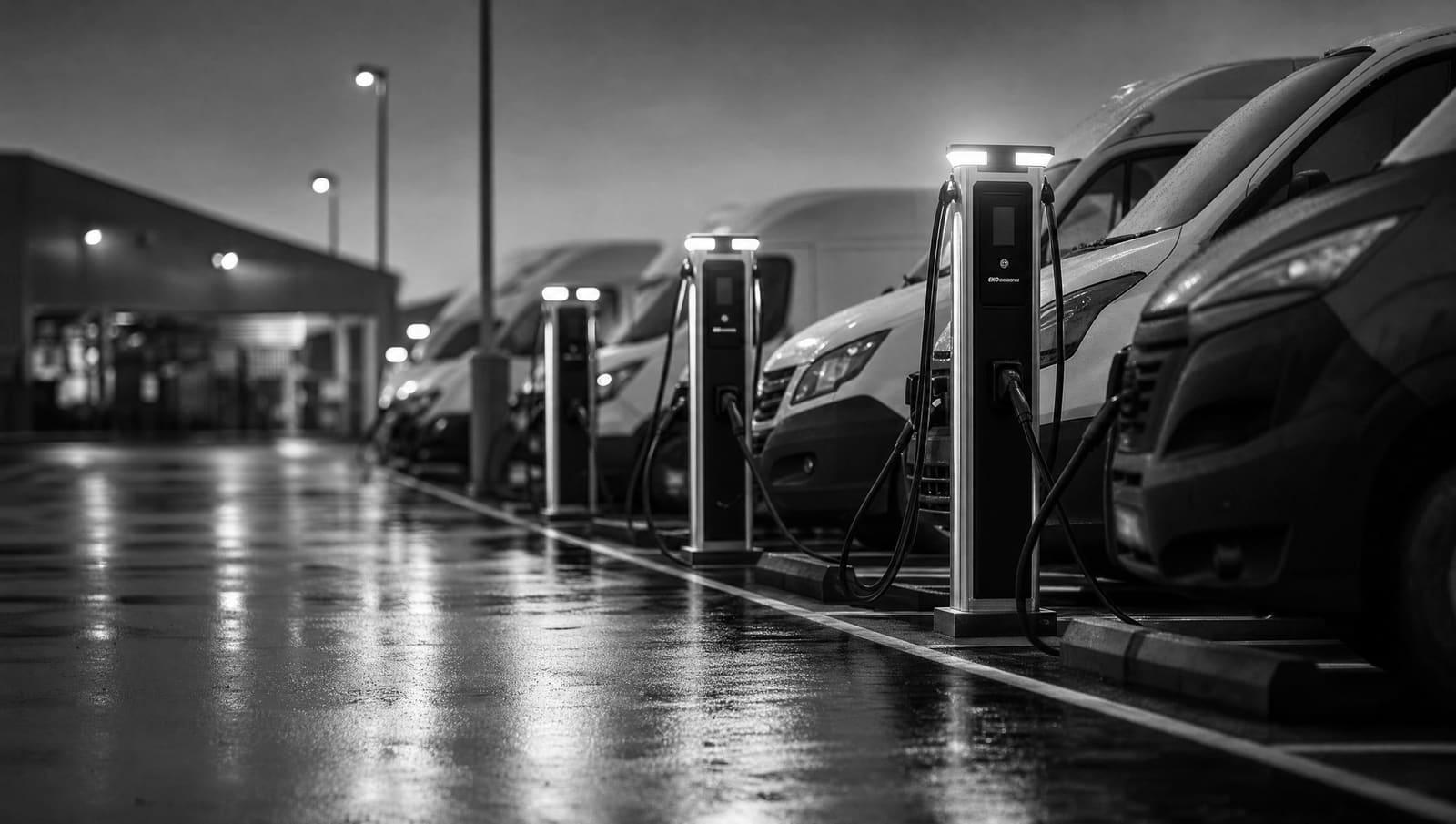
Commercial EV charger installation in Topeka.
A complete commercial installation covers the site and electrical assessment, charger selection, utility coordination, design, permitting, construction, inspections, network setup, testing, and turnover. Level 2 often suits vehicles parked for hours. DC fast charging serves shorter stops or tight fleet schedules, but it can require a much larger electrical and utility scope.
The site review must verify electrical capacity, parking dwell time, cable routes, stall access, communications, drainage, security, and space for later expansion.
Start with operations
Choose charging around vehicles, not hardware
First decide who will charge, how long each vehicle stays, and how much energy it needs before leaving. A workplace may value several slower ports that serve cars through the day. A fleet may need charging tied to routes, shifts, and a firm departure time. A public site may need payment, driver support, visible signs, and faster turnover.
These choices set the charger type, port count, power demand, network features, and parking layout. They also shape operating rules. Decide whether charging is free, paid, assigned, open to visitors, or limited to fleet vehicles. If several chargers can share power, managed charging may reduce the peak demand placed on the building. The right plan is the smallest system that reliably completes the charging job while leaving a practical path for growth.
Scope before price
The budget lines that belong in the plan
Commercial installation pricing depends on more than the charger. Review these lines separately so equipment, construction, approvals, and ongoing service are not hidden inside one allowance. For a deeper budgeting discussion, see commercial EV charging cost.
Equipment choice
Level 2 and DC fast charging solve different problems
Level 2 equipment sends AC power to the vehicle, where onboard hardware converts it for the battery. It is usually the first option to study when employees, tenants, guests, or fleet vehicles stay parked for hours. A design can spread charging across more spaces, and network controls may share available power among connected vehicles. The review still needs to check panel capacity, circuit routes, mounting, cable reach, and communications.
DC fast equipment converts power outside the vehicle and sends DC power to the battery. It can fit public charging with short stops or fleets that must recover energy between runs. The installation plan is often more demanding because the equipment places a larger load on the site. Utility coordination, service equipment, switchgear, equipment pads, protective barriers, and cooling or communications needs can become major scope items.
Do not select a charger from its highest advertised output alone. The vehicle, battery condition, connector, site power, and charging controls can limit actual delivery. Ask the designer to show the useful power per port, the assumed vehicle schedule, and how simultaneous sessions affect performance.
Complexity check
What makes one installation simpler than another
The same number of ports can produce very different projects. Existing capacity and a short, open electrical route can simplify the work. Limited capacity, pavement crossings, fast charging, or complicated operating needs can expand it.
Lower complexity
Capacity and parking already align
The building has usable electrical capacity, chargers sit near suitable distribution equipment, conduit routes are direct, communications are available, and Level 2 charging matches long vehicle dwell times.
Higher complexity
Power or site work drives the schedule
The plan needs DC fast charging, service changes, new distribution gear, long trenching, pavement restoration, payment systems, phased parking closures, or utility construction before chargers can operate.
Site assessment
Turn the charging goal into a buildable scope
A useful assessment begins with vehicles and parking. Record arrival times, departure times, daily energy needs, expected growth, and whether every vehicle must be ready at once. Mark the preferred spaces and check how drivers will enter, park, connect, and leave. Consider cable reach, pedestrian paths, accessible use, signs, lighting, security, snow or water exposure, and protection from vehicle impact without assuming a layout will pass review.
Next, trace the power path. The assessment should identify the serving meter, electrical service, panels, available spaces, existing loads, likely charger load, and the route to each charging area. It should also note where trenching, boring, wall penetrations, concrete work, or pavement repair may be required. Networked stations need a reliable communications plan rather than an assumption that a signal will reach the parking area.
The result should be a written basis of design. It should state the proposed port count and power, load assumptions, preliminary one-line concept, site route, operating controls, utility questions, permit assumptions, expansion strategy, and unresolved risks. That document lets bidders price the same job.
Ask for the assumptions
If a proposal gives a port count without showing vehicle dwell time, available power, simultaneous charging, and the electrical route, it is not yet a dependable construction scope.
Operating model
Decide who owns the equipment and who runs charging
Ownership affects procurement, software access, maintenance, data, payment revenue, and the ability to change providers later. A facility can own the chargers and hire separate service providers, or use an arrangement that bundles equipment, networking, operation, or maintenance. Neither structure removes the need for clear responsibilities.
Before signing, identify who controls pricing and user access, who receives charging data, who answers driver calls, and who pays for communications and replacement parts. Check whether essential functions continue if the network is unavailable. Review warranty terms, software commitments, data export, and the process for replacing equipment. The physical installation should remain useful even if the operating relationship changes.
Facility-owned
More control, more direct responsibility
The owner can shape equipment, access, and service choices, but must manage software, warranties, repairs, payment policies, and vendor coordination.
Bundled service
Simpler administration, more contract dependence
A provider may combine several duties, but the buyer should examine term length, fees, data rights, service levels, equipment ownership, and exit conditions.
Design and procurement
Plan approvals and utility work before ordering chargers
Once the preliminary load and layout are known, the project team can confirm applicable codes, permit needs, inspection steps, and utility requirements. These items are time-sensitive and site-specific. Because no verified Topeka permit or utility detail is supplied here, a buyer should require the project team to confirm current requirements directly for the property before design is released or equipment is purchased.
Utility coordination should address present and future charging demand, existing service, metering, possible upgrades, rate effects, and any work that must be completed outside the facility’s construction contract. Ask who submits documents, who answers technical questions, and which dates depend on utility action. An equipment order made before this review can lock the project into power needs the site cannot support on the expected schedule.
Procurement should compare compatible systems against one written basis of design. Evaluate usable port power, connector needs, network functions, payment options, warranty, serviceability, lead time, replacement strategy, and cybersecurity requirements. Treat any incentive or tax credit as unconfirmed until current eligibility, location rules, deadlines, and documentation are checked in August 2026.
Construction and turnover
Installation is complete only after every port works
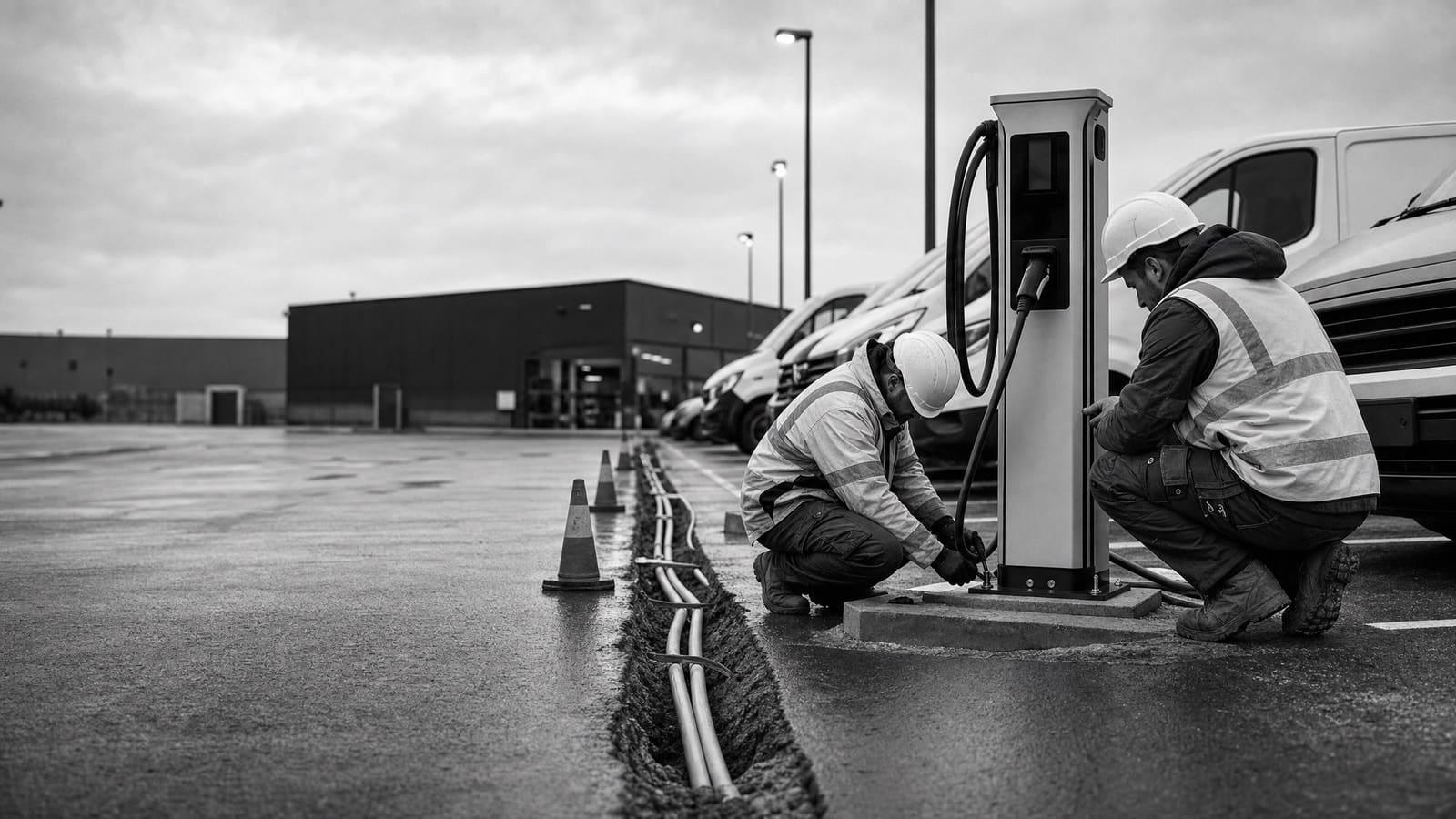
Construction can include new distribution equipment, conduit, conductors, trenching, boring, foundations, bollards, charger mounting, signs, striping, communications, and restoration. The sequence should protect normal facility operations. Define work hours, parking closures, shutdown windows, delivery access, temporary barriers, and responsibility for restoring pavement or landscaping. If the project is phased, label which infrastructure serves the current ports and which work is reserved for expansion.
Inspections and energization are milestones, but they are not the final test. Commissioning should verify every connector through a real or approved simulated charging session. Confirm power delivery, cable reach, display behavior, access controls, payment functions, network reporting, load-management rules, remote resets, fault alerts, and emergency procedures. Record charger serial numbers, circuit labels, breaker settings, software accounts, and warranty dates.
Turnover should include approved drawings or accurate record documents, equipment manuals, inspection records, network credentials, warranty information, maintenance instructions, and staff training. Assign an owner for driver questions and faults. A charger that is energized but cannot authorize users, report errors, or receive service is not fully operational.
Growth and lifetime value
Build today’s ports without blocking tomorrow’s expansion
Future-ready design does not mean buying every charger now. It means making informed choices about the work that would be expensive to repeat. A project may reserve panel space, size shared equipment for an approved future load, install spare raceways, extend conduit past pavement, or preserve room for added distribution equipment. Each measure should have a defined purpose. Oversizing everything without a vehicle forecast can waste capital.
Phasing works best when the drawings show both the present build and the planned end state. The design should explain how later ports connect, how load controls change, whether utility capacity must grow, and which parking spaces are protected for expansion. Keep spare pathways documented and capped so another contractor can find and use them.
Compare proposals on lifetime obligations as well as construction scope. Include network subscriptions, communications, payment processing, inspections, preventive maintenance, repairs, parts, warranties, electricity-rate effects, and eventual equipment replacement. The lowest equipment price may not produce the lowest operating burden. Use the assumptions in the commercial charging cost guide to organize the estimate, then replace broad allowances with site findings.
Comparable proposals
Five things every installation quote should show
Give each bidder the same vehicle needs and site information. Then compare scope, exclusions, assumptions, schedule, and operating obligations—not just the total at the bottom.
01
Defined equipment and performance
List models, port count, useful power, connectors, mounting, networking, payment features, warranties, and substitutions.
02
Complete electrical and civil scope
Show panels, switchgear, circuits, conduit, trenching, concrete, barriers, striping, signs, restoration, and division of responsibility.
03
Approvals and utility responsibilities
Identify design documents, permit work, fees, inspections, submissions, utility coordination, and items priced only as allowances.
04
Schedule with real dependencies
Separate design, approvals, equipment lead time, utility work, shutdowns, construction, inspections, activation, and commissioning.
05
Turnover and ongoing costs
State testing, training, documents, software fees, data service, payment charges, maintenance options, response terms, and exclusions.
Keep planning locally
Related EV charging pages in Topeka
Get a defensible number
Price the equipment and the building together.
Send the address, operating target, and target opening date. Flux will identify what must be verified before the project can be priced.
Price my chargersQuestions
Straight answers.
What does commercial EV charger installation include?
A complete scope includes vehicle and site planning, electrical assessment, charger selection, utility coordination, design, permitting, electrical and civil construction, inspections, networking, commissioning, training, and turnover documents. The proposal should clearly assign every task.
Should a commercial property choose Level 2 or DC fast charging?
Choose from the parking schedule and required energy. Level 2 often fits vehicles parked for hours. DC fast charging can fit short stops or fleets with tight turnaround needs, but it may require a larger electrical and utility scope.
Can the existing electrical service support EV chargers?
A load assessment must answer that question. The review should compare existing building demand with the proposed charging load and operating schedule. Managed charging may share available capacity, while some projects need new distribution equipment or service work.
When should the utility become involved?
Engage the utility after a preliminary load and growth plan are available, and before ordering equipment that depends on added capacity. Confirm metering, service needs, rate effects, application duties, outside construction, and schedule dependencies.
Do commercial chargers need a network?
Not every use case needs the same network features. A network can support access control, payments, session data, alerts, remote service, and managed charging. The quote should disclose subscriptions, communications needs, payment fees, data rights, and offline behavior.
How should a buyer compare installation quotes?
Compare proposals against one written scope. Check charger performance, electrical and civil work, approvals, utility duties, exclusions, allowances, schedule assumptions, commissioning, warranties, software fees, maintenance, and expansion provisions.
Are incentives or tax credits available for a Topeka project?
Eligibility can depend on the property location, current rules, project timing, equipment, and documentation. Treat all incentive and credit information as time-sensitive, and verify the applicable August 2026 requirements before relying on funding in the budget.
Sources used for this guide
- [1]afdc.energy.gov — Alternative Fuels Data Center: Procurement and Installation for Electric Vehicle Charging Infrastructure
- [2]betterbuildingssolutioncenter.energy.gov — DOE Better Buildings Commercial EV Charging Infrastructure Guide
- [3]driveelectric.gov — Public electric vehicle charging infrastructure playbook · Joint Office of Energy and Transportation
- [4]energy.gov — DOE Federal Workplace Charging Program Guide