
COMMERCIAL ENERGY · AUTOMATION · FACILITY SERVICES
Commercial contractors in Seattle.
We are commercial contractors in Seattle. We scope, permit, and build tenant improvements and commercial building work for occupied properties.
WHAT WE DO
From energy audits to robot repair.
Energy
Find the waste, fund the fix.
Energy audits
Audit cost & pricing
Efficiency consultants
ALL ENERGY →
Battery
Storage that pays for itself.
BESS installation
Battery backup
Containerized BESS
ALL BATTERY →
EV
Charging that shows up on time.
EV charging installation
Fleet charging
Workplace charging
ALL EV →
Robots
Automation that earns its floor space.
Cleaning robots
Autonomous floor scrubbers
Security robots
ALL ROBOTS →
Mechanical
The big installs, built right.
HVAC installation & replacement
Ductwork installation
Sheet metal & pipe fabrication
ALL MECHANICAL →
Maintenance
The trades that keep buildings alive.
HVAC service
Electricians
Roofing
ALL MAINTENANCE →
Not sure where it fits?
Reach out. We scope it and put the right team on it, whatever the trade.
SEATTLE BY THE NUMBERS
What Seattle does to buildings.
8"
SNOW A YEAR
Snow removal is a contract here, not a maybe.
785K
PEOPLE STRONG
Seattle commercial buildings keep a growing market running.
START HERE
What commercial contractors in Seattle have to check first
Commercial contractors in Seattle all work inside one permit system: the Seattle Department of Construction and Inspections. The first question on a job is not price. It is which permit path the job sits on. A business that moves to a different address, or expands inside an existing commercial building, counts as new. A change at the same address with no use change is a tenant improvement. Those two paths carry different reviews and different start dates. We check the property before we price it. Seattle's GIS map shows zoning and environmentally critical areas for the parcel. The Seattle Services Portal shows recent permits and violations on that address. An open violation on a space you just leased becomes your problem on day one, so we look first and write it into the scope.
Permit path first
Seattle permit checks we run before we price a commercial job
New business or tenant improvement
Scope
A move to a different Seattle address, or an expansion inside an existing commercial building, is treated as a new business. Same address and same use is a tenant improvement. We confirm which one you are before we build a schedule, because the permit set and the review are not the same.
New building permit trigger
Permit
A new commercial, mixed use, or industrial building needs a construction permit from SDCI. If your plan is a ground-up structure and not an interior fit-out, we budget for that permit set from the start instead of adding it after the lease is signed.
Zoning and critical areas on the parcel
Site
We pull the parcel on the Seattle GIS map to see zoning and any environmentally critical area. A critical area on the lot changes site work, foundation approach, and how long review takes, so it changes the number we quote.
Open permits and violations at the address
Records
We check the Seattle Services Portal for recent permits or violations on the property. An unresolved violation or an open permit left by a prior tenant has to be closed out, and that lands in the schedule and the budget before new work starts.
Prior permit history for the space
Records
We use SDCI's historical permit records to see what was legally built in the space. If the drawings you were handed do not match the permitted layout, we find that before demo instead of during inspection.
Vetting questions
Questions to ask commercial contractors in Seattle before you award
- Ask who pulls and holds the SDCI permit, you or the contractor, and get it in writing before the contract is signed.
- Ask how the schedule handles SDCI review time. Seattle publishes permit performance goals, so the answer should be a tracked date, not a guess.
- Ask what happens if the parcel sits in an environmentally critical area and site work has to change after review.
- Ask how exterior scope is sequenced around rain. Seattle averages about 51 inches a year, so roof, envelope, and site work need dry-window planning and temporary protection.
- Ask how work is staged in an occupied building: after-hours access, dust and noise control, and which exits stay open while the space is in use.

POWER & AUTOMATION
Battery storage, EV charging, and robots that work.
Commercial buildings are adding batteries, chargers, and floor robots faster than most contractors can keep up. We design and install battery energy storage systems, handle utility interconnection, and build EV charging from a pair of stalls to a full fleet depot.
On the automation side, we deploy cleaning and security robots that pay for themselves in labor, then keep every piece of it running. Planning any of this? Get in touch and get a real number for your building.
Get in touchHOW IT WORKS
From first call to finished work.
01
Get in touch
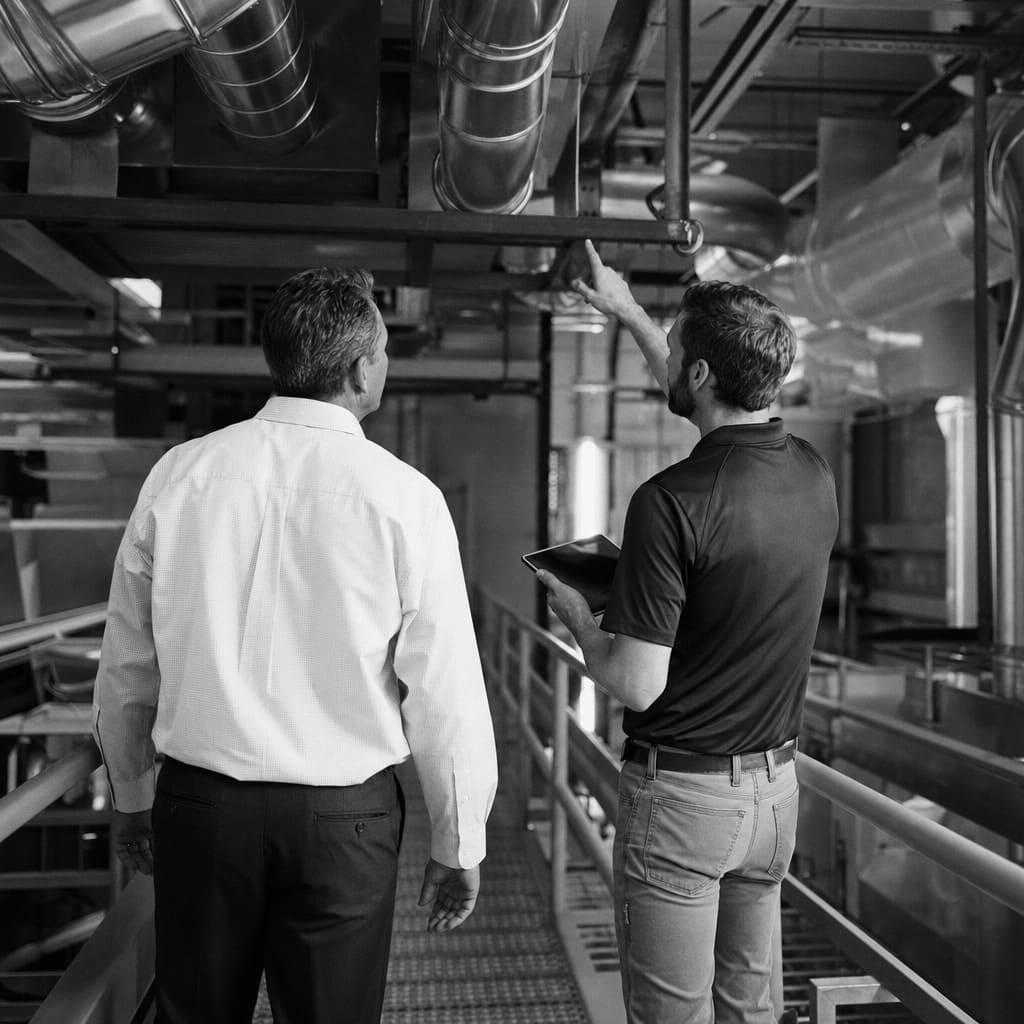
Tell us the building and the problem. Two minutes, no phone tag.

02
Get a scoped proposal
We assess the site, engineer the fix, and put a real price on it.
03
The work gets done
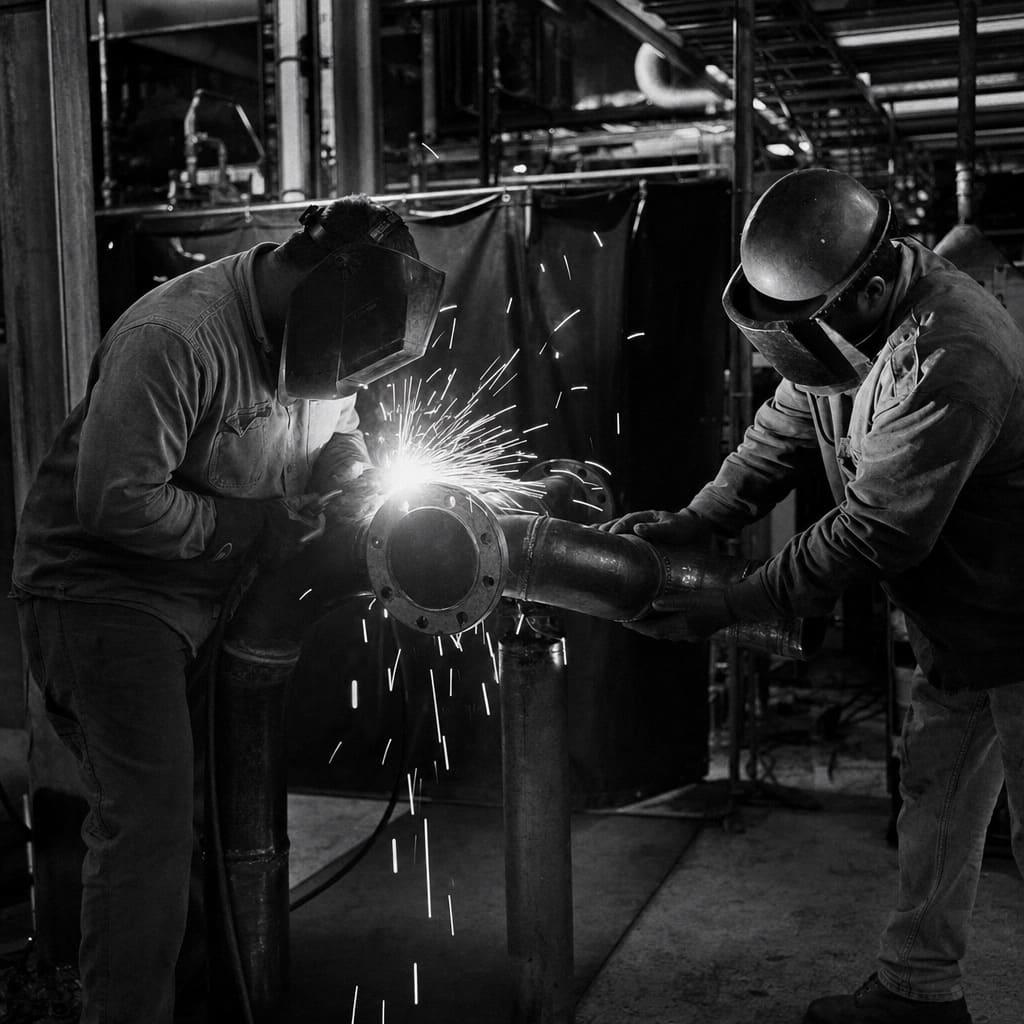
Vetted, insured local crews, with one point of contact from scope to done.
WHY FLUX
One call covers the whole building.
Every trade, one contact
Mechanical, electrical, energy, robots. You deal with one person from scope to done.
Licensed local crews
Insured crews from your market, vetted before they walk your site.
A real price, fast
Free site visit, scoped proposal, and a number you can take to your board.
Built for what's next
Battery storage, EV charging, and facility robots alongside the trades you already buy.
THE CORE TRADES
The trades that keep a building running.
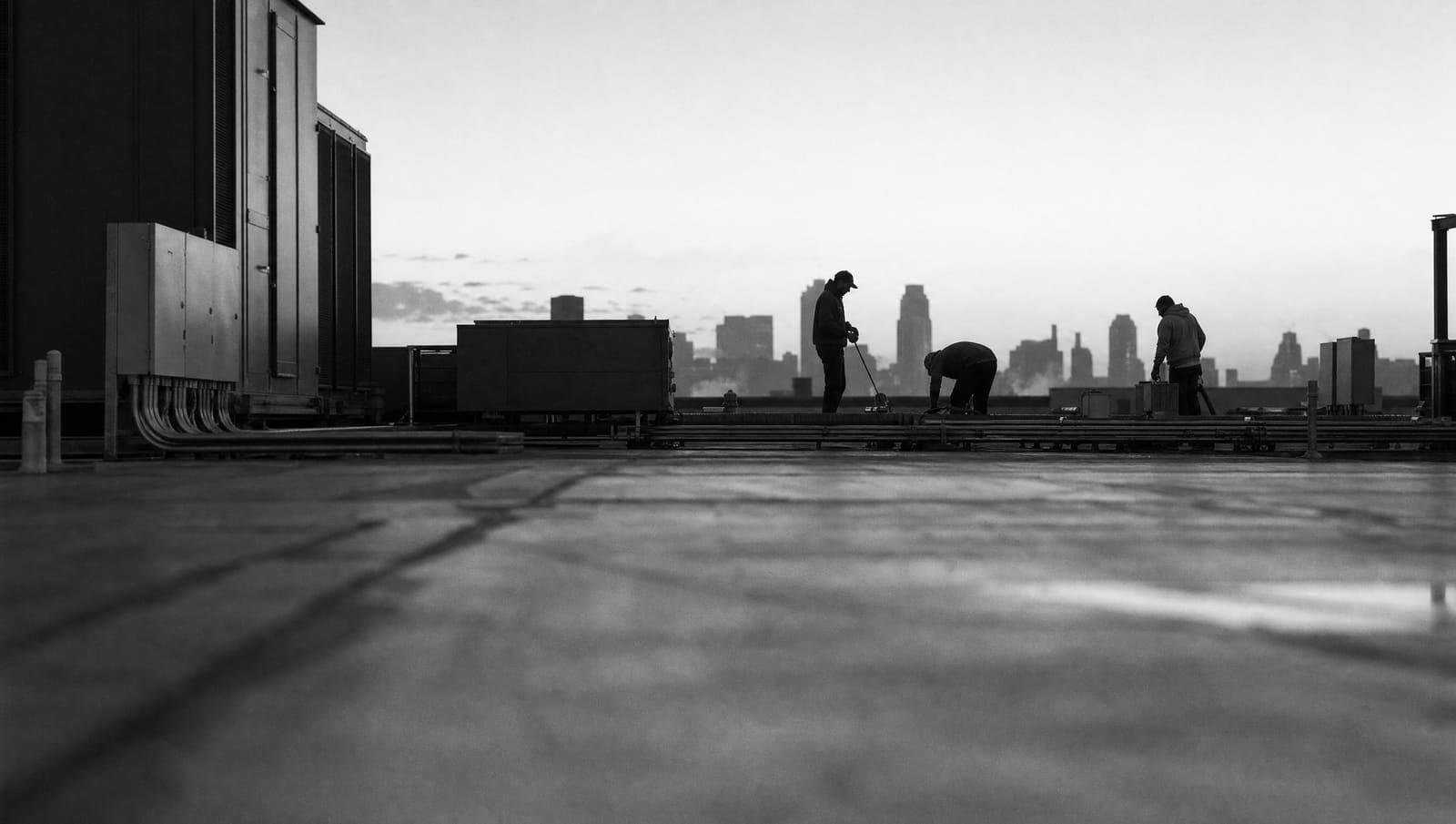
HVAC, plumbing, electrical, roofing. The unglamorous work is most of the job, and slow contractors are where it costs you. Our mechanical crews handle installs and replacements, from rooftop units to boilers, chillers, and process piping.
Maintenance covers the rest: service calls, electricians, roofing, fire and life safety, landscaping, and snow. Not sure where to start? An energy audit finds the waste and funds the fix.
Get in touchWHO WE SERVE
Every kind of commercial building.
Office & corporate
Tenant comfort, uptime, and energy costs under control.
Industrial & manufacturing
Process piping, automation, and the power to run it.
Warehouse & logistics
Docks, floors, charging, and robots that earn their space.
Retail & hospitality
Fast fixes and clean installs that never touch open hours.
Healthcare & medical
Code-first work in buildings that can't go down.
Multifamily & HOA
One contact for the whole property, every trade.
POPULAR PROJECTS
What we get asked for most.
QUESTIONS
Straight answers.
What do commercial contractors charge per hour in Seattle?
We do not quote a blanket hourly rate for a Seattle commercial job. We price the scope. The things that move the number are the permit path through SDCI, whether the building stays occupied and needs after-hours work, how much of the scope is exposed to rain, and whether old permits or violations on the address have to be closed first. Ask us for a scoped number, not a rate card.
What is the difference between a general contractor and a commercial contractor?
A general contractor is the party that holds the contract and runs the trades. A commercial contractor is a general contractor that works on commercial buildings: offices, retail, industrial, and mixed use. In Seattle that matters because commercial jobs run through SDCI's commercial permit paths, and because the work usually happens in a building someone is still operating. We work only on commercial properties.
Who are some good general contractors in the Seattle area?
We are not going to point you to another firm. Judge any Seattle contractor on the same things: can they tell you whether your job is a new business permit or a tenant improvement, will they pull the parcel on the city GIS map and check the Seattle Services Portal for open permits and violations before bidding, and will they name who holds the permit. A contractor who cannot answer those before the contract has not scoped your building.
Do we need a permit for a tenant improvement in Seattle?
If your business alters its current Seattle location without changing the use, the city treats it as a tenant improvement to an existing business. If you move to a different location or expand within an existing commercial building, the city treats you as a new business, which can require several permit types. We confirm which case applies at your address first, because it sets the drawings, the review, and the start date.
GET STARTED
One call away.
Tell us the building and the problem. We bring the plan, the price, and the crew. Site visits are free, always.
MORE SERVICE AREAS