SAN FRANCISCO, CA · MECHANICAL
Commercial mechanical contractors in San Francisco.
We are commercial mechanical contractors in San Francisco, handling HVAC, process piping, building automation, and the permit paperwork that comes with them.
Mechanical work that hits the date.
Whether a build-out needs mechanical from scratch or one system reached its end, the schedule is the job. One request covers plumbing, HVAC, boilers and chillers, and ductwork with the coordination that keeps other trades moving.
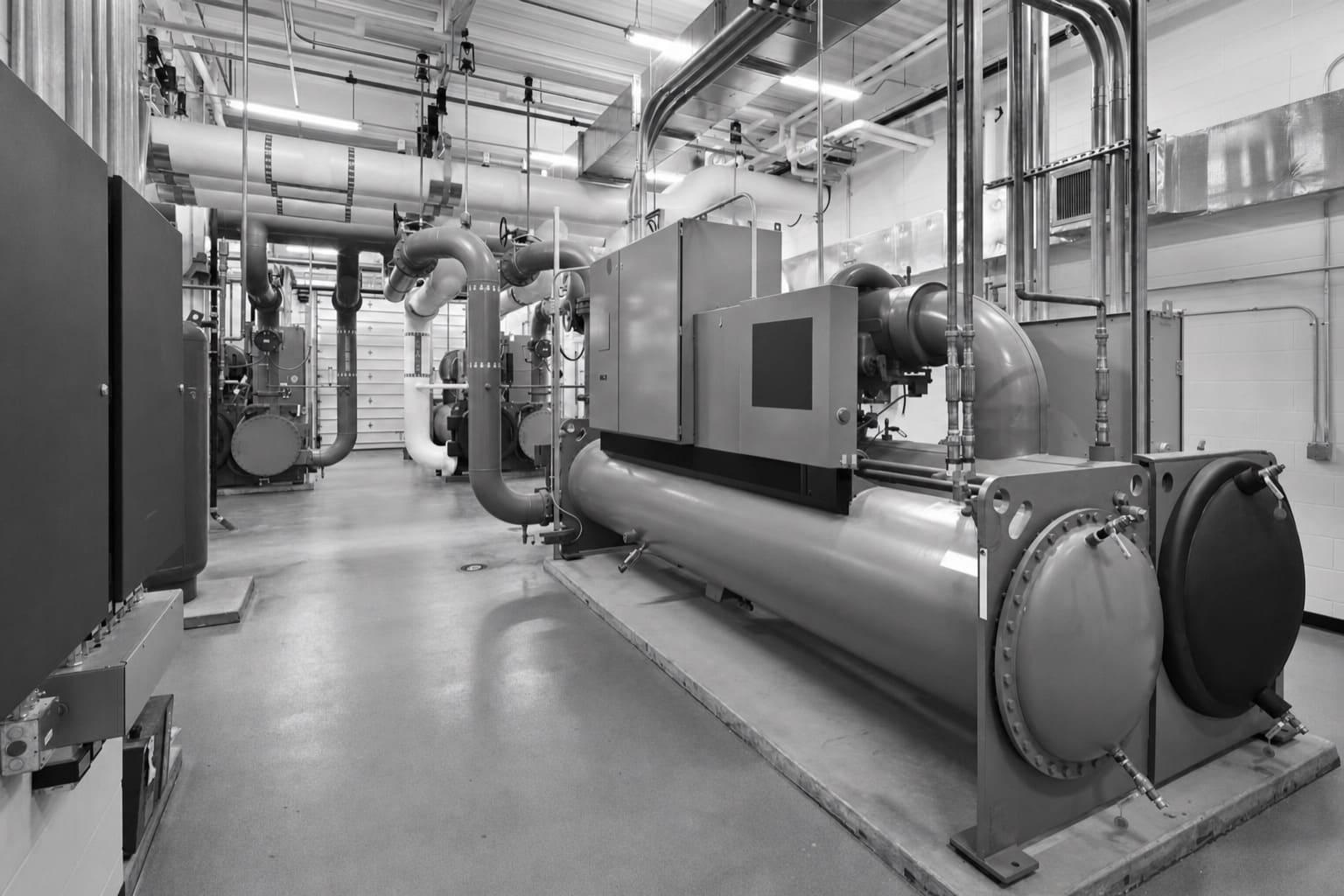
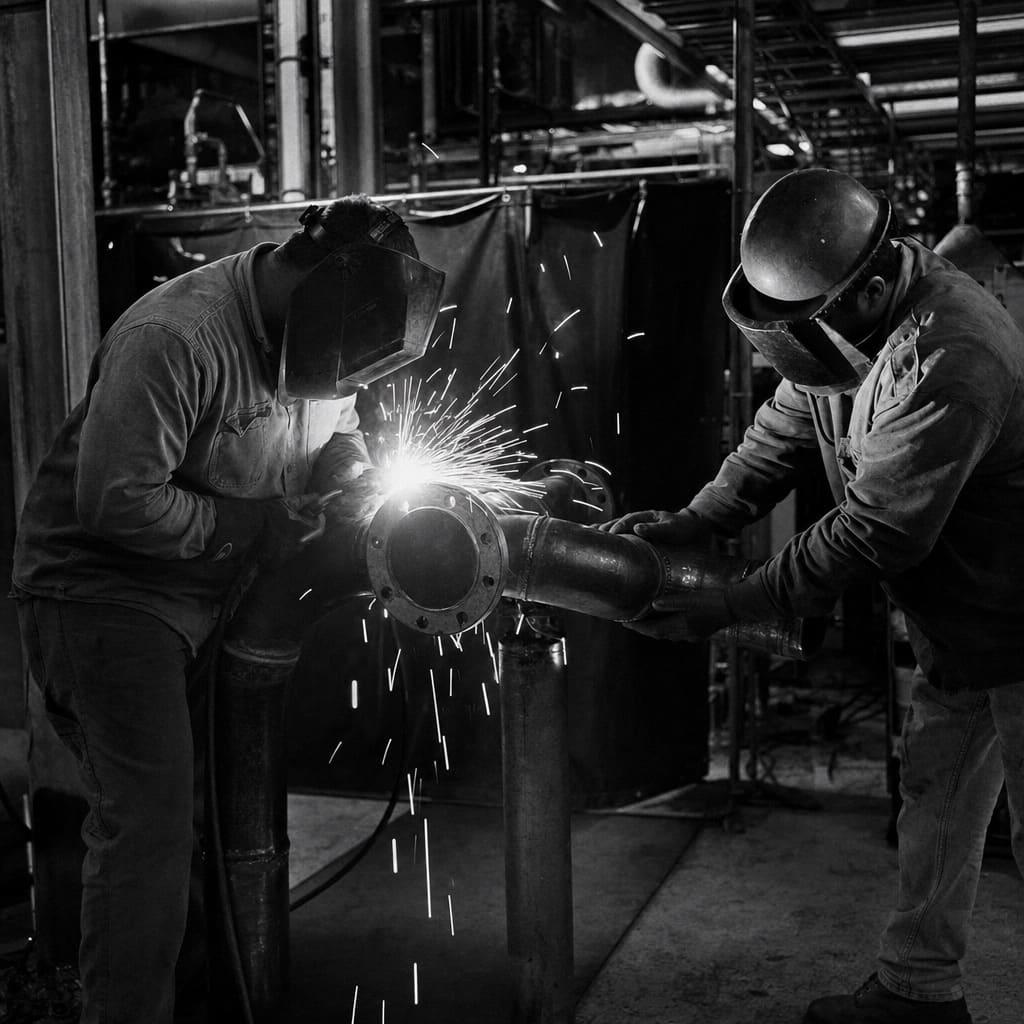
Industrial work is its own discipline: process piping, sheet metal and pipe fabrication, and design-build engineering when the drawings don't exist yet. One point of contact from scope to commissioning, and a number that doesn't move after signing.
START HERE
How mechanical work gets scoped and permitted in San Francisco
Flux Facility is a commercial mechanical contractor in San Francisco. We handle HVAC systems, process piping, and building automation for commercial buildings. We start with a site visit. We record nameplate data, duct layout, thermostat locations, and electrical service capacity. We do not price a job from old drawings. Every building permit application in San Francisco goes to the Department of Building Inspection. DBI reviews it for life safety and building code compliance. The city offers more than one way to apply, based on the project, so we set the permit route before we order equipment. You get a written scope that names the work, the permit path, and who signs off.
Confirm which building department holds your address
Two permit desks serve buildings that people call San Francisco. Inside the city, the Department of Building Inspection reviews every building permit application for life safety and building code compliance, and San Francisco offers more than one way to apply based on the project. Its counter runs Monday through Friday, 8am to 4pm, and closes between noon and 1pm. We confirm the jurisdiction from the street address before we file, because a filing at the wrong desk has to start over.
Pre-bid site survey
What we measure before we quote mechanical work in San Francisco
Equipment nameplate data
RECORD
We write down model, capacity, and voltage on every unit. The nameplate sets the replacement match and tells us whether the electrical service can carry a larger unit or needs work first.
Duct static pressure and airflow
MEASURE
We read static pressure and airflow at the unit and at the zones. A bigger rooftop unit cannot push past undersized supply ducts or unbalanced dampers, so either the duct fix goes in the bid or the tonnage stays put.
Duct leakage testing
TEST
We test duct leakage with calibrated flow hoods and manometers. Where the conditioned air escapes decides whether we seal existing runs or replace them before new equipment lands on the roof.
Code violations from prior installs
COMPLIANCE
We list what earlier installers left behind. DBI reviews the permit for code compliance, so those corrections belong in the scope and the budget now, not in a change order after inspection.
PROJECT PLANNING
Mechanical systems we install and service in San Francisco buildings
HVAC replacement and repair
HVAC
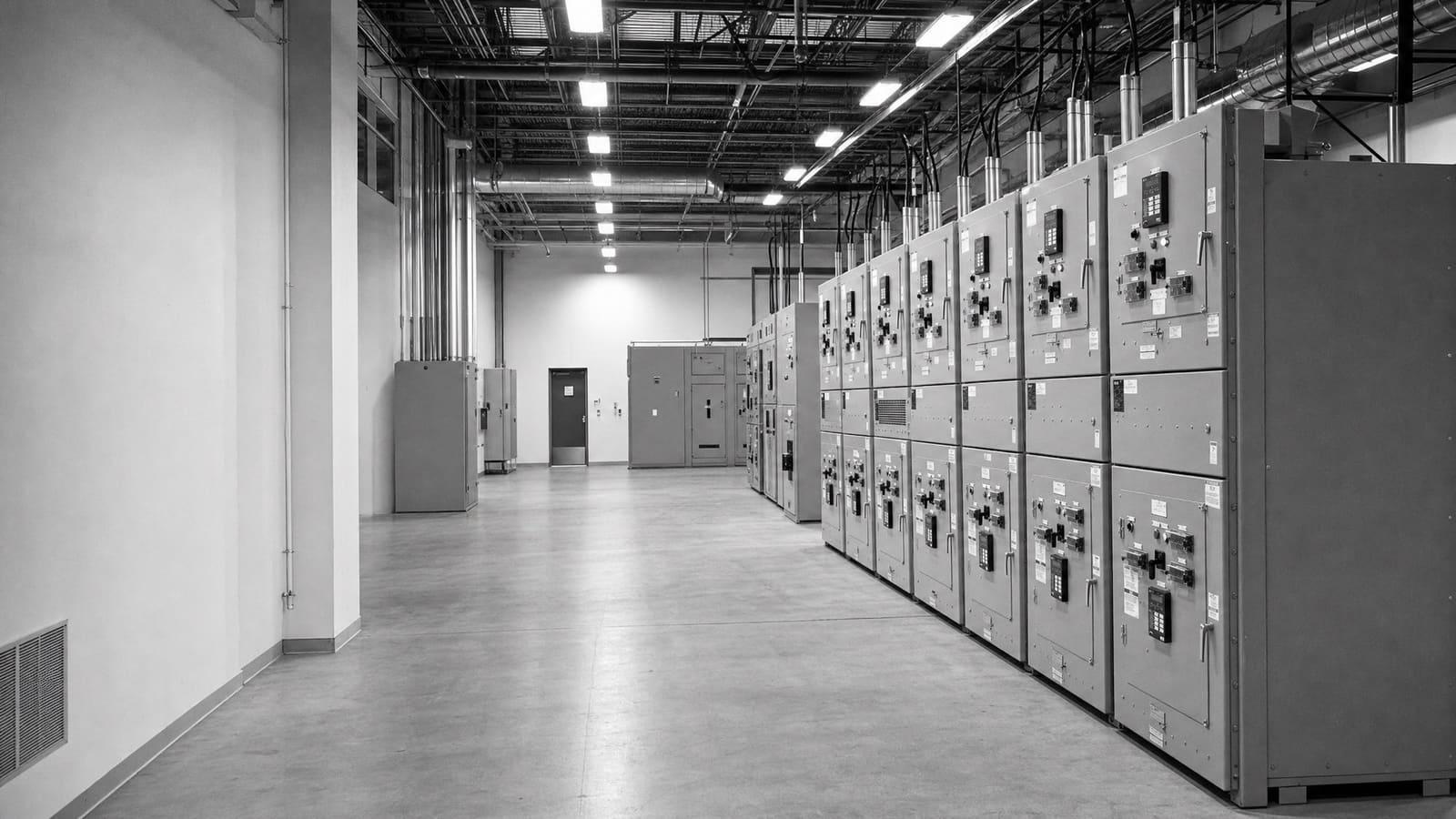
We match equipment to measured loads and to your electrical service. California Title 24 sets efficiency ratings and economizer controls for commercial installations, so equipment selection has to clear that before it gets ordered.
Process piping
PIPING
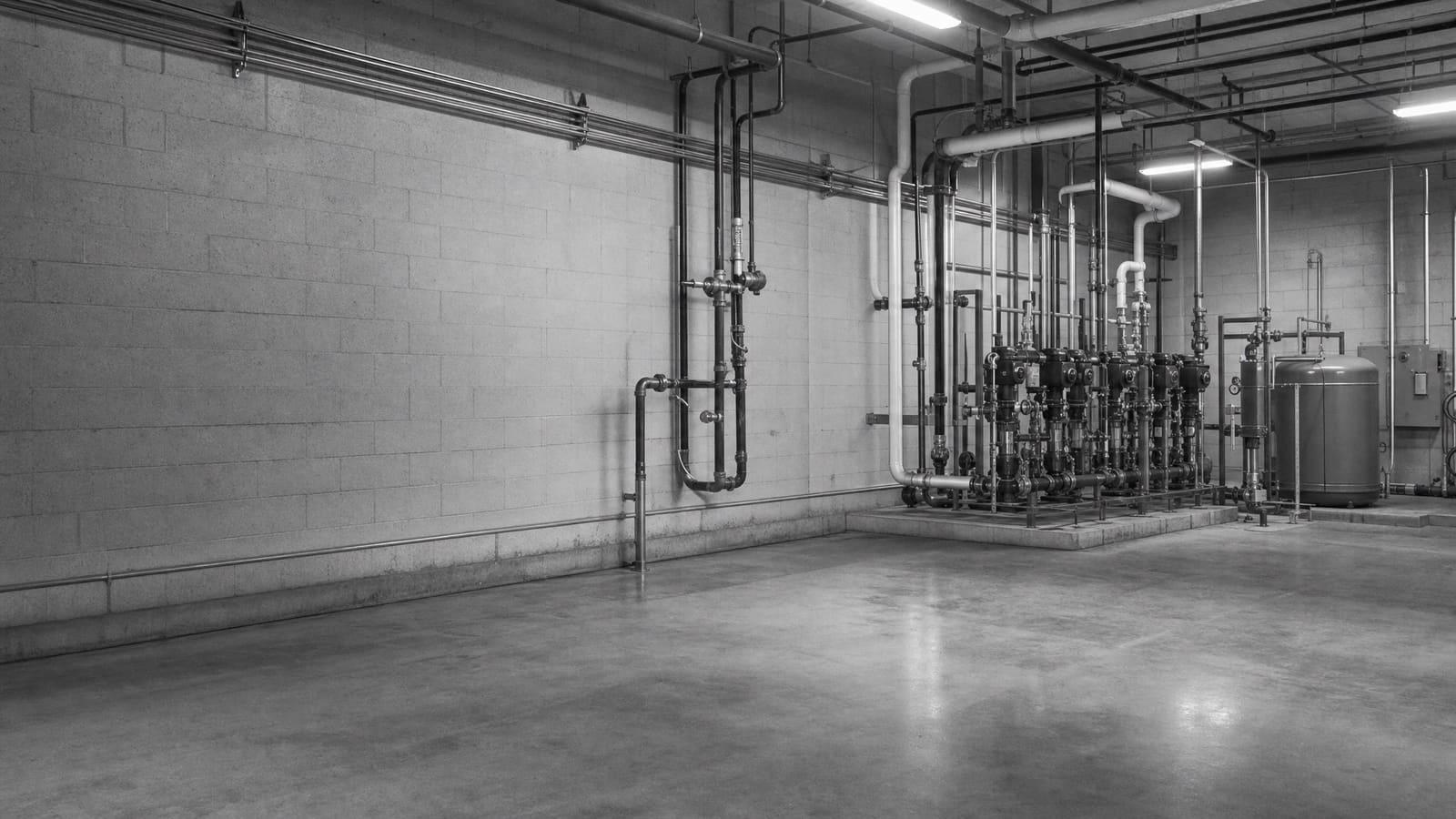
We design and install process piping, select the pipe material for the fluid and pressure it carries, pressure test the system, and hand over the test records. Material choice is a scope decision, not a field substitution.
Building automation
CONTROLS
We integrate controls, set alarm points, and turn on remote monitoring. For a San Francisco operator with several buildings, remote monitoring means one engineer triages alarms instead of driving to each site to read a panel.
Economizer and damper service
TITLE 24
We check linkage, actuators, and sensors so the dampers open when they should and the compressors stay off.
WHAT WE HANDLE
Everything under the mechanical door.
CONSTRUCTION & INSTALLATION
DESIGN & PRECONSTRUCTION
Bid comparison checks
How to compare San Francisco commercial mechanical bids
- Ask whether the bidder field-measured your building or priced from drawings. A measured bid and a drawing bid are not the same number.
- Ask for a written scope that names each unit, each duct correction, and each permit, so the low price is not just a smaller scope.
- Ask which building department the bid assumes for your address, and who pulls and closes the permit.
- Ask how California Title 24 is handled for equipment efficiency and economizer controls, and who prepares that paperwork.
- Ask for airflow and duct leakage readings before and after, so you can confirm the fix worked instead of taking it on faith.
BEFORE YOU BUY
What we hand over at closeout on San Francisco mechanical jobs
- The signed permit and inspection record from the building department that holds your address.
- Pressure test records for every new process piping run, with the test pressure and the hold result.
- Airflow and duct leakage readings taken after the work, printed next to the readings we took before it.
- A nameplate log for installed equipment with model, serial, capacity, and voltage, so the next tech is not guessing.
- The controls points list and monitoring access, so your team sees alarms without calling us first.
ASKED IN SAN FRANCISCO
Common questions about commercial mechanical contractors in San Francisco
How much does a mechanical contractor charge per hour?
PRICING
Rates move with the trade, the shift, and whether the call is planned or after hours. We quote San Francisco work by scope and show labor hours and material lines before you sign.
What is the difference between a general contractor and a mechanical contractor?
ROLES
A general contractor runs the whole project and the other trades. We are the mechanical contractor: HVAC, piping, and controls. On mechanical-only jobs we hold the permit ourselves.
Project in San Francisco?
Tell us the building, exact scope, and target date. Flux will review the request and send the next step.
QUESTIONS
Straight answers.
Who reviews commercial mechanical permits in San Francisco?
The Department of Building Inspection reviews every building permit application for life safety and building code compliance. San Francisco offers more than one way to apply based on the project, so we confirm the route with DBI permit services before we file.
Is that the same permit desk?
No. Its counter is open Monday through Friday, 8am to 4pm, closed between noon and 1pm, and questions go to that division by phone or email. We check the address first.
Can you just swap the rooftop unit and leave our ductwork alone?
Sometimes, but we test first. A 15-ton unit cannot make up for undersized supply ducts or poorly balanced dampers. We measure static pressure and run duct leakage testing, then the bid either includes the duct work or keeps the equipment at a size the ducts can serve.
Do you handle process piping and controls, or only HVAC?
All three. We do HVAC, process piping with material selection and pressure testing, and building automation with system integration and remote monitoring. One contractor holding all three means the piping schedule and the mechanical room schedule do not fight each other.
GET STARTED
Plan it once. Build it right.
Send the plans or the nameplate and get a complete installed price: real scope, real lead times, no surprises on the back end.
MORE SERVICE AREAS