The direct answer
What a complete commercial installation includes
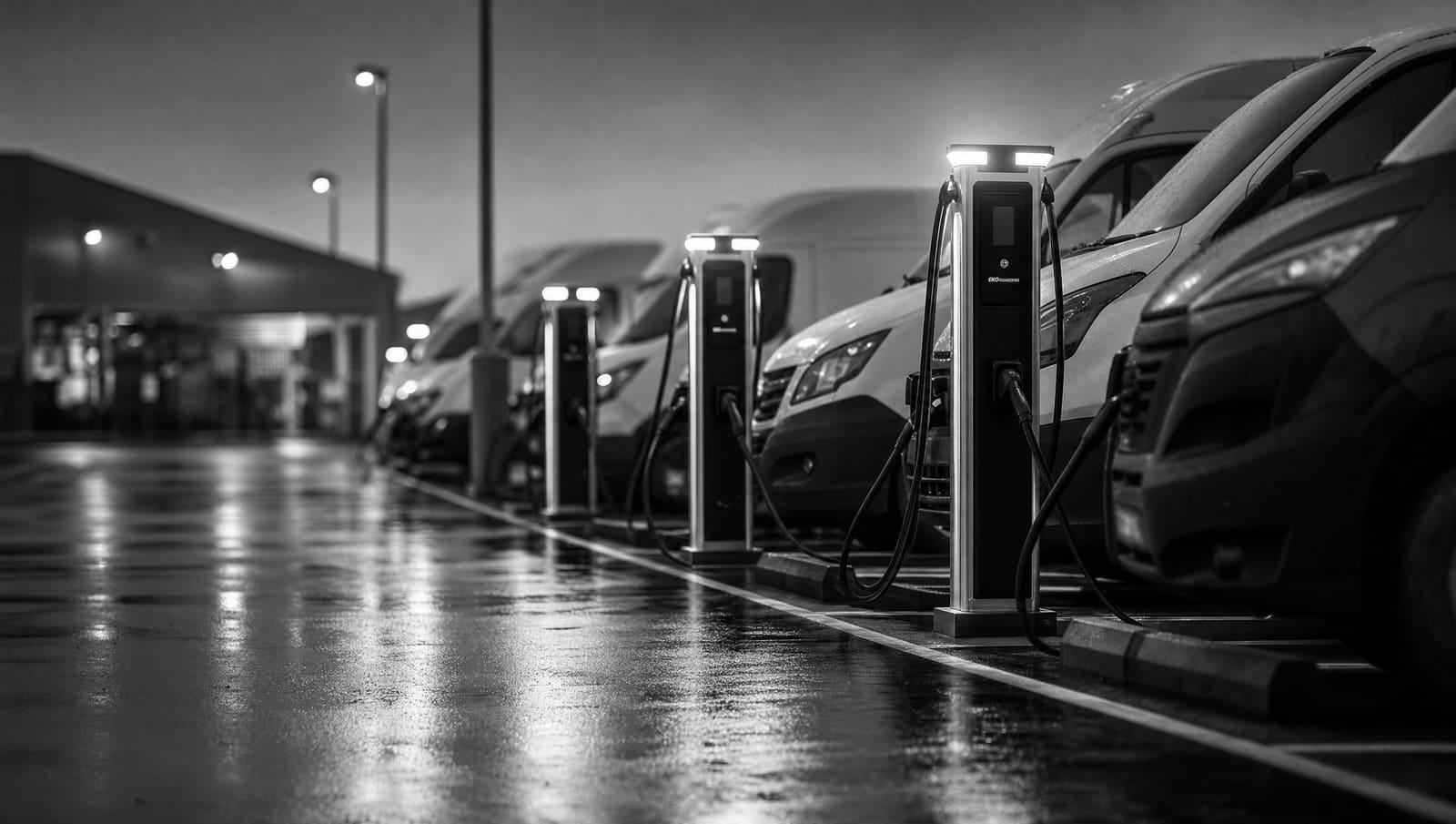
Commercial EV charger installation in Rancho Cordova starts with a site and electrical assessment. The project then moves through charger selection, utility coordination, design, permitting, make-ready construction, equipment installation, inspection, network setup, commissioning, and turnover. Level 2 often suits vehicles parked for hours. DC fast charging serves faster turnover but can require much more power and utility work.
The site review must verify electrical capacity, parking use, cable routes, communications, accessibility needs, expansion plans, and any service upgrades.
Choose the operating model first
Three decisions shape the installation
The right charger is the one that supports how the property works. Begin with the vehicles, their daily travel, and the time they remain parked. Employees who stay for a full shift have a different need than fleet vehicles that must return to service quickly. Public charging adds another layer because access, payment, signage, support, and station visibility affect the driver experience.
Next, decide who may charge and who pays. A workplace may offer charging as an employee benefit, recover energy costs, or assign access by driver group. A fleet may keep every station private and schedule charging around routes. A public host may need pricing, payment processing, usage records, and remote support.
Finally, choose a starting quantity without ignoring growth. Installing spare conduit, panel space, or capacity for later ports may reduce future disruption. That does not mean buying every charger now. It means designing the first phase so the next phase has a practical path.
Build a complete budget
The charger is only one project line
Compare the full installed scope, not the equipment price alone. For a deeper discussion of project variables, see commercial EV charging cost.
Equipment selection
Level 2 and DC fast charging solve different problems
Level 2 charging usually fits workplaces, longer customer visits, overnight parking, and many fleet schedules. The vehicle converts AC power from the building into power its battery can use. A commercial Level 2 station still needs a dedicated electrical design, suitable branch circuits, safe mounting, cable management, and a parking layout that works for drivers. Networked models can control access, track sessions, collect payment, and help manage power across several ports.
DC fast charging moves the conversion equipment outside the vehicle. It can deliver energy more quickly, but the installation plan becomes more demanding. The project may need larger electrical equipment, added cooling or communications needs, a different utility service strategy, and more space for equipment. Fast charging makes sense when quick vehicle turnaround creates real operating value. It should not be selected only because it is faster.
Ask the designer to model the energy each vehicle needs during its actual parking window. A slower station with enough dwell time may complete the job. If vehicles have short stops, tight routes, or heavy daily energy use, DC fast charging may be justified. A mixed design can also work when most vehicles charge slowly and a smaller group needs rapid recovery.

Project complexity
What separates a straightforward project from a difficult one
Two projects using the same charger can require very different construction. Existing capacity, equipment location, parking distance, communications, and utility involvement matter more than the charger box alone.
Lower complexity
Capacity and parking are close together
The building has usable electrical capacity, a clear conduit route, suitable communications, accessible working space, and parking near the electrical equipment. Expansion can use a planned pathway.
Higher complexity
Power or routing needs major work
The project needs service changes, utility equipment, long trenching, pavement repair, new distribution gear, difficult shutdowns, or coordination with other property work.
Site assessment
A useful site review connects vehicles to the electrical system
Begin with operating facts. Record the number of vehicles, arrival and departure times, daily travel, charging frequency, and the minimum energy each vehicle must receive. For public or workplace charging, estimate how long drivers stay and whether charging is a benefit, paid service, or controlled amenity. These facts set a practical power target and port count.
The electrical review should trace power from the incoming service to the proposed stalls. It should examine existing distribution equipment, likely charger loads, meter needs, shutdown constraints, physical working space, and the route for conduit. The parking review should cover stall placement, cable reach, circulation, signage, equipment protection, lighting, communications, and future expansion. Applicable accessibility, code, permitting, and inspection requirements must be confirmed for the actual design.
The review should also identify decisions outside the installer’s direct control. Utility capacity, service changes, equipment lead times, property approvals, and inspection scheduling may affect sequence and timing. Put those dependencies in the proposal instead of hiding them in assumptions.
Leave the site review with a defined basis of design
The record should show vehicle needs, proposed ports, power per port, load controls, equipment locations, cable routes, utility questions, approval needs, expansion provisions, and open risks.
Ownership and operation
Decide who controls the stations after turnover
Commercial charging continues to create work after construction ends. Someone must manage driver access, pricing rules, station status, software accounts, support calls, warranties, repairs, and electrical maintenance. These duties can stay with the property owner, pass to a service provider, or be divided under a clear agreement.
Networked charging can support payments, access groups, session data, remote monitoring, and load controls. It may also bring recurring fees and a dependence on communications and software support. Simpler equipment can reduce those layers, but it may provide less control and less operating data. Ask what still works if the network connection fails, who owns the data, how pricing changes are made, and how equipment can be moved to another network.
Owner controlled
Keep policy and equipment decisions in-house
Define which staff manage access, pricing, reporting, driver support, vendor accounts, warranties, and repair approvals.
Managed service
Assign operating duties by contract
Compare fees, service levels, data access, payment handling, response times, parts coverage, contract term, and exit rights.
Procurement and phasing
Buy a working charging system, not separate pieces
A sound procurement package ties charger hardware to electrical design, construction, networking, commissioning, and ongoing support. Confirm connector compatibility with the vehicles expected to use the site. Define mounting, cord length, environmental rating, communications method, payment features, warranty, replacement process, and software term. If the organization requires a formal solicitation, give every bidder the same site information and operating requirements.
Phasing can protect capital while keeping future work practical. The first phase may install only the ports supported by near-term demand while reserving panel space, conduit, pull points, or equipment locations for growth. Ask the engineer to show what future additions the design can support and which changes would still require utility review. Load management may allow several ports to share available capacity, but its operating limits must match vehicle schedules.
Review lifetime obligations before award. Network subscriptions, communications, payment fees, preventive maintenance, replacement parts, vandalism exposure, electricity rates, and demand-related charges can affect the ownership decision. Incentives and tax credits are time-sensitive. The federal infrastructure tax credit uses location eligibility rules, so verify the property and current requirements before treating any benefit as part of the budget.
Quote comparison
Five things every comparable proposal should show
Ask bidders to use the same operating assumptions and separate included work from allowances, exclusions, and owner responsibilities. A low total is not comparable if major scope is missing.
01
A clear basis of design
List vehicles, dwell times, port count, charger power, access policy, networking, and planned expansion.
02
The full electrical and civil scope
Show panels, protection, conduit, trenching, concrete, paving repair, mounting, signage, communications, and site protection.
03
Utility, permit, and inspection responsibilities
Name who prepares applications, pays fees, answers corrections, coordinates inspections, and manages utility dependencies.
04
Equipment, software, and operating costs
Identify models, warranties, subscriptions, payment fees, connectivity, data access, load controls, and renewal terms.
05
Schedule, exclusions, and turnover requirements
State milestones, lead-time assumptions, shutdowns, commissioning tests, training, closeout documents, and post-installation support.
Keep planning locally
Related EV charging pages in Rancho Cordova
Get a defensible number
Price the equipment and the building together.
Send the address, operating target, and target opening date. Flux will identify what must be verified before the project can be priced.
Price my chargersQuestions
Straight answers.
What happens first in a commercial EV charger installation?
Start with vehicle needs and a site assessment. The team should confirm parking time, required energy, proposed port count, electrical capacity, equipment locations, cable routes, communications, expansion needs, and approval dependencies before final equipment selection.
Should a commercial property install Level 2 or DC fast chargers?
Choose based on required energy and parking time. Level 2 often works when vehicles remain parked for hours. DC fast charging fits short turnaround windows or heavy energy needs, but it can require much larger electrical and utility infrastructure.
Can load management avoid an electrical service upgrade?
It may help when several chargers can share available capacity or reduce output during building peaks. It is not a universal substitute for an upgrade. The design must prove that managed power still gives each vehicle enough energy before departure.
What should be included in the installation quote?
The quote should cover design assumptions, electrical and civil work, chargers, mounting, communications, utility coordination, permit responsibilities, inspections, commissioning, training, warranties, software fees, exclusions, schedule dependencies, and turnover documents.
Do commercial chargers need a network connection?
Not always. Networking is useful for access control, payments, usage records, remote monitoring, and load management. A private fleet or simple employee installation may need fewer features. Compare those benefits with subscription, communications, and support obligations.
How should a business plan for more chargers later?
Ask the design team to identify future port locations, electrical capacity limits, reserved panel space, conduit routes, pull points, communications, and utility triggers. Document what can be added under the first design and what will require new review.
Are incentives available for a Rancho Cordova commercial project?
Programs, tax rules, funding, deadlines, and location requirements can change. The federal infrastructure tax credit uses a location eligibility test. Verify the property and all current program terms before including an incentive in the approved project budget.
What happens during commissioning and turnover?
The installer should energize and test every port, verify communications and access rules, confirm load controls, complete required inspections, record equipment information, train responsible staff, and provide warranties, manuals, drawings, accounts, and support contacts.
Sources used for this guide
- [1]afdc.energy.gov — Alternative Fuels Data Center: Procurement and Installation for Electric Vehicle Charging Infrastructure
- [2]betterbuildingssolutioncenter.energy.gov — DOE Better Buildings Commercial EV Charging Infrastructure Guide
- [3]driveelectric.gov — Public electric vehicle charging infrastructure playbook · Joint Office of Energy and Transportation
- [4]energy.gov — DOE Federal Workplace Charging Program Guide