The direct answer
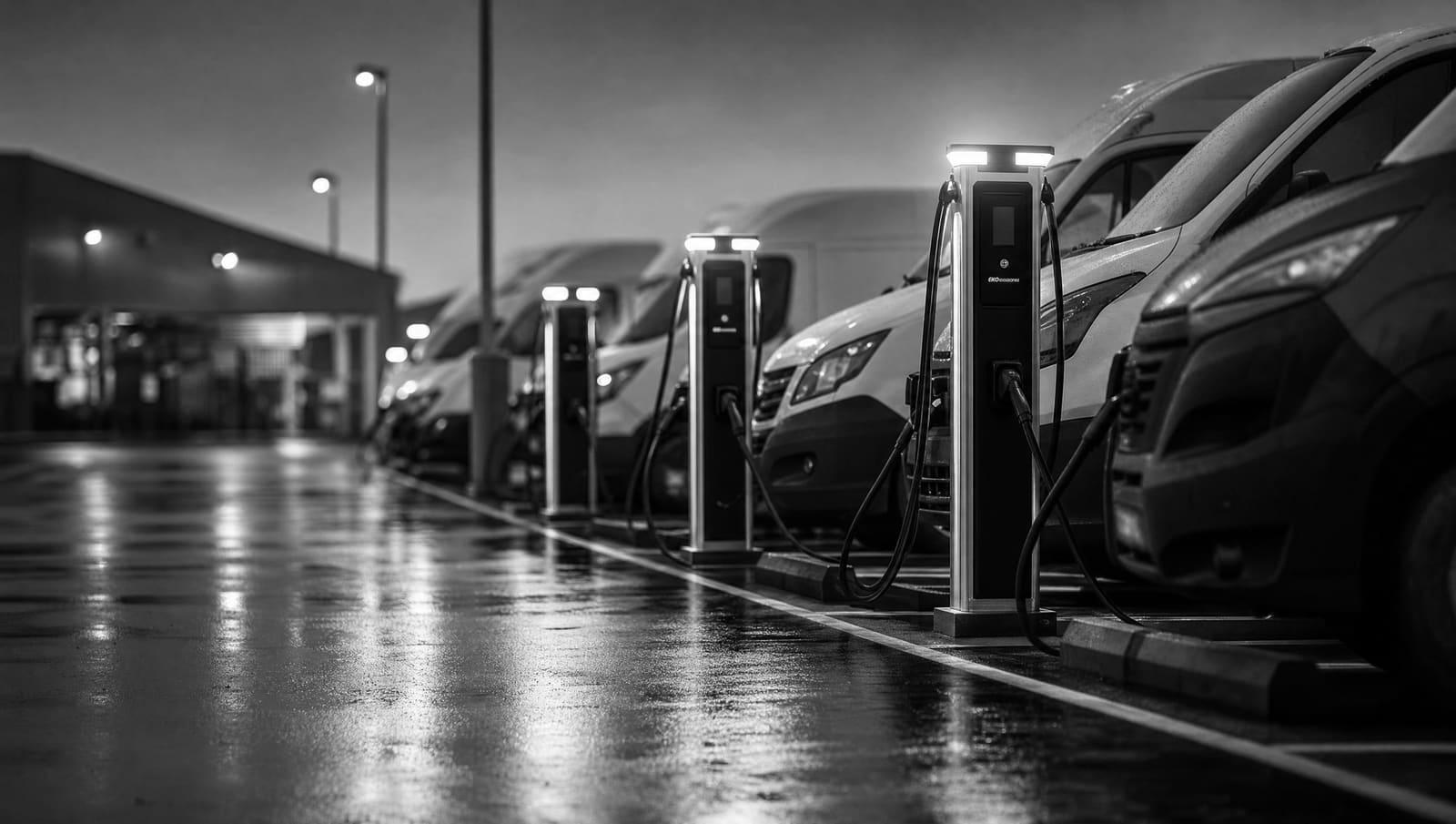
Commercial EV charger installation in Pearland.
A complete commercial installation starts with a site and electrical assessment. It then moves through equipment selection, load planning, utility coordination, design, permitting, construction, charger setup, inspection, commissioning, and staff turnover. Level 2 usually serves vehicles parked for hours. DC fast charging supports shorter stops but can require a much larger electrical and utility scope.
The site review must verify electrical capacity, parking dwell time, cable routes, charger access, communications, and room for future stations.
Start with operations
Choose charging around how the property works
The right charger is not simply the fastest unit available. It is the unit that can deliver the needed energy while each vehicle is parked. Begin with users, arrival patterns, daily mileage, parking duration, and the number of vehicles that may charge together.
Level 2 equipment connects to commercial building power and lets the vehicle handle AC-to-DC conversion. It is often a practical fit when employees, tenants, fleet vehicles, or visitors remain parked for several hours. DC fast charging performs that conversion outside the vehicle. It can support quicker turnover, but its higher power demand changes the service, utility, equipment, and construction discussion.
Also decide whether drivers will pay, whether access is public or restricted, and whether the owner needs usage records. These choices affect networking, communications, software, signs, station ownership, and ongoing fees. Make them before design so the electrical plan and operating plan support each other.
Scope before price
What changes an installation quote
A useful budget separates charger hardware from the electrical, civil, communications, and operating work needed to make it usable. Review these lines before comparing totals or reading commercial EV charging cost guidance.
Equipment selection
Level 2 and DC fast charging create different projects
Level 2 charging is commonly considered for workplaces and multifamily properties. It can also serve fleets or visitors when vehicles remain on site long enough to receive the energy they need. A Level 2 project may use wall-mounted or pedestal equipment, dedicated circuits, panels, conduit, communications, and network controls. Several ports can still create a meaningful building load, so the design must study how many vehicles could charge at once.
DC fast charging is commonly considered for public charging and operations that need faster vehicle turnover. The charger supplies DC power directly to the vehicle battery. That changes far more than the cabinet. The project may need substantial power distribution equipment, a new service arrangement, utility work, equipment pads, protective barriers, cooling clearances, and a more detailed commissioning plan.
Do not select by the highest nameplate rating alone. Actual charging also depends on the vehicle, connector compatibility, battery condition, and the power the site can deliver. Ask the designer to show how the proposed output supports the operating need. A lower-output plan with enough ports may serve a long-dwell parking lot better than one high-power unit. A fast-turn fleet may reach the opposite conclusion.

Complexity check
Why similar charger counts can produce different scopes
The charger count tells only part of the story. Existing power, equipment location, parking layout, utility needs, communications, and expansion plans determine how much work sits behind each port.
Lower complexity
Capacity and parking are already aligned
The building has usable distribution capacity, the chargers sit near the electrical source, communications are available, and construction avoids difficult surfaces. The quote should still include design, approvals, protection, testing, and turnover.
Higher complexity
The site needs new infrastructure
Long cable routes, pavement work, limited panel capacity, service changes, fast charging, new metering, or future expansion can add design and coordination. These items should appear as defined scope, not late allowances.
Site assessment
Verify the building and parking lot before choosing hardware
A commercial EV charging review should begin at the electrical service and end at each proposed space. Record service and panel information, available distribution paths, meter locations, nearby equipment, and the distance to parking. Look for walls, occupied areas, pavement, drainage features, landscaping, and other conditions that could affect routing or restoration.
Then study how the parking area operates. Confirm who uses each space, typical arrival and departure times, whether spaces can be reserved for charging, and how cables will reach vehicles without creating conflicts. Plan for signs, physical protection, lighting, security, and accessible use as part of the finished site.
Connected stations also need a reliable communications plan. Do not assume that a signal visible on a phone will support every charger after cabinets, vehicles, and building materials are in place. Identify whether the station will use cellular, wireless, or another connection and who will activate it.
Finally, test the first phase against the long-term plan. Spare pathways, room in distribution equipment, and an expansion layout can reduce repeat disruption. They should be intentional design choices, not vague promises that the site is future-ready.
Ask for an assumptions record
The site report should state the observed electrical conditions, proposed charger locations, routing assumptions, communications plan, operating need, expansion concept, and items that still require utility or authority review.
Operating model
Decide who owns the equipment and the charging experience
Commercial charging continues after construction ends. The owner needs clear responsibility for station hardware, network accounts, driver support, payment settings, energy reporting, repairs, and software renewals. These duties may stay with the property, be assigned to an operator, or be divided among several parties.
Use the business goal to guide that choice. A workplace may want simple access control and usage records. A public station may need payment processing, pricing rules, customer support, and listing information. A fleet may care most about vehicle readiness, alerts, and charging schedules. Put these needs in the procurement documents so bidders price the same operating outcome.
Owner-controlled
More control, more internal responsibility
The property controls equipment and policy but must assign staff or vendors to manage accounts, drivers, maintenance, data, and software.
Managed service
Simpler administration with contract dependencies
A provider may handle more daily tasks. Review service terms, response duties, recurring charges, data access, and what happens if the relationship ends.
Procurement and phasing
Buy a working system, not a row of charger boxes
A commercial charging proposal should connect design, construction, equipment, activation, and operations. If those pieces come from different firms, define the handoff between them. State who supplies stamped documents when required, submits permits, coordinates with the utility, buys chargers, installs communications, configures the network, schedules inspections, and closes outstanding items.
Order equipment after compatibility and site requirements are confirmed. Check the connector strategy, mounting method, cable reach, communications method, network functions, warranty process, and delivery schedule. The cheapest hardware choice can become difficult to operate if it cannot support access rules, payment, reporting, or service needs.
For phased work, separate what must be installed now from what is only planned. A sound first phase can include pathways, distribution space, or site layout provisions for later ports. Yet future capacity still depends on the electrical and utility conditions that exist when expansion occurs. Ask the design team to document the assumed final charger count and power demand.
Compare total ownership duties as well as construction scope. Include network subscriptions, payment administration, inspections, preventive care, repairs, replacement planning, and staff time. Review those items beside the initial project budget rather than after launch.
Compare proposals
Five things every comparable quote should show
Do not compare only the bottom line. Require each bidder to identify the same project boundaries, assumptions, exclusions, operating features, and turnover result.
01
A defined charging plan
Show users, port count, charger type, output, access rules, networking, and the operating reason behind the choice.
02
A complete electrical and civil scope
List panels, circuits, conduit, trenching, pads, mounting, protection, signs, communications, restoration, and any assumed service work.
03
Named coordination responsibilities
State who handles design, utility contact, permit submission, inspections, equipment delivery, network activation, and unresolved field conditions.
04
Commissioning and turnover requirements
Require testing at every port, account setup, staff instruction, warranties, manuals, settings, and final project records.
05
A schedule with real dependencies
Separate design, approvals, utility work, procurement, construction, inspection, activation, and owner decisions that can affect completion.
Keep planning locally
Related EV charging pages in Pearland
Get a defensible number
Price the equipment and the building together.
Send the address, operating target, and target opening date. Flux will identify what must be verified before the project can be priced.
Price my chargersQuestions
Straight answers.
What does commercial EV charger installation include?
A complete scope includes the site and electrical assessment, charging plan, equipment selection, utility coordination, design, permitting, electrical and civil construction, charger mounting, network setup, inspections, commissioning, training, and turnover documents. The quote should clearly identify who owns each task.
Should a commercial property choose Level 2 or DC fast charging?
Choose based on how much energy vehicles need and how long they remain parked. Level 2 often fits workplaces, long-dwell visitors, multifamily parking, and some fleets. DC fast charging fits faster turnover but can create a much larger electrical, utility, equipment, and construction project.
Can the existing electrical service support EV chargers?
That requires a site-specific electrical review. The assessment should examine the existing service, panels, distribution equipment, current building demand, charger output, and the number of vehicles expected to charge together. Utility input may be needed when new service or metering work is being considered.
Do commercial chargers need to be networked?
Not every use case needs the same network features. Networking may be needed for payment, access control, usage records, alerts, remote management, or energy reporting. Decide which functions matter before selecting equipment, and include communications coverage and recurring fees in the proposal.
How should a business plan for more chargers later?
Document the expected future port count, parking layout, and power demand during the first design. Consider spare pathways, distribution space, equipment locations, and a staged operating plan. Future-ready claims should name the infrastructure included now and the work still expected in a later phase.
What should happen during EV charger commissioning?
Commissioning should confirm that each port is energized, communicates correctly, starts and completes a charging session, and follows the intended access or payment settings. Turnover should also include account access, staff instruction, warranties, manuals, final records, and a clear service contact.
Are tax credits or incentives available for a Pearland project?
Eligibility is time-sensitive and can depend on the exact address, project details, and current program rules. Verify any federal, state, utility, or local opportunity before treating it as part of the budget. A proposal should separate confirmed support from incentives that remain under review.
How do we compare commercial EV charging bids?
Give each bidder the same operating requirements and ask for the same scope breakdown. Compare charger output, electrical work, civil work, utility assumptions, networking, permits, commissioning, warranties, recurring fees, exclusions, schedule dependencies, and responsibility for resolving field conditions.
Sources used for this guide
- [1]afdc.energy.gov — Alternative Fuels Data Center: Procurement and Installation for Electric Vehicle Charging Infrastructure
- [2]betterbuildingssolutioncenter.energy.gov — DOE Better Buildings Commercial EV Charging Infrastructure Guide
- [3]driveelectric.gov — Public electric vehicle charging infrastructure playbook · Joint Office of Energy and Transportation
- [4]energy.gov — DOE Federal Workplace Charging Program Guide