Direct answer
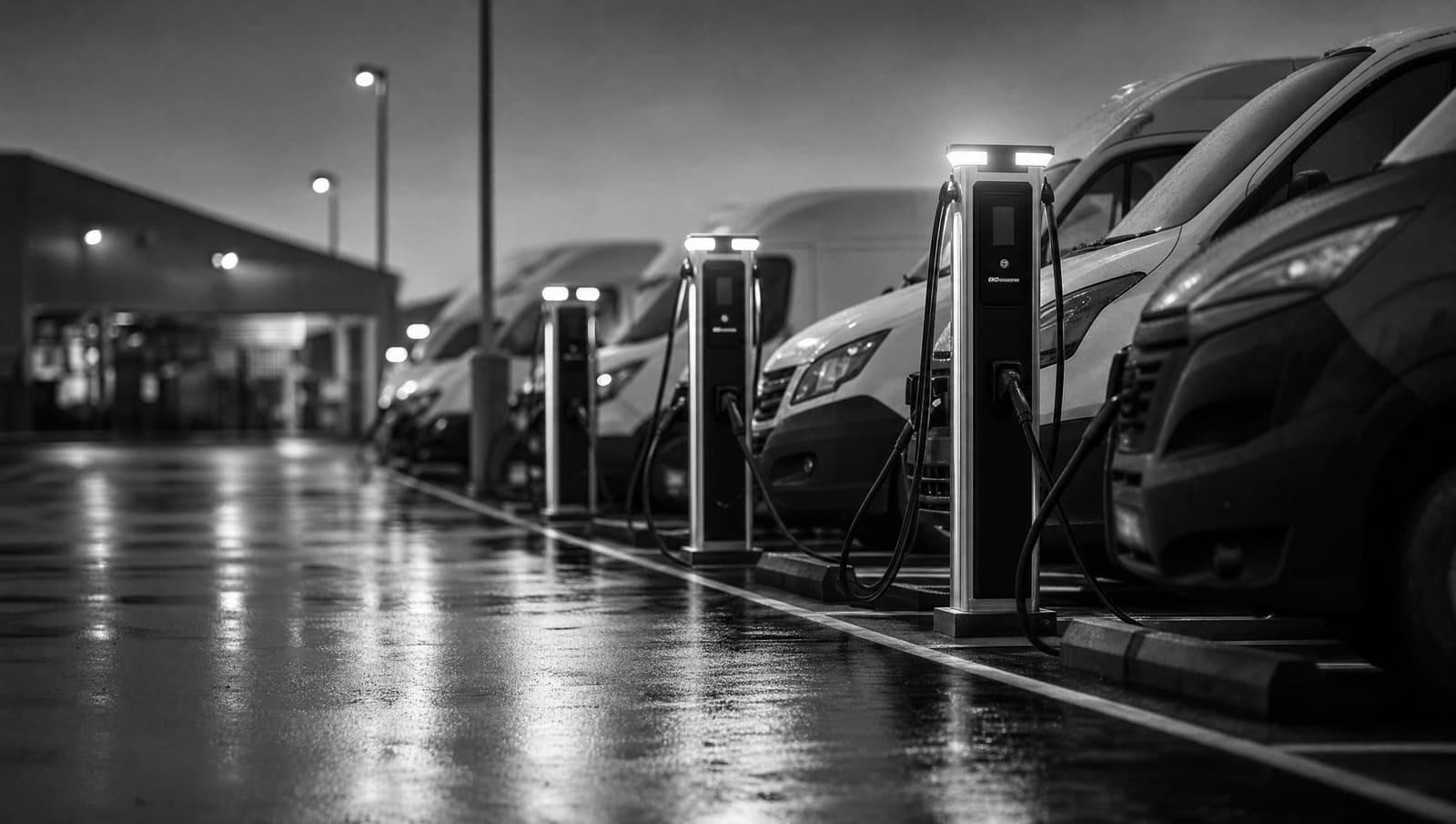
Commercial EV charger installation in Palm Bay.
A complete commercial installation covers the site and electrical assessment, charger selection, utility coordination, design, permitting, construction, network setup, testing, and turnover. Level 2 charging often connects through a building distribution system. DC fast charging can require much larger electrical equipment, added utility work, and a longer development path.
The site review must verify available power, parking use, cable routes, accessibility needs, communications, drainage exposure, and room for future stations.
Start with operations
Choose charging around the vehicles, not the hardware
The best charger is the one that supplies enough energy before each vehicle leaves. Begin with who will charge, how long vehicles remain parked, and how charging access will be controlled. Workplace and other long-dwell parking often fit Level 2 equipment. Public sites may consider Level 2 or DC fast charging. Fleets need a plan based on arrival times, departure times, daily energy use, and the number of vehicles that must charge together.
Power alone does not define a good project. A faster charger can increase electrical and utility requirements without creating more value when vehicles remain parked for hours. A lower-power system can also fail if fleet vehicles return nearly empty and leave again soon. Build a simple operating profile before requesting equipment prices. That profile gives the engineer, contractor, utility, and network provider the same target.
Quote drivers
Where installation scope can change
Equipment is only one part of the project. Review the complete installation cost by scope line so charger prices do not hide major electrical, civil, utility, or operating work.
Equipment choice
Level 2 and DC fast charging create different projects
Level 2 equipment uses alternating current from the building. The vehicle converts that power for its battery. This approach commonly fits workplace, resident, guest, and other parking where vehicles remain for meaningful periods. The design still must address circuit capacity, panels, protection, conduit, mounting, cable reach, communications, and simultaneous demand.
DC fast equipment converts power outside the vehicle and delivers direct current to the battery. Its higher power can support short stops or demanding fleet schedules, but it can change the whole project. The design may need larger conductors, switchgear, dedicated distribution equipment, cooling provisions, utility upgrades, and a different equipment location. Those requirements should be tested before a charger is ordered.
Connector support also matters. Confirm the vehicles that will use the site now, the vehicles expected later, and how adapters or multiple connector types would affect daily use. The charger nameplate is a maximum, not a promise that every vehicle will accept that rate. Vehicle limits, battery condition, shared power, and site controls can all affect a charging session.

Complexity check
What separates a simpler installation from a major infrastructure project
Two projects with similar charger counts can require very different work. The dividing line is often existing capacity, routing, utility involvement, and the charging power required at the busiest time.
Lower complexity
Existing capacity and a clear route
A project is easier to define when suitable distribution capacity is confirmed, parking is near the electrical source, communications are available, and construction avoids difficult paved crossings.
Higher complexity
New capacity or high-power charging
Complexity rises when the site needs utility upgrades, new switchgear, long underground routes, extensive surface restoration, coordinated shutdowns, or DC fast charging equipment.
Site assessment
A useful site review turns a charger idea into a buildable scope
The assessment should start at the electrical service and end at each proposed charging space. The reviewer should document service information, distribution equipment, panel space, relevant loads, meter locations, and possible connection points. A formal load study may be needed before the design can confirm how much charging the building can support.
The parking review should measure real routing distances and identify pavement, landscaping, drainage paths, existing underground systems, equipment clearances, mounting areas, lighting, signage, security, and accessible use. It should also consider whether cables can reach vehicles without crossing walking paths or inviting damage.
For networked chargers, confirm how the stations will communicate. A nearby building network does not automatically mean a dependable signal at the parking space. The operating team should also decide whether drivers need payment, authentication, reservations, energy reporting, or remote support.
The result should be a written basis of design. It should state the intended users, charger type, initial port count, assumed charging schedule, power strategy, likely utility involvement, construction approach, and expansion plan. That document lets bidders price the same project.
Ask for assumptions in writing
If capacity, routing, utility work, communications, or surface restoration remains unverified, the proposal should identify the allowance, exclusion, or next study needed.
Ownership and operation
Decide who controls the stations after construction
Commercial charging includes hardware, software, electrical infrastructure, parking operations, and driver support. Ownership can be direct, service-based, or divided among several providers. The right structure depends on how much control the facility wants and who will handle recurring work.
Before procurement, assign responsibility for network accounts, electricity, pricing, refunds, driver questions, preventive maintenance, repairs, warranties, replacement parts, cellular service, software subscriptions, and utilization reporting. Public charging may need payment and clear access rules. Workplace or fleet charging may favor private authentication and simpler billing.
Request the software terms before selecting hardware. Confirm contract length, data access, payment processing, remote controls, support hours, update policies, and what happens if the network agreement ends. A charger should not become hard to operate because ownership and account access were left unresolved.
Owner controlled
More control, more responsibility
The facility chooses equipment and operating policies, holds key accounts, and directly manages vendors, maintenance, software, and future changes.
Service supported
Simpler administration, added terms
A provider may manage software or support, but the buyer should review fees, service levels, data rights, renewal terms, and exit conditions.
Phasing and procurement
Build the first phase without blocking the next one
A phased project should separate present demand from the long-term plan. Show the first chargers, the expected final port count, and the electrical capacity reserved for growth. The design can then evaluate larger raceways, spare conduit, equipment space, future pads, or controls that share available power. These choices may reduce later excavation and disruption, but they should be priced separately so the owner can judge their value.
Managed charging can limit or schedule demand across several ports. It may help a site serve more vehicles without allowing every charger to draw its maximum power at once. The design must still show how the control system works, what happens if communications fail, and whether every vehicle can receive the required energy before departure.
Order equipment only after the electrical concept, connector needs, network terms, and installation environment are confirmed. Verify delivery assumptions and approved substitutions in the contract. If incentives or tax treatment could affect procurement, check current eligibility, location rules, deadlines, and documentation with the responsible program and tax professionals before relying on savings. Programs and credits can change, so they should not replace a sound project case.
Comparable bids
Five things every installation quote should show
A low total is not useful when major work is missing. Give each bidder the same operating profile and site information, then compare these five parts.
01
Defined equipment and quantities
List ports, power, connectors, mounts, cables, network features, warranties, substitutions, and delivery assumptions.
02
Electrical and civil scope
Show panels, protection, conductors, conduit, trenching, pads, bollards, restoration, striping, signage, and communications.
03
Utility, design, and approvals
Assign responsibility for engineering, utility coordination, drawings, permit submissions, inspections, corrections, and required closeout.
04
Schedule and site impacts
State dependencies, shutdowns, parking closures, lead times, inspection milestones, exclusions, allowances, and change-order rules.
05
Commissioning and ongoing support
Include test sessions, network activation, training, documents, account ownership, maintenance options, response terms, and recurring fees.
Keep planning locally
Related EV charging pages in Palm Bay
Get a defensible number
Price the equipment and the building together.
Send the address, operating target, and target opening date. Flux will identify what must be verified before the project can be priced.
Price my chargersQuestions
Straight answers.
What is included in commercial EV charger installation?
A complete scope normally includes site assessment, load review, equipment selection, electrical design, utility coordination, permitting, civil and electrical construction, charger mounting, network activation, inspections, commissioning, training, and closeout documents. The proposal should clearly identify any item handled by the owner or another vendor.
Should a Palm Bay commercial property use Level 2 or DC fast chargers?
Choose from the vehicle schedule. Level 2 often fits vehicles parked for hours. DC fast charging is better suited to short stops or fleet operations that need substantial energy quickly. The final choice must also account for available power, utility needs, construction, vehicle compatibility, and operating goals.
Can the existing electrical service support EV charging?
Only a site and load assessment can answer that. The review should examine the service, panels, present building demand, proposed charging demand, and future plans. Managed charging may control simultaneous demand, while other sites may need new distribution equipment or utility capacity.
When should the electric utility become involved?
Engage the utility early when a project may need added service capacity, new metering, transformers, or other utility-owned work. Early coordination helps define responsibilities, technical requirements, pricing inputs, and schedule dependencies before equipment and construction commitments are made.
Do commercial chargers need network software?
Not every station needs the same network features. Networking may support access control, payment, energy reporting, remote monitoring, pricing, and maintenance alerts. Compare recurring fees, connectivity, data rights, support, payment terms, and account ownership against the actual operating need.
How should a facility prepare for more chargers later?
Show the expected future port count during the first design. Ask the team to price expansion provisions such as spare conduit, larger raceways, equipment space, future pads, reserved capacity, and managed charging. The quote should separate current construction from optional future-ready work.
What should happen during commissioning?
Each port should be energized, inspected, connected where applicable, and tested with a charging session. Confirm access rules, payment settings, communications, remote monitoring, cable reach, labeling, and emergency contacts. The owner should receive training, warranties, drawings, settings, account credentials, and maintenance information.
Are incentives available for commercial charging in August 2026?
Eligibility can depend on location, equipment, project timing, tax status, and current program rules. Federal guidance points businesses to an eligibility locator for the infrastructure tax credit, but the owner should verify current requirements and deadlines before treating any credit or incentive as project funding.
Sources used for this guide
- [1]afdc.energy.gov — Alternative Fuels Data Center: Procurement and Installation for Electric Vehicle Charging Infrastructure
- [2]betterbuildingssolutioncenter.energy.gov — DOE Better Buildings Commercial EV Charging Infrastructure Guide
- [3]driveelectric.gov — Public electric vehicle charging infrastructure playbook · Joint Office of Energy and Transportation
- [4]energy.gov — DOE Federal Workplace Charging Program Guide