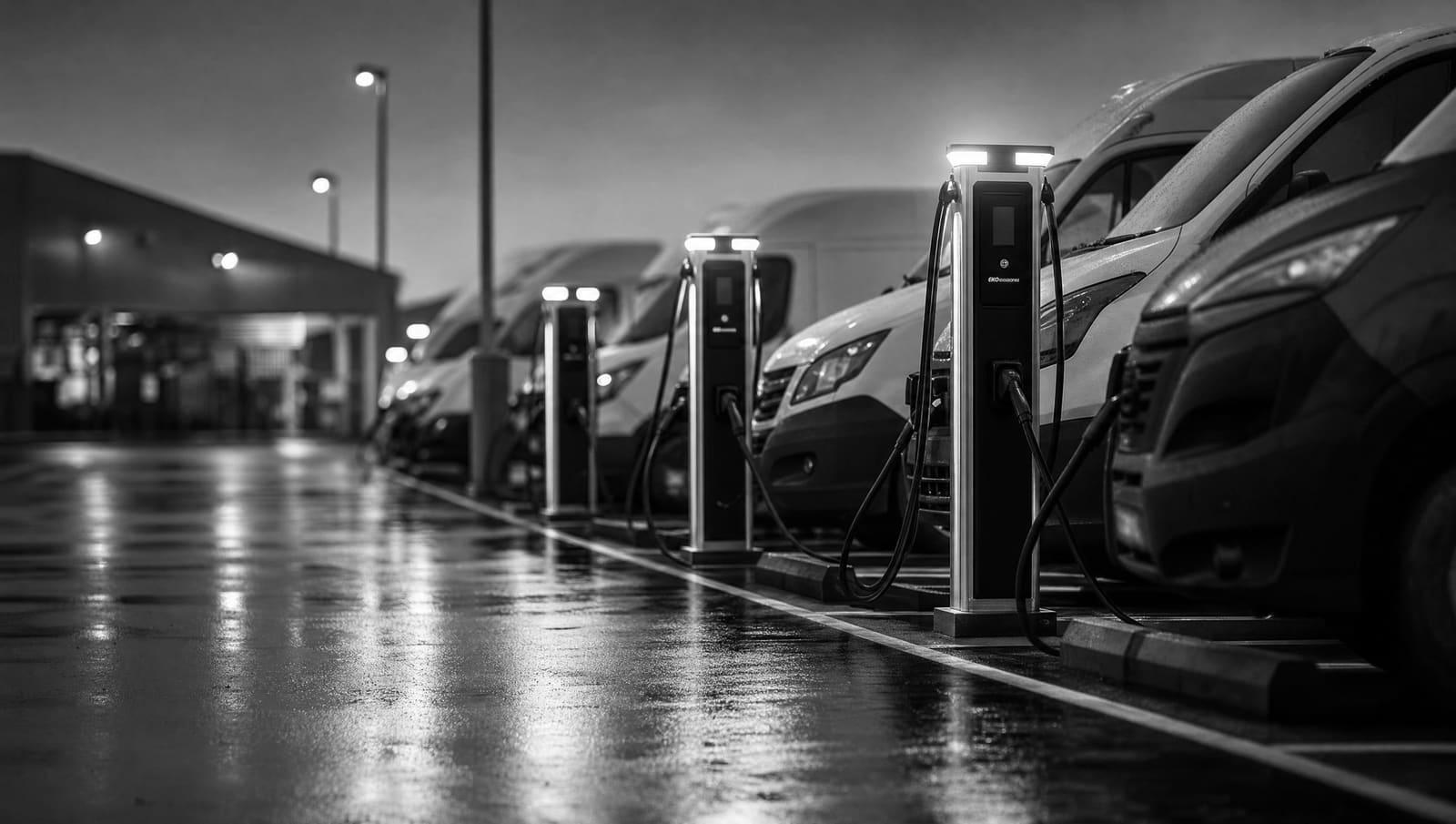
A complete project
Commercial EV charger installation in O'Fallon.
A commercial installation starts with vehicle needs, parking use, and an electrical assessment. The full project can include design, utility coordination, permits, panels, conduit, trenching, charger mounting, networking, inspections, commissioning, and staff turnover. Level 2 often serves vehicles parked for hours. DC fast charging calls for a deeper review of service capacity, utility equipment, and operating demand.
The site review must verify available power, charger location, cable reach, construction routes, communications, accessibility needs, and room for planned expansion.
Set the operating plan
Make three choices before selecting equipment
Start with the vehicles and the time they remain parked. A workplace, customer lot, managed fleet, and public charging site can need very different power even when each begins with the same number of ports. Then decide who may charge and who pays. That choice affects networking, account controls, payment features, data collection, and staff duties.
Finally, set a realistic expansion plan. Installing every future charger now may not make sense, but reserving electrical space and planning conduit routes can keep later work from disturbing finished pavement. Ask the designer to show the initial charging load and the planned future load. The electrical and utility review should address both. These three choices create a useful basis of design and help prevent charger features from driving the project without a clear business reason.
Build a complete scope
The budget is more than the charger
A useful budget separates equipment from the electrical, civil, communications, and operating work around it. Review commercial EV charging costs by scope, not by charger count alone.
Select the right charging level
Level 2 and DC fast charging solve different operating problems
Level 2 charging commonly fits vehicles that remain parked for several hours. The vehicle converts AC power for its battery, while the building supplies the charger through its electrical distribution system. A commercial Level 2 project can still require new circuits, panels, trenching, communications, and controls. It is not simply a matter of mounting a box near a parking stall.
DC fast equipment performs the power conversion outside the vehicle. It supports faster turnover, but its larger electrical demand can change the project from a building circuit addition into a service and utility planning effort. Switchgear, utility equipment, equipment pads, protective barriers, and thermal or communications needs may become more important. The installation plan should begin with the energy each vehicle needs and the time available to deliver it.
Do not compare equipment only by its maximum rating. The vehicle may accept less power, and the site may not need every port operating at full output at once. Ask for a charging schedule that translates vehicle use into electrical demand. That gives the engineer a stronger basis for selecting equipment, evaluating capacity, and considering managed charging.

Understand project complexity
What makes one installation simpler than another?
Charger count alone does not show project difficulty. Existing power, routing, construction, utility involvement, and operating controls can matter more.
Lower complexity
Power and parking already align
Spare distribution capacity, a short route to nearby stalls, workable communications, and limited surface restoration can reduce design and construction effort. Permits and inspections still belong in the schedule.
Higher complexity
The site needs new infrastructure
Long trench routes, constrained electrical rooms, larger charging loads, utility upgrades, active parking areas, payment systems, or several construction phases require more coordination and carry greater schedule risk.
Verify the site
A site review should turn assumptions into a buildable plan
The review should begin at the electrical service and follow the proposed path to each charging space. Document the meter, service equipment, panels, available breaker positions, equipment ratings, and practical routing options. The team should also review parking circulation, charger protection, cable reach, equipment clearances, signage, communications, security, drainage concerns, and the surfaces that construction will disturb.
Next, compare the electrical condition with the operating plan. A load study can show whether the proposed charging fits the present system or whether controls, new distribution, or a service change deserve further study. Managed charging may reduce simultaneous demand by adjusting how available power is shared. It does not create unlimited capacity, so its assumptions must be stated clearly.
The resulting scope should identify open questions and who owns them. Utility review, permit requirements, inspection steps, equipment lead times, network setup, and restoration should appear on the project schedule. If a proposal skips these items, the apparent simplicity may only mean that work has been left outside the price.
What should be documented?
Request a site plan, charger schedule, electrical basis, routing concept, utility responsibilities, civil limits, communications approach, commissioning plan, exclusions, and a list of unresolved conditions.
Decide who runs the system
Ownership and operations belong in the design
Commercial charging continues after construction ends. Someone must control access, respond to faults, manage driver questions, review software, and maintain the physical equipment. Public or paid charging can add payment and reporting duties. Fleet charging may place more value on vehicle readiness and operating schedules.
Equipment ownership also affects service responsibility and future choices. Before procurement, identify who owns each charger, network account, communications connection, meter relationship, and data record. Ask how software subscriptions, warranties, replacement parts, and support are handled. A clear operating model helps the buyer compare proposals on total responsibility instead of treating activation as the finish line.
Owner-operated
More control, more responsibility
The facility may control equipment and policy directly, but it must assign network administration, maintenance, billing, user support, and replacement planning.
Third-party involvement
Define every boundary
If another party owns, networks, or services equipment, the agreement should identify fees, data access, uptime duties, escalation paths, term length, and end-of-term options.
Procure for the full life
Phase construction without creating a stranded system
A phased project can separate the infrastructure decision from the charger purchase. The first phase might install only the ports needed now while sizing selected pathways, panels, or space for a defined later phase. That approach works only when the drawings state what has been reserved. A vague promise of being future-ready is hard to price and harder to verify.
Procurement should compare compatible scopes. Confirm whether each bidder includes engineering, utility coordination, permits, electrical construction, civil restoration, equipment freight, network setup, testing, training, and closeout documents. Note allowances and unit rates for uncertain work. Confirm who carries equipment delivery risk and what happens if the selected model changes before construction.
Review ongoing expenses separately from construction. Network subscriptions, payment processing, communications, preventive maintenance, repairs, warranties, electricity, and demand-related utility costs may shape the ownership decision. Incentives and tax credits are time-sensitive. The federal locator referenced by energy agencies can help screen location eligibility, but eligibility, rules, and tax treatment should be confirmed for the site at the time of purchase. Do not make an installation decision around an unverified incentive.
Compare proposals
Five things every comparable quote should show
Ask bidders to price the same operating plan and clearly separate included work, allowances, alternates, exclusions, and recurring charges.
01
A defined charging schedule
List charger type, port count, output, mounting, connectors, networking, and the vehicles or dwell times behind the choice.
02
The complete electrical scope
Show panels, breakers, conductors, conduit, controls, metering, load assumptions, and any service or utility work.
03
Civil and parking work
Identify trenching, boring, pads, barriers, striping, signage, traffic control, accessibility work, and restoration.
04
Approvals and schedule ownership
Assign design, permit, inspection, utility, procurement, construction, activation, and dependency responsibilities.
05
Commissioning and ongoing support
Include test sessions, network activation, training, closeout records, warranties, maintenance options, fees, and response procedures.
Keep planning locally
Related EV charging pages in O Fallon
Get a defensible number
Price the equipment and the building together.
Send the address, operating target, and target opening date. Flux will identify what must be verified before the project can be priced.
Price my chargersQuestions
Straight answers.
What is included in commercial EV charger installation?
A complete scope can include site and electrical assessment, charging design, utility coordination, permits, equipment procurement, panels and wiring, trenching and restoration, charger mounting, networking, inspections, commissioning, training, and closeout documents. The quote should say which party owns every task.
Should our O'Fallon property use Level 2 or DC fast charging?
Choose from vehicle dwell time and daily energy need. Level 2 often fits vehicles parked for hours. DC fast charging fits faster turnover but can require more electrical capacity and utility coordination. A vehicle and charging schedule should support the choice.
Can commercial chargers use our existing electrical service?
Possibly, but the answer requires an electrical review and load analysis. The team should compare existing demand, equipment capacity, proposed charging load, and future growth. Managed charging may help control simultaneous demand, but its limits and operating assumptions must be documented.
Does the installation contractor coordinate with the utility?
Utility coordination should be a named part of the scope when required. The proposal should identify who submits information, answers utility questions, tracks studies or equipment, addresses metering, and carries utility dependencies in the schedule.
What information is needed before requesting a quote?
Provide the site address, vehicle types, daily travel or energy needs, parking duration, desired port count, access and payment rules, planned growth, operating hours, and any available electrical drawings or utility records. A site visit should verify the physical conditions.
How should we compare commercial EV charging bids?
Use one basis of design and compare equipment, electrical work, civil work, utility responsibilities, permits, restoration, networking, commissioning, exclusions, allowances, schedule assumptions, warranties, recurring fees, and maintenance. A low total is not comparable if key work is omitted.
Should we install extra chargers now or prepare for later?
Base the first phase on current demand, then define the next phase on the drawings. Reserved electrical space, pathways, routing, and load assumptions can support growth. Ask the quote to distinguish installed capacity from infrastructure that is only planned or prepared.
Are incentives available for a commercial charging project?
Programs, tax rules, deadlines, and location eligibility can change. Screen the exact address using current official tools, then confirm eligibility and tax treatment before relying on funding in the budget. Treat any unverified benefit as separate from the base project decision.
Sources used for this guide
- [1]afdc.energy.gov — Alternative Fuels Data Center: Procurement and Installation for Electric Vehicle Charging Infrastructure
- [2]betterbuildingssolutioncenter.energy.gov — DOE Better Buildings Commercial EV Charging Infrastructure Guide
- [3]driveelectric.gov — Public electric vehicle charging infrastructure playbook · Joint Office of Energy and Transportation
- [4]energy.gov — DOE Federal Workplace Charging Program Guide