Direct answer
Commercial EV charger installation in New Rochelle.
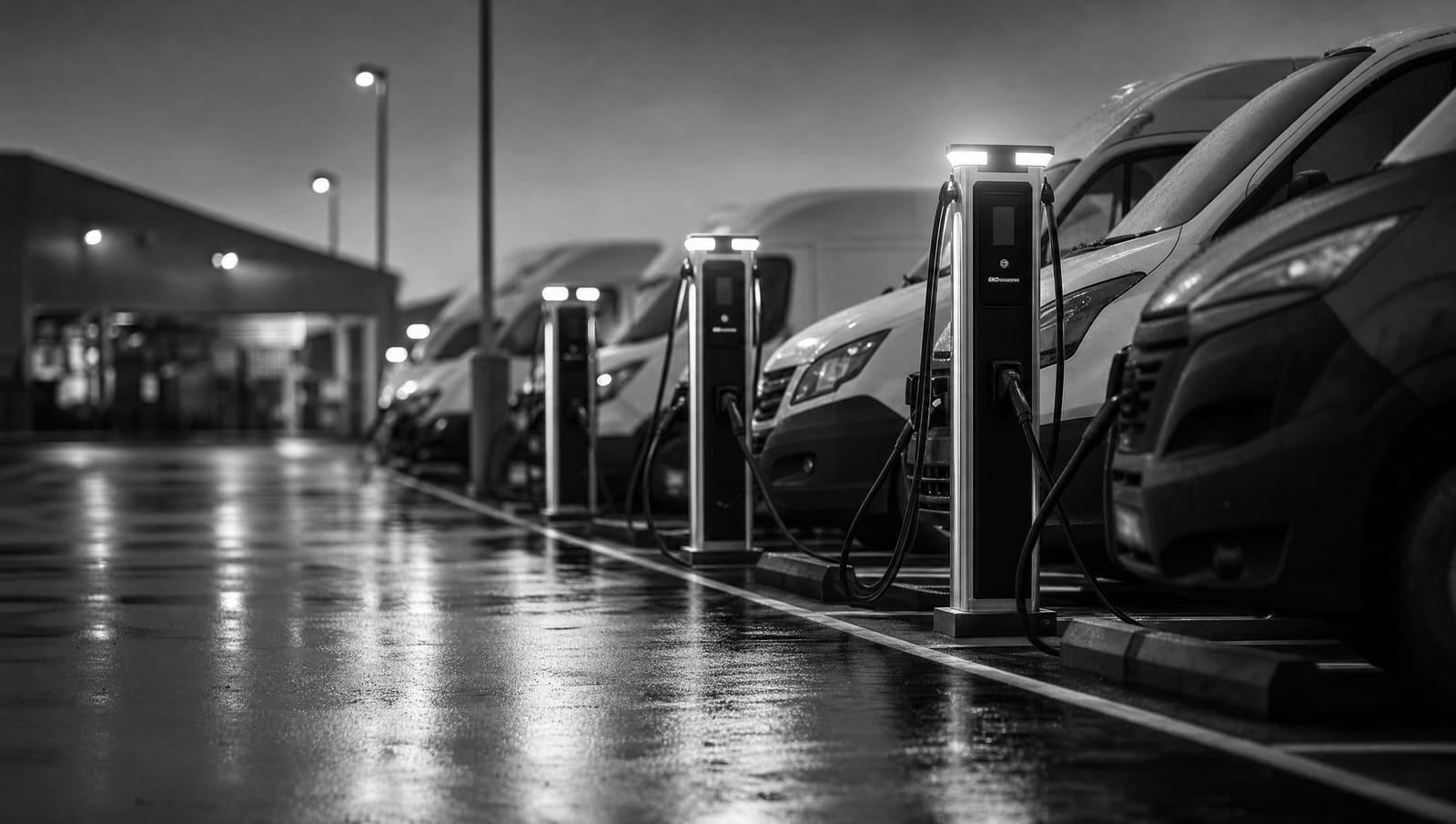
A complete commercial EV charger installation starts with a site and electrical assessment. It then moves through charger selection, system design, utility coordination, permitting, construction, inspection, network setup, commissioning, and turnover. Level 2 charging often works for vehicles parked for hours. DC fast charging serves shorter stops but can require much more electrical and utility infrastructure.
The site review must verify available power, parking use, cable routes, communications, accessibility needs, equipment locations, and room for later expansion.
Operating plan
Make three choices before selecting a charger
The right charger is the one that supports the vehicles, parking schedule, and people who will use it. Begin with dwell time. An employee car parked through a work shift has different needs from a fleet vehicle that must return to service quickly. Then decide who gets access. A private fleet, employees, tenants, visitors, and the public may need different controls.
Finally, define how the stations will be managed. A simple station may provide charging without user accounts or payment. A networked station can support access rules, usage records, monitoring, and payment, but it also brings software decisions and ongoing fees. These choices affect the equipment, communications, electrical design, signage, and handoff plan.
Do not buy chargers first and ask the site to support them later. Write a short operating brief before design begins. State who charges, how long vehicles stay, when charging occurs, who pays, and who responds when a station stops working.
Project scope
What belongs in the installation budget
A useful budget separates equipment from the work needed to power, protect, connect, and operate it. Ask the contractor to identify assumptions and allowances.
Equipment choice
Level 2 and DC fast charging create different projects
Level 2 equipment sends AC power to the vehicle, where onboard equipment converts it for the battery. It is often a practical fit when cars remain parked for several hours. The design still must account for the number of ports, simultaneous demand, circuit sizing, cable reach, mounting, accessibility, networking, and future growth.
DC fast charging performs the conversion outside the vehicle and delivers DC power to the battery. It is built for faster turnaround, but the installation can place much greater demands on the property and utility connection. The project may need larger conductors, added switchgear, service work, utility equipment, protective devices, equipment pads, cooling clearances, and a more involved commissioning process.
Nameplate power is not the same as useful performance at every moment. The vehicle, battery condition, charger, and available site power all affect charging. Select the lowest level of complexity that reliably meets the operating schedule. If vehicles sit for a long time, adding more well-placed Level 2 ports may serve the operation better than concentrating the budget in one faster unit.

Complexity check
What makes one installation simpler than another
Charger count alone does not define project difficulty. Existing electrical conditions, power routes, parking layout, communications, and utility work can change the scope.
Lower complexity
Existing capacity and a short route
A project is easier to plan when suitable distribution equipment is available, charging spaces are near power, communications work, and construction avoids major paved areas.
Higher complexity
Service work and major site construction
Complexity rises when the design needs utility upgrades, long underground routes, new switchgear, extensive pavement work, fast charging, or phased work around active parking.
Site review
Turn the site walk into a buildable scope
A commercial site review should connect the parking plan to the electrical system. The team should document the service, meters, panels, transformers, available spaces, major building loads, and possible connection points. It should also trace realistic routes to the charging spaces. A route that looks short on a drawing may cross pavement, landscaping, occupied rooms, fire lanes, or other utilities.
The review should test the operating plan as well. Confirm the expected vehicle count, arrival pattern, parking duration, daily energy need, charging window, and growth plan. For fleets, use route and return-to-base information. For shared parking, decide how drivers gain access and whether vehicles can remain after charging ends.
The result should be more than a recommendation for a charger model. It should identify needed surveys or studies, design assumptions, likely utility involvement, civil work, communications, protection, signage, inspection steps, and commissioning duties. Unknown conditions should appear as open items, not disappear inside a single allowance.
Information to have ready
Bring recent electrical records, panel schedules, site plans, parking rules, vehicle schedules, growth goals, and any charger or network requirements already set by your organization.
Operating model
Decide who owns the hardware and who runs the service
Commercial charging combines physical equipment with daily operating work. The property may buy and own the chargers, or another provider may supply some combination of hardware, software, billing, and support. Either model can work when the agreement makes responsibility clear.
Review more than the purchase price. Ask who controls user accounts and pricing, who receives usage data, and whether data can be exported. Confirm network terms, payment processing, warranty administration, software updates, parts availability, and service response. If a network relationship ends, understand what station functions remain.
Ownership also affects turnover. Building staff need basic training, escalation contacts, warranty records, as-built documents, and a safe shutdown procedure. Drivers need clear access rules and support instructions. These details should be settled before launch, not after the first failed session.
Owner-managed
More control, more responsibility
Direct ownership can provide control over equipment and policies, while the facility carries network, maintenance, warranty, and replacement decisions.
Service-supported
Bundled operations need clear terms
A service model may simplify daily management, but contracts should define fees, data rights, uptime support, renewals, and exit conditions.
Future planning
Build the first phase without blocking the next one
A first phase should solve a current need and preserve practical paths for growth. During design, compare the cost and disruption of installing spare conduit, reserving panel space, planning equipment pads, or creating pull points while the site is already open. Future-ready work should follow a real expansion plan, not a vague promise to add chargers later.
Load management may help several stations share a defined amount of available power. This can reduce simultaneous demand by adjusting charging output, but it does not create energy or remove the need for sound electrical design. The controls, charger compatibility, network dependence, fallback behavior, and effect on vehicle readiness all belong in the proposal.
Procurement should follow an approved design basis. Confirm connector needs, output, environmental rating, cable management, accessibility, communications, software, warranty, replacement support, and delivery before ordering. Evaluate the full ownership period, including electricity, network subscriptions, payment processing, inspections, preventive maintenance, repairs, and eventual replacement. For a separate discussion of project cost structure, see commercial EV charging cost.
Quote review
Five items every comparable quote should show
Compare proposals by scope, assumptions, and operating result. A low total can hide exclusions that return later as change orders or owner responsibilities.
01
Design basis
Show charger count, output, connection method, demand assumptions, and planned electrical capacity.
02
Complete construction scope
List equipment, wiring, trenching, restoration, protection, mounting, signage, communications, and accessibility work.
03
Utility and approval duties
Assign applications, design responses, permit submissions, inspections, fees, revisions, and scheduling.
04
Activation and turnover
Include networking, test sessions, account setup, training, warranties, manuals, and as-built records.
05
Exclusions and ongoing costs
State allowances, unknown conditions, owner work, subscriptions, transaction fees, maintenance, and support terms.
Keep planning locally
Related EV charging pages in New Rochelle
Get a defensible number
Price the equipment and the building together.
Send the address, operating target, and target opening date. Flux will identify what must be verified before the project can be priced.
Price my chargersQuestions
Straight answers.
What does commercial EV charger installation include?
A complete scope can include site assessment, electrical review, charger selection, design, utility coordination, permits, equipment procurement, electrical and civil construction, inspections, network activation, testing, training, and closeout documents. The proposal should state exactly which party owns each task.
Should our property install Level 2 or DC fast chargers?
Choose based on vehicle dwell time and required turnaround. Level 2 often fits workplaces, shared parking, and other settings where vehicles remain for hours. DC fast charging may fit vehicles that need shorter stops, but it can require much more power and infrastructure. A charging-demand plan should come before equipment selection.
Can our existing electrical service support EV charging?
An electrical assessment must answer that question. It should review the service, distribution equipment, existing loads, charging schedule, and planned expansion. The design may use available capacity, managed charging, new distribution equipment, or a utility service change. Do not assume spare breaker spaces prove that enough capacity exists.
When should the utility become involved?
Contact the utility early when the project may affect service capacity, metering, rates, transformers, or other utility equipment. Early coordination helps expose design requirements and schedule dependencies before chargers are ordered or construction commitments are made.
Do commercial chargers need a network?
Not every charger needs networking. Networked equipment can support access control, payment, usage records, monitoring, and remote management. It may also add subscriptions, communications requirements, and vendor dependence. Choose functions from the operating plan, then confirm what happens if communications or the network service fails.
How should we plan for future chargers?
Define a likely later phase during the first design. Review reserved electrical capacity, load management, spare conduit, panel space, pull points, equipment locations, and parking changes. Price future-ready work separately so you can see which investments reduce later disruption and which add little value.
What should happen during commissioning?
Commissioning should verify electrical safety, charger operation, connector function, communications, access rules, payment features when used, and successful charging sessions at every port. Turnover should also include training, support contacts, warranties, manuals, network credentials, and as-built records.
How do we evaluate current incentives or tax credits?
Treat every incentive and tax rule as time-sensitive. Verify the property address, eligible costs, equipment rules, labor requirements, application timing, funding status, and tax treatment with the current program administrator and qualified advisers before including any benefit in the approved budget.
Sources used for this guide
- [1]afdc.energy.gov — Alternative Fuels Data Center: Procurement and Installation for Electric Vehicle Charging Infrastructure
- [2]betterbuildingssolutioncenter.energy.gov — DOE Better Buildings Commercial EV Charging Infrastructure Guide
- [3]driveelectric.gov — Public electric vehicle charging infrastructure playbook · Joint Office of Energy and Transportation
- [4]energy.gov — DOE Federal Workplace Charging Program Guide