Direct answer
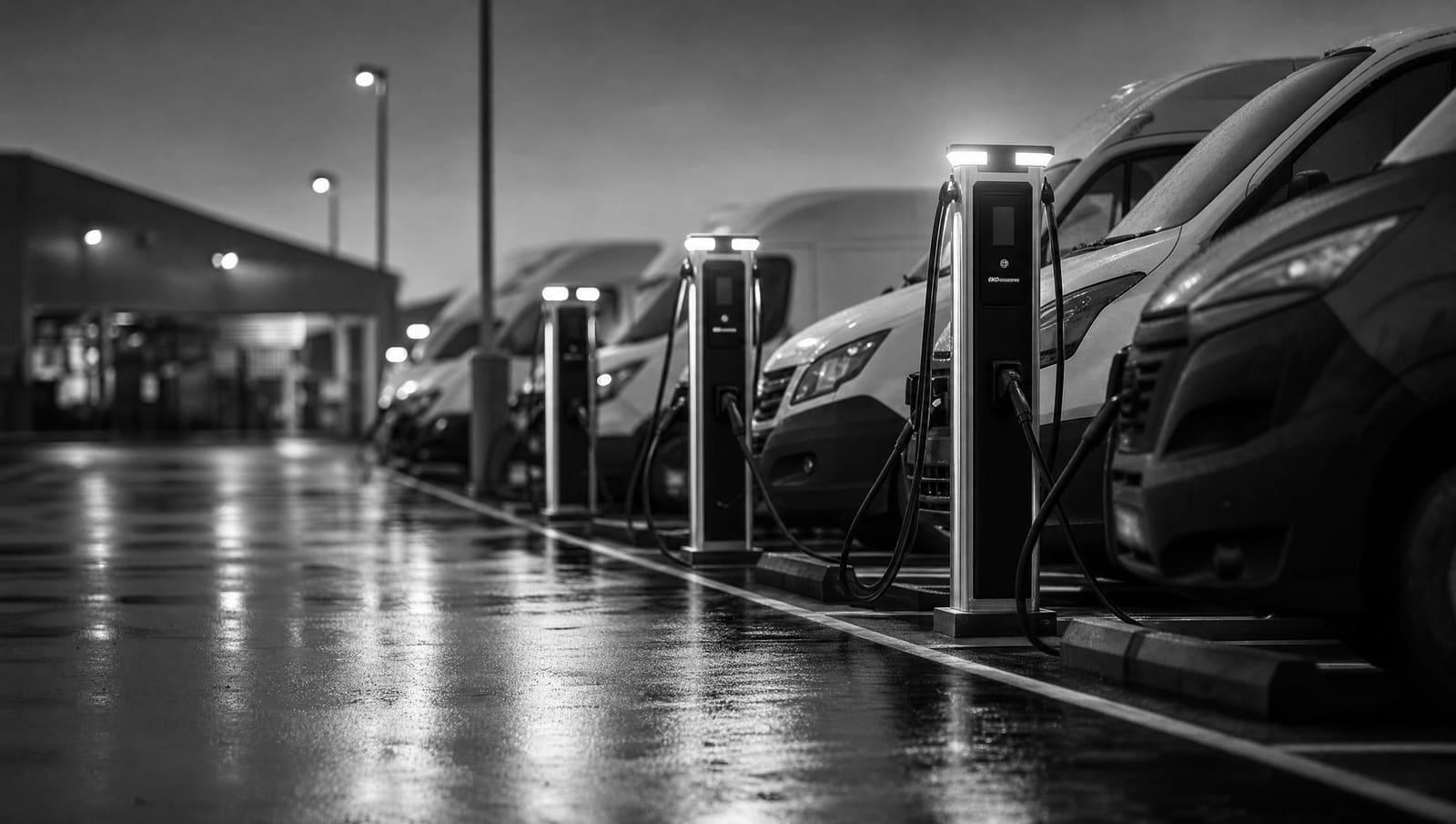
Commercial EV charger installation in Nashua.
A commercial installation covers site and electrical assessment, charger selection, utility coordination, permit planning, construction, equipment setup, inspection, testing, and turnover. Level 2 charging often connects through the building distribution system. DC fast charging can require much larger service, switchgear, transformer, civil, and utility work, so it needs earlier coordination.
The site review must verify usable electrical capacity, parking dwell time, cable routes, communications, accessibility, drainage, snow operations, and space for later expansion.
Start with operations
Choose charging around how the property works
The right charger is the one that gives each vehicle enough energy before it leaves. Begin with who will charge, how long vehicles remain parked, how often spaces turn over, and whether access is private or public.
Level 2 usually suits vehicles parked for hours, including employee cars and many fleet vehicles that return for long dwell periods. DC fast charging is built for shorter stops or fleets that need a quicker turnaround. It also places a much larger demand on the electrical system.
Then decide how drivers will use the stations. A private fleet may need assigned access and dependable departure readiness. Workplace charging may need employee rules and fair sharing. Public charging may need payment, pricing, support, signage, and station listing. These choices affect hardware, networking, electrical design, and ongoing fees. Make them before equipment is ordered.
Quote structure
Where installation uncertainty enters the budget
A useful budget separates equipment from the work needed to deliver power safely. It also shows allowances, exclusions, and items that depend on utility or permit review.
Equipment choice
Level 2 and DC fast charging create different projects
Level 2 equipment sends AC power to the vehicle, where onboard equipment converts it for the battery. It commonly connects to commercial electrical panels. This can make it a practical choice when cars or fleet vehicles remain parked for several hours. The design still must account for the combined load of every planned port, not just one charger.
DC fast equipment converts power outside the vehicle and sends DC power to the battery. Faster charging can support short visits and tight fleet schedules, but it changes the upstream work. The project may need more service capacity, larger conductors, dedicated distribution equipment, cooling, equipment pads, and closer utility involvement. Operating costs also deserve attention because a high peak load can affect the applicable utility bill.
Do not select by the largest nameplate rating alone. The vehicle may accept less power, and several chargers may share available capacity. Ask the designer to show expected charging performance for the vehicles, simultaneous-load assumptions, and what happens when all ports are occupied. That is more useful than comparing charger labels without a site model.

Complexity check
What makes one installation simpler than another
Charger count matters, but existing capacity and the route to parking often matter more. A site plan should expose these conditions before procurement.
Lower complexity
Capacity and parking align
Usable panel capacity, a short protected cable route, workable communications, and little pavement disturbance can keep design and construction contained.
Higher complexity
The site needs new infrastructure
A service upgrade, transformer work, long trenching, traffic control, major restoration, or DC fast equipment adds coordination and schedule risk.
Site assessment
Turn the parking plan into an electrical plan
A credible assessment begins at the service and ends at each charging space. The team should document service and panel ratings, current loads, available breaker positions, meter arrangement, equipment condition, and the proposed connection point. A load study or other engineering review may be needed to confirm how much capacity is truly usable.
Next, walk the physical route. Measure the distance to the stalls and identify walls, finished areas, pavement, landscaping, drainage, and other utilities. Confirm where charger foundations, protective posts, disconnects, cabinets, and signs can fit without blocking circulation. Networked stations also need a dependable communications plan.
Finally, test the plan against operations. Review arrival and departure times, daily energy needs, simultaneous charging, public access, security, snow clearing, maintenance access, and expansion. If existing capacity is tight, managed charging may control how power is shared among ports. It can be useful, but the design should state its limits and show whether it still meets vehicle departure needs.
Bring real operating information
Provide vehicle types, daily mileage, parking windows, planned port count, public-access needs, and future growth. These inputs let the designer test the charging plan against the property.
New Hampshire context
Review utility demand before choosing fast charging
New Hampshire's EV infrastructure planning has identified utility capacity, access to three-phase power, and demand charges as important issues for fast-charging projects. That state plan is planning context, not proof of the present conditions or rates at a Nashua address.
For a Nashua project, confirm the serving utility, current tariff, available service, transformer needs, metering approach, and upgrade schedule before committing to DC fast equipment. Model the expected charging peak as well as energy use. If the business can shift charging or share power across ports, ask how that strategy affects vehicle readiness and the utility billing profile. Current terms must be verified during project development.
Treat programs and credits as time-sensitive
Check current eligibility, deadlines, location rules, tax treatment, and required approvals before placing an incentive or credit in the project budget.
Operating model
Decide who owns the customer experience
The physical installation is only part of a commercial charging program. The owner also needs a plan for access, pricing, data, uptime, repairs, and driver support. Network services can provide controls and reporting, but they may add contracts and recurring charges.
Ownership terms should be clear when a third party supplies equipment, software, financing, or operations. Confirm who controls pricing and data, who receives revenue, who answers driver calls, and what happens if the network agreement ends. The charger, network, and service model should work together rather than being bought as separate decisions.
Site-owned
More control and responsibility
The facility can control equipment and policy, while carrying maintenance, software, support, and replacement duties.
Third-party role
Read the operating terms
Define equipment ownership, revenue, data access, service response, contract length, and the path to change providers.
Permits and construction
Coordinate approvals before equipment reaches the site
The project team should identify applicable codes, permit documents, inspection points, and utility requirements during design. Requirements can change, so the contractor should confirm the current rules with the authorities responsible for the property. Any required engineering should be complete before construction pricing is treated as final.
Utility and permit work should run beside equipment procurement, but only after the basic design is stable. Buying chargers too early can lock the site into the wrong voltage, power level, mounting style, connector arrangement, or communications system. It may also create storage and warranty concerns while approvals are pending.
Construction usually includes the electrical make-ready work first: distribution equipment, raceways, conductors, trenching, foundations, protection, and restoration. Chargers are then mounted, terminated, configured, and inspected. The schedule should state which tasks depend on the utility, equipment delivery, site access, or weather. If the property must remain open, include parking closures, delivery routes, work hours, temporary barriers, and restoration phases in the plan.
Long-term value
Build the first phase with later ports in mind
Future-ready work does not mean buying every charger now. It means avoiding preventable demolition when demand grows. During the first phase, compare the value of larger pathways, spare conduit, reserved electrical space, adaptable controls, and foundations or pull points serving future parking areas. Each item should have a defined purpose and price.
Also compare lifetime obligations, not just the purchase order. Review network subscriptions, payment processing, cellular service, inspections, preventive maintenance, replacement parts, warranties, utility billing, and support. Ask whether the charger remains useful if the original network service changes. Open communication capabilities and clear data ownership may reduce future constraints, but compatibility must be verified for the selected equipment.
The commercial EV charging cost guide can help organize budget questions, but the buying decision should come back to service: enough energy by departure time, a safe installation, manageable operating costs, and a repair plan that keeps ports available.
Bid comparison
Five things every comparable quote should show
Compare the same scope, assumptions, and operating result. A low total means little when important electrical, civil, utility, software, or turnover work is missing.
01
Defined charger schedule
List models, ratings, ports, mounting, cables, network features, warranties, and supplied accessories.
02
Electrical basis
Show load assumptions, connection points, distribution work, controls, and any service-upgrade dependency.
03
Complete site work
Identify trenching, concrete, protection, signage, accessibility work, pavement repair, and excluded restoration.
04
Approval and schedule duties
Assign engineering, permits, inspections, utility coordination, procurement, milestones, and delay risks.
05
Commissioning and turnover
Include test charging, network activation, training, records, support contacts, and maintenance options.
Keep planning locally
Related EV charging pages in Nashua
Get a defensible number
Price the equipment and the building together.
Send the address, operating target, and target opening date. Flux will identify what must be verified before the project can be priced.
Price my chargersQuestions
Straight answers.
What does a commercial EV charger installation include?
It should include site and electrical assessment, charger and parking design, utility coordination, permit planning, make-ready construction, equipment mounting and wiring, inspection, network setup when needed, test charging, training, and turnover documents.
Should our Nashua property use Level 2 or DC fast charging?
Use vehicle dwell time and daily energy need as the starting point. Level 2 often fits vehicles parked for hours. DC fast charging fits shorter stops or tight fleet schedules, but it can require much larger electrical and utility infrastructure.
Can chargers use our existing electrical service?
Possibly, but a site assessment must confirm current loads and usable capacity. Managed charging may share available power across ports. If the operating plan still exceeds the service, the project may need new distribution equipment or a utility upgrade.
When should the utility become involved?
Engage the utility early when the project may add significant load, require a service upgrade, change metering, or use DC fast charging. Confirm capacity, responsibilities, current rates, required studies, and likely schedule before ordering major equipment.
What happens during commissioning?
The team verifies installation and protection, energizes the equipment, configures access and networking, performs a charging session on every port, checks reporting or payment functions, trains responsible staff, and provides records and support information.
Are incentives or tax credits available in Nashua?
Eligibility cannot be assumed. Programs, deadlines, location rules, and tax requirements change. Screen the exact property and project using current official guidance, then verify approval conditions before counting any benefit in the budget.
How should we compare installer quotes?
Require the same charger schedule, load assumptions, electrical and civil scope, utility responsibilities, permit work, software terms, exclusions, schedule, commissioning, warranties, and maintenance options. Ask bidders to price alternatives separately instead of hiding them in allowances.
Sources used for this guide
- [1]afdc.energy.gov — Alternative Fuels Data Center: Procurement and Installation for Electric Vehicle Charging Infrastructure
- [2]betterbuildingssolutioncenter.energy.gov — DOE Better Buildings Commercial EV Charging Infrastructure Guide
- [3]driveelectric.gov — Public electric vehicle charging infrastructure playbook · Joint Office of Energy and Transportation
- [4]energy.gov — DOE Federal Workplace Charging Program Guide
- [5]dot.nh.gov — State Plan Template for Electric Vehicle Infrastructure Deployment