MINNEAPOLIS, MN · SOLAR
Commercial solar installation in Minneapolis.
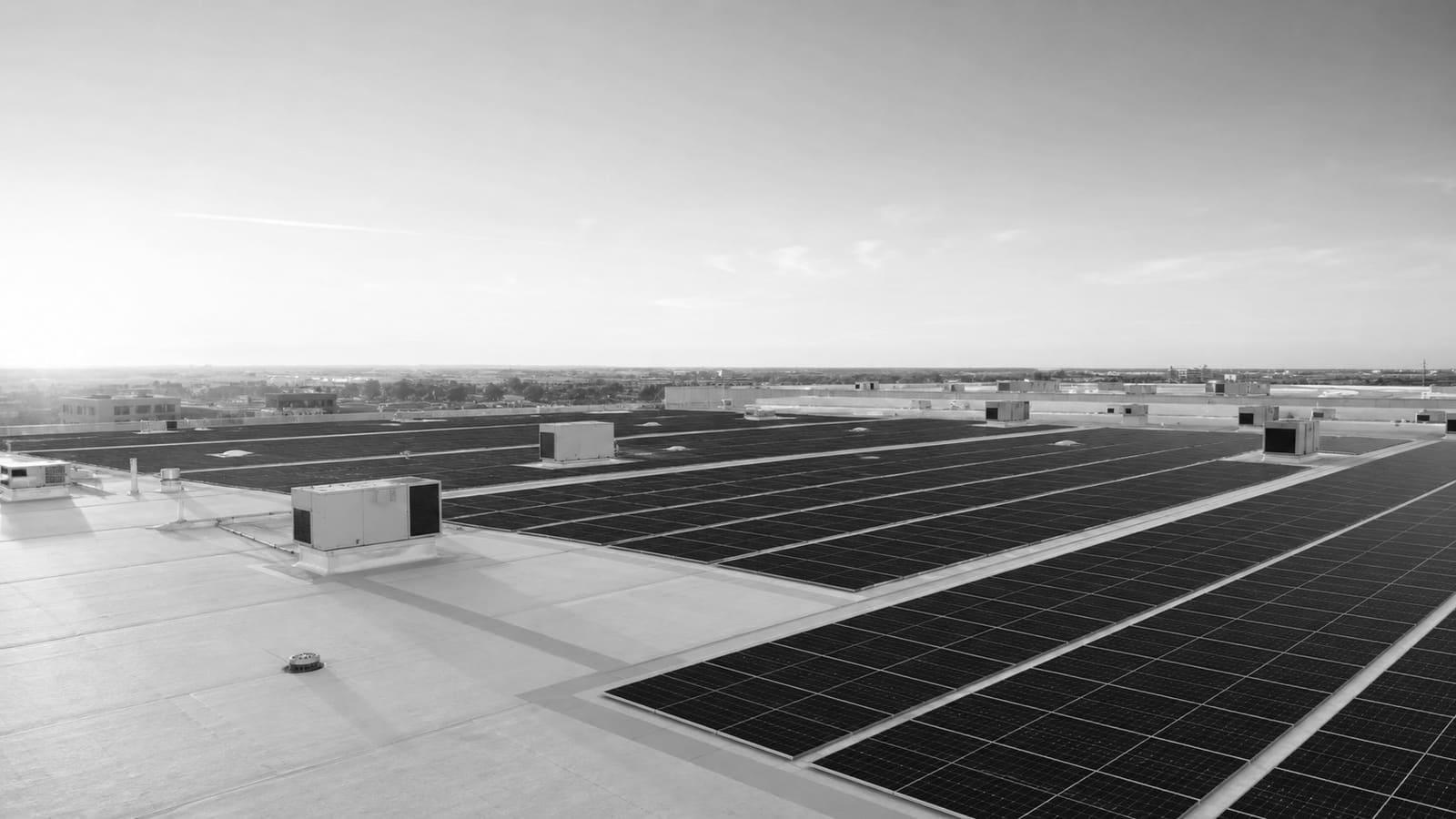
Commercial solar installation in Minneapolis starts with roof fit, array design, snow exposure, code checks, and grid coordination.
Start with the building, not the panels.
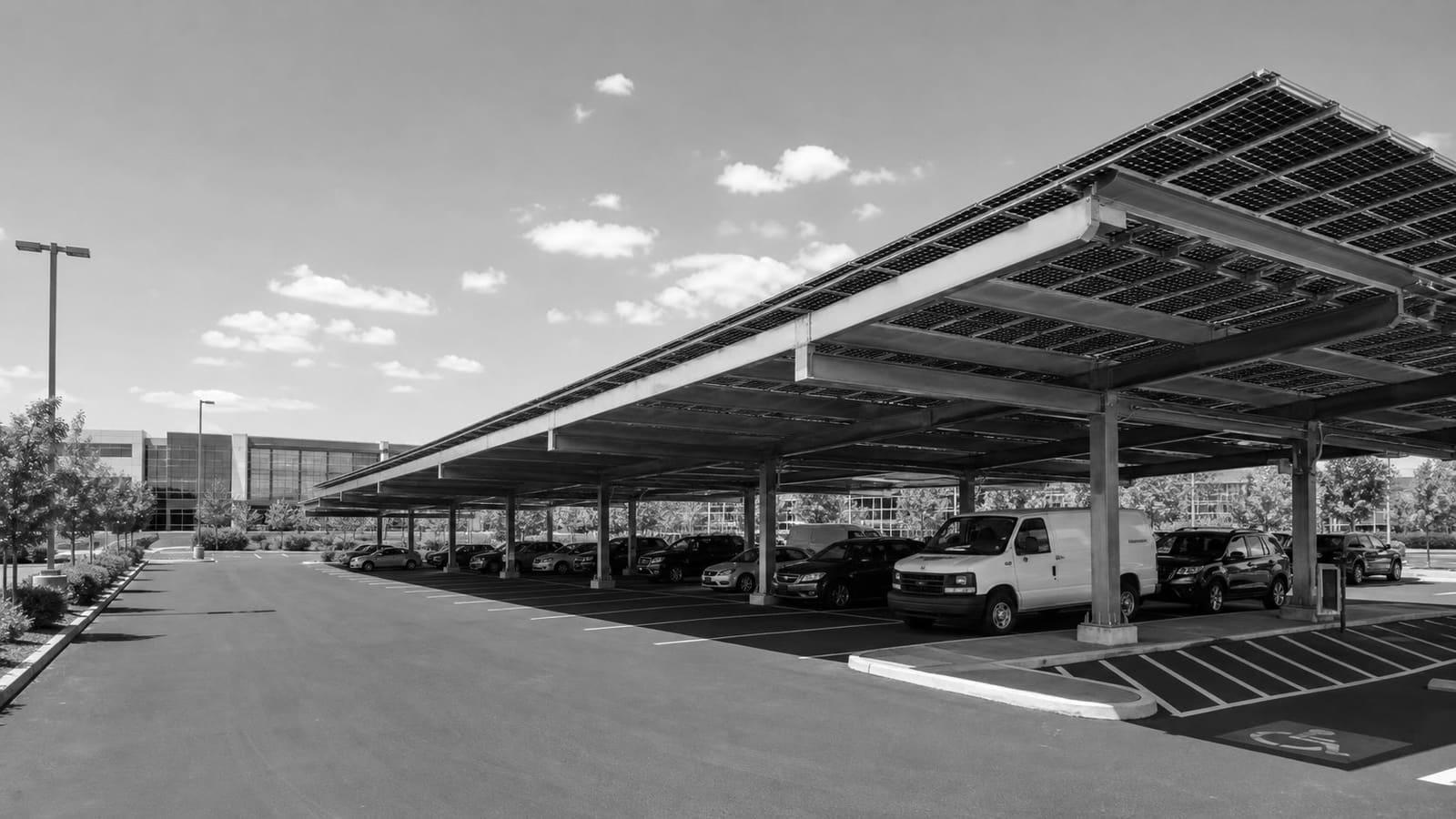
A commercial solar project has to fit the site, the roof, the electrical system, and the utility rules. We start with a solar feasibility study, then compare rooftop solar with solar carports where parking offers the stronger site.
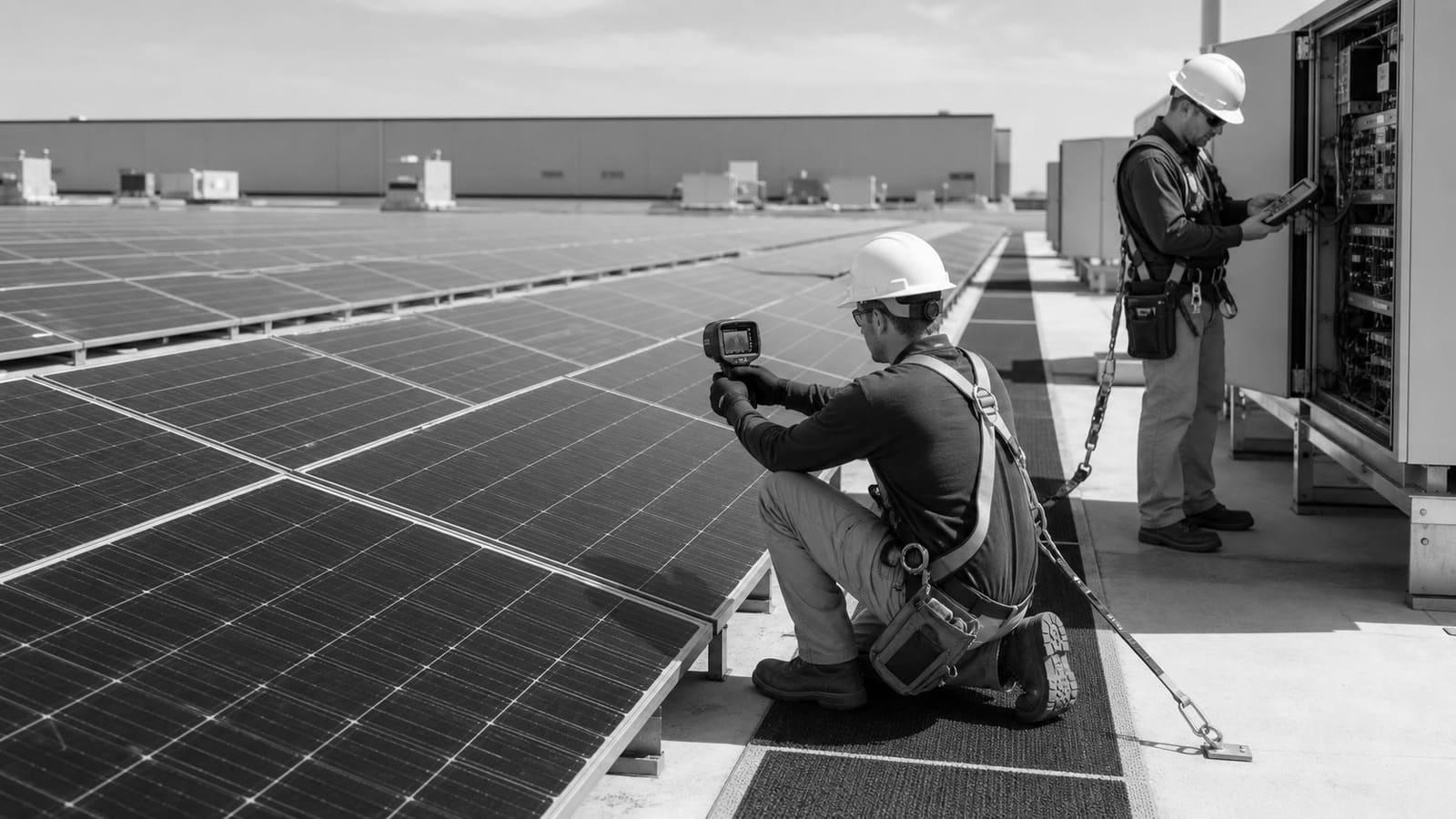
One team carries design, permits, utility interconnection, construction, commissioning, and solar maintenance. We also compare direct ownership with solar financing and PPAs, and add battery storage only when it has a clear job.
START HERE
Is solar a good fit for a Minneapolis commercial building?
Commercial solar installation works for a Minneapolis commercial building when the roof is compatible, the structure can support the array, and the design protects the roof warranty. We plan the array around usable roof space, solar exposure, energy production, code compliance, and the grid connection. A building does not pass our fit check if its structure cannot support the planned system. Roof limits may also change the layout or rule out a rooftop array. We define those limits before equipment placement so the buyer can judge the project on clear building facts.
Snow changes the array choice
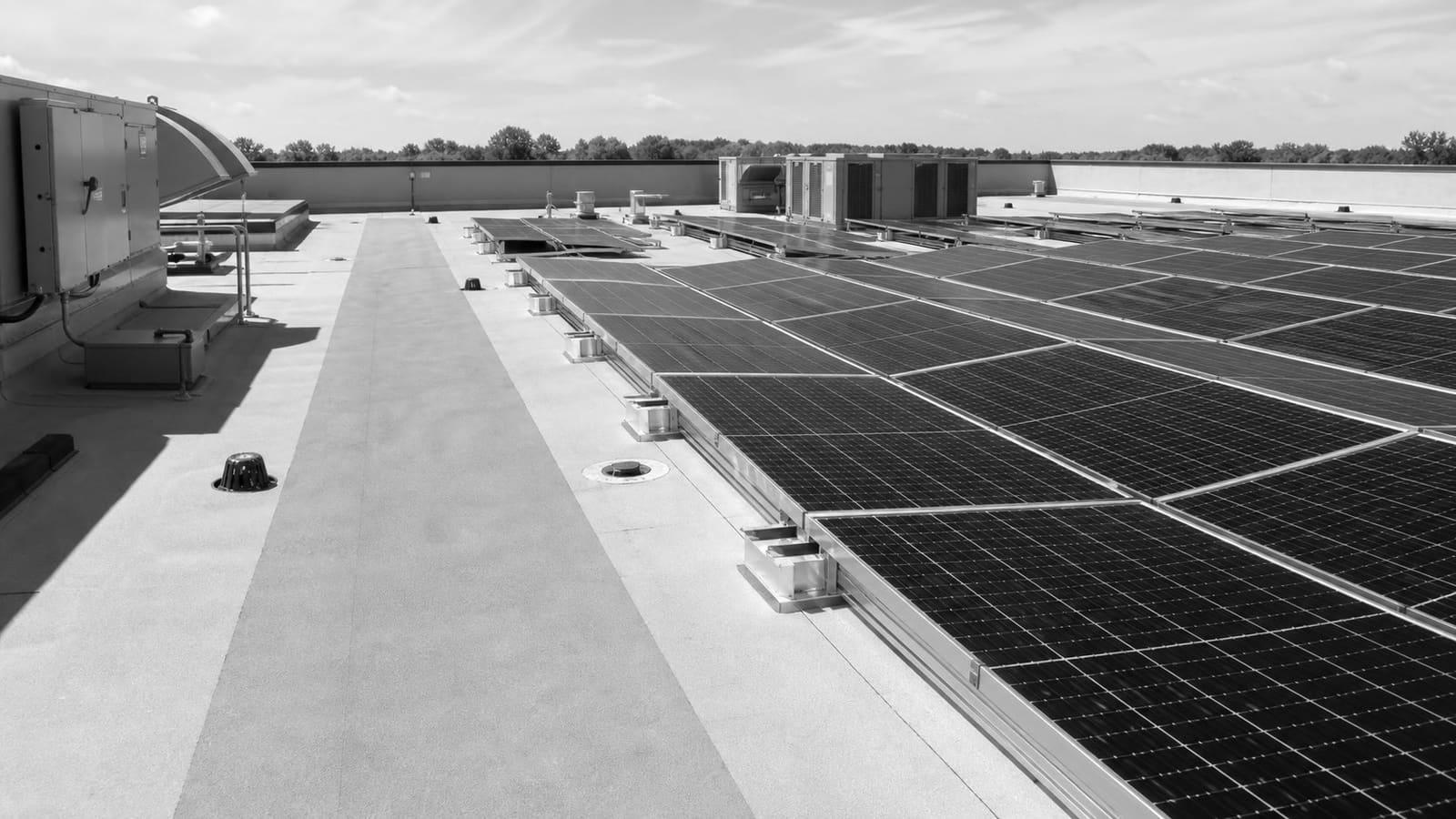
Minneapolis averages about 37 inches of snow a year based on the 1991–2020 climate record. That exposure affects panel tilt and structural review. A steeper tilt can shed snow more effectively, but it also raises wind load. A lower tilt can reduce wind load, yet it may shed snow less well. We use that tradeoff to set the array angle, attachment plan, and structural scope for the commercial roof. The buyer should approve the design only after those linked effects are clear.
Snow Design
How does commercial solar installation handle Minneapolis snow?
Panel tilt
DESIGN
Compare a lower tilt with a steeper tilt. Steeper panels can shed snow better, while lower panels can reduce wind load. The choice changes array angle and attachment design.
Structural integrity
PASS/FAIL
Record the roof structure and the planned array load. A failed structural review stops the rooftop plan or changes the layout and support design.
Roof compatibility
ROOF
Confirm the roof type, condition, and warranty limits. The result changes attachment details and whether a rooftop array is a sound fit.
Solar exposure
OUTPUT
Model the array using its tilt and direction. In the continental United States, south-facing panels tilted from 15° to 40° give the best production range stated in the guidance.
WHAT WE HANDLE
Everything under the solar door.
PROJECT PLANNING
What should a Minneapolis solar proposal include?
- A custom array design that names panel placement, tilt, and direction.
- A structural integrity result that clearly passes, changes, or stops the rooftop plan.
- A roof compatibility record that names attachment details and warranty limits.
- A grid connection coordination task with a named owner and project stage.
- A performance monitoring system in the equipment scope.
City Records
What city checks affect commercial solar installation in Minneapolis?
Building registration
RECORD
Confirm the City commercial building registration record before project coordination. Every covered non-living commercial building in Minneapolis must be registered.
Mixed-use record
SCOPE
For a mixed-use property, identify the non-living areas on the registration. That changes which parts of the property are covered by the commercial record.
Fire system change
PERMIT
Check whether the solar plan will modify or extend a fire safety system. If it will, a fire protection permit is needed before that part is installed.
Inspection contact
CONTACT
Verify the registered building contact. The City uses registration data for building and fire inspections, emergency notice, and property records.

BEFORE YOU BUY
Which solar design tradeoffs should Minneapolis buyers compare?
Production versus wind load
TRADEOFF
A tilt chosen for more solar exposure may not give the lowest wind load. Compare both effects before approving the array angle.
Snow shedding versus wind load
EXPOSURE
A steeper panel angle can shed snow and hail more effectively, but it increases wind load. That changes structural and attachment choices.
Flush mounting versus output
LAYOUT
Panels set flush with the roof may help appearance and wind load even when tilt or direction is not best for energy production.
Roof warranty versus attachment
WARRANTY
Match the attachment method to roof compatibility and warranty conditions. A conflict changes the mounting plan or can rule out the proposed layout.
QUESTIONS
Straight answers.
How does Minneapolis snow affect a commercial solar array?
About 37 inches of average annual snow makes panel tilt a design choice. A steeper angle can shed snow better, but it also increases wind load.
What can make a Minneapolis commercial roof a poor solar fit?
A roof fails the fit check when its structure cannot support the planned array. Roof compatibility or warranty limits may also require a new layout.
Does a Minneapolis commercial building need a city registration record?
Yes. The City says every covered building used for non-living purposes must be registered. Mixed-use buildings register only their non-living areas.
Can a solar project affect a Minneapolis fire permit decision?
Yes, if the plan installs, modifies, or extends a fire safety system. The City requires a fire protection permit before that part of the project begins.
GET STARTED
Tell us about the building.
Whatever the trade, we scope it, price it, and put the right crew on it. Site visits are free, always.
MORE SERVICE AREAS