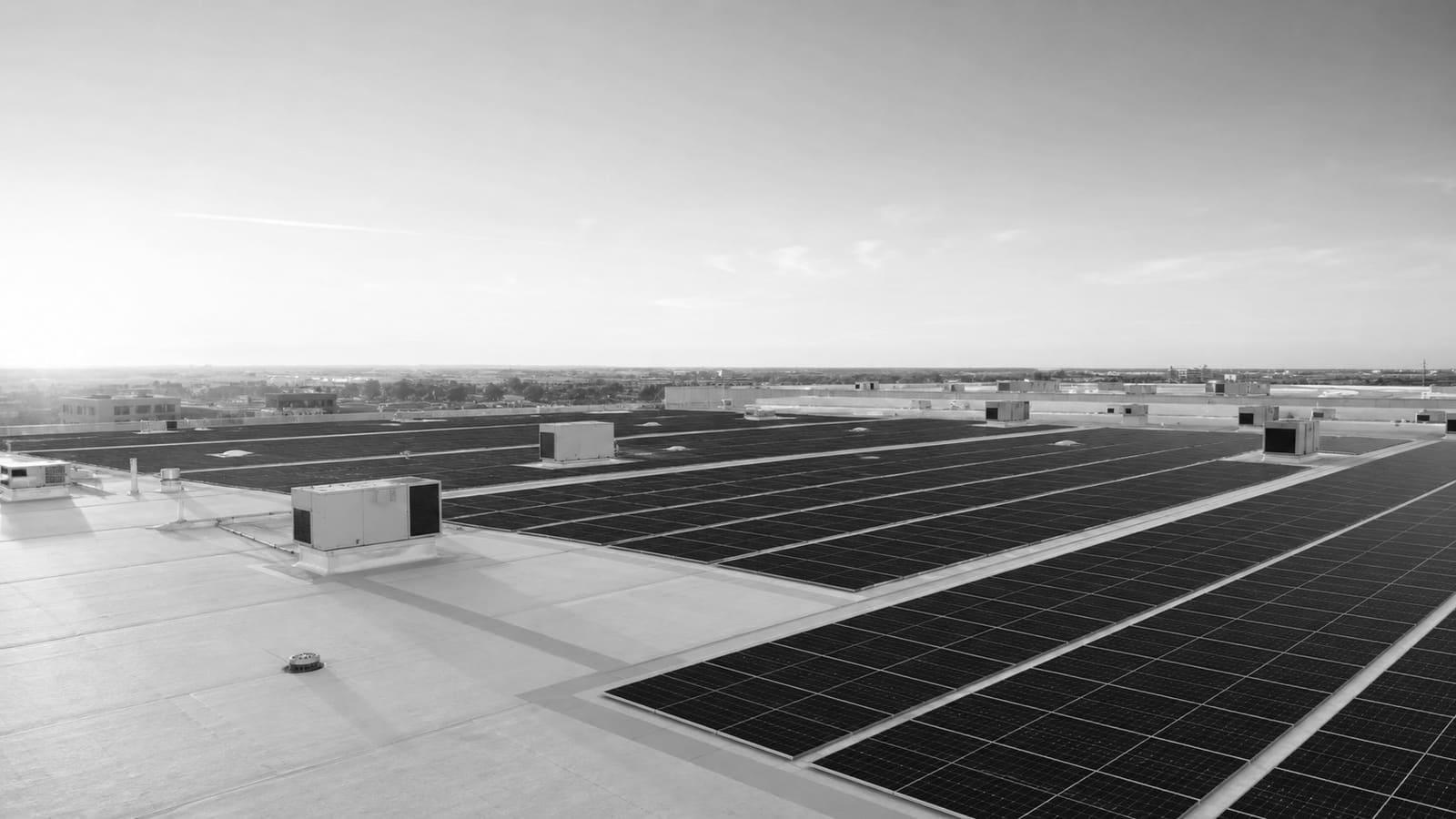
COLORADO SPRINGS, CO · SOLAR
Commercial solar installation in Colorado Springs.
We install solar systems for Colorado Springs commercial buildings based on roof condition, power demand, exposure, and operating goals.
Start with the building, not the panels.
A commercial solar project has to fit the site, the roof, the electrical system, and the utility rules. We start with a solar feasibility study, then compare rooftop solar with solar carports where parking offers the stronger site.
One team carries design, permits, utility interconnection, construction, commissioning, and solar maintenance. We also compare direct ownership with solar financing and PPAs, and add battery storage only when it has a clear job.
START HERE
Is solar a good fit for a Colorado Springs commercial building?
Commercial solar installation can fit a Colorado Springs building when its roof, energy demand, sun exposure, and operating goals support the system. We use these facts to set the array size and layout. A shaded roof or a roof that needs major repairs may be a poor fit for a rooftop PV system. Panel output also changes with roof direction, tilt, shading, weather, panel efficiency, and equipment quality. We check those conditions before the design moves forward.
Balance snow shedding and wind load
Colorado Springs averages about 38.9 inches of snow a year. Panel tilt can change how a commercial array handles that exposure. Steeper panels can shed snow more well, but they also face more wind load. Lower tilt can reduce wind load and may improve production. We weigh roof limits, solar exposure, snow shedding, and wind load together. That choice changes the mounting plan and final array layout.
Site fit
Commercial solar installation checks for Colorado Springs buildings
Roof condition
PASS/FAIL
A roof near repair or replacement can delay rooftop PV or change the project to a different mounting plan.
Energy demand
SIZE
Building power use sets the useful system size. Demand that does not match the planned array changes panel count and design.
Shade and direction
LAYOUT
Shade, roof direction, and panel tilt change expected output. Poor solar exposure can reduce the array area that makes sense.
Equipment quality
EQUIPMENT
Panel efficiency and equipment quality affect how much energy the system can produce from the available roof area.
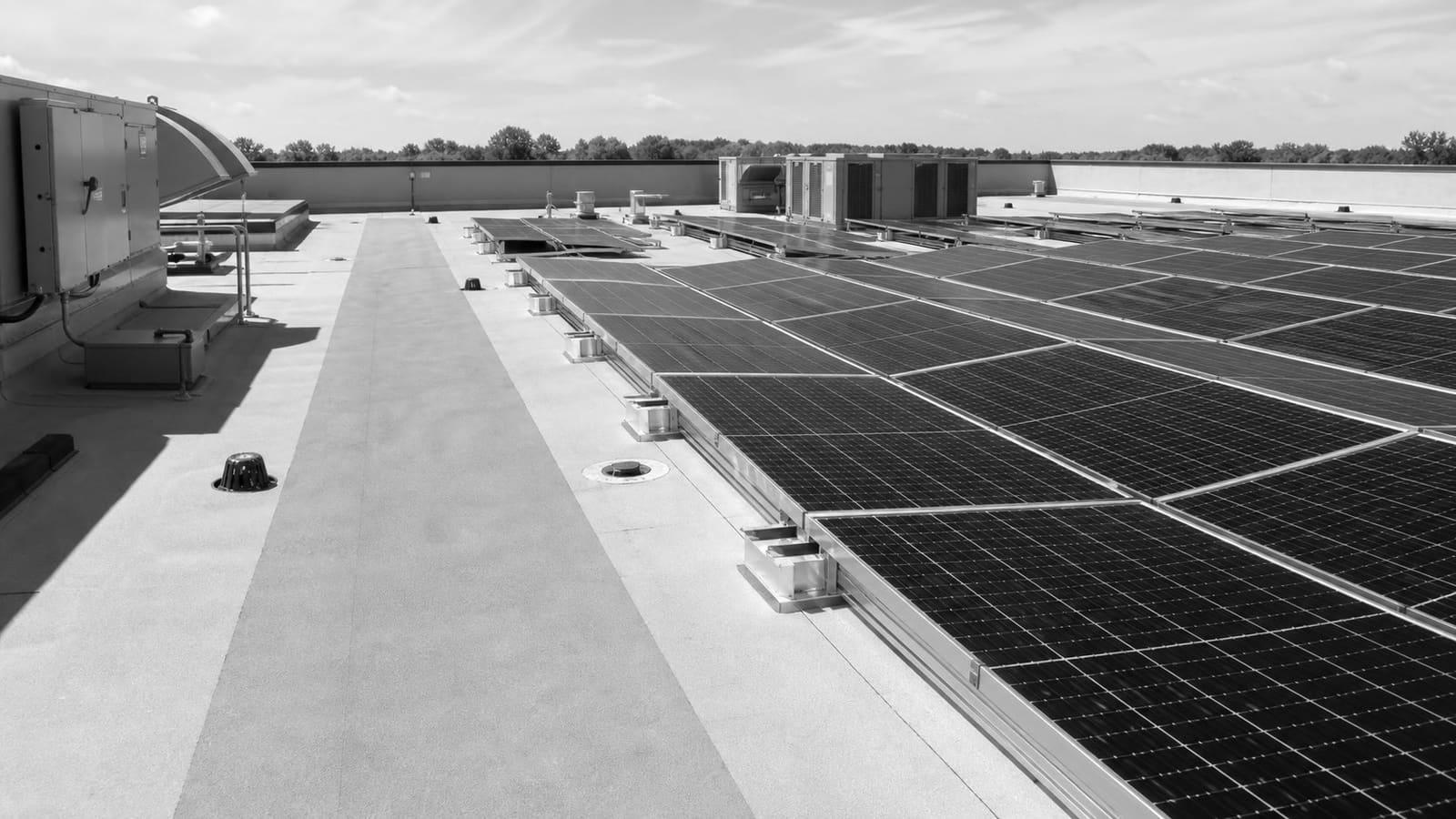
WHAT WE HANDLE
Everything under the solar door.
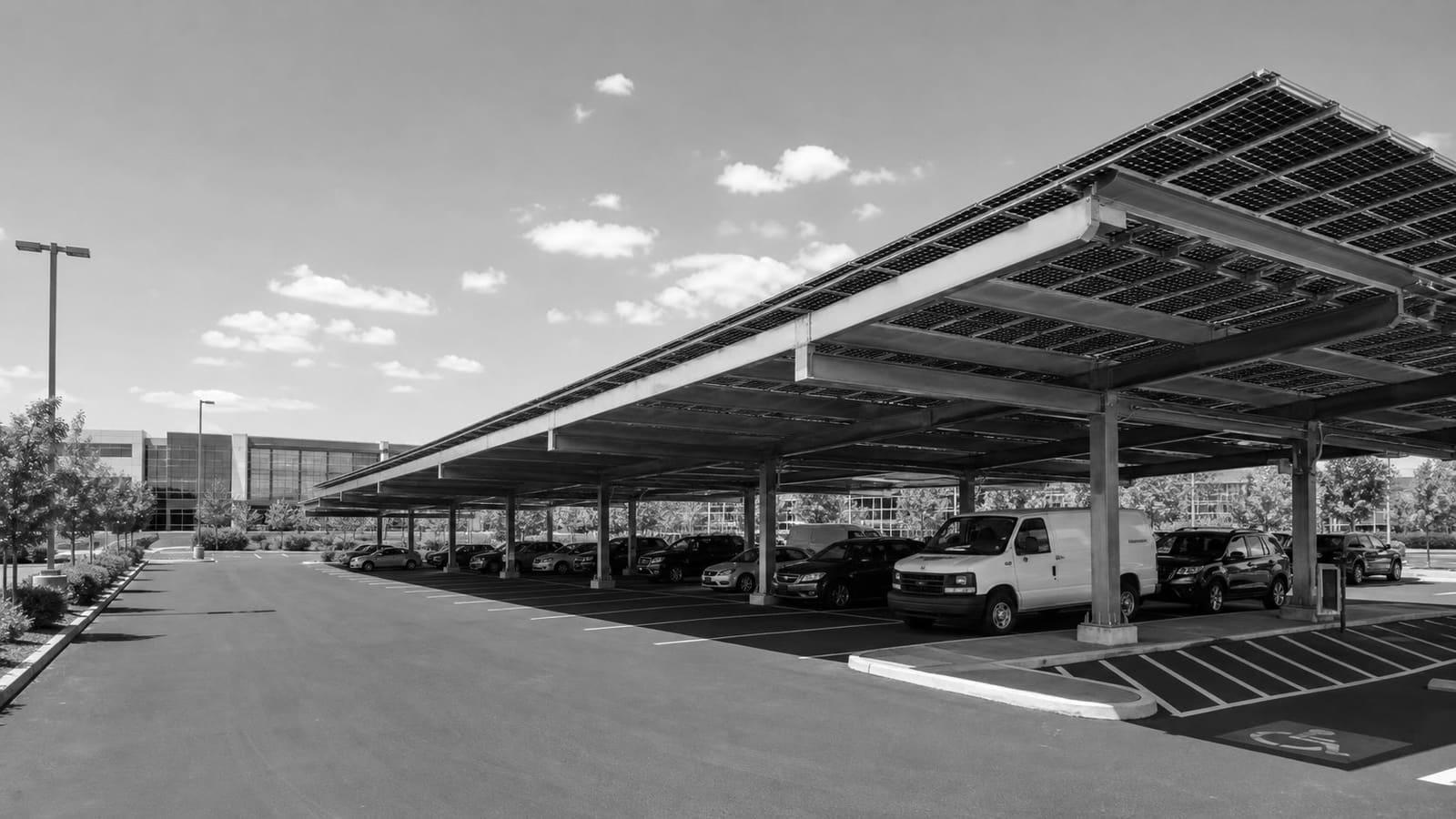
PROJECT PLANNING
How Colorado Springs roof choices change a solar design
Flush roof panels
TRADEOFF
Flush mounting may help appearance and lower wind load, but it may not give the best tilt or direction for production.
Steeper panel tilt
EXPOSURE
A steeper tilt can shed snow and hail more well. It also raises wind load, so the roof and mounting plan must support the choice.
Lower panel tilt
DESIGN
A lower tilt can reduce wind load and may improve production. It may not shed winter buildup as well as a steeper array.
Permit path
Commercial solar installation planning in Colorado Springs
- Confirm the property jurisdiction before final design because Colorado cities and counties can adopt different code editions and local changes.
- Use the Colorado Springs permit portal when the project falls under that local permit office.
- Put plan review and inspection steps into the project schedule before setting the installation date.
- Match the submitted roof, mounting, and array plans to the final field layout so permit review does not rely on an old design.
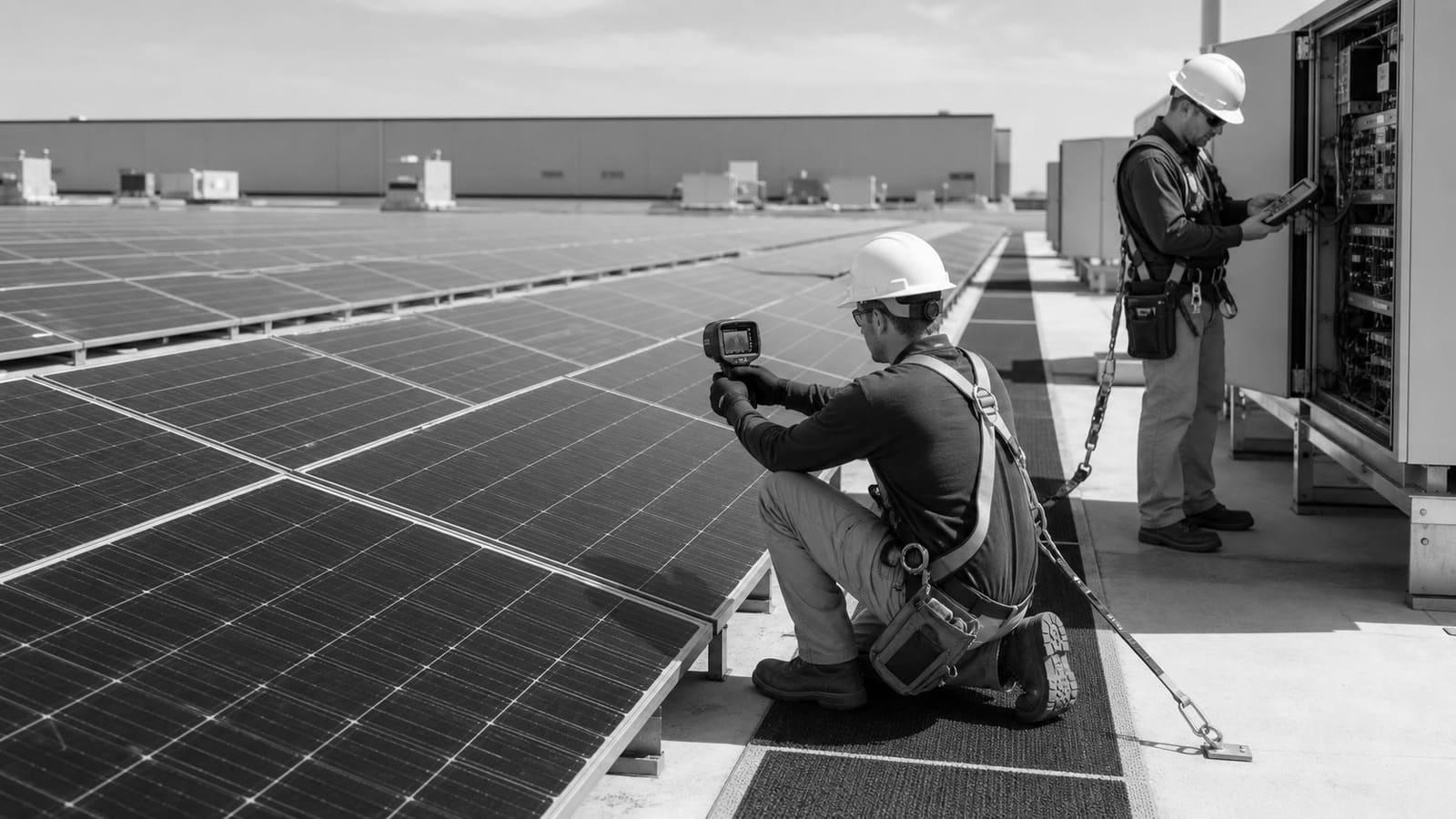
BEFORE YOU BUY
What Colorado Springs facility teams should approve before installation
- Approve the roof area only after its condition, shade, direction, and usable space support the planned PV array.
- Approve system size only after building energy demand is compared with expected output.
- Approve panel tilt only after the snow-shedding benefit is weighed against added wind load.
- Approve the schedule only after the permit, plan review, and inspection path is clear.
- Record the final panel layout and equipment selection so the installed array matches the approved design.
QUESTIONS
Straight answers.
What decides the size of a commercial solar system in Colorado Springs?
Energy demand, usable roof area, shade, roof direction, tilt, panel efficiency, weather, and equipment quality all affect system size and output.
Can snow change a Colorado Springs commercial solar design?
Yes. The city averages about 38.9 inches of snow a year. A steeper tilt can improve snow shedding, but it also increases wind load.
Does a Colorado Springs solar project need permit planning?
Yes. Confirm the property jurisdiction, local code path, plan review, and inspection schedule before setting the installation date.
When is rooftop solar a poor fit for a Colorado Springs commercial building?
A roof with major repair needs or heavy shade may fail the rooftop fit check. Those limits can delay the project or require a different layout.
GET STARTED
Tell us about the building.
Whatever the trade, we scope it, price it, and put the right crew on it. Site visits are free, always.
MORE SERVICE AREAS