FORT WORTH, TX · SOLAR
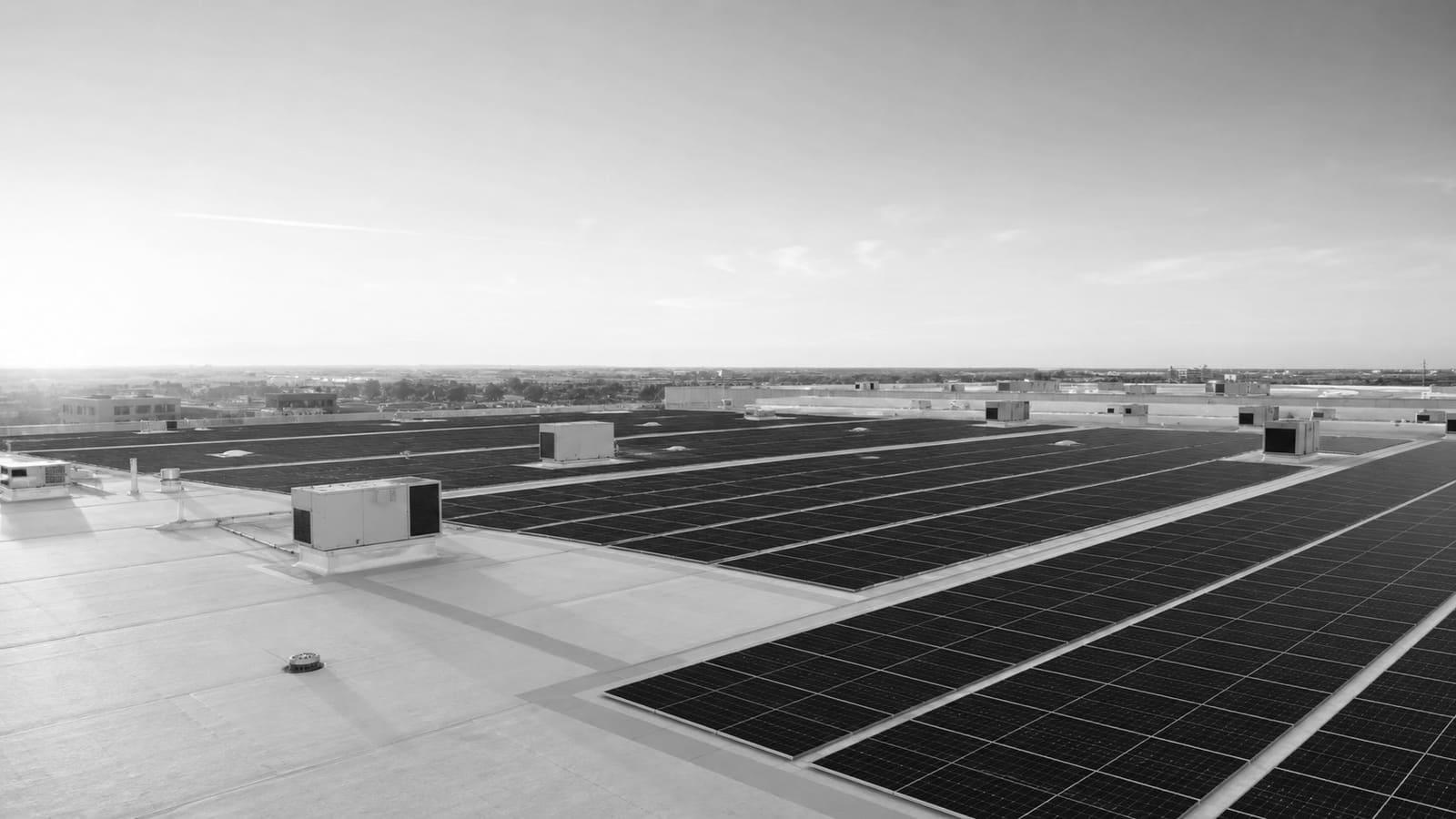
Commercial solar installation in Fort Worth.
Flux Facility designs, permits, and installs rooftop, carport, and ground-mount solar for Fort Worth commercial buildings, from the first electric bill review to the utility connection.
Start with the building, not the panels.
A commercial solar project has to fit the site, the roof, the electrical system, and the utility rules. We start with a solar feasibility study, then compare rooftop solar with solar carports where parking offers the stronger site.
One team carries design, permits, utility interconnection, construction, commissioning, and solar maintenance. We also compare direct ownership with solar financing and PPAs, and add battery storage only when it has a clear job.
START HERE
How does a Fort Worth building owner get started with solar?
Commercial solar installation puts a power system on a Fort Worth building's roof, parking canopy, or open ground and wires it into the building's electric service. Flux Facility starts with your electric bill and your load. Panel count comes last.
We run the same order on every Fort Worth job: read the load, screen the site for shade and usable area, pick the array type, then clear city permits and the utility connection before anything gets mounted. Utility policies, connection requirements, and permitting rules differ from place to place, and those answers change the design. We get them in hand first.
Will solar cut the demand charge on a Fort Worth electric bill?
Part of a commercial electric bill is the demand charge. It is set by the single 15-minute period each month when your power use peaks. Solar cuts that demand only while it is producing during that peak window. Many commercial buildings peak in the afternoon on cooling load, and solar heat gain pushes that cooling load higher, so afternoon output and peak demand often line up. Use about 10% of rated capacity as the planning figure for demand savings: a 1 MW array might average 100 kW. August is Fort Worth's hottest month, with average highs near 96°F and overnight lows near 75°F. We pull your interval data and find when your peak actually lands before we size the array.
Permits and utility
What permits and utility approvals does commercial solar need in Fort Worth?
The code editions Fort Worth has adopted
CODE
Fort Worth has adopted the 2023 National Electrical Code, along with the 2021 International Building, Mechanical, and Existing Building Codes. Each carries local amendments. The city typically adopts new code editions every other three-year cycle, so the edition on your last project may not be the current one. We draw the permit set to the editions in force and take amendment questions to the city Building Official's office.
How the system connects to the utility
INTERCONNECT
Utility policies on net metering, meaning credit for power you send back to the grid, and the connection requirements for tying in differ by region, as do permitting rules. We confirm the connection requirements and the order of paperwork for your Oncor service before the design is locked.
Oncor's Commercial Standard Offer Program
INCENTIVES
Oncor pays incentives through its Commercial Standard Offer Program to approved service providers that carry out qualifying peak-demand or energy-saving projects for eligible commercial customers. The 2026 incentive budget is $4,925,481, and no single service provider and its affiliates can take more than 20% of it. Eligibility runs on the premise's rate code. We check that premise ID before any incentive dollar goes into a proposal.
Experience to verify before you sign
VETTING
For commercial and industrial solar, the working benchmark is at least three years of company experience in design, engineering, and installation of commercial-scale photovoltaic systems, plus a project history on commercial, industrial, or utility-scale work. Ask every bidder for both in writing. Flux lists ours in the proposal.
WHAT WE HANDLE
Everything under the solar door.
PROJECT PLANNING
What does Flux check before a Fort Worth commercial solar quote?
- A shading analysis of the roof or lot, run on site before we draw a layout, not after the panel count is set.
- Severe weather exposure. The federal energy program publishes hardening guidance for wind, hail, flood, and wildfire on photovoltaic systems. We check which of those apply to your site and record the answer in the design.
- Cable management for the DC strings, meaning the wire runs between panels. We plan those runs in the drawings instead of leaving them to the field crew.
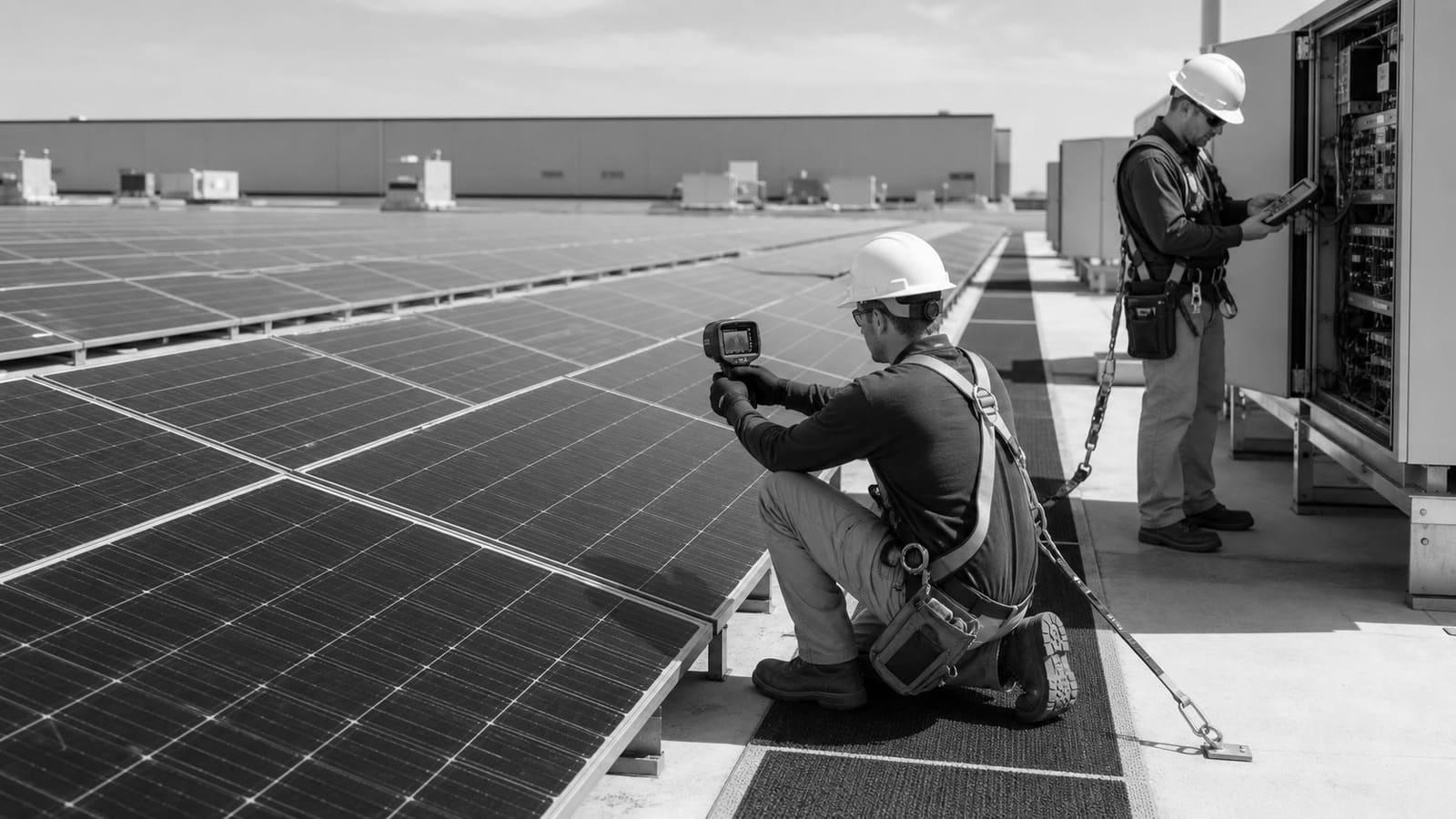
- Commissioning, the startup testing that proves the system produces and shuts down the way the design says. We schedule it before we hand over the closeout records.
- The end-of-life plan for the modules. More than 85% of a photovoltaic module is aluminum and glass, both commonly recycled, but module recycling is not widely adopted because of cost. Get the plan in the contract.
Array type choice
Rooftop, carport, or ground-mount solar for a Fort Worth building?
Rooftop arrays
ROOFTOP
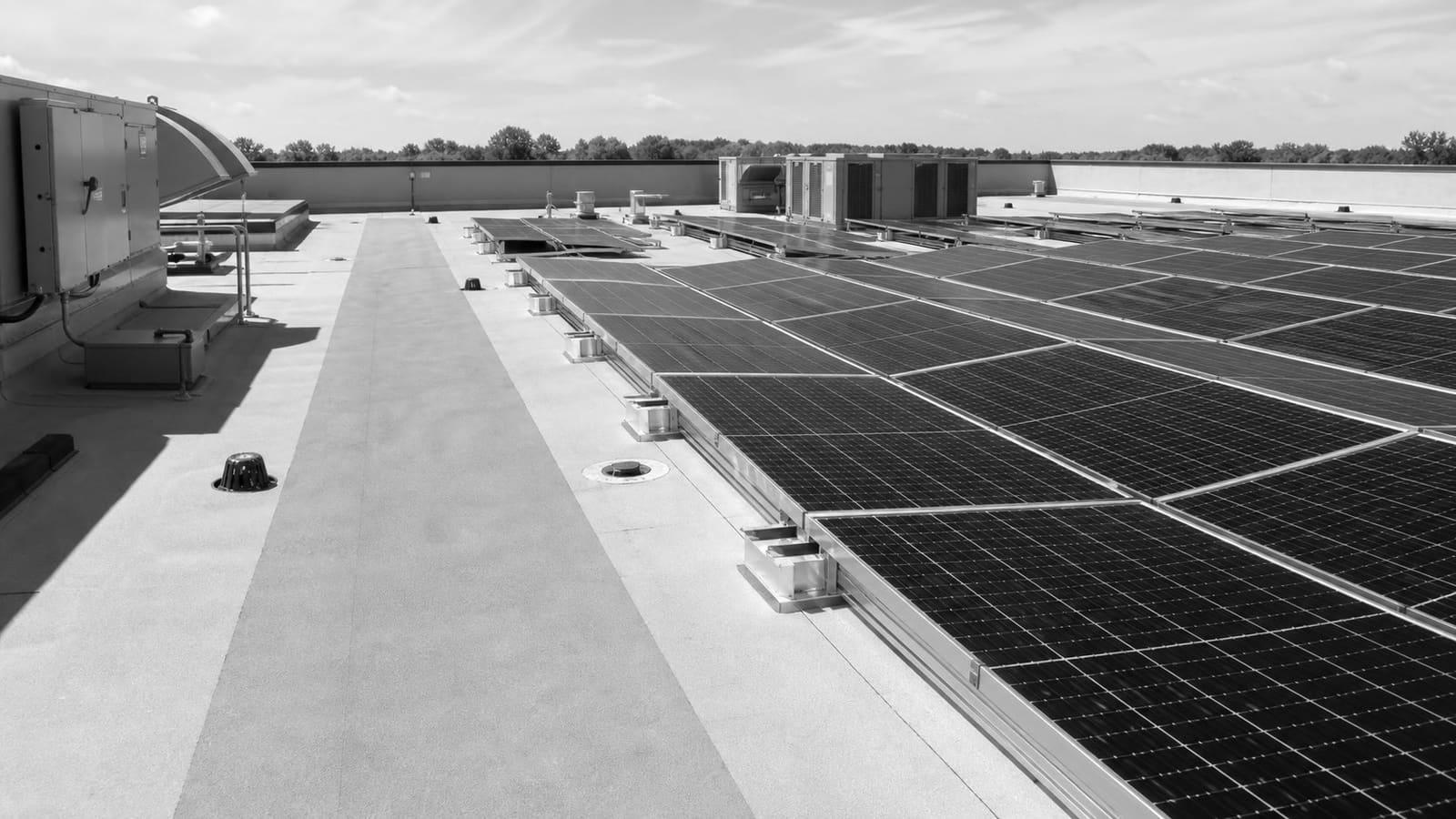
Panels sit on the building roof. Panels mounted flush with the roof are often chosen for appearance and lower wind load, even when the angle and direction are not the best for power output. We show you what production the flush layout gives up before you sign off on it.
Solar carports
CARPORT
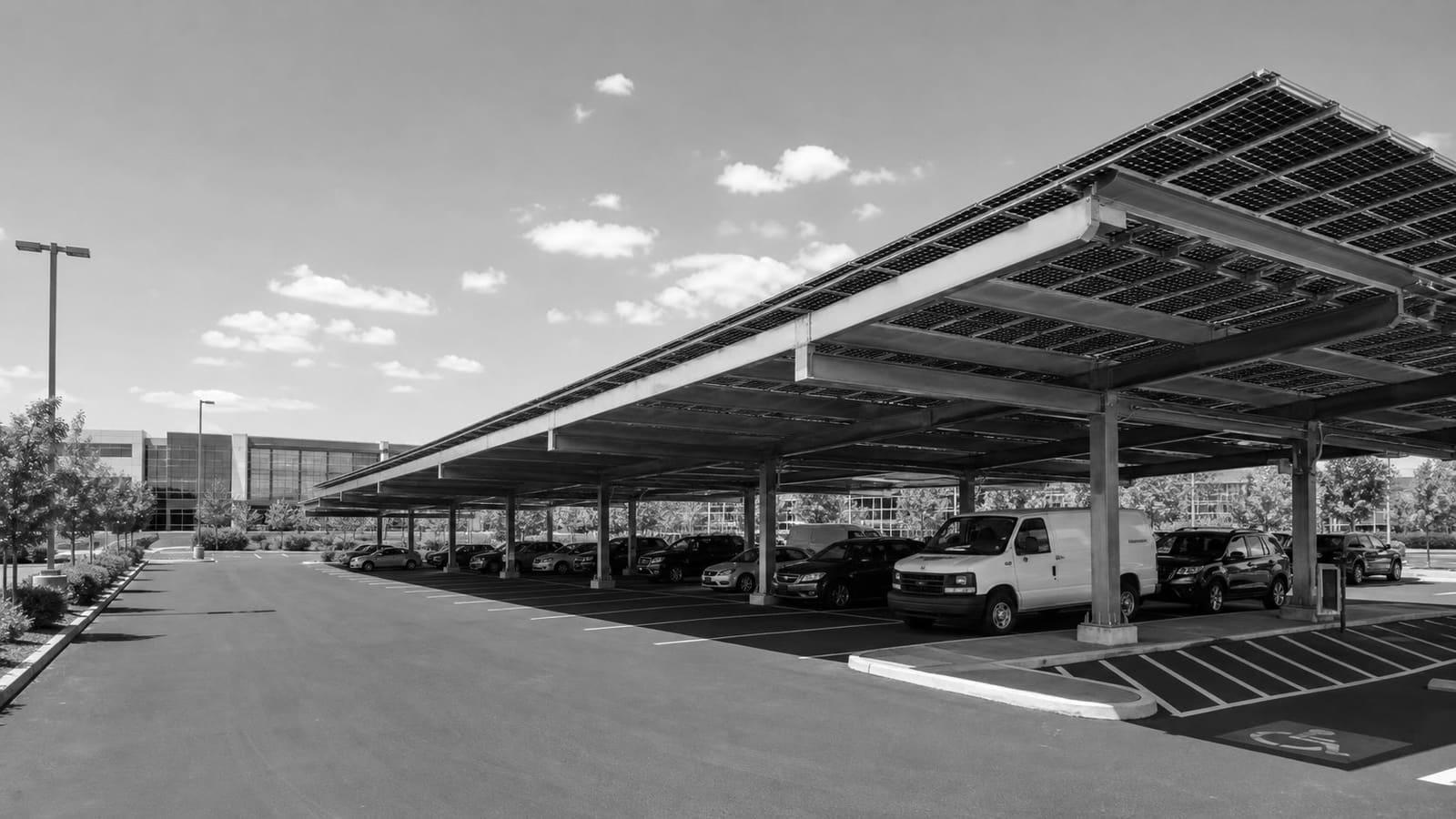
The array becomes a canopy over parking stalls. EPA project records include a redeveloped former factory site that reached net zero energy use with rooftop and parking canopy arrays together. We map drive lanes, existing lot lighting, and electrical runs before we set a single column.
Ground-mount arrays
GROUND-MOUNT
Panels sit on open ground near the building. The best angle for solar exposure equals the local latitude, and 15° to 40° facing south produces the most power in the continental U.S. Lower angles cut wind load on the panels; steeper angles up to 60° raise it. We weigh angle against wind load in the structural design and put the chosen number in the drawings.
BEFORE YOU BUY
What should a Fort Worth commercial solar proposal spell out?
- Who owns the equipment. Buying outright, a lease, a power purchase agreement, an energy savings performance contract, and energy-as-a-service each put the hardware in different hands. Third-party ownership with the site owner buying the power is allowed for solar only in certain states, and we confirm what your site can use.
- Who operates and maintains the array, and for how long. Under third-party ownership an outside firm builds, owns, operates, and maintains the system while you buy the power. Under direct ownership, that upkeep is yours to contract.
- Access and shutdown windows. Name the days the crew is on the roof or in the lot and the hours power is off, before the schedule goes to your tenants or staff.
- Closeout records. As-built drawings, equipment and warranty documents, and system logins should transfer to you on the same day the job closes.
QUESTIONS
Straight answers.
Can Flux add solar during a Fort Worth building renovation?
Yes. We line the array up with the electrical work already scoped in the remodel and file the permits together so the roof and the panel work happen in one pass.
Can a Fort Worth manufacturing plant get the Oncor commercial incentive?
Only if it still pays into the Energy Efficiency Cost Recovery Fund. Customers classified as manufacturing who opted out are not eligible. Oncor checks the premise ID for the rate code.
Will a solar carport close our Fort Worth parking lot?
We phase it. Foundations and electrical runs go in section by section so part of the lot stays open, and we set that sequence with your operations team first.
Does the building lose power during a solar installation?
One planned outage window covers the tie-in to your electrical service. We schedule it with you, keep it short, and run the rest of the install while you operate.
GET STARTED
Tell us about the building.
Whatever the trade, we scope it, price it, and put the right crew on it. Site visits are free, always.
MORE SERVICE AREAS